Sister Margret Ann Pahl knelt in quiet prayer inside the chapel when she heard the heavy creak of the door opening. Father Gerald Robinson stepped inside, his presence breaking the silence.
What unfolded after that moment would become a grim chapter in American history. The first recorded case of a priest killing a nun.
The Gentle Sister
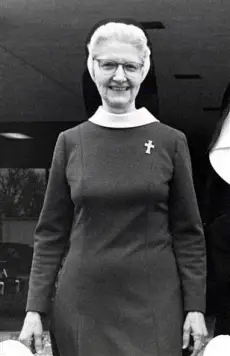
Born into a devout Catholic Family in Edgerton, Ohio, Margaret Pahl grew up on a 200-acre farmland. She was fourth among the nine children of Frank and Catherine Pahl.
“She’d been called to be a nun. She just knew,” said her younger sister, Catherine Flegal.
Sister Pahl received her nursing degree after high school and began her career in healthcare.
Later, she worked as a science teacher before pivoting to administrative roles at Mercy Hospital in Tiffin and Saint Charles Hospital in Toledo.
“She was wonderful,” Mary Casebere said of her older sister. Above all, she added, “Sister was completely devoted to God.”
Sister Pahl was getting older, but she did not want to retire. She finally took a job as the caretaker of the chapel at Mercy Hospital in Toledo in 1971. She also worked as the head sacristan.
A Body Found in The Sacristy
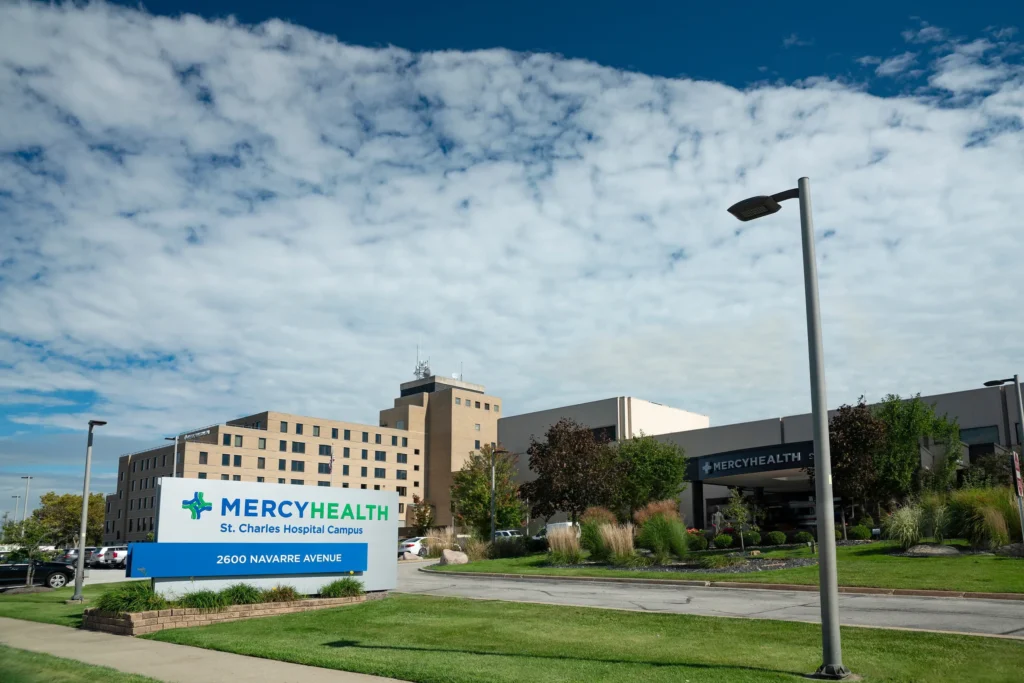
It was the 5th of April 1980. In just 24 hours, the Holy Saturday church services would begin at the chapel at Mercy Hospital.
Late at night, Sister Madeleine Marie stepped quietly into the dim sacristy to make a call on the telephone.
Just as she prepared to dial, she noticed a pool of blood on the floor. Her scream echoed through the chapel walls.
Before her lay a lifeless body with its face and arms outstretched on the cold marble floor. The silence of the chapel, once calm and reverent, had become heavy with hidden menace.
It was the body of Sister Margret Ann Pahl. She had been stabbed 31 times in total, including 9 times over her heart.
The injuries over her chest resembled an upside-down cross. She was overpowered and strangled, evident from the marks on her neck and her bloodshot eyes.
Her clothes looked as though they were removed and hastily put back together. The killer had covered her body with a white altar cloth.
On her forehead was a smear of blood that symbolised a kind of twisted anointment.
Although it appeared she had been violated, this possibility was later ruled out after a thorough investigation.
The coroner did, however, document an abrasion near her genital area, according to WTOL.com.
“The only thing I had left to hope for was that she was strangled before she was stabbed.“ Ms Flegal, Sister Pahl’s sister, said.
Initially, it was believed that the murder was a result of a robbery attempt due to her missing purse. Another thing missing was Sister Pahl’s scissors, which she usually carried.
Although the purse was found later, the scissors were never recovered. And as details unfolded, it became obvious that the murder was far more ritualistic in nature.
“I called home to ask my mom for something, and she told me about the murder,” Lee Pahl, Sister Pahl’s nephew, said. “You just don’t ever expect anything like that to happen to a nun in a chapel, especially.“
5th April 1980, the day before Easter. Holy Saturday, a time of silence and waiting for the resurrection.
Yet in Toledo’s Mercy Hospital chapel, this sacred pause was desecrated by the brutal murder of Sister Margret Ann Pahl.
The Hours Leading up to the murder
In the hours before the murder, Sister Margaret Ann Pahl moved through her routine as usual, attending to her daily tasks at Mercy Hospital as she had for decades.
Sister Pahl rose at 5 a.m. in her upstairs quarters at Mercy Hospital. She gathered cleaning cloths and incense from a nearby closet and placed them on the tray, setting it on a chapel pew.
By 6:20 a.m., Sister Pahl returned to the dining room for a quick breakfast. On her way back, she told a cafeteria worker she was heading to St. Joseph’s chapel.
At 6:45, she left the dining room for the last time, presumably returning to the chapel to prepare the altar for Easter services.
It was around 8:00 AM when Sister Madeline Marie walked into the chapel and then stepped into the sacristy to make a phone call.
There, she came upon the sight of Sister Margaret Ann Pahl’s body.
Who was the First Suspect?
Tragically, the crime unfolded just one day before Sister Pahl’s 72nd birthday.
Sister Phyllis Ann had heard Sister Marie’s scream from the chapel. She had searched through the sacristy for a phone and called the police. The police immediately locked the chapel as it was officially declared a crime scene.
“I have seen dead bodies before, working in the medical field…. but nothing ever like this”, said Sister Phyllis Ann.
At the crime scene, it was found that a single blind had been lowered in the chapel. The first door was locked, and the second had a master key inside it.
Only a few nuns, maintenance workers, and the Priests were assigned the master key, according to Sister Phyllis Ann.
With this information, Toledo Police soon developed their first suspect – Father Gerald Robinson.
The case was led by Toledo Police Lieutenant William Kina from the Homicide Unit alongside Detective Art Marx.
They set up a command centre in the hospital and worked alongside evidence collectors and lab technicians to investigate the crime scene.
Father Robinson, along with several others, was suspected in the aftermath of Sister Pahl’s murder. But only he gave two polygraph tests, which were found to be inconclusive.
It was finally on April 18th, when Father Robinson was brought to the police station for questioning.
During interrogation, Father Robinson said that he was not the killer, but he knew who it was. He told detectives that a man had confessed to him about Sister Pahl’s murder.
Upon being pressed further, he confessed that he lied and that he did not know who the killer was.
At the time, Toledo police did not require interrogations to be recorded, and Detective William Kina followed that practice.
This practice proved to be problematic when the case was reopened decades later, even though it was routine in the 1980s.
How the case that once captivated, now went cold
Since Father Robinson was the prime suspect, he was questioned twice, as per WTOL11.com. But there were external pressures at play.
The day after a lengthy interview with Father Robinson, Detective Kina questioned him again and believed he was close to securing a confession.
But just as the interrogation seemed to reach a critical point, there was a knock at the door.
Standing outside were Chief Vetter, Monsignor Jerome Schmit, and a diocesan lawyer. Detective Kina was ordered to leave, and minutes later, Schmit and Robinson walked out of the safety building together.
Chief Vetter was a senior Toledo police official, while Schmit was a high‑ranking priest in the Toledo Diocese. Father Robinson was never questioned again.
After about three weeks, Chief Vetter shut down the Mercy Hospital for the Police, turning the homicide case cold.
Officers said in an interview that allegations involving clergy were often handled quietly inside church leadership.
During the investigation, Bishop John Donovan received a letter outlining developments in the case, including a meeting between Deputy Chief Vetter and Monsignor Schmit.
The letter also discussed arranging legal counsel for Father Gerald Robinson and plans to move him out of town.
“I talked to some policemen who worked in Toledo in 1980. They said you could not arrest a priest. It was just impossible,” added Blade Editor David Yonke.
The prime suspect of the case – Father Robinson presided over the funeral mass of Sister Pahl just 4 days later.
Investigators began with over 100 suspects when they started, but with no physical evidence to firmly tie Father Robinson to the crime, the case slipped into obscurity.
Later, it was classified as a cold case and was left unresolved for decades.
Views from Witnesses
Hospital employee Shirley Lucas told the police that on Good Friday, the day before her death, Sister Margaret Ann appeared visibly upset after the Good Friday service was cut short.
Lucas recalled seeing her in tears, asking through sobs, ‘Why did they cheat God out of what was his?’
Wardell Langston, a janitor at the Mercy Hospital, told investigators that he had heard rapid footsteps echoing across the second‑floor balcony on the morning of the murder. The sound, he said, seemed to stop near Father Robinson’s living quarters.
“The receptionist was there. She heard it too,” he testified.
In total, three eyewitnesses testified that they could place Father Robinson near the crime scene that morning, including an EKG technician who arrived for work at around 6:50 AM.
She said she saw Father Robinson standing in the hallway near the open doors of the chapel.
Another employee said she had been picking up newspapers from the newsstand. While waiting for the elevator, she saw Father Robinson walk out from the chapel carrying a duffel bag. She testified that they even made eye contact.
All these testimonies seemed to contradict Father Robinson’s alibi. He claimed that he was in his quarters that morning and had not left.
A Sign From God
Fierce winds swept through the St. Bernardine chapel in Fremont, shaking the metal cross atop the roof, flinging open doors, and scattering dead leaves across the carpet in the chapel.
“It wouldn’t have surprised me one bit,” brother-in-law Paul Casebere recalled, “if that roof had come off the church.”
More than 200 mourners had gathered at the St. Bernardine chapel where Sister Margret Ann Phal would retire. Lee Pahl recalled the storm that erupted during the Funeral Mass as Father Robinson delivered the homily.
“The back doors to the chapel blew open, and leaves blew in. Everybody was just sitting there wondering if this roof was coming off,” he said, “It makes you wonder, I think there was much more going on with that storm than what anyone realised at the time…He was sending a message to Father Robinson.”
“It was so quiet,” Mrs Casebere, Sister Pahl’s elder sister, said as she remembered the Funeral end. “To me, it was like God telling us not to worry. That she’d made it to heaven.”
Over the years, many investigators who worked on the case retired. Several documents were lost, and there were no tape recordings of the interviews.
Father Robinson, however, was only transferred to St. Anthony’s parish. There, he still remained active as a religious leader in the area.
Sister Phyllis Ann would occasionally phone the police to ask about updates regarding the case, but it had become just another file in the unsolved section.
The Letter That Reopened the Case
The Toledo Diocese review board received a letter in December 2003.
After nearly 23 years, there was new evidence regarding the gruesome murder of Sister Pahl. The letter was written by a woman who claimed to have been abused by the Priests in the church.
“At the age of 5, a ceremony was performed at Calvary Cemetery. I was placed in a coffin-like pine box, and cockroaches were released inside. I was in the box for several minutes and thought I was going crazy. They told me the bugs marked me for Satan,” she wrote in the letter.
Apart from this, the letter included detailed instances of sexual exploitation by different priests, including Father Gerald Robinson. This letter reached Julia Bate’s cold case team, and soon, Toledo Police reopened the case for investigation.
The letter writer, who wished to remain anonymous, also mentioned ritualistic elements and asked Bate’s team to look for an upside-down cross.
In 2004, Detective Tom Ross finally confronted Father Robinson.
He asked Father Robinson, “Father, how do we explain this knife, causing those puncture wounds and leaving those transfer marks on that altar cloth? She is stabbed through that altar cloth, with a perfect crucifix on the chest upside down, the long part of this under her chin and the short part of the cross toward the middle of her abdomen. What’s that all about?”
All Father Robinson muttered was “I don’t know.”
Within a few weeks, the family of Sister Pahl granted permission to the Bates’ team to exhume the Sister’s body for evidence.
“We never knew that Father Gerald Robinson was a suspect in my aunt’s murder until he was arrested in 2004,” Lee Pahl mentioned. “We never knew it.”
There was a second autopsy performed on the body. During the second autopsy, Dr Diane Scala‑Barnett, the then county coroner, removed a section of Sister Margaret Ann’s jawbone.
In doing so, she discovered a defect that matched precisely with the tip of Father Robinson’s letter opener.
“It fit like a lock and a key. Key in the lock,” said Prosecutor Dean Mandros.
The Final Trial
It was not until April 23rd, 2004, twenty‑six years after Sister Margaret Ann Pahl’s murder, that Father Gerald Robinson was finally arrested.
“Our family knew nothing about what was going on, or very little. We never knew that Father Gerald Robinson was a suspect in my aunt’s murder until he was arrested in 2004”, mentioned Lee Pahl.
In April 2006, following the second autopsy of Sister Margaret Ann Pahl, police arrested Father Gerald Robinson.
Although the renewed forensic examination did not uncover his DNA, Robinson was taken into custody and held without bail in the Lucas County Jail. From there, he continued to deny any involvement in Sister Pahl’s murder.
On April 17, 2006, Father Gerald Robinson’s trial officially began.
A prosecution forensic expert testified that the letter opener could not be ruled out as the murder weapon and that the altar cloth bloodstains were consistent with its shape.
On cross‑examination, the expert also mentioned that the missing scissors might also have caused the stain.
One of the most striking aspects of the case was the scarcity of documentation. For an investigation of such magnitude, the record was unusually thin, leaving behind only a handful of official notes.
“We found it unusual that when you have a priest charged with a homicide, and you had decades earlier a nun murdered in one of your chapels, you would think there’d be files about that, there’d be records about that, but there was nothing,” Mandros said. “It had been cleansed; some opined that all went to the Vatican.”
On May 11, 2006, after nine days of testimony and six hours of deliberation, the jury found Father Gerald Robinson guilty. At 70, he became the second priest in U.S. history convicted of homicide. The judge sentenced Robinson to 15 years to life.
“The diocese never once reached out to the police department or the prosecutor’s office and inquired about the status of the investigation as to who killed this nun in this chapel,” he said. “Never once.”
Confronting the Legacy of Silence
Father Gerald Robinson, 76, died at 4:15 a.m. in hospice care at Franklin Medical Center in Columbus, where he had been treated for heart problems.
Despite his conviction, Father Gerald Robinson was buried with full priestly funeral rites. The Diocese of Toledo confirmed that his funeral Mass followed the “usual protocol” for a diocesan priest.
The Toledo Diocese’s independent review board continues to investigate and evaluate claims of exploitation and abuse in its parishes, even decades after incidents occurred.
The case also drew wider attention through David Yonke’s investigative book Sin, Shame, and Secrets, which examined Father Robinson’s conviction.