




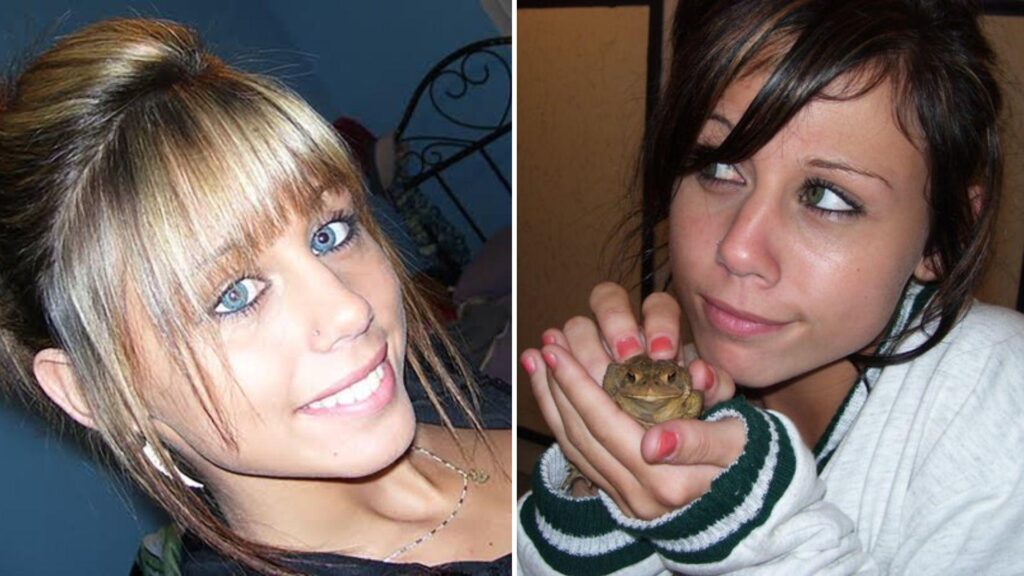
Seventeen is quite a weird age to grow up into. One’s childlike innocence begins to fade, and the freedom of teenage rebellion can lead to rather brash decisions.
For many, such experiences are fondly remembered later on. Brittanee, however, wouldn’t have the opportunity to have such memories.
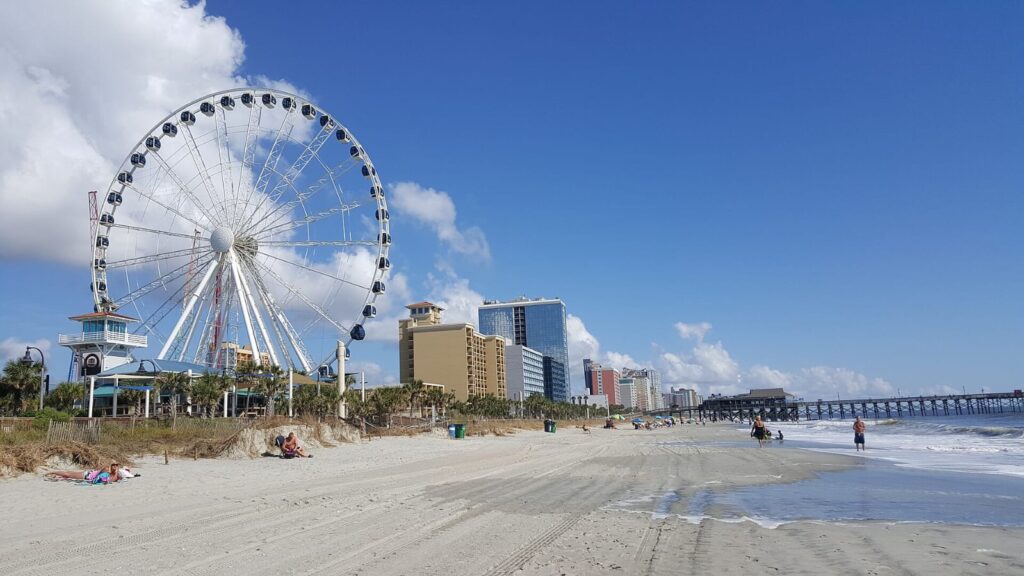
Yearning to enjoy the warm sun that shines bright down south (a welcome escape from studying) for some time, Brittanee felt she needed to visit Myrtle Beach, South Carolina.
The catch was that her mother disapproved.
Without any adult supervision, Dawn Conley, Brittanee’s mother, was highly anxious about letting her young daughter travel hundreds of miles from home alone.
She even mentioned later that she had a premonition that something terrible would happen during this trip.
Brittanee Drexel’s Early Childhood
Born to teenagers John Kahyaoglu and Dawn on October 7, 1991, Brittanee had persistent hyperplastic primary vitreous in her right eye.
The condition required persistent surgeries and eventually rendered her eye blind, requiring her to wear contact lenses to cover it.
Despite all the difficulties and even given her family circumstances, Brittannee had been living a relatively happy life until she was seventeen.
She was described by her family members as a warm-hearted young girl who liked playing soccer, had a deep passion for fashion, and was a motherly figure to her younger siblings.
However, in early 2009, her performance at school declined markedly. Her mother would later claim this was because of the stress she felt about her parents’ separation and eventual divorce.
Wanting to get her daughter out of this academic slump, her mother made it clear that she was not allowed to go to Myrtle Beach during spring break, wanting Brittanee to stay home and catch up on her schoolwork instead.
The Forbidden Trip
On 22nd April 2009, with spring break approaching and her mother’s refusal still firm, Brittanee made the decision that would cost her her life.
As any angsty teenager would, Brittanee had chirpily informed her mother that she needed to go to a friend’s house for a day or two to calm down, and Dawn agreed.
Instead, Brittanee had promptly packed her bags and headed on a twelve-hour trip down south to Myrtle Beach.
It was the peak of summer break, and teens thronged along the streets of the South Carolina coastline.
Three days later, after she and her group had arrived at the Bar Harbour Hotel in Myrtle Beach, Drexel called her mother once during the daytime and told her she was at the beach, carefully omitting where.
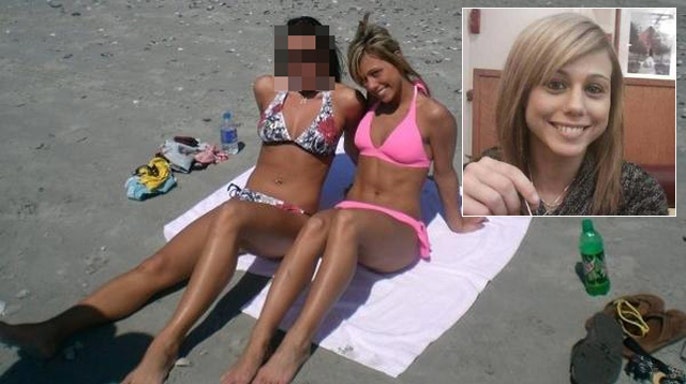
Dawn Conley wasn’t very alarmed either, assuming that Brittanee had been referring to a beach along the Lake Ontario shoreline.
Trouble in Myrtle Beach
Unfortunately for Brittanee, her holiday wouldn’t go quite as she’d planned.
Indications that trouble was brewing within the group’s ranks were evident as early as April 25.
It appears that Brittanee clashed with her other friends who accompanied her on this trip, although information on the actual reason remains scarce.
Apparently, tensions in the group had escalated to the point that Brittanee could no longer stay in the same room with the rest of her friends, having been ‘thrown out’.
Thus, she ended up alone in a foreign city she had travelled to, many miles from home.
She had no way of knowing that she would never make it home at all.
The Evening of April 25th
Her unfortunate incident with friends had left Brittanee with no accommodation, and, as a result, she was seen by folks passing through the hotels lining the Ocean Boulevard, even spending time with other acquaintances she’d made on the trip.
An old friend of Brittanee’s had been staying at Blue Water Resort, several blocks from her hotel, whom Brittanee would visit that day.
Video surveillance shows that Brittanee exited the Blue Water Resort sometime after 8:40 pm and moved north across Ocean Boulevard. This would prove to be her last appearance on camera.
Around this time, Brittanee had started texting her boyfriend, John Grieco.
However, the texts came to an abrupt halt at 9:15 pm, after which John Grieco started calling her friends in Myrtle Beach, anxious to know what had happened.
When all else failed, a hapless Grieco contacted Dawn Conley, who hadn’t known Brittanee’s exact location up to that point.
Rochester police were promptly contacted, with the aim of establishing connections with their counterparts in South Carolina.
The Search for Brittanee
Panic broke out as dawn broke at Myrtle Beach, South Carolina, on April 26th, 2009.
Police tried calling Brittanee’s cell but failed; her friends attempted to find out where she was, but with little success.
Fervently, they hoped she’d just stayed somewhere else and lost her phone, but that, too, didn’t look promising.
It was established that Brittanee’s last known associate before her disappearance was a young 20-year-old nightclub promoter named Peter Brozowitz, who was then questioned, but to almost no avail.

Police then proceeded to search Brittanee’s room, finding her clothes and other belongings but not her purse or phone.
Although the phone’s ping signals were traced, they led only to a path 50-60 miles (80-97 km) south of Myrtle Beach and then stopped abruptly on the morning of April 26, the day after her disappearance.
A Search Without Answers
As days turned to weeks, the search for Brittanee Drexel grew more fervent by the day.
Volunteers combed beaches, marshlands, abandoned properties, and wooded areas across the periphery, while helicopters swept over remote stretches of coastline and search dogs were brought in.
Thousands of flyers bearing her face were distributed across New York and South Carolina, but with remarkably few outcomes.
There were no signs of any sort of struggle or even a kidnapping.
On the contrary, there were no witnesses to confirm that anything at all had happened to her after she disappeared from the video recordings.
Rumours Fill the Gaps
A vacuum created by a lack of evidence is promptly filled in by sensationalism.
Callers began calling on the dedicated hotline, claiming to have seen Brittanee in some other states, while others insisted that she’d run away voluntarily or gotten involved with drugs or criminal activity.
Each lead only led to a brick wall of disappointment. For Dawn Conley, this uncertainty was agonising.
There was no body to mourn, no suspect to hate or even a remote explanation as to what happened to her daughter.
The First Break in the Case
In 2011, however, after almost two years, the investigation managed to take a dramatic turn, with the announcement by federal authorities that they believed Brittanee had likely been abducted shortly after leaving Myrtle Beach and transported to nearby Georgetown County.
According to them, a group of local criminals could possibly be responsible for the abduction, and for the first time, they believed they were actually closing in on an answer.
The problem was that the answer would eventually prove to be wrong.
The ‘Stash House’ Theory
According to the information that the FBI had picked up over the years, Brittanee had allegedly been picked up shortly after leaving the Blue Water Resort and transported roughly sixty miles south to the Georgetown County area.
There, investigators believed, she had fallen into the hands of a group of local criminals operating out of what witnesses described as a “stash house” near McClellanville.
In June 2016, federal investigators publicly put forward a theory that Brittanee had been held against her will, repeatedly sexually assaulted, and eventually murdered.
Most of this ‘information’ was based on testimonies by jailhouse informants, with one of them claiming he’d seen parts of the incidents firsthand.
Of particular interest were several local individuals, among them Timothy Da’Shaun Taylor, a young man whom police identified as a suspect in their case.
Taylor was already in prison on completely unrelated charges.
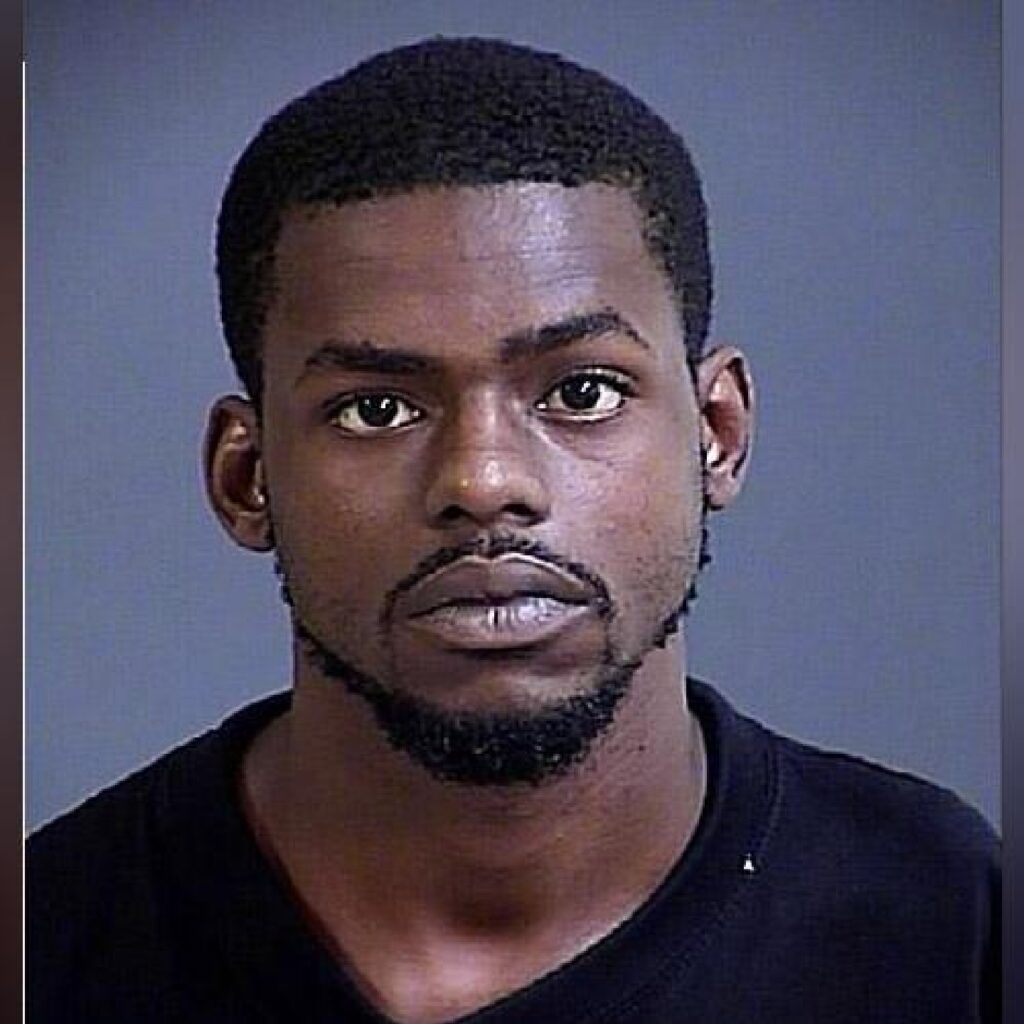
FBI agent Gerrick Muñoz testified that earlier that year, Taquan Brown, another South Carolina inmate who had begun serving a 25-year sentence for manslaughter, had told the FBI that in 2009, shortly after Brittanee disappeared, he’d witnessed Taylor sexually assaulting Brittanee, while others were present.
Apparently, Drexel had tried to run out of the “stash house”, but hadn’t been successful. Brown stated that he’d seen Taylor pistol-whip Drexel, then take her back inside.
He then heard two gunshots, which he assumed were the sounds of the young woman being killed.
The problem, however, remained that this was mostly speculation.
Although many claimed the mystery had effectively been solved, investigators could never produce the evidence necessary to prove it.
There was no forensic evidence to corroborate the informants’ claims, and despite years of investigation, no murder charges materialised against the people implicated by the theory.
The Questions Continue
As a part of his plea deal in 2017, Taylor agreed to undergo a polygraph test, although the answers to the polygraph were labelled “deceptive” by the FBI.
Taylor confessed to overhearing an argument between two individuals over who had Brittanee’s phone, which aroused his suspicion.
On the other hand, when asked whether he saw Brittanee after her disappearance, the examiner noted that Taylor was not telling the truth.
A New Direction in the Investigation
In 2022, the investigation took a turn that almost nobody could have expected, as a registered sex offender, Raymond Moody, came to light.
The frustrating lack of evidence in the Taylor angle had caused the police to look into other avenues for answers, and the reality was considerably less dramatic (though equally macabre) than they’d expected.
Caleb Messer, an FBI intelligence analyst, said that “eventually there was a point in time where there was one specific vehicle that stood out to us.”
A 1998 Ford Explorer belonging to Moody’s girlfriend, Angel Vause.
In April 2022, investigators again decided to interview Vause, who had previously ‘provided’ information regarding the night Brittanee disappeared in 2009.
Corroborating her testimony with facts from the previous case revealed massive loopholes in her story.
Things seemed to be picking up the pace from here, as Moody was arrested on May 4, 2022, on obstruction-of-justice charges related to his involvement in the case.
Unlike many previous suspects who’d been named by the police, Moody actually used to live in the Myrtle Beach area when Brittanee went missing.
Although investigators had already looked into him before, no substantial proof could help make further progress in the case.
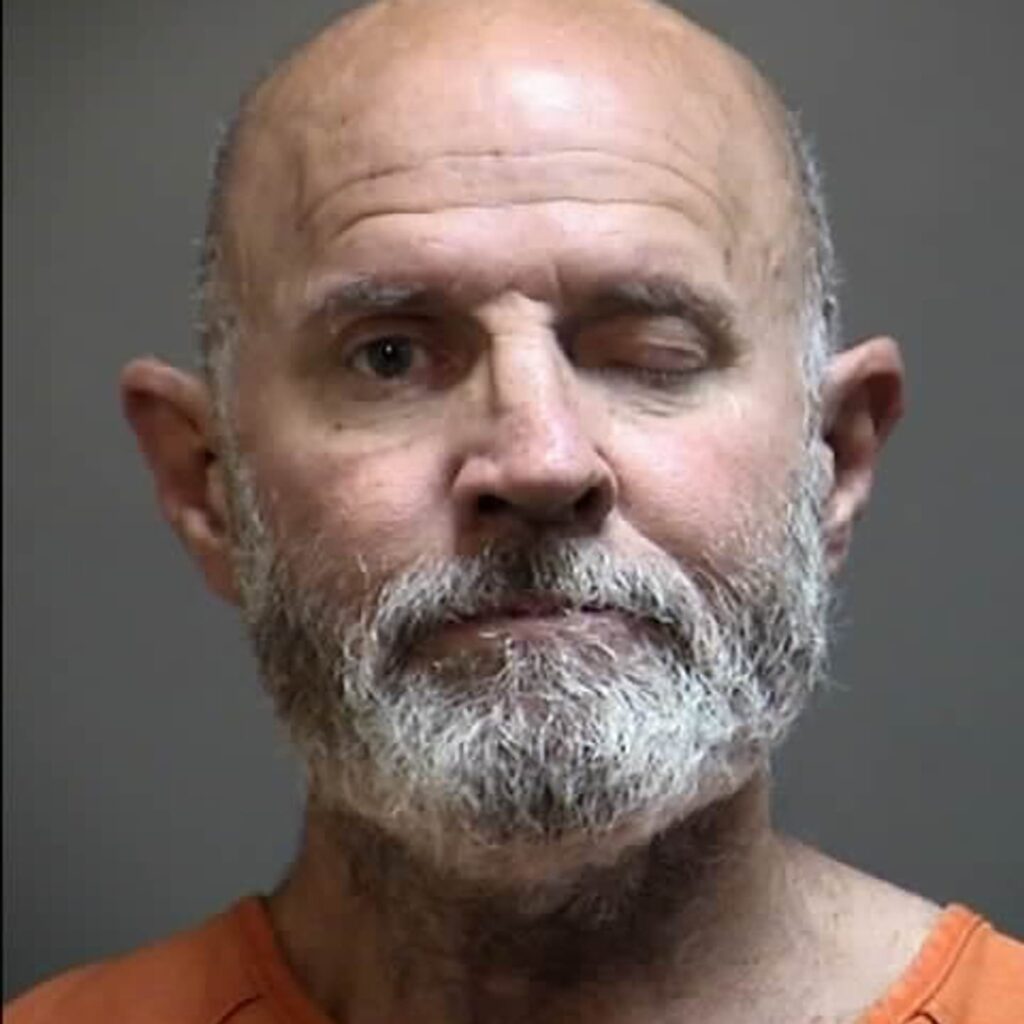
“I give Ray a copy of the search warrant, he can put two and two together and start to realise that we’ve got evidence and, ultimately, we would go after whatever and whomever we had to, to get justice for Brittanee Drexel,” Hank Carrison, a senior investigator with the Georgetown County Sheriff’s Office, informed the media.
Quite as he’d guessed, Moody turned himself in in May 2022, in a surprising turn of events. Perhaps experiencing a change of heart (if murderers do have a heart).
With the pressure mounting, Moody confessed to having kidnapped Brittanee in the Ford Explorer late on the night of April 25, 2009.
From Moody’s statement, he took Brittanee to an isolated spot in Georgetown County, where he sexually abused her before killing her.
Moody even took the authorities to the place where he had apparently disposed of her body more than thirteen years ago.
The FBI soon began acting on this lead, and by May 11, human remains were located, buried in the woods off a gated private drive outside Georgetown, about four feet into the ground, which were identified as Brittanee’s through DNA and dental records on May 15.
Justice (?) At Last
Raymond Moody admitted to the crimes of murder, kidnapping, and first-degree criminal sexual conduct on October 19, 2022, receiving a life sentence along with two consecutive sentences of thirty years.
And while there was no way for Dawn Conley to have any closure, at least she knew what had actually happened after thirteen long years.
In March 2024, Vause was arrested by federal authorities for three offences related to false statements she’d made to the FBI during its investigations.
In September 2024, Vause pleaded guilty to all three counts, and on February 13, 2025, she was sentenced to eighteen years in federal prison.
Brittanee Drexel’s Legacy
For several years, it had proved quite difficult for Dawn Conley to accept that her daughter was indeed dead, with no proof.
Again, to hold on to the hope that her daughter wasn’t somewhere out there, still alive, was painful beyond words.
Dawn’s life had been a limbo of possibilities, and none of them had been bright.
When her daughter’s body was finally found in May 2022, Dawn was noted saying that it was a devastating yet liberating experience.
Through the tragedy that had stifled and clouded her life, Dawn continued to bring hope to other folks.
In 2016, she established “Brittanee’s Little Angels,” a nonprofit organisation for helping families of missing individuals and victims of human trafficking.
“…there’s really no help out there, and people don’t know what resources they have when their child goes missing,” said Dawn. “So that’s something that we’re doing, that we’re working on now.
In the years that followed, Dawn has emerged as a leading voice in helping missing children and their families, using Brittanee’s case to educate and assist others who, like her, were placed in a limbo where nobody hopes to find themselves.
If you enjoy reading about mysterious disappearances, consider giving our articles on Lauren Spierer and Leonard Dirickson a read.