Johana Casas was a 19-year-old girl with modelling dreams in a small town. Unfortunately, she didn’t live to see them fulfilled. She was found dead near her home town, and the prime suspects were her current boyfriend and her ex!
The Early Life Of Johana Casas
Johana grew up in Pico Truncado, a small town in South Santa Cruz, Argentina. But she wasn’t her parents’ only child. She had an identical twin sister named Edith Casas.
Marcelina Casas (Johana & Edith’s mother) said they were both two peas in a pod. They had the same face, tone, gaze and way of walking. “I see Johana in Edith’s eyes”, she would later comment.
An article on montevideo.com mentions that Johana worked as a model and participated in numerous fashion shows in Santa Cruz and Bahía Blanca (another city in Argentina). She was also chosen as Miss Pico Truncado.
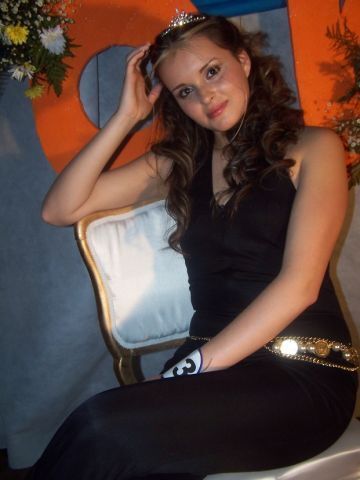
It was during this time, in May 2007, that Johana started dating Víctor Cingolani, one of the two men suspected of her homicide. At the time, Cingolani worked twelve-hour days at an oil company.
Meeting Victor Cingolani
He would perform multiple roles at the job, including crew leader, general helper & mechanic. To let off steam, he’d go out with his friends at night. He preferred brothels over bars, a TiempoSur article claims.
He met Johana on one of these nights out. “I met Johana at the bingo hall one afternoon. I was on a winning streak. I looked at her and waved her over,” he said in an interview.
On seeing him wave, Johana got up and went to the bathroom with a friend. No one knows what the two discussed. When Johanna came out, she slipped Cingolani a piece of paper with her name and number on it.
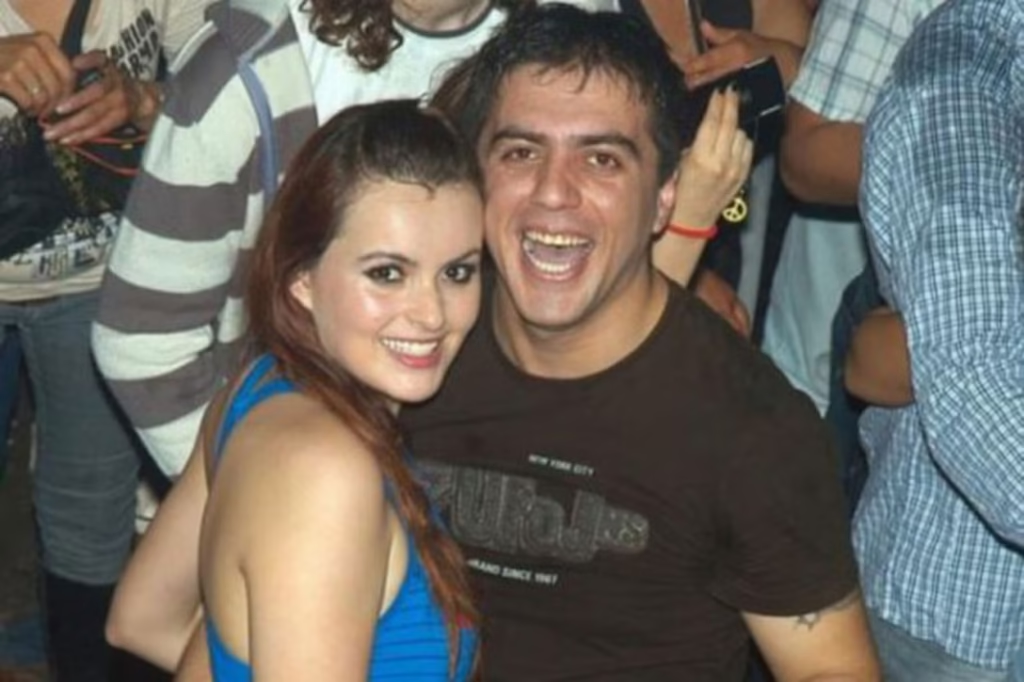
They soon started dating, and the relationship lasted for a year and a half. It is to be noted that Cingolani did have some prior allegations of gender-based violence and harassment, which would also materialise later in the case.
Despite that, Johana and Cingolani seemed like a normal couple to everyone else. They had even flown together to meet Johana’s parents in Buenos Aires. But for some reason, they decided to call it quits.
No one knows why the breakup happened. Some say the relationship was troubled and that Cingolani was violent and controlling. But Cingolani maintains that they broke up because of differences in what they wanted from life.
“Johanna and I separated because she wanted to have children and I didn’t. Also, Johanna didn’t like going out at night.” Cingolani explained in a news article.
When Cingolani and Johanna were still dating, they often went out with her sister Edith Casas. This is when sparks began to fly between him and Edith. “I was charmed by her humility, her simplicity, her kindness”, Cingolani confessed.
Soon after the break-up, Cingolani started dating Edith. And Johanna went on to date Marcos “El Tosco” Diaz – the second man suspected in her homicide case.
The Last Relationship Of Johana Casas
Marcos Gabriel “Tosco” Díaz, further referred to as Diaz, was Johana’s last boyfriend before she was killed. Little is known about his background in public records. But he did have a partner before he met Johana.
Her name was Analía Vidal. They even had a child together. Vidal would later confess that Diaz often threatened and assaulted her. He was a very jealous and controlling man.
In an El Patagonico article, Vidal revealed that Diaz had once locked her up for 10 days in her mother’s house and didn’t even allow her to go to work. There’s no information in the public record on how Diaz and Johana met.
But their relationship was probably good enough that six months later they decided to live together. The live-in relationship didn’t last long, though, because a week later, Johana was no more.
The Johana Casas Murder
On the night of 15th July 2010, Diaz and Johana went to a party organised at the Maldonado sisters’ house. They had some pizza, and then they left at 3.00 am on 16th July 2010 with the Maldonado-Flores couple.
They dropped the couple at their home, and then after that, Johana and Diaz were alone in the vehicle. At that time, both of them were arguing. Johana was thinking of leaving Diaz and must have told him as much.
Diaz’s mother, his ex-partner and his sister later testified in court to his obsessive personality traits. His mother confessed that he didn’t even let her go to her granddaughter’s birthday party.
All of this pointed to his obsessive personality traits, which were suffocating Johana. The prosecution in the case argued that this is why Johana planned to leave him that night.
The prosecutors believed the argument intensified at 5:30 am somewhere near Pico Truncado. His ex-partner would later confess that he always carried a pistol and was a gunman.
Diaz, unable to contain his anger, used the same gun and shot Johana twice. Then the worried criminal swiftly fled the scene. Sources say he called his brother Dimas at 6.09 am from Pico Truncado.
Then he travelled south through Tres Cerros, San Julián, Piedra Buena, and Puerto Santa Cruz before returning. Meanwhile, a neighbour found the body of Johana Casas in the wooded area, a few meters from a shrine to Difunta Correa.
One Crime, Two Ex-Boyfriends
According to a report on La Nacion, Cingolani and Diaz were arrested hours after the crime. But the police released Diaz soon after due to a lack of evidence. Cingolani stayed in custody.
The case focused solely on Cingolani after that, as the authorities had forensic evidence against him. A paraffin/glove test found nitrates on his hands, and a police dog placed him near the area where Johana was found.
He always maintained that he didn’t kill Johana, and that the gunshot residue (nitrates) found on his hands was from a hunting session with his brother-in-law. A few months later, a piece of evidence was found that changed everything.
At the scene of the crime, the police found a cigarette butt. And it had traces of Diaz’s DNA on it. But it was hard to prosecute Diaz since he wasn’t present at the first public trial.
He was later put into preventive detention and tried separately. Cingolani was put on trial first. The court convicted him and sentenced him to 13 years in prison. But this didn’t change Johana’s twin sister, Edith’s, opinion.
Marrying Her Sister’s Suspected Killer
Soon after her twin sister’s death, Edith was seen participating in demonstrations demanding justice. She was also seen wearing a T-shirt featuring Johana’s face. But something else was going on in parallel behind the scenes.
The Montevideo Portal says she was also meeting Cingolani in prison and having intimate encounters with him. She believed that he was unjustly convicted.
In an interview with The Journal, she said he “is a guy who would not hurt a fly. He did not kill her.” In December 2012, the couple announced that they intended to marry.
Cingolani himself implied that their love wasn’t a casual affair. They were serious about each other. “I love Edith, I want to start a family, have children, live a normal life like everyone else,” he said.
But the Casas family wasn’t too happy about Edith marrying the guy convicted of her sister’s murder. She even filed a document with the Civil Registry of Pico Truncado requesting that the wedding ceremony be suspended.
“I don’t want my daughter to marry a murderer. I don’t want her to suffer the same fate as her sister. That’s why I’m going to do everything possible to prevent the wedding from taking place,” she told Clarin News.
Here’s a video of Edith Casas responding to these claims in depth on C5N news.
Edith’s mother claimed her daughter wasn’t psychologically fit to make that decision, so a judge ordered a psychological evaluation. Even her father, Valentin Casas, was disappointed by the decision.
The Independent reported him saying: “For me, both of them are dead”, he said, “Johana is with God and Edith is with the Devil.” But Edith maintained that she wasn’t being pressured or mentally unfit.
After her family shunned her, she took a few photos from her home and started living with Cingolani’s sister, only two blocks away from her own mother. Yet, she never visited her mother.
Edith firmly maintained that Cingolani was innocent and that she loved her. The original plan was to get married in December 2012, but her mother’s request delayed it. Nevertheless, Edith remained steadfast.
“I am marrying of my own free will, because it is my life and I decide.” She told La Nacion, “I’m happy because I’m going to marry the man I love. We trust in God, and I know that justice will be served for my sister and the truth will come out.”
Despite the resistance, the wedding was approved in January 2013. The video below shows the ceremony happening with Edith in a pink dress, Cingolani in a black suit & tie and a few other attendees.
The ceremony finally happened a month later, on a very romantic date – 14th February 2013. Página/12 reports that Cingolani attended his own wedding with a special permit from the prison service.
The groom (Cingolani) came to his own wedding handcuffed and surrounded by security. A judge formalised the wedding. While the couple saw their dream turn into reality, the public still considered it a nightmare.
Angry people gathered outside the venue and threw stones and eggs, making the couple’s exit risky. A stone even shattered the glass of the registry office.
Cingolani had to be disguised with sunglasses and a beret and was made to leave from the back door. Someone even shouted “murderer” when he left. The convict was immediately placed back in his cell.
The early days of their marriage were full of prison visits. But their dark honeymoon didn’t last long. June 2013 brought renewed hope to the newlyweds.
Diaz’s Trial And Conviction
The second trial, focusing on Diaz as the accused, began in June 2013. The case focused on multiple strong pieces of evidences:
– His DNA allegedly found on a cigarette butt at the scene.
– A CD by the singer Ángela, allegedly seen in Díaz’s vehicle and later found near Johana’s body.
– Witness descriptions of his obsessive relationship with Johana.
– A call to his brother saying he’d found his woman with another man.
Diaz denied killing Johana though. His account said he left her at a place called “El Hongo” and then went south for a separate errand. But the prosecutors found gaps in his story.
His actual route, phone calls and behaviour after the killing didn’t match his version of events. This inconsistency became the key focus of the second trial.
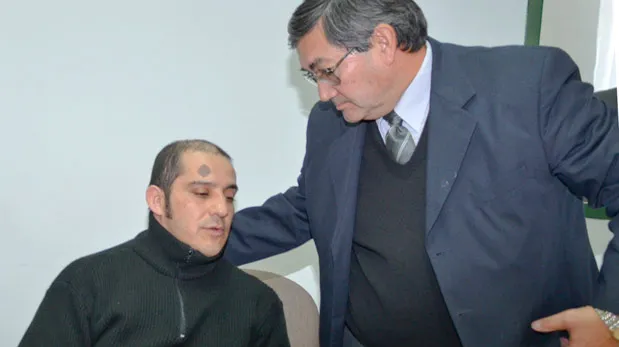
Initially, Diaz was treated as an accomplice, but by the end of the trial, the court ended up treating him as the perpetrator of the crime. In July 2013, Diaz was convicted & sentenced to 12 years in prison.
This conviction created a legal absurdity. One murder had happened, but two men were convicted for the crime. Diaz had been convicted as the man responsible for the killing. That raised an obvious question. Why was Cingolani still in prison?
Cingolani’s lawyer argued that Diaz’s conviction changed everything and that there was no valid evidence tying Cingolani to the case. The alleged link between Diaz and Cingolani had also never been proven.
In December 2013, Cingolani’s conviction was overturned. And he returned to living a normal wedded life with his wife Edith. But things never quite went back to normal for anyone involved in the case.
Aftermath of the Johana Casas Murder
After his release, Cingolani stayed with Edith. He was even seen with her many times. Come 2020, he was back in the news for an entirely different reason. After coming back from a trip in Spain, he tested positive for COVID.
According to an article in Clarín News, he was the only case in Pico Truncado at the time. Next year, in 2021, Edith separated from Cingolani. Her relationship with him had cost her a lot.
The case came to rest on Díaz’s conviction. But emotionally, it left behind something far messier. A murdered daughter, a divided family, a sister who chose love over blood. And what about closure?
Edith’s relationship with her family had been irreversibly damaged. She only hoped that someday her parents would understand. She told Todo Noticias that she’s still affected by her twin’s death, especially since she was killed right before their birthday.
Sometime that same year, Edith was reportedly in a relationship with a new partner and expecting a baby with him. The Casas family never fully recovered from the double shock – Johana’s death and Edith’s marriage to Cingolani.
The case continues to be a staple of true-crime podcasts and short internet documentaries, especially because of the premise of kin marrying the killer.
The Johana Casas murder was ultimately solved, and everyone involved got their closure. But not everyone is fortunate enough. Lauren Spierer, an Indiana University student, vanished one night and was never found. Read her story to find out what happened.