




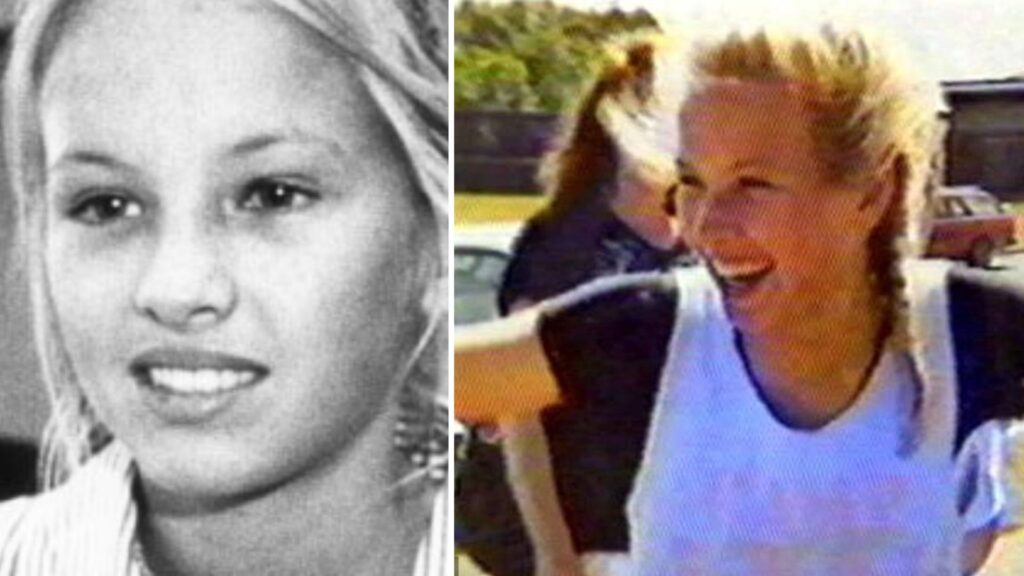
On a Friday afternoon in November 1987, twelve-year-old Sian Kingi finished her classes at Sunshine Beach State school. She hopped on her yellow 10-speed bicycle and rode to meet her mother, Lynda Kingi, at the Noosa Fair Shopping Centre.
They were picking out clothes for an outfit that Sian would wear at a party happening in a few days.
Since Sian had ridden the bicycle to school, she was familiar with the route back home. She said goodbye to her mother and got on the bright yellow bicycle.
At the time, Noosa, the area they lived in, was considered a tight-knit, quiet community where children frequently rode their bikes alone. Sian chose the path through Pinaroo Park, eager to beat her mum home.
She was then approached by a distraught woman, later identified as Valmae Faye Beck, who called out for her dog. Known to be a lover of animals, Sian sympathised with this woman’s plight as she asked her to help find her “white poodle wearing a pink bow.”
Sian dismounted. The moment she did, Beck’s companion, Barrie John Watts, sneaked up and grabbed Sian from behind, bound and gagged her. Watts then forced her into the back of their vehicle and drove off.
They went about 12 kilometres to a remote bush area in Tinbeerwah Forest. Here Watts repeatedly raped Sian, then stabbed her 12 times in the chest and slit her throat. Beck was present and participated in the molestation.
They left Sian’s body in a dry creek bed with her uniform still on.
Back at home, Lynda arrived and noticed her daughter was not back yet. Since she knew Sian to be reliable, she initially assumed that she had perhaps dropped by a school friend’s house.
As evening and darkness began to settle in, concern increased. She called the homes of Sian’s classmates and volleyball teammates. No one had seen or heard from her since they left the shopping area.
Barry Kingi, Lynda’s husband, arrived from work, and she expressed her worry that Sian had not arrived yet. As soon as their calls confirmed that Sian was not with any of her friends, they immediately left the house together and began retracing their route.
At 8 pm, while checking the path through the park, Barry and Lynda came across Sian’s bright yellow bicycle, abandoned, leaning against a tree. It was unlocked. They loaded the bike into their car and drove to the Noosa Heads police station.
The police officially accepted the parents’ report and began searching the park. They also dispatched a missing person’s notice to the media, which would go out in the next morning’s newspaper.
On Saturday, the 28th, an expansive community search began across Noosa. Hundreds of volunteers, State Emergency Service officials, and police officers combed through Pinaroo Park and the surrounding bushland.
The next day, surfing celebrity Bill Wallace came forward and said that on Friday afternoon, he and a friend spotted a white Holden Kingswood station wagon with interstate plates driving erratically near Castaways Beach. He had also written down the license plate.
On 30th November through to 2nd December, the investigation intensified. Police were able to link the vehicle to a Victoria-registered plate belonging to Valmae Beck. A specialised task force at the time had tracked down the owner’s history, and ground teams expanded searches into the regional forests.
On the 3rd, a local fruit picker was walking through an isolated pine plantation when he noticed a foul odour. Beneath the tossed branches, he discovered Sian’s mutilated body. She was still wearing her school uniform at the time.
The police secured the location, and detectives visited the Kingi residence to deliver the horrible news to Barry and Linda.
By this time, police had begun looking for Valmae. When police visited their rental property in Lowood, Queensland, they discovered the couple was last seen there on 4th December.
This was the same day the body was discovered, and it made the news. Police also found cut hair and dye kits, indicating they had changed their appearance to avoid being identified.
A money order sent on December 10 for rent payment was traced to a coastal town known as The Entrance in New South Wales. Detectives arrested the couple on 12th December and extradited them to Queensland two days later.
They were subsequently charged with the abduction, rape, and killing of Sian Kingi.
Barrie Watts and Valmae Beck
Barrie John Watts was born on 15th July 1953 as John Fulton Beck. As an orphan, he grew up in a troubled childhood and committed a string of petty crimes in Perth.
He was caught and convicted for two counts of breaking and entering. This led to a two-and-a-half-year prison sentence.
He had met Valmae Beck while working as a doorman at a Tavern in 1983, and the two began a relationship. At the time, Beck was a 41-year-old mother of six who had been divorced twice.
They got married after he was released from prison. Beck was very insecure and desperate to keep their marriage, considering Watts was ten years younger than her. This caused her to be submissive to his desires.
Watts was also very abusive and routinely hit Beck. He was controlling of how she presented herself and demanded she dye her hair blonde and wear a school uniform to satisfy his fetishes. Watts appeared to have an obsession with young girls and child pornography.
Prison psychiatric evaluations would reveal later that Watts justified the obsession by saying prison culture heavily encouraged fantasies concerning schoolgirls.
To prevent Watts from leaving, Beck played along with his depraved fetishes, including the planning of a kidnapping and rape of a girl.
Facing theft and fraud charges in October 1987, in Western Australia, the couple skipped bail and fled across the country to Queensland.
They rented a house in Lowood on October 15th. Immediately after they settled in, Watt’s fantasies began to surface, and Beck made a call to a friend of hers in Perth. She said Watts was at it again. He apparently spent time hanging around the local school bus stops, watching school girls.
Police later determined that Watts had been actively hunting for victims in this area. He even took Watts to a spot in the bush and pointed to a pre-dug grave site where he said he would be taking victims in the future.
In November, Beck approached a female nurse using the pretext of asking for directions. Watts was supposed to come up behind her and abduct the female nurse. Their plans were foiled when a male nurse interrupted the conversation.
The following day, Watts and Beck made a brazen attempt to kidnap a female Target employee using a knife in Booval. The woman screamed and fought back. Watts immediately abandoned the plan, and they ran away.
Frustrated because of their failed attempts at kidnapping in Ipswich, Watts shifted his focus to the Sunshine Coast. The couple began scoping out Noosa.
They would park along the local school routes and watch Sian Kingi ride her bicycle for days. It was to map out her routine.
On the 27th of November, Watts apparently woke up and told Beck, “Today is the day.” He wanted to be the first and the last sexual partner of a young virgin girl. The goal was premeditated kidnapping, sexual torture, and murder.
The Interrogation and Confession
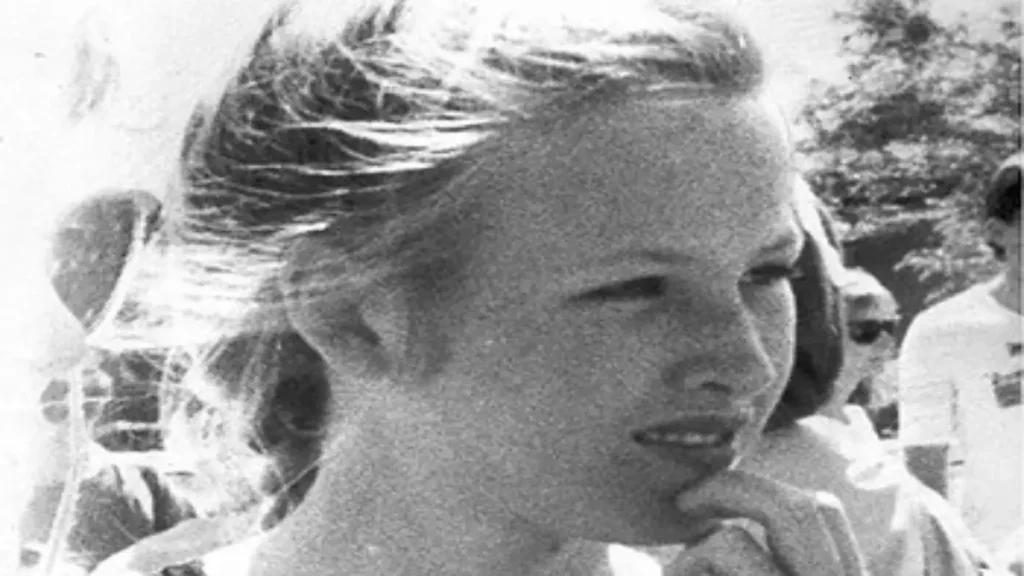
During the initial questioning following their arrest, Watts refused to speak. Beck was more cooperative. Based on the recordings and voluntary statements from the holding cells, the investigators were able to reconstruct the exact sequence of events.
A forensic investigation of the vehicle also showed cloth fibres that matched what Sian was wearing. There were also blood traces that were consistent with the girl’s blood type. Going on Beck’s statements, the knife used to kill the girl was also recovered from Six Mile Creek.
Physical evidence in the case directly connected to Beck’s account and tied both of them to the crime.
The Trial and Other Victims
Becks appeared at a committal hearing in April 1988. She pleaded guilty to the kidnapping and rape. She pleaded not guilty to the murder.
Both were tried separately based on Beck’s testimony. Her trial began in October 1988. After deliberations, the Supreme Court jury found her guilty of murder.
On the charge of abduction, she was sentenced to three years in prison. She also got a sentence of ten years for rape as an accessory. The murder conviction earned Beck life imprisonment. These sentences were to be served concurrently. Beck was eligible to apply for parole after serving 14 years.
The trial of Barrie John Watts began in February 1990. Aside from the abduction, rape, and murder charges, he also faced additional counts of attempted kidnapping of a department store worker.
He pleaded not guilty to all charges. However, Beck’s statements weakened his defence. She detailed the way Watts was the mastermind of the plot and how they used the story of a fake lost dog to lure Sian.
Investigators also presented secretly recorded audio detailing conversations between Watts and Beck while they were in adjacent holding cells. These were very damning as well.
On the 28th of February 1990, the jury gave guilty verdicts on every count. For the rape count, Watts was sentenced to 15 years in prison. He received three years for the abduction and life in prison for the murder charge.
While he gave the sentence, Justice Jack Kelly of the Brisbane Supreme Court stated that Watts was a danger to the public. He ordered Watt’s prison files marked, “never to be released.” That is, unless he was of advanced age and could no longer be considered a danger to young girls.
Apparently, the Sian Kingi case was not the only victim of Watt’s. During the time he began scoping for school children after his initial release, he may have committed other atrocities.
He was linked to the disappearance and potential murder of Helen Mary Feeney. She was a 31-year-old mother and teaching student who went missing on October 29, 1987. This was exactly a month before Sian was killed.
Beck also testified against Watts in the case, stating that he had dumped Helen’s body and burned it at a rubbish tip near Lowood, west of Brisbane. Watts denied the charges as there was no physical evidence to support the claim.
Watts was acquitted of the murder and manslaughter charges. Helen’s body was never found. Beck and Watts were connected to other unsolved murders of young women in Brisbane, but there was no evidence to further charge them after their sentencing.
Beck’s Punishment in Prison
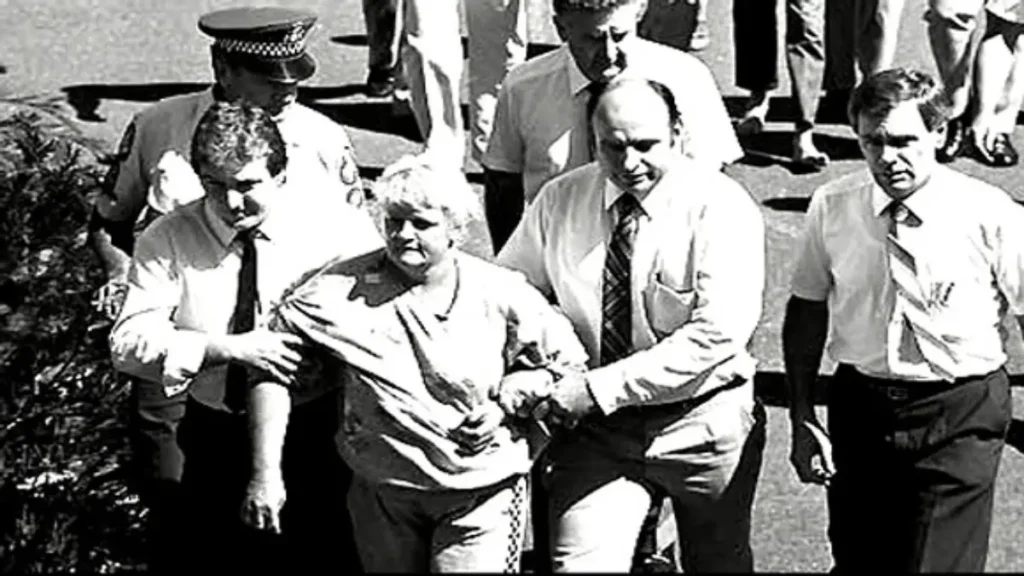
Beck’s time behind bars was brutal as she was repeatedly sought out and assaulted by fellow inmates. At one point, she was hit in the head with a tin can wrapped in a sock, causing a serious head injury.
She divorced Watts in 1990, saying that she regretted everything they had done together. Becks went on to apply for parole three times but was denied three times.
The parole board also extended her non-parole period by 18 months for her participation in Helen Feeney’s murder. She legally changed her name to Fay Cramb in 2007.
To protect her from inmate attacks, she was isolated most of the time. Her physical health also deteriorated at this time, and Beck became obese. She also suffered from chronic diabetes and cardiovascular disease.
In 2005, the corrections authorities transferred her from the Brisbane Correctional Centre to the Townsville Correctional Centre in North Queensland.
In May 2008, she was rushed to the Townsville hospital after experiencing shortness of breath. The doctors performed surgery to implant a pacemaker, but her condition got worse. She was then placed in a medically induced coma and eventually passed away on May 27, 2008.
Watt’s Parole Fight
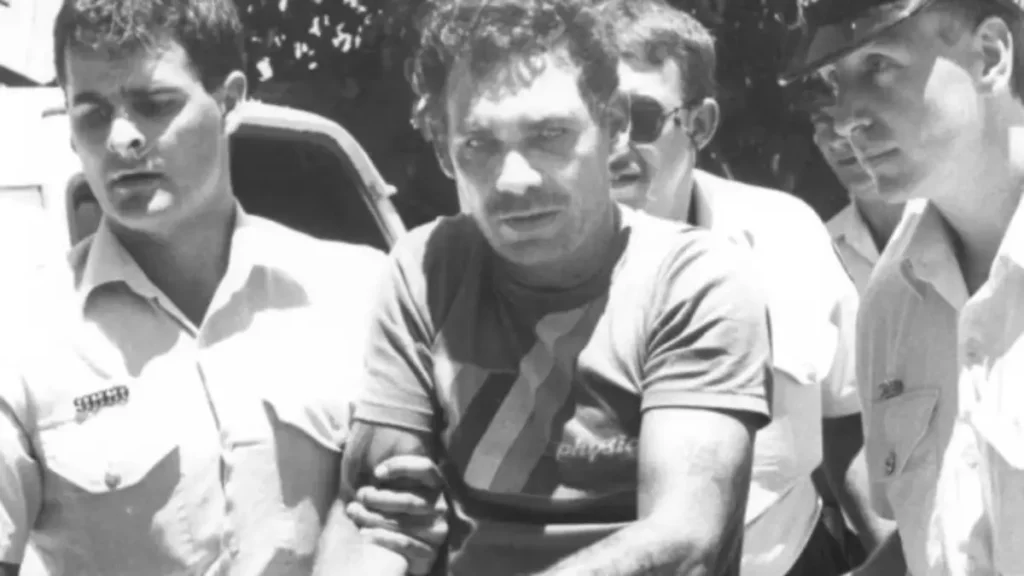
In 2007, twenty years after the murder and years of denial, Watts confessed to the murder of Sian Kingi. It was not out of remorse but to improve his chances of getting parole.
Watts became eligible for parole in 2000 but decided it would not be a good idea. He chose to apply for early release in November 2020. This caused outrage across Queensland, and the Kingi family was notified.
In 2021, the Queensland Parole Board utilised laws that were passed in 2021 to block Watts from applying for parole again until 2034.
This legislation, dubbed Sian’s law, granted the president of the Queensland Parole Board the power to block applications for up to 10 years at a time.
The Deputy President, Peter Shields, described submissions from the victim’s registered family members as speaking to the tragedy they have had to live with.
On the question concerning reoffending, the Board determined that the nature of Watt’s crimes was so bad that there was a potential that he could commit the same crimes again.
Barrie Watts currently remains in prison. In February 2024, the Queensland Parole Board determined that he was a high-risk personality to the community. They cited the enduring effect of the crime’s brutality, and psychological evaluations confirmed there was no change in his potential for violence.