




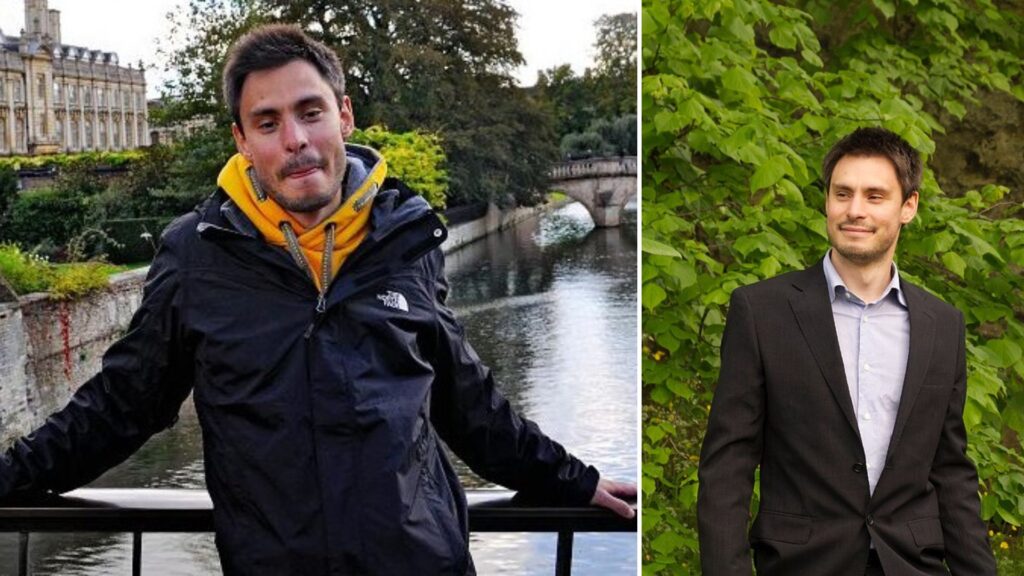
It was the fifth anniversary of the 2011 Tahrir Square riots. Cairo was on lockdown, swarming with military and plainclothes national security agents with orders to squash any anti-regime protests.
On January 25, 2016, Giulio Regeni, a 28-year-old Italian PHD student at the University of Cambridge, stepped out of his apartment building in the upmarket El Dokki neighbourhood at 7.40 pm. He was dressed warmly for the evening, with only a jacket, jeans, and a scarf.
Giulio took out his phone and sent a WhatsApp message to his girlfriend back in Italy, saying he was stepping out. He was heading to a birthday dinner party in downtown Cairo.
The party was for prominent Egyptian professor Hassanein Keshk, a leftist critic of then-President Abdel Fattah al-Sisi’s administration. Giulio was going to meet fellow Italian academic and close friend, Gennaro Gervasio.
He walked down El Dokki Street, toward the El Behoos metro station. As he approached the entrance to the train station, he was suddenly cornered by plainclothes police.
At 8 pm, witnesses said they saw him being aggressively questioned and patted down before being whisked into the back of a civilian vehicle by men who looked like security agents.
20 minutes later at the restaurant, Gennaro Gervasio grew anxious because his friend was uncharacteristically late. He dialled Giulio’s phone multiple times, but no one answered. His phone then switched off at around 8.25 pm.
Surveillance Preceding Giulio’s Disappearance
Giulio did not become a target overnight. Egypt’s national security service began looking into his affairs in October 2015. They considered that Giulio might be a British spy sent to destabilise the country because of his Cambridge connections and sensitive research tied to trade unions.
This was a highly sensitive topic for the Egyptian regime at the time. So the NSA used the people closest to Giulio to gain access.
The person at the centre of this web was Mohamed Abdallah, the head of the Egyptian street vendors’ union that Giulio had been researching. Abdallah was the informant for the National Security Agency, and he secretly filmed Giulio during a meeting.
This was while also trying to get Giulio to provide resources for his personal use. Giulio had apparently participated in union meetings up until December, 14, 2015. Abdallah was working with an NSA officer, Aser Kamal. At the time, Kamal was responsible for monitoring foreigners in Egypt.
A video recording sent to Kamal shows Abdullah saying, “I just need someone to call me because of what I have with me. The young man just left. I can turn it off or keep recording. Whatever you want me to do. I don’t understand what I should be doing next.”
This footage, obtained by Al Jazeera, confirmed that Giulio was indeed being actively monitored. The attorney general, Nabil Sadeq, claimed that Giulio first came to the authorities’ attention in January 2015, when Abdallah reported him to the NSA as a suspected spy.
Later on, Egyptian security forces would search Giulio’s apartment and threaten his roommate, Mohamed al-Sayyed, before he was snatched.
Italian prosecutor Giuseppe Pignatone confirmed that Giulio had attracted the attention of Egypt’s security forces for months, and this continued to escalate until the time he was abducted.
Torture, Murder, and Cover-up
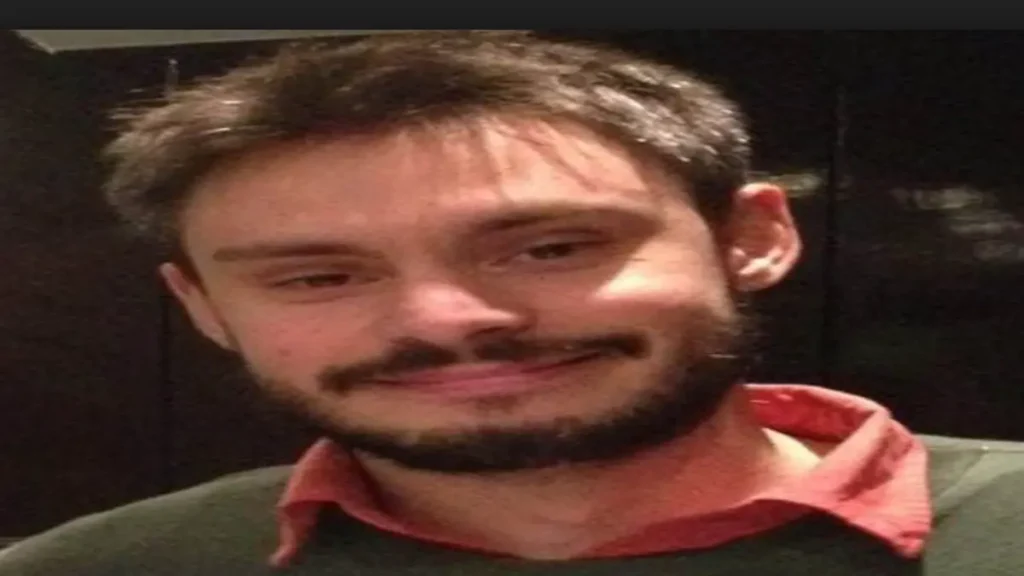
Right after Giulio was snatched, security officers blindfolded and bound him. The vehicle sped across the Nile, going through police checkpoints to the National Security Agency headquarters.
Giulio was marched into a four-story villa and brought to Office No. 13. This room was historically designated for interrogating foreign nationals who were suspected of espionage.
Since he was researching independent trade unions at the time, the authorities were convinced that Giulio was a British spy. Hence, they were looking to extract a confession of conspiracy against the presidency. It did not matter if this was not the case.
Giulio was tortured from the 25th up until early February. He was denied food and bound in heavy chains. A whistleblower from the NSA recalled seeing him handcuffed to the floor of that room.
Major Magdi Ibrahim Abdelal Sharif oversaw the interrogation process. Witnesses apparently heard Jiulio sound like he was in a state of delirium, drifting in and out of consciousness. The isolation and extreme conditions had completely broken him down.
Giulio eventually died at the hands of his captors. His body was taken away from the facility and discarded on the Cairo to Alexandria highway. Here, it lay until passengers of a broken-down minivan chanced upon it, dumped in a ditch.
Within hours of the body’s discovery, Egyptian authorities asserted that Giulio had been the victim of a car crash. This narrative collapsed almost immediately, though, as the discovery coincided with an official visit by the Italian Economic Development Minister, Federica Guidi, to Cairo.
On learning about the state of the mutilated body, the delegation from Italy cancelled the trade mission and flew back to Rome.
An internal autopsy was done in Cairo by the director of Egypt’s Department of Forensic Medicine, Hisham Abdel Hamid.
Behind closed doors, Hamid reported to Egyptian authorities that Giulio must have been tortured for days at intervals of 10 to 14 hours before being killed. Though the Egyptian government, in turn, suppressed the report.
Sabotaged Investigation and Collapse of the Cover Story
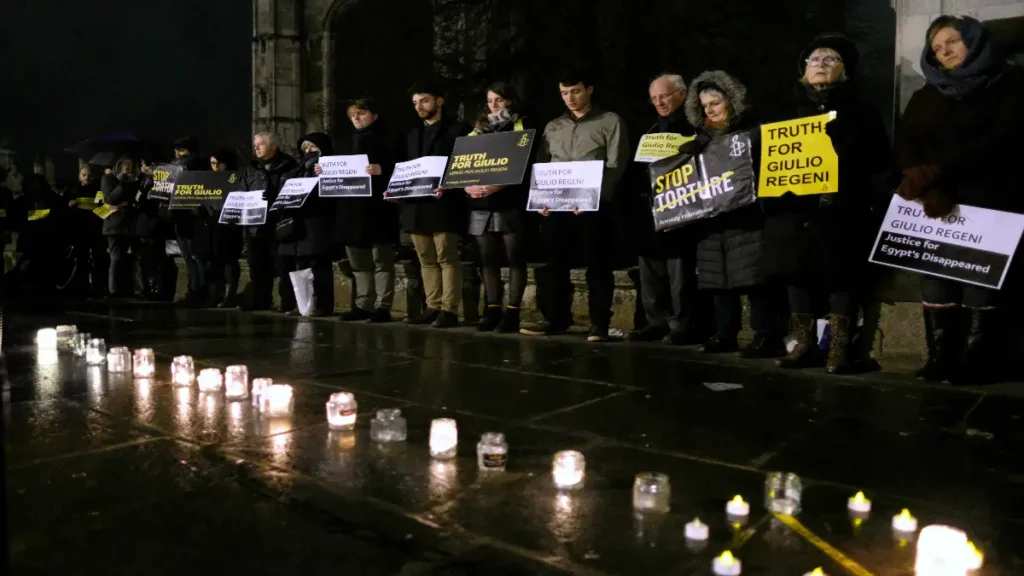
Egyptian authorities guaranteed their full cooperation and invited a team of six senior Italian detectives to Cairo to assist with the investigation in February 2016. When Italian police were allowed to question the local witnesses, they were only given a few minutes.
Egyptian police were also in the room as these were conducted, which intimidated the witnesses. Even when Italian detectives requested CCTV footage from the El Behoos metro station where the abduction took place, the police stalled for days.
After handing it over, they claimed the footage from January 25th had been taped over. At the leadership level, the official responses from the Egyptian authorities contradicted each other in ways the Italians found not only implausible but also deliberately constructed.
Initially, the police suggested that Giulio had been killed in a road accident. This claim fell apart considering the state of the body. In March 2016, Egyptian investigators said that police confronted and shot five gang members who were responsible for the abduction and murder.
They said these individuals specialised in impersonating policemen to kidnap foreigners so they could steal their money, but they offered no other details.
Items belonging to Giulio, including his student photo identification and passport, were said to have been found in a raid in one of the flats belonging to the gang members.
However, witnesses informed journalist Declan Walsh and other reporters that the gang was executed while riding in a van. One of the witnesses said, “One was shot as he ran, his corpse later positioned inside the van.”
The alibi unravelled when Italian investigators used their phone records to show the supposed gang leader, Tarek Abdel Fattah, was 60 miles north of Cairo on the day he kidnapped Giulio.
The prosecutor’s office in Cairo later denied that the criminal gang had a hand in Giulio’s death. Surveillance from the subway station near Giulio’s apartment had also been deleted.
The Egyptian government refused requests for metadata from millions of phone calls, claiming it would compromise citizens’ constitutional rights.
The CCTV footage shared with the Italian investigators, showing the Cairo metro station where Giulio was last seen, had notable gaps in the timeline. This suggests the footage had been tampered with shortly after Giulio was abducted.
In August 2017, journalist Declan Walsh reported that an anonymous official within the Obama administration revealed that weeks after Giulio’s death, the US acquired proof that the Egyptian authorities had abducted, tortured, and killed Giulio.
His piece also claimed that the leadership in the Egyptian government was completely aware of the circumstances of Giulio’s death.
The role of Cambridge University in the affair proved very uncomfortable in 2016; Giulio’s Cambridge tutor, Maha Abdelrahman, followed the advice of university lawyers and refused to cooperate with the Italian inquest, to the family’s dismay.
By early 2017, the British police had denied requests from Italian prosecutors to interrogate specific individuals in the United Kingdom. The Cambridge MP, Daniel Zeichner, later described British inactivity as a lack of tenacity.
The Four Suspects
After years of investigation, the Italian authorities named senior officers from the Egyptian National Security Agency. They included General Tariq Sabir, Colonel Athar Kamel Mohamed Ibrahim, Colonel Uhsam Helmi, and Major Magdi Ibrahim Abdelal Shharif.
The most relevant among the four was Major Shariff, who officially supervised the Giulio case before and after his abduction. Italian investigators determined that Sharif personally managed a network of informants to track Giulio’s movements on a daily basis.
The Italians proved this following a slip-up in a café in Nairobi in 2017. A witness overheard some Egyptian officials talking about the case. After confirming their identities by spying on their business cards, this witness heard Major Sharif boast about his personal involvement in the operation.
He said that he believed Giulio was a British spy and personally started striking him the moment they got Giulio in the back of a police van in January 2016.
Colonel Helmi was the one responsible for telecom monitoring. Italian investigators tracked the cell tower data showing communication from Helmi’s devices surrounding Giulio’s apartment and the El Behoos metro station on the day of the snatch.
Colonel Ibrahim was in charge of the ground physical security forces. He deployed the plainclothes officers and vehicles that trailed Giulio from the El Dokki neighbourhood.
General Sabir was the bureaucratic mastermind who authorised the operation. As a senior official, nothing of that scale could occur without his oversight and approval.
Indictments and Failed Trials
In the later months of 2020, Italian prosecutors finalised the charges against the four men. Egyptian public prosecutors cleared the men on domestic grounds, declaring the case temporarily closed. The government then placed the suspects under absolute state protection.
On May 25, 2021, Egyptian National Security officials were officially indicted by an Italian judge after the Italian state dismissed the Egyptian state’s counterclaim.
All three, except Major Sharif, were only charged with aggravated kidnapping. Sharif himself was indicted for aggravated kidnapping, inflicting grievous bodily harm, and conspiracy to commit aggravated murder.
In October 2021, the trial began but was immediately suspended as the defence argued that, because Egypt had refused to cooperate or provide the men’s addresses, there was no legal proof that the defendants were aware of the charges.
In September 2023, the Italian Constitutional Court changed the legal landscape, ruling that the proceedings would continue in the defendants’ absence. This maintained that Egypt’s deliberate non-cooperation cannot block international justice.
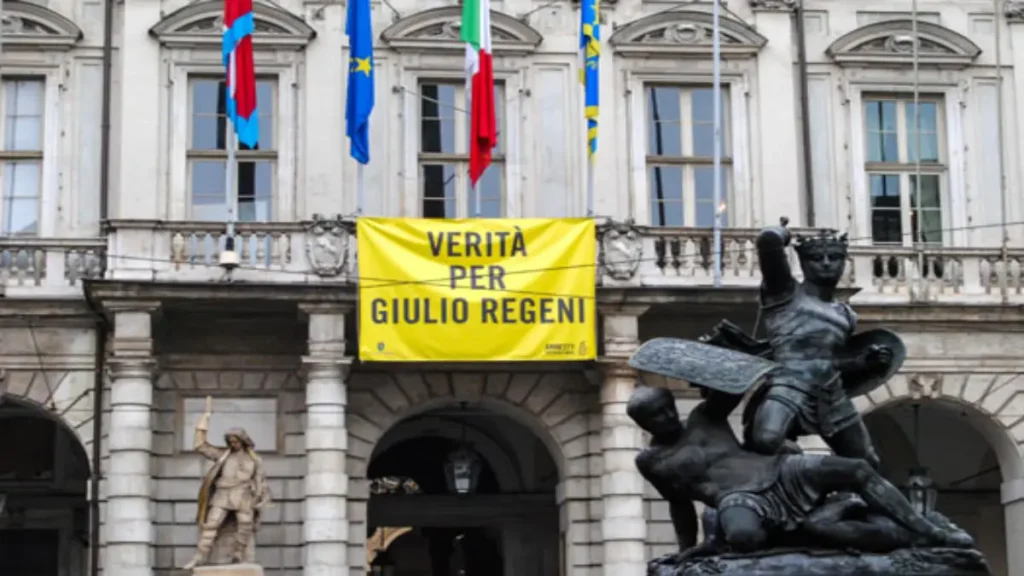
Italy then opened a fresh trial in 2024 against the four officers, who were tried in absentia in a court in Rome. Giulio’s parents, Paola and Claudio, were present as the opening session was conducted. They also posed outside the tribunal with a banner, which read “Truth for Giulio Regeni.”
The defence lawyer representing one of the defendants stated that the men were completely untraceable and that, even if the court found them guilty, they would not serve their sentences.
As of January 2026, the trial was suspended following a query by the defence to the Constitutional Court. Egypt’s prosecution officially closed the investigation into the incident in December 2020.
The Family’s Struggle
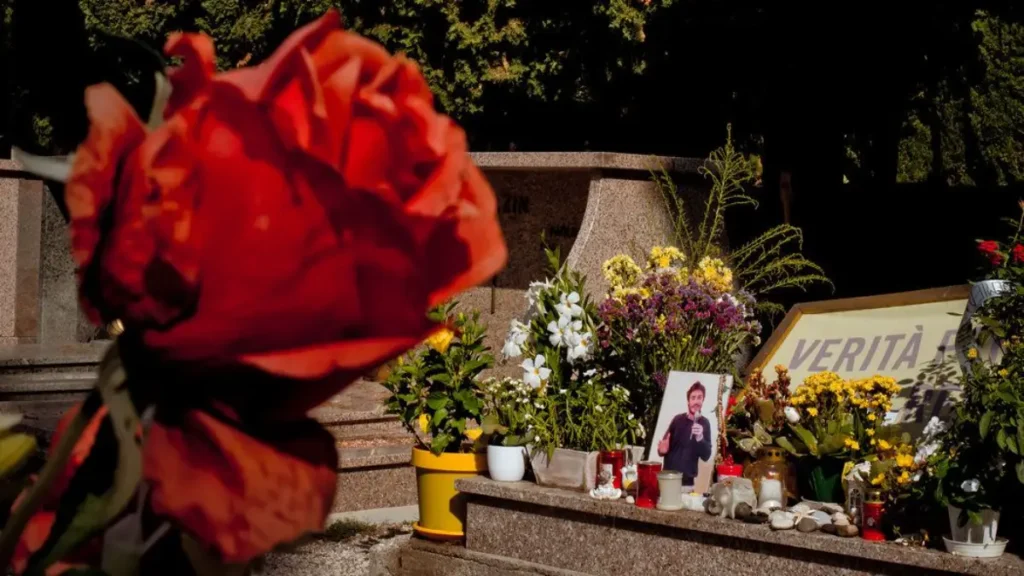
Giulio’s family organised a petition requiring an investigation into his murder, signed by 5000 academics internationally. They also held rallies in Italy, including blockades outside the Egyptian embassy.
The family was also working to place sustained pressure on Italian authorities to pursue the case. His father said, “This battle is not just for our son Giulio, but for every Giulio in Egypt and in every other country around the world.”
Paola’s words to the Italian parliament were among the most documented statements. She said her son was so disfigured that she was only able to identify him by the tip of his nose.
This case also continues to symbolise resistance against disappearances by the authorities. Extrajudicial killings are still a blot on the face of many developed nations despite human rights awareness and initiatives. Nine years later, no one has served a day in prison for the murder of Giulio Regeni.
If you would like to read other stories on child prodigies and creepy phenomena, check out our articles on the 2016 Creepy Clown phenomenon and Kim Ung-Yong, the child prodigy.