John Cobby’s life came crashing down on 4th February, 1986, hearing those tragic words on the radio. He was desperate, trying to trace his estranged wife who had been abducted a day prior. Driving along the coast, he heard on the radio, “The unclothed body of a woman has been discovered in a paddock in western Sydney.”
Anita Cobby’s Early Life
Born to Garry Bernard Lynch and Grace “Peggy” Lynch on 2nd November, 1959, Anita was destined for a glamorous life on the ramp. She took part in quite a few beauty pageants as a teenager, even winning the Miss Western Suburbs Pageant in November 1979.
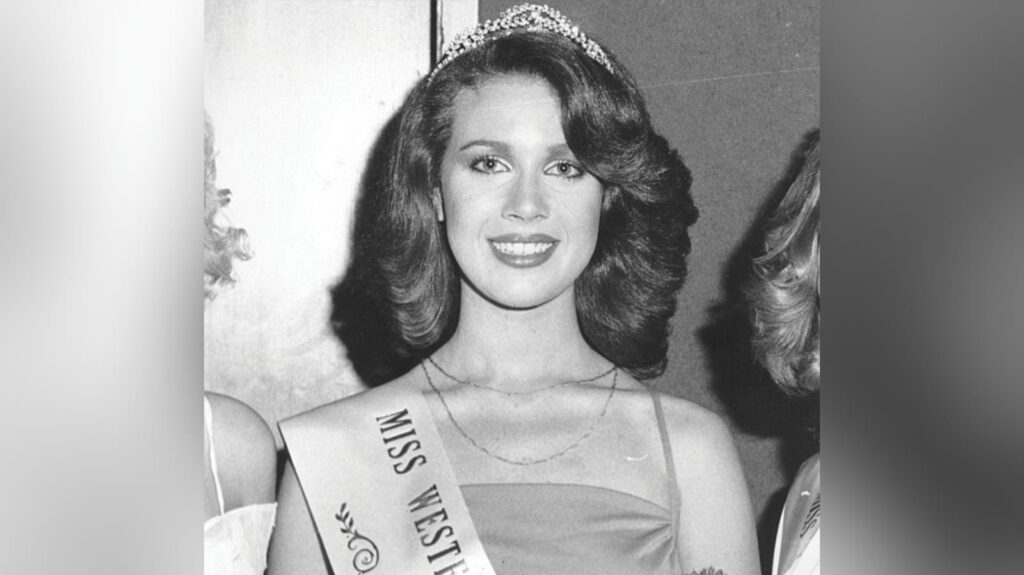
Though she had initially considered a career as a model, she changed her mind when her interest shifted to becoming a nurse, inspired by the profession’s kindness and empathy, following in her mother’s footsteps. When Anita was killed, she was living with her parents, Garry and Grace Lynch, in Blacktown, New South Wales.
A few months prior, she had separated from her husband, John Cobby, with whom she had been married since 1982, as per The Guardian. Reconciliation talks, however, were apparently underway.
A Walk Home through Blacktown
Working as a nurse at Sydney Hospital, Anita routinely travelled from her family home in Blacktown to central Sydney for work, as she did on the 2nd of February, 1986. Having completed her duties at the hospital that day around 3 p.m., she then went out for lunch with some of her colleagues in Redfern.
Towards the end of the day, she took the 9.12 pm from the Central railway station heading to Blacktown railway station.
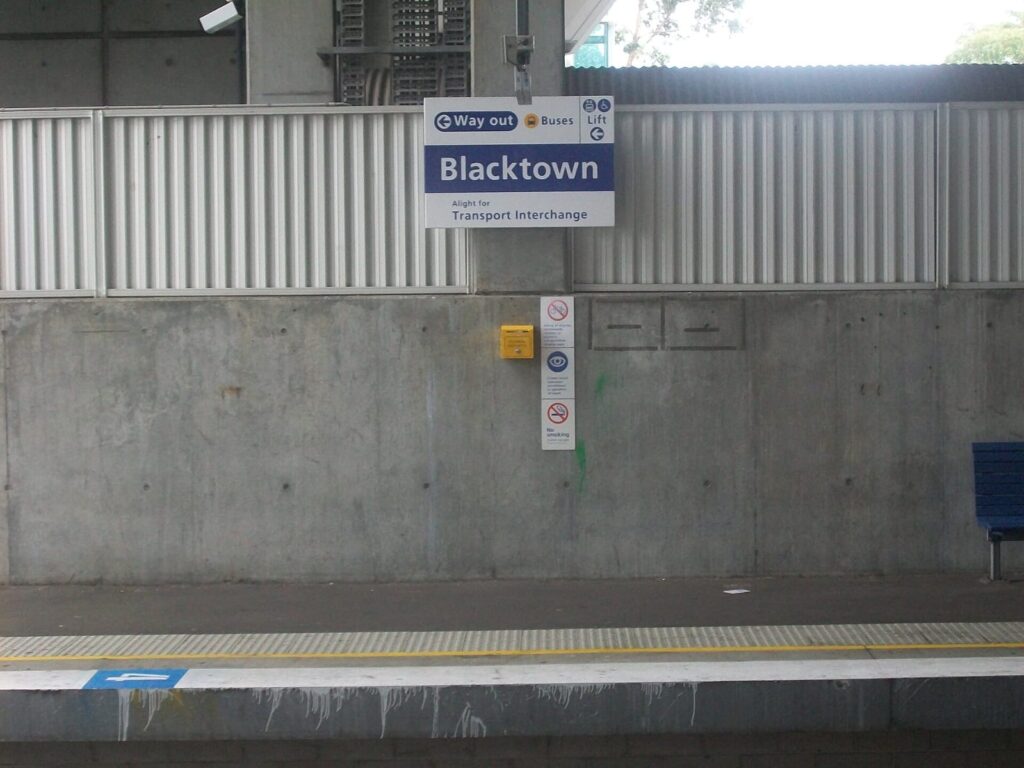
As was her habit, Anita tried to call her dad immediately upon her arrival so he could pick her up in his car. But in a cruel twist of misfortune, the payphone at the station had reportedly been damaged that day due to vandalism. To add salt to injury, there was no taxi available at the stand outside.
Anita had no other choice but to walk back home.
Anita’s Abduction
As she walked, Anita noticed a HT Holden Kingswood slowly come to a halt beside her. Before she had any chance to respond, two of the five men inside the car jumped out and forced her into the vehicle as she desperately screeched for help.
A teenage boy, with his younger sister and their mother, reportedly heard the screams and even witnessed Anita being dragged into the car. However, by the time the boy ran across the street to intervene, the vehicle had already sped away.
They quickly contacted the police and began searching for the car themselves. While driving along Reen Road in Blacktown, they eventually spotted an abandoned Holden parked beside a nearby paddock.
When nothing was found in the paddock after the neighbours had tried to look with a torch, they assumed the car must be a different model and left. Upon their arrest, the assailants admitted that they had hidden in the high grass to avoid the limelight until the man had left the scene.
The Last Hours of Anita Cobby
In the vehicle, Cobby was assaulted, beaten up, and raped in the most savage manner, all while the vehicle was on the move.
Her attackers reportedly punched Cobby repeatedly, breaking her nose and both cheekbones and forcing her to perform disgusting acts of sexual gratification upon all five men.
Eventually, the assailant drove down to a nearby service station to purchase fuel with the stolen money. Anita was then driven to a secluded paddock, while being held down in the car, raped repeatedly, strangled, and continually beaten by her five attackers.
Dragging her out of the car, the miscreants pushed the brutally beaten Cobby into a paddock along a barbed wire fence, where they dumped her and continued to sexually and physically abuse her.
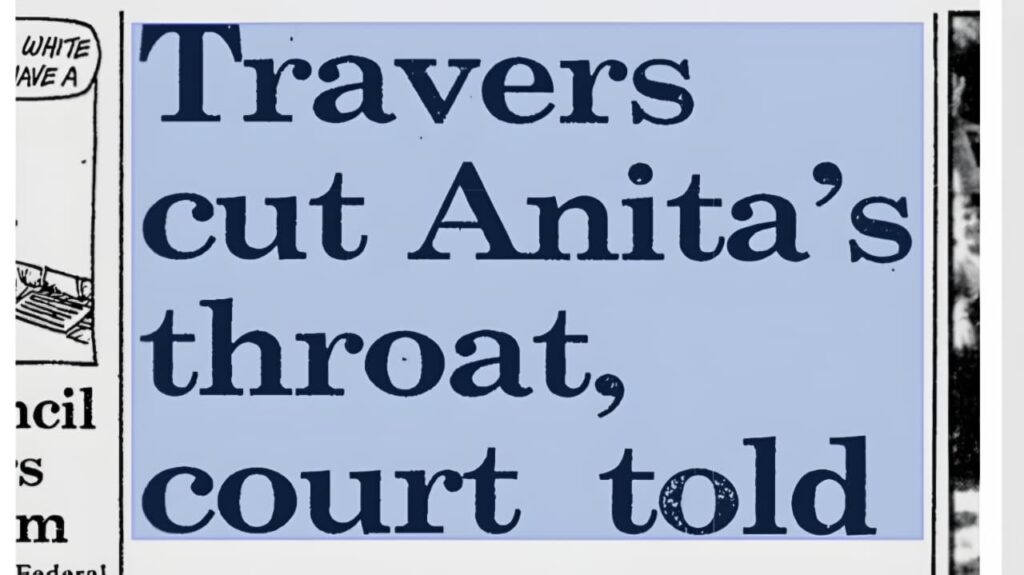
A taped confession of one of the five monsters, John Travers, reveals that although they had not initially planned to kill Anita, he later became concerned with the fact that she had seen all their faces, heard their voices, and could very well identify them at a later stage.
Thus, urged on by the others, Travers cut her throat, almost severing her head.
The forensic pathologist who performed her autopsy noted that Cobby was ‘likely still conscious’ at the time of her throat being cut, and estimated it would have taken ‘between 2-3 minutes’ for her to bleed to death.
Anita’s body is discovered
On the 4th of February, 1986, the lifeless body of Anita Cobby was found lying in a paddock close to Prospect, very close to the road where the neighbours had earlier been searching for the stolen Holden.
Anita had been brutally beaten until she was almost unrecognisable, her body bruised and battered by the cuts, slashes of barbed wire fences against which she was hurled.
Det. John Wakefield had been the Second In Charge of the Blacktown Police Force when Anita’s body was discovered.
“A murder scene tells a story; the last moments and what they did to her will always stay with me. The look on her face, the state of her body… It was such a shock for the man who owned the dairy where she was found. Nobody could expect to come across a body like that,” he said.
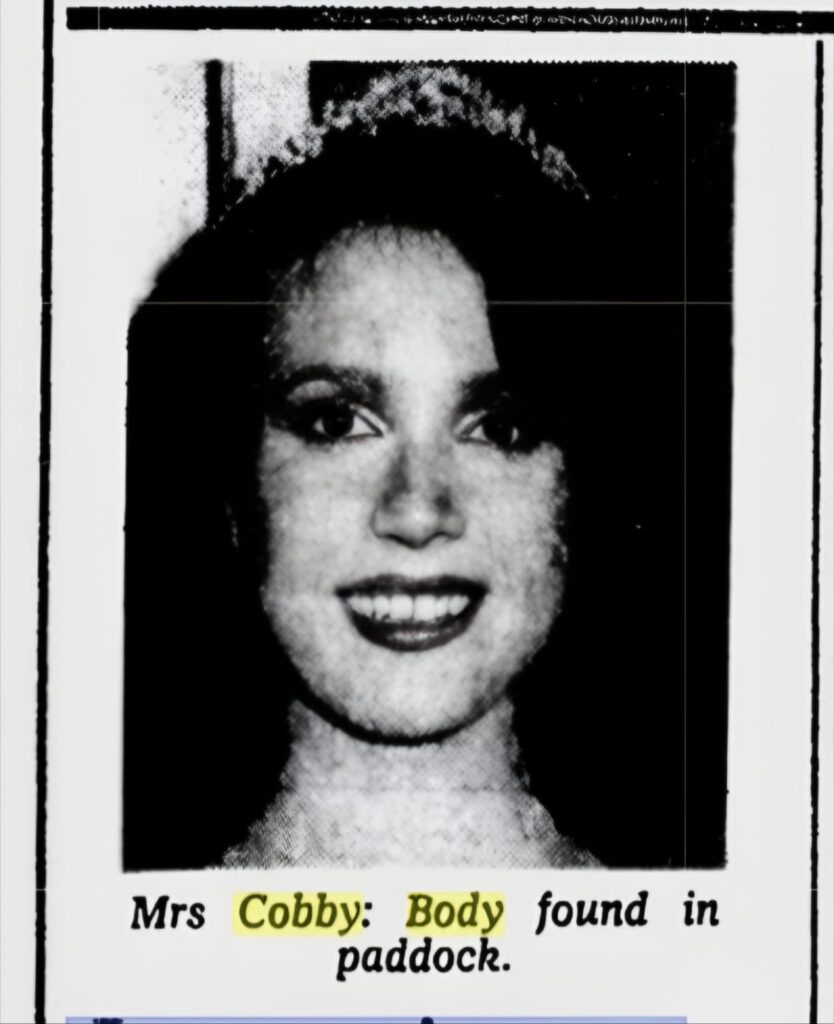
Understandably, the sheer brutality of the crime shook the entirety of Australia to such an extent that many Australians still remember exactly where they were when they first heard about it.
Radio stations and television broadcast continuously, reporting updates from the investigation, and as more of the gruesome details came to light, outrage was ignited on a scale hardly ever seen before.
A family destroyed
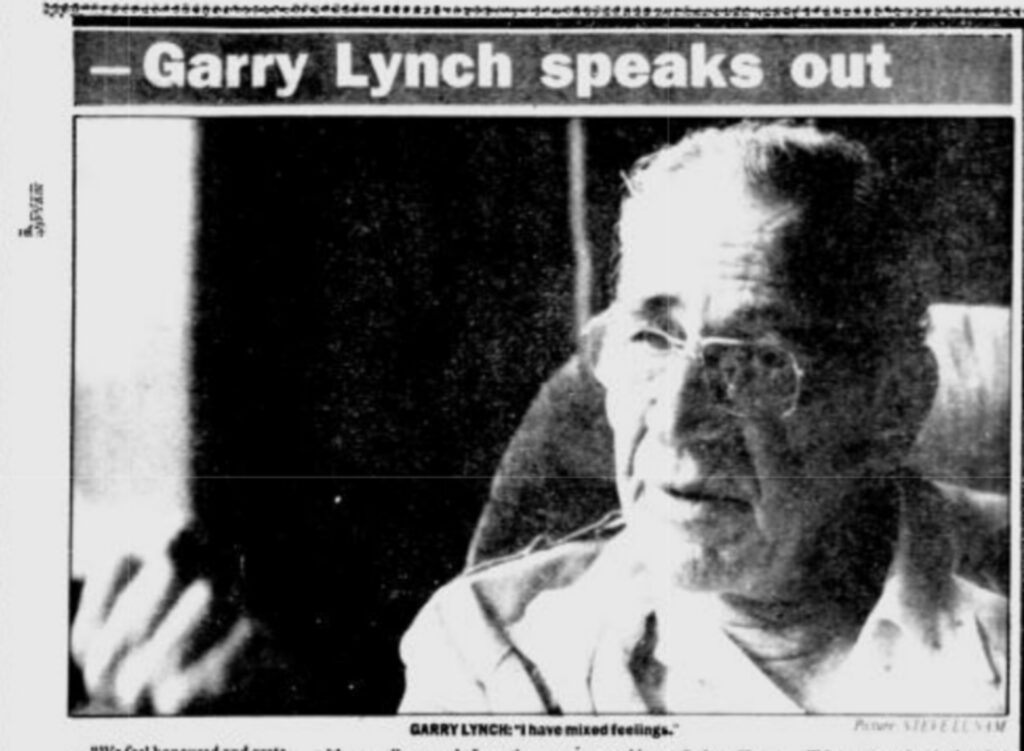
For Anita’s family, however, the horror had only just begun. Her father, Garry Lynch, a graphic artist with the Royal Australian Air Force, was devastated beyond words. He would later describe the experience of identifying her body as something no family should ever have to endure.
Her friends and colleagues at the Sydney Hospital, too, were considerably, if not equally, distraught upon hearing the news. For some, it was difficult to picture the warm and caring nurse that they knew as the mangled corpse that had been found.
Hunting Anita’s killers
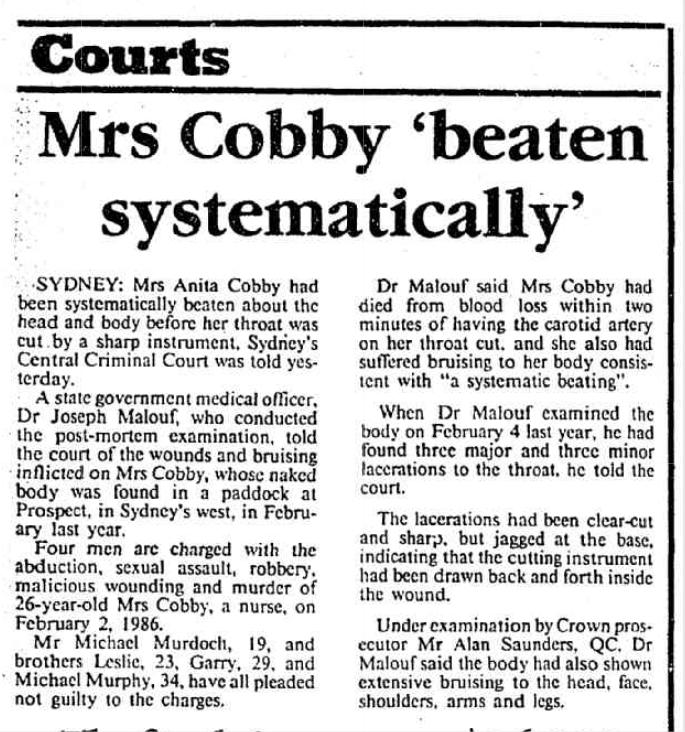
Meanwhile, detectives from the homicide squad began what would prove to be one of the biggest investigations ever mounted in New South Wales. Statements made by local witnesses proved to be invaluable in the search, especially those involving the stolen green Holden Kingswood sighted during the kidnapping.
Reportedly, only two other witnesses apart from the people who had initially called the cops had seen Anita leave the railway station. In the hope of jogging memories, a police officer dressed as Cobby travelled on the 9:12 pm train to Blacktown while her colleagues interviewed passengers.
Breaking the case open
Following a tip-off from a police informant, the police soon learned that the Holden had, in fact, been stolen. They were able to trace the vehicle back to a local family, the Murphy brothers, Les, Michael, and Gary Murphy, and their friends, John Travers and Michael Murdoch.
On 21 February, police arrested Travers and Murdoch at the home of Travers’ uncle and Les Murphy at Travers’ own house.
Murdoch and Murphy were both charged with offences relating to stolen cars. Travers, who admitted to stealing the vehicle, was inconsistent when providing information regarding the murder and was therefore kept under police custody.
One of the most significant breakthroughs reportedly came when Travers’ girlfriend (later dubbed Miss X to protect her identity) secretly agreed to cooperate with investigators and wore a concealed recording device during her conversation with Travers while he was in custody. Those recordings would later become a key component of the prosecution’s case.
When more information about the case was disclosed to the public, throngs of people surrounded the court building each day, clamouring that capital punishment be restored in Australia.
“Hang the Bastards”
“One memory I’ll always have is of a very elderly lady in the crowd. She was very thin, had grey hair up in a bun – she looked a bit like a nun. She began screaming ‘hang the bastards’ and lunged at the car.
When I asked her to move back, she grabbed my coat and screamed at me, ‘Have you got a fu**ing daughter? I have, let me at them!”
“I understood the emotion. I looked at her and gently said, ‘Justice will be done.’ It was certainly a level of anger that I had never seen before and have never seen since.” Chief Inspector Grey Raymond would later comment.
In the aftermath of the events, people seemed visibly flustered. Before the perpetrators were arrested, men were seen picking up their wives from railway stations armed with baseball bats. ‘If we find them, we’ll cave their heads in!’ they’d say.
By late February 1986, police had begun to close in on the five men connected to the crime. Crucial forensic evidence recovered from the stolen Holden Kingswood, witness accounts of the abduction and intercepted conversations through Travers’ girlfriend further strengthened their case.
During investigations, the Murphy brothers and their associates reportedly began turning one another in, during questioning, each trying to minimise their role in the killing.
Travers, in particular, brought immense attention upon himself after giving wildly contradictory statements on the night in question.
Eventually, police charged the five perpetrators with the abduction, rape and murder of Anita Cobby. Although the arrests were met with immense public relief, the rage still remained palpable.
Fury in the Courts
The trial for the perpetrators commenced in the Supreme Court of New South Wales on 16th March, 1987. Right before trial, Travers changed his plea to guilty, after which the Sydney newspaper The Sun published a front page story, carrying the headline “ANITA MURDER MAN GUILTY” alongside a large image of Travers.
Further, the story referred to Michael Murphy as an unemployed prison escapee with no fixed address and provided details of his apparent escape from Silverwater Correctional Centre, where he had been serving a 25-year sentence.
Subsequently, the jury had to be dismissed because potentially prejudicial information had been published, which could influence their decision.
After 54 days of trial, on 10 June 1987, all five were found guilty of sexual assault and murder. On 16 June, they were each sentenced in the Supreme Court of New South Wales to life imprisonment plus additional time without the possibility of parole.
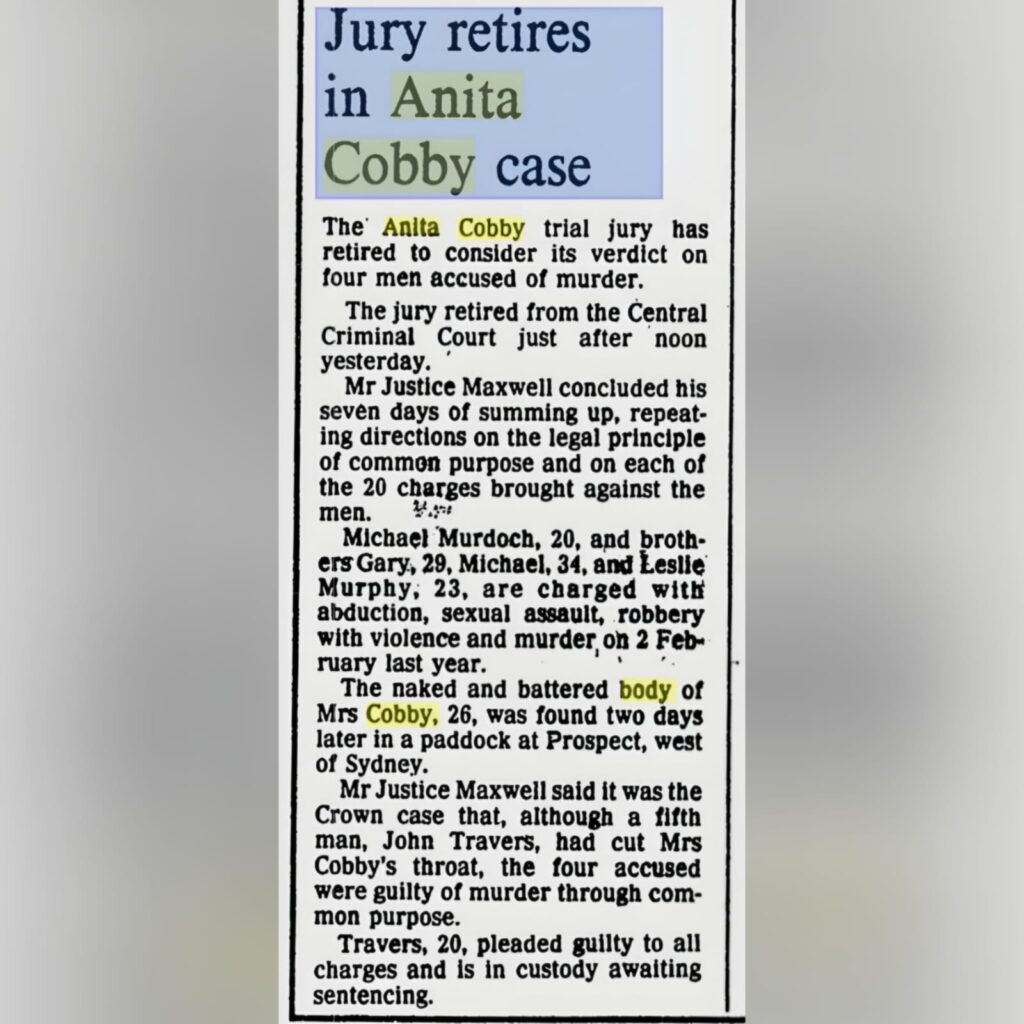
Justice Alan Maxwell, the presiding judge at the case, described the crime as “One of the most horrifying physical and sexual assaults.” He further stated, “This was a calculated killing done in cold blood. The Executive should grant the same degree of mercy they bestowed on their victim.”
Pain to Purpose
Anita Cobby’s family remained understandably broken despite the conviction.
“They were just such lovely, beautiful people,” Mr Raymond, the case’s Chief Inspector, would later say. “I can still see Grace entering the room in her apron. Garry (Anita’s father) stared at me for a long time, and then grabbed my hands in his and said, ‘Gary, something good has to come out of something so bad.’ We all cried and cuddled.”
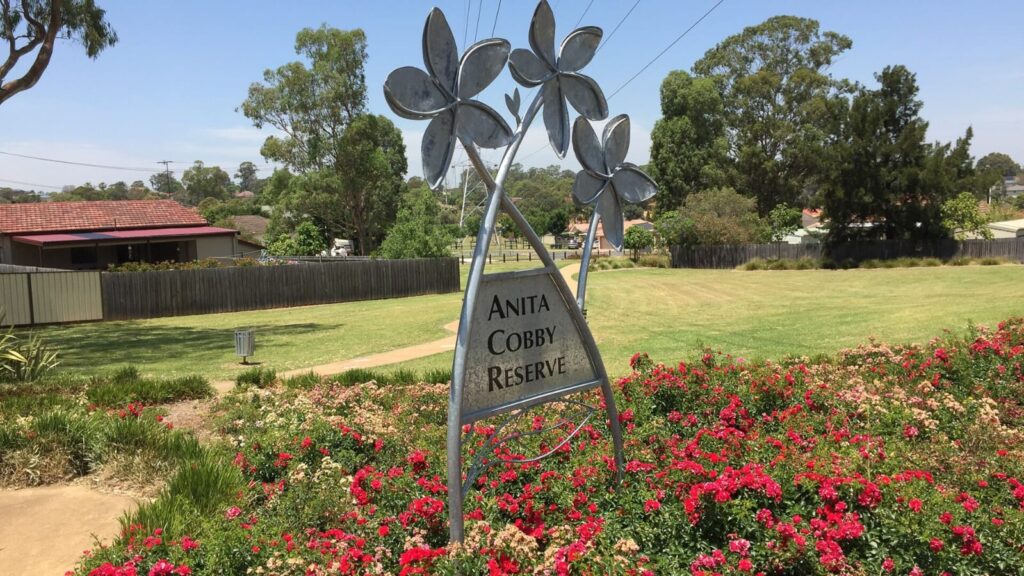
Faced with a nightmare that seemed entirely unbearable, Anita’s parents chose to focus their remaining years on reaching out and aiding other families struggling to cope with the realities of abduction and homicide.
They established the Homicide Victims Support Group with Christine and Peter Simpson, parents of Ebony Simpson, who was just nine years old when she was abducted after alighting from her school bus before being raped and then tossed into a dam in Bargo and left to drown.
Finding themselves members of an unlikely group that everybody prays not to be part of, Anita and Ebony’s parents were united in their pangs of grief.
“I could wish it was someone else’s daughter, but I can’t, can I? They would then have to go through what we’re going through.” Garry Lynch would later comment, reflecting on the sad turn of events that had snatched his daughter away from him in a gruesome manner.