Content Warning: Some readers may find the descriptions in this article disturbing.
In March, 2007, Tynesha Stewart was spending spring break at the Houston apartment of her friend, 19-year-old Lois Greenwood. Her ex-boyfriend, 27-year-old Timothy Wayne Shepherd, came by on the morning of March 15th to talk.
The 19-year-old freshman had broken up with Shepherd before leaving to pursue a civil engineering course at Texas A&M University. Now, after two semesters, Shepherd was still struggling to come to terms with the possibility that Tynesha was already seeing other people.
Out of politeness, she agreed to meet Shepherd, thinking it would result in closure. She intentionally left her phone behind at the apartment, telling Lois she would be back soon so they could get ready for a Beyoncé concert later that evening.
Shepherd drove Tynesha to his apartment on the second floor at the Red Oak Place complex in Harris County. At noon, Tynesha’s small sister, Kayla, also called Shepherd’s phone to check in on her. Tynesha took the call and told Kayla she would be back later. This was the last contact her family had with her.
Her tone gave no indication that she was in any danger. Shepherd then began to aggressively interrogate Tynesha about her time away at college.
He pressed her for information about a fellow student called Mark, whom she had apparently started seeing. Furious that she was already moving on with her life, Shepherd attacked Tynesha and threw her on the floor. He then choked her to death on the living room floor.
Afterwards, Shepherd walked over to the kitchen to eat a sandwich before walking back to ensure she was truly dead. Now came the issue of disposing of the body.
Shepherd moved Tynesha’s body into the bathroom. Leaving the body in the tub, he drove to a hardware store where he bought a power jigsaw and cleaning agents, including ammonia and bleach.
Afterwards, Shepherd returned to his place and used the electric jigsaw to cut Tynesha’s limbs and torso into bits. Fearing that the police would eventually identify Tynesha using dental records, Shepherd used pliers to dig out all of her teeth. These, he threw down the garbage disposal.
Portions of the body were cut into smaller pieces so they could fit on the outdoor charcoal grills on his patio. He mixed the pieces with portions of pork ribs and poultry to disguise them and set the grill on.
The smoke and the smell were so thick that a complex maintenance worker came to see what was going on. This worker later reported seeing what appeared to be pieces of chicken on the grill. He also caught a glimpse of something like a rack of ribs in bath water.
Shepherd did not let him step into the apartment to see what else was going on, but said he had the situation under control. His neighbour, James Herbert, also came knocking. His concern was pertinent because the barbecue grill Shepherd was using was borrowed from Herbert.
When he asked if he could taste some of the food, Shepherd deflected, saying the food he was cooking was for a wedding.
Later on, Shepherd stuffed the rest of Tynesha’s remains into a plastic storage tote bag. He took the bag downstairs and stuffed it into the complex’s trash bin.
Over the following days, Shepherd burned the other remains on the borrowed barbecue grill. The fire was so intense at times that the flames sometimes reached the balcony roof. This prompted Herbert’s girlfriend to call emergency services, but Shepherd turned them away, claiming his barbecue grill was just flaring up.
Questions and a Search Ensue
On the evening of the 15th, Tynesha failed to meet her friends Lois and Ashlee to get ready for the Beyoncé concert. When Tynesha did not show up, her friends went back to Lois’s apartment and found her phone still in the exact place that she had left it.
They then spent the entire night and Friday the 16th calling Shepherd’s phone. They did not know exactly which apartment Shepherd lived in, but they knew the complex. Tynesha’s friends drove through the parking lot to search for Shepherd’s car, but it was not there.
This coincided with the time he had gone to the hardware store to get the disposal supplies. When Tynesha’s mother, Gale Shields, tried to contact the police that weekend, they were initially hesitant to file a report.
Because Tynesha was an adult, they assumed she was on spring break and would turn up later. Her friends knew, though, that she would never just drop off the grid and skip a concert that she had bought tickets for.
The damning realisation was when Shepherd became noticeably silent. Before Tynesha got in the car with him, he would frequently call her friends, family, and college roommates to check on her multiple times a day. The reason he was silent was probably that he knew exactly where she was.
Police eventually decided to detain and interrogate him. He was initially cooperative during questioning and consented to searches of the apartment and his vehicle.
As Shepherd had already disposed of the evidence, he was confident they would not find anything. However, when detectives searched the apartment, they noticed the smell of strong cleaning chemicals. This was the first red flag.
Portions of the apartment also had wet, fresh paint, a sign that a crime scene had been quickly cleaned up. Investigators began interviewing the neighbours at the Red Oak Place apartment complex.
They reported hearing violent pounding, running water, and the continuous drone of a garbage disposal on the 15th. Neighbours also described seeing greasy black smoke coming from Shepherd’s balcony that weekend. There is also a sickly sweet aroma coming from his barbecue.
The Investigation and Confession
Forensic technicians went back to his apartment with a search warrant and chemical enhancers. They sprayed luminol, which glows blue on contact with haemoglobin and the bathroom lit up.
Despite Shepherd scrubbing the floors with ammonia, the residue glowed around the base of the toilet, the edge of the bathtub and behind the plastic bathroom light where he flipped the switch.
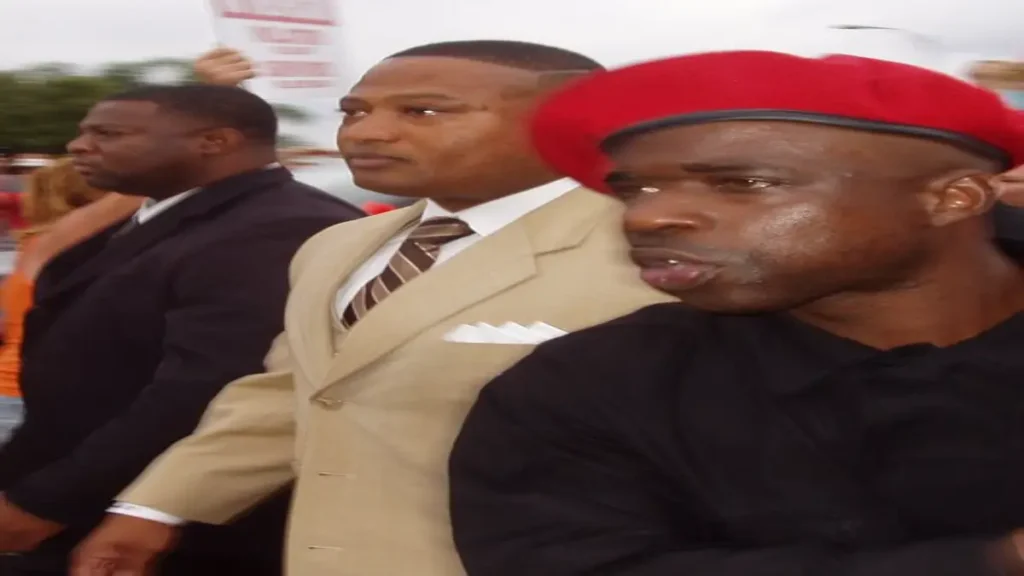
As they were desperate for answers, Tynesha’s family called a prominent Houston civil rights activist, Quannel X. At the time, he was well known for his work on justice reform in the black community.
He had also participated in high-profile cases like the death of 4-year-old Maleah Davis and Rudy Farias. Quannel X was also requested by Shepherd’s camp to help protect him from the police, whom he perceived were overzealous and potentially racist.
Shepherd’s angle was to enlist this activist as an ally, because he perceived the optics were against him. Quannel X agreed to meet him at a local motel and convinced Shepherd to get into his vehicle.
They drove around the neighbourhood, and Quannel X managed to win his trust, breaking him down psychologically. He then sprung the trap and told Shepherd that the police already know what happened from the forensics analysis.
He claimed forensics could find a drop of blood in a swimming pool, so Shepherd wasn’t fooling them with his attempts at concealing what he did.
Shepherd finally broke down in tears, shouting, “Man, they’re going to kill me. They’re going to give me the death penalty.”
After Quanell connected him with a defence attorney to calm him down, Shepherd agreed to show them where Tynesha’s remains were. Quannell called the sheriff’s department, and Shepherd took them to a commercial dumpster behind a different apartment complex, 4 miles away.
Forensics Uncovers More Deception
Shepherd had initially lied by saying that he threw the entire body in the bin. Later, the investigators found that the dumpster had already been emptied and taken to a county landfill.
A physical search of the landfill was not possible, so they had to go back to Shepherd’s apartment to turn it upside down for evidence. Upon closer investigation of the apartment beneath his balcony, one of the investigators spotted the charred bone fragments and burnt human hair.
These had fallen through the wooden floorboards of his porch, as he was doing the grilling days earlier. The forensics team also took apart the sink and plumbing, where they found pieces of Tynesha’s teeth jammed in the garbage disposal.
Shephered was immediately charged with murder and held on a bond of $250,000. While he was in custody, he tried to take his own life, but the attempt was unsuccessful, so he was placed under supervision.
Whether it was a fear of the consequences of the guilt of what he had done, no one could tell for sure. As the investigation went on, vital details emerged about who Shepherd was.
His cousin testified in court that Shepherd had told him that he could get away with murder. Shepherd allegedly also said that he could boil a person and eat them.
These were not idle threats, considering the lengths that he went to dispose of Tynesha’s body.
The Trial
Jury selection started in September 2008. Prosecutor Marie Primm laid out the details of the case, painting the defendant as a cold and calculating individual. She emphasised his history of abuse and stalking.
One witness, who was Tynesha’s roommate, indicated that she had difficulty with Timothy Shepherd. They were supposed to have broken up, but Shepherd refused to leave her alone.
The defence team was led by Clip Lewis, a high-profile attorney out of Houston. They had an impossible task of convincing the jury that Shepherd was justified in his actions.
Instead, Lewis attacked the process by which the confession was obtained, stating, “It clearly illustrated law enforcement’s repeated refusal to honor Mr. Shepherd’s request for a lawyer to be present.”
Several witnesses were then called in to testify for the prosecution. The key one being Tynesha’s mother, Gale Shields. She wept, describing the last time she laid eyes on her daughter.
Shields also emphasised the fact that Shepherd could not look her in the eye. He apparently said Tynesha must have gone for a walk the day after killing her.
Tynesha’s sister, Kayla and her stepfather, Preston, also testified at the trial that Shepherd had given her a black eye while they were dating.
When Quanell X took the stand, he stated that his main goal was to secure justice for Tynesha. He then described the Shepherd’s confession and how he disposed of the body. Quanell also told the jurors that Shepherd never showed any remorse for what he did to Tynesha.
After the trial, the jury took four hours to deliberate before returning a guilty verdict. Shepherd was unemotional when the jury announced its decision. The family didn’t cause a scene, but his father, Kenneth Washington, made a last-minute plea before the judge.
This was for the court to have mercy on his son, so his gifts could still be of some use to society. Prosecutor Primm responded immediately, saying, “You talk about Tim’s gifts. What about Tynesha’s gifts? Your son took those from her, didn’t he?”
Shields gave a brief statement saying, “I can forgive Timothy,” she said. “I have to forgive Timothy if I want to see Tynesha again.”
Judge Vanessa Velasquez sentenced Shepherd to 99 years in prison along with a $10,000 fine. Under Texas law, this sentence made him eligible for parole after serving 30 years.
Aftermath

Shepherd’s defence decided to appeal immediately, claiming the jury focused too much on what he did to Tynesha’s remains after killing her, rather than the circumstances of the death.
Shepherd appealed the conviction to the Texas Fourteenth Court of Appeals, and the court affirmed the verdict, finding no error in the trial proceedings. Every argument that the prosecution had created was rejected.
Shepherd is currently in a maximum-security prison in Texas, where he will remain until his parole in 2037. The victim’s family has since set up pages in honour of Tynesha. In the words of Tynesha’s sister Gayla, “She deserved more.”
If you would like to read other stories on child prodigies and creepy phenomena, check out our articles on the 2016 Creepy Clown phenomenon and Kim Ung-Yong, the child prodigy.