On a cold winter day in December 1972, Kenneth Parnell and Ervin Murphy got into a white Buick and drove from Yosemite down into Merced, California.
At 3.30 pm that afternoon, Steven Stayner, a freckle-faced second grader, was walking home from Charles Wright Elementary on Highway 140.
Murphy and Parnell chanced upon the boy and pulled the Buick over next to Steven.
Murphy got out of the car and approached the boy, claiming to be a representative of a local church seeking donations for his parish.
He offered to take Steven home, so he could ask his mother for a donation.
Though the boy was initially hesitant to get into a stranger’s vehicle, the offer for a ride home in that winter weather was appealing, and he got into the Buick.
As soon as the boy got into the backseat, Murphy got into the front, and Parnell drove away.
He steered the Buick east, away from Steven’s home and headed out of Merced, towards Mariposa County.
A short distance later, Parnell stopped the car at a payphone beside the road.
He placed a call and returned to the vehicle, saying, “Your parents – I just spoke to them. They no longer want you because they can’t afford you.”
Terrified and deeply hurt by the news, the boy chose to believe Parnell.
He was brainwashed into thinking that his family had abandoned him, so Steven didn’t scream or try to jump out of the vehicle.
At home, Steven’s parents, Delbert and Kay Stayner, realised he was extremely late from school and contacted the Merced Police.
Police immediately launched a search effort, canvassing the area where Steven was last seen.
As there were no witnesses to the crime, the trail went cold.
That night, Parnell took Steven to a cabin in Cathey’s Valley, where he sexually assaulted him.
He did this on a regular basis, telling him his family did not want him anymore, and that Parnell was adopting him.
On one occasion, Parnell pretended to take a phone call from Steven’s mother to complete the charade.
He also told him that a judge had awarded him custody.
Parnell changed Steven’s name to Dennis and enrolled him in school.
What followed was seven years of isolation, psychological manipulation, and abuse.
The Abductor, Kenneth Parnell
Kenneth Parnel was born on September 26, 1931, in Texas.
He grew up during the height of the great depression in a severely unstable and dysfunctional environment.
When he was just six, his father abandoned the family, and Parnell struggled for a long time with this trauma.
His mother relocated the family to a boarding lodge in Bakersfield, California.
At the lodge, he was largely unsupervised while his mother ran the lodge.
Unfortunately, this made him vulnerable to sexual assault by some of his mother’s adult boarders.
His experiences set Parnell on a dark trajectory, and by the late 1930s and 40s, he was in and out of juvenile custody for arson and car theft.
In 1951, Parnell bought a fake deputy sheriff’s badge at an Army-Navy surplus store.
He used the badge to impersonate an officer and kidnap an 8-year-old in Bakersfield.
He was eventually caught and convicted of child abduction.
While awaiting sentencing, Parnell escaped from a state institution in Norwalk, California.
The law soon caught up with him, and he was sentenced to four years in San Quentin State Prison.
After getting out in 1955, Parnell had to register as a sex offender in Kern County.
He violated the terms almost immediately and was sent back to San Quentin.
He was again released in 1956.
Parnell left California but was arrested again in Utah for armed robbery and grand larceny.
This time, the judge sentenced him to five years to life in prison.
He served six years in a Utah prison before being released.
By the time he targeted Steven Stayner, Parnell was a registered sex offender working as a night auditor at the Yosemite Lodge, just a few hours from Merced.
While he was working at the lodge, Parnell befriended a co-worker, Ervin Murphy.
Though Parnell was a convicted child molester, Murphy was portrayed as gullible and naïve.
Parnell managed to convince Murphy that he was an aspiring minister who just needed to find a young boy to raise in a religious manner, so he could follow in Parnell’s steps.
Murphy later claimed to have genuinely believed Parnell’s story.
The cabin in Catheys Valley, where Stayner was taken in Mariposa County, was just half an hour from Merced.
It was also just a hundred yards from the boy’s maternal grandfather’s property.
Seven Years as a Captive
Though Steven appeared normal to most of his classmates, he was a psychological and literal captive.
Parnell also controlled him by alternating between treating him well and sexually abusing him.
By then, Parnell had also introduced Steven to alcohol and marijuana.
As a young traumatised child who had been brainwashed into believing his parents had left him, Steven leaned into substances as a coping mechanism.
Parnell also invited a woman named Barbara Matthias to stay with them, and she freely abused the boy as she pleased.
She was also there to help Parnell maintain a pseudo-family façade.
As Steven began to grow older, Parnell’s sexual interest in him waned, and he wanted to abduct a younger boy to replace him.
He then ordered Matthias to lure another child from the Santa Rosa Boys Club that Steven attended.
She was meant to use Steven as bait to make the boy comfortable enough to hang around Parnell’s vehicle.
This attempt failed, and Matthias left the household.
Despite the increasing level of freedom as the boy got older, Stayner was still too young to consider escape.
Parnell then moved Steven to Comptche, a tiny, remote community in Mendocino County.
He worked menial jobs and enrolled Steven in the local schools using the alias Dennis Parnell.
Despite the abuse at home, Steven managed to flourish academically.
Desperate to continue building his twisted version of a family, Parnell began planning new abductions.
He even forced Steven to act as an accomplice, though the teen intentionally sabotaged every attempt.
Realising that Steven would not help him, Parnell recruited a local teen acquaintance named Randall Sean Poorman.
He bribed Poorman with alcohol, marijuana, and $50 to participate in abductions.
5-year-old Timothy White was playing outside his parents’ house in Ukiah, California, on February 14, 1980, when Poorman spotted and approached the boy.
Timothy refused to come with him, and Poorman shoved the boy against a chain-link fence.
He then dragged him, screaming, into the getaway vehicle.
Parnell immediately started grooming White, as he had done with Steven.
He cut the boy’s blonde hair and dyed it dark brown to mask his appearance on any future missing-person posters.
Unlike Steven, who was broken down in isolation, Parnell worked on Timothy while Steven watched.
Timothy was uncooperative, though, refusing to accept the lies.
He cried for his mother and father every day.
Hearing the lies out loud made Steven realise the extent to which he was manipulated.
He knew Timothy had a family searching for him, which made him consider that his own family might still be looking for him.
The Escape
On March 1, 1980, Steven led Timothy out of the cabin while Parnell was working his night shift as a hotel clerk.
The boys hitchhiked 40 miles down the highway in the dark until they reached Ukiah.
Steven walked Timothy to the Ukiah Police Department.
When Timothy saw the police station window, he got scared and ran back toward Steven, but an officer had already spotted them.
Despite Parnell cutting Timothy’s hair and dyeing it brown, an officer recognised the five-year-old from the local missing-person flyers.
They then turned their attention to Steven, wondering if the teen was responsible for the kidnapping.
They pressed him for his name and where he lived.
He managed to get out the words, “My name is Dennis Gregory Parnell… but I know my first name is Steven. I’m pretty sure my last is Stayner, and if I have a middle name, I don’t know it.”
Officers ran his name through the system and contacted the Merced Police force.
Detectives quickly pulled the 1972 kidnapping file.
At around 2.30 am on March 2nd, 1980, police knocked on the door of Delbert and Kay Stayner, telling them they may have found their missing child.
Kay initially thought it was a cruel joke until the police confirmed the teen had specific birthmarks.
Steven was driven back to Mercer under police escort.
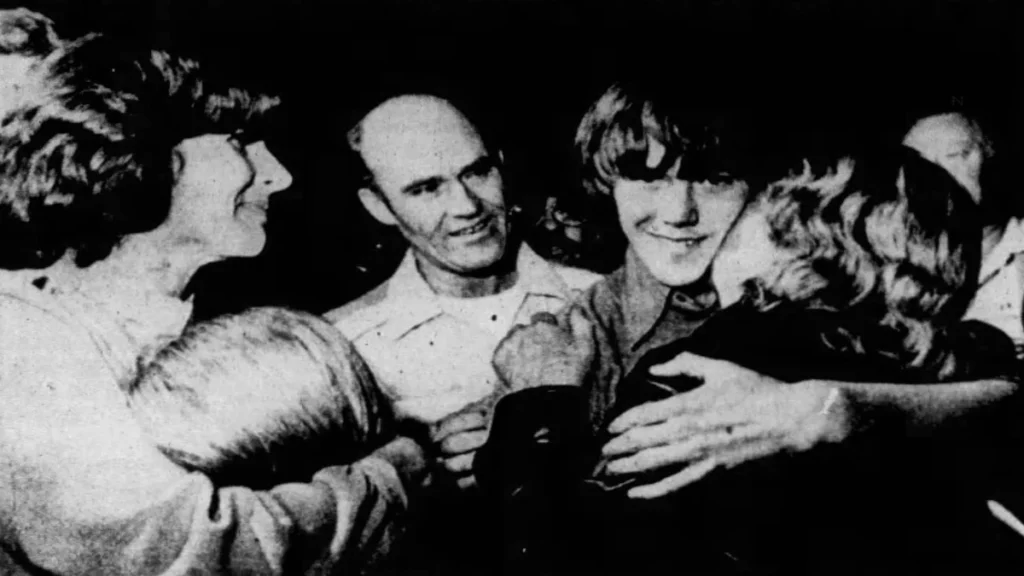
As he walked up the family driveway, a flurry of media cameras captured the emotional reunion with his parents and family after seven years.
While he was in the police station, though, Steven also provided investigators with vital information about Parnell’s whereabouts, including the remote cabin where he had been keeping the boys.
On March 2nd, 1980, police walked into the hotel lobby and arrested Parnell as he was working his shift at the hotel.
It was only when police ran his prints that they uncovered the previous sodomy and robbery convictions.
Steven had yet to divulge what really happened to him.
Police also noted that Steven had developed a soft spot for his captor because of the manner in which he was defensive about their time together.
Police arrested Ervin Murphy and Sean Poorman for their involvement in the abductions.
Homecoming and Trial

The homecoming did not mean complete recovery.
Though a later film would portray that the conflicts were between him and his parents, Steven admitted that the problems were with his siblings.
He had lived alone for so long that it was now difficult to re-integrate and follow family rules.
Steven also confirmed that his relationship with his brother was also strained.
During a 2007 interview, Stayner’s sister, Cory, said their brother did not seek counselling because their father claimed he did not need it.
She said, he got on with his life, but he was ‘pretty messed up.’
He was regularly teased by other children for being molested and eventually dropped out of school.
Stayner began to drink more often and was eventually kicked out of his family’s house.
Parnell was convicted of the kidnapping of Steven Stayner and Timothy White in 1981.
This earned him a sentence of seven years in prison for White and 20 months in prison for kidnapping Stayner.
Considering the statute of limitations for sexual assault had expired, he was not charged with the abuse he inflicted on Steven.
This was even after testifying to these actions in court.
He served only five years and one month before being released on parole.
After being let go, Parnell bounced around California, and he was required to register as a high-risk sex offender.
Murphy claimed that he stayed with Parnell and Steven for only two months before returning to his job in Yosemite.
The judge rejected Murphy’s claims of innocence, stating, “The part you had in this crime was very significant… and we can take no comfort in the fact that you were directly involved only for the first two months. Involvement for a day or two would have been enough.”
He was sentenced to five years in prison but was paroled after two years.
Poorman immediately confessed to how he collaborated with Parnell to abduct Timothy.
After being tried as a minor, he was sent to a youth rehabilitation camp.
The Last Years of Steven Stayner
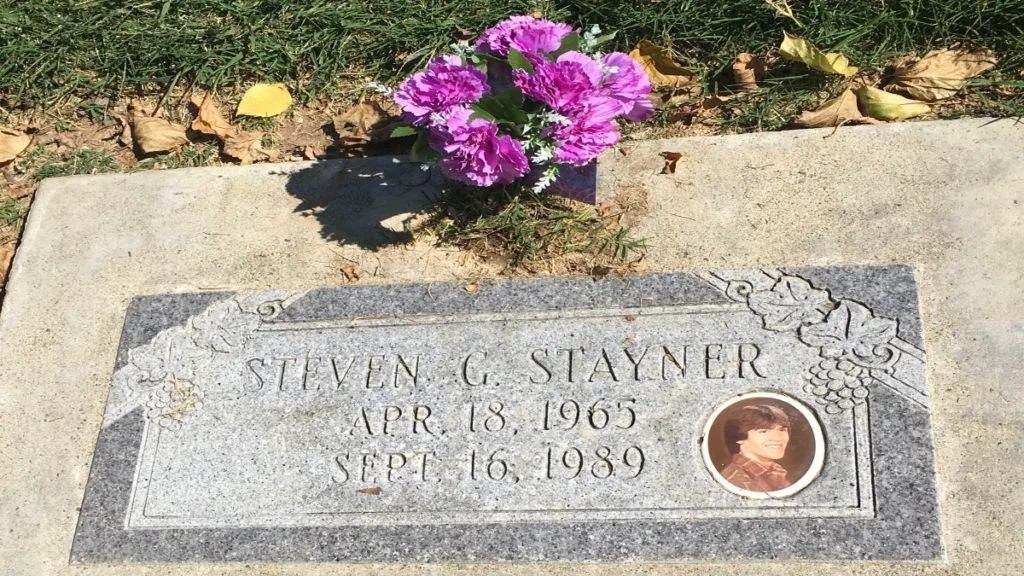
In 1985, Steven married 17-year-old Jody Edmonson, and they had two children.
Seeking to make amends for what happened to him, he worked with child abduction groups and spoke to children about personal safety.
He was also vocal against the leniency of Parnell’s sentence, considering the penalty was less than the duration of his captivity.
However, the internal damage was pervasive and unaddressed.
He struggled with alcohol dependency and cycled through jobs.
His license was also suspended three times.
In the mid-1980s, true crime began to attract significant viewership.
Lorimar Television and the Andrew Adelson Company approached the Stayners to secure film rights to the story.
Steven was paid $30,000 and became a consultant to ensure the details of the captivity, as depicted, were accurate.
The NBC Miniseries ‘I Know My First Name Is Steven’, aired in 1989 and drew an audience of 40 million.
This title came directly from the statement Steven made at the Ukiah police station.
At 5.30 pm on September 16, 1989, Steven was riding his motorcycle home from his job at Pizza Hut, heading out towards Atwater.
He was near Richwoods Meats when a car pulled out of the side road and stalled.
Steven slammed into the driver’s side door and flew 45 feet over the vehicle. The driver of the car fled the scene.
Steven was not wearing a helmet and was riding with an invalid license.
He sustained major head injuries and was pronounced dead at Merced Community Hospital.
At the time, he was just 24 years old.
The Cary Stayner Plot Twist
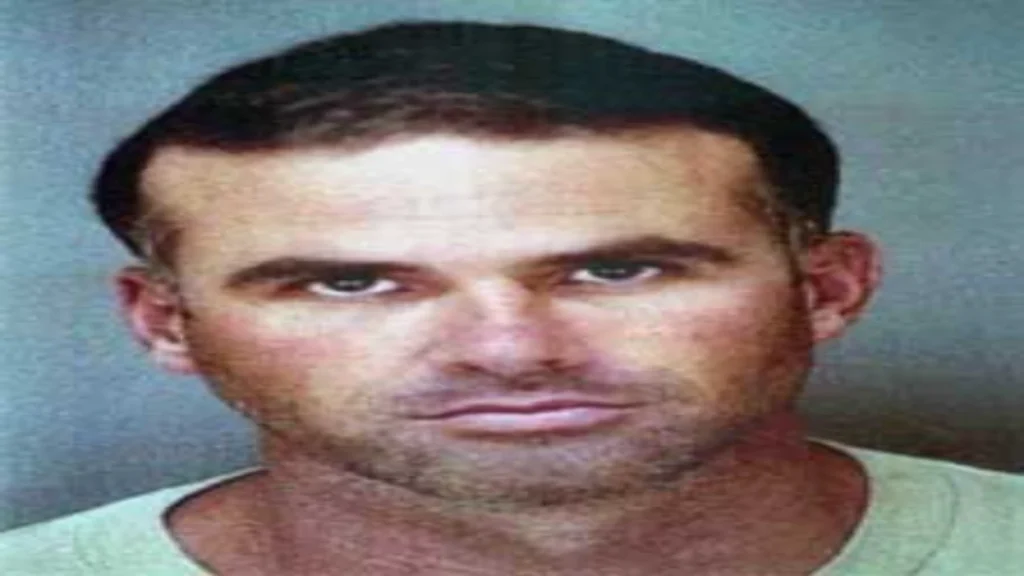
Despite everything that was going on, there was an overlooked plot hole with Steven’s brother, Cary Stayner.
When Steven escaped his abductors and came home, he got significant attention, overshadowing his brother, Cary.
Cary harboured behavioural problems and dark fantasies from an early age.
These, he kept secret despite the urges toward violence and sexual deviation.
After Steven came back home, Cary withdrew more and dropped out of school to become a mechanic.
In 1997, he took a job as a handyman and maintenance mechanic in the Cedar Lodge motel.
This gave him direct access, which he used to target and kill three tourist women in February 1999.
Five months later, Cary crossed paths with a 26-year-old Joie Armstrong.
She was a naturalist who worked for the Yosemite Institute.
Cary ambushed her outside a cabin in the Foresta area and decapitated her.
These murders attracted federal attention, and witnesses reported seeing Cary’s vehicle near Joie’s cabin.
Realising the net was closing, he fled, but FBI agents caught up to him at the Laguna Del Sol nudist colony in Sacramento.
He was tried in federal and state courts for the murder of Joie Armstrong and of the three tourists.
The first conviction earned him life in prison without the possibility of parole.
The state court also found him guilty of first-degree murder for the three counts.
Cary Stayner was sentenced to death on August 27, 2002.
He remains incarcerated in a single isolated row on death row at San Quentin to date.
The ‘Last Hurrah’ of a Lifelong Predator
In late 2002, an ageing Parnell tried to orchestrate another kidnapping by approaching the sister of his home care worker, and offering her $500 to bring him a 4-year-old boy.
The woman went to the Berkeley police, who orchestrated a sting operation.
She would wear a wire and record Parnell as he made the down payment for a child.
Police swooped in and arrested him.
Parnell was subsequently convicted of multiple felonies, including child stealing, and he was sentenced to 25 years to life under the state’s three-strikes law.
He died at the age of 76 in 2008, from natural causes while under hospice care.