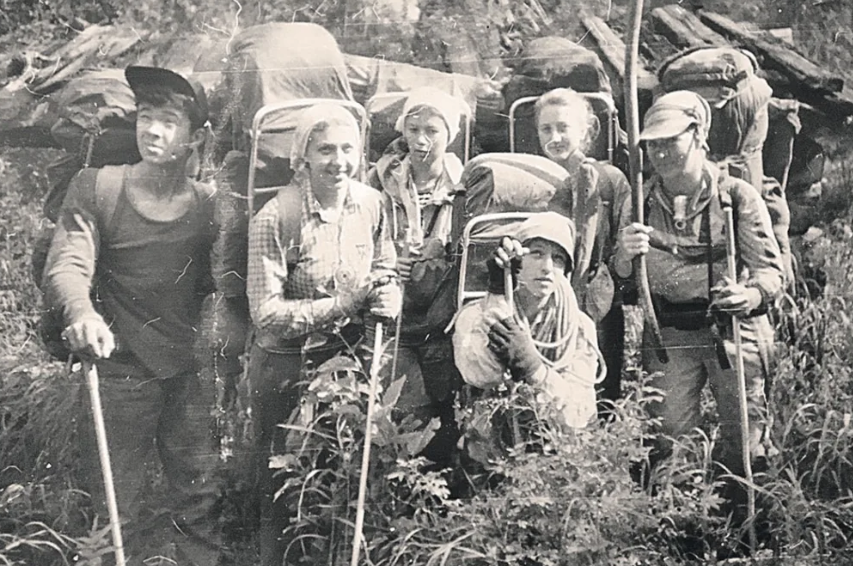
On 5 August 1993, a hiking group in the Khamar-Daban mountains near Lake Baikal began a descent in bad weather, and within hours, six people were dead. The seventh, 17 year old Valentina Utochenko, survived long enough to reach the Snezhnaya River and be found by a rafting group days later.
It is often called “Buryatia’s Dyatlov Pass,” partly because of how little confirmed documentation is publicly accessible, and partly because the survivor’s later account describes sudden collapse and irrational behavior that people struggle to reconcile with the official conclusion.
A tourist club that treated the mountains like school
The group came out of a tourist club called Azimut, based at a pedagogical college in Petropavl, Kazakhstan. Their leader, Lyudmila Korovina, was 41 and described in multiple reconstructions as an experienced hiking instructor and Master of Sport.
The six with her were mostly teens and young adults: Aleksander “Sacha” Krysin, Tatyana Filipenko, Denis Shvachkin, Viktoriya Zalesova, Timur Bapanov, and Valentina Utochenko. Russian-language summaries add personal details that later shaped how families and friends remembered the trip, including that Krysin had been in the club since childhood and, according to that account, had recently proposed to Korovina’s daughter Natalia.
The route they expected to finish in one piece
Korovina planned a multi-day route starting near the Murino station area and moving across ridges and passes toward the Snezhnaya River basin. Both English and Russian summaries describe the group moving through named passes and peaks and aiming to cross paths with another party in the area, including one associated with Korovina’s daughter.
Russian sources describe the hike as part of a broader “Turiada” culture of mass outings and sports routes, where meticulous planning on paper sometimes collided with weather and fatigue in the real world. Korovina, according to that same reconstruction, began planning months earlier, including a movement schedule and food rationing.
The ridge where the weather stopped being “summer”
By 4 August, the group was in a treeless alpine zone when the weather worsened into cold rain, and by the morning of 5 August, wet snow had entered the mix. Different sources describe the last camp as exposed, above tree cover, with difficulty making a fire.
One of the clearest surviving fragments comes from testimony attributed to Utochenko and quoted by RIA Novosti: tent lines tore in the night, stakes pulled out, and sleeping bags got wet. Even in a short retelling, that detail lands like a turning point, because wet insulation is where cold stops being uncomfortable and starts becoming dangerous.
The moment the group stopped functioning as a group
The most widely circulated narrative of the deaths comes from Utochenko’s later statements, quoted and paraphrased by journalists. In the RIA version, the group decided around 10 a.m. to start descending toward the Snezhnaya valley because they were soaked and freezing and visibility was poor. They moved only a short distance before Krysin began falling repeatedly.
Korovina stayed with him and told the others to continue down, then called someone back. Utochenko returned and later described Krysin’s eyes as “huge” and his gaze as detached, then described Korovina checking his pulse and saying his heart had stopped.
After that, the details become both more chaotic and harder to verify cleanly, because they are reported through retellings of a survivor who had just watched her group collapse. In the same testimony as quoted by RIA, Utochenko describes trying to help Viktoriya Zalesova, being bitten, then seeing Tatyana Filipenko begin striking her head against rocks, while Denis Shvachkin crawled into a sleeping bag behind stones.
How Utochenko survived the part no one else did
Utochenko’s survival is easier to summarize than to imagine. After realizing the others were not moving, she descended alone toward trees, changed into drier clothing, and spent the night in her sleeping bag under cover. In the morning, she went back uphill and saw the group still scattered where they had fallen.
From there, the story becomes a second ordeal. Both English and Russian timelines say she followed power lines downhill, hoping they led to people, reached abandoned structures, and eventually made her way to the Snezhnaya River.
On 9 August, a rafting group from Kyiv found her near the Snezhnaya and a tributary, fed her, and gave her antibiotics, then took her toward help. Multiple accounts note she did not speak for several days.
The search was slowed by weather, maps, and a second emergency
There are two timelines in circulation that can sound contradictory until the wording is unpacked. English Wikipedia says police received a report but “no formal search” occurred until 24 August, while Russian Wikipedia describes rescuers being alerted earlier and helicopter searches beginning on 21 August after weather delays.
Russian sources also describe a parallel search in the same range for two missing tourists from Omsk, and claim that on 24 August, rescuers picked those two up near the Snezhnaya before spotting the Korovina group’s bodies on the Retranslyator slope.
Rescuer Vladimir Zinov is quoted describing low clouds, fog, and rain, and how teams searched for a visible patch of plastic film because they believed the bodies were covered.
What rescuers found on the slope
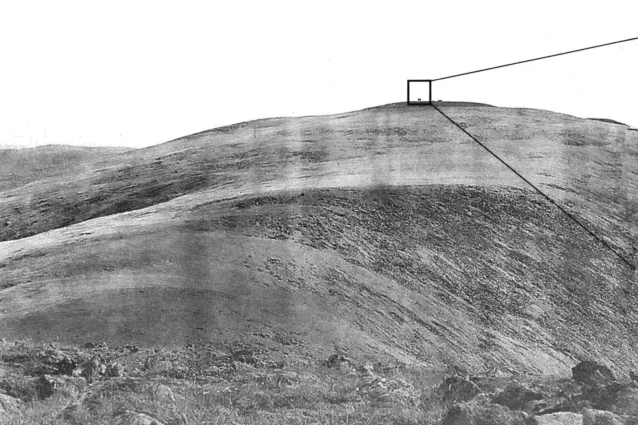
Russian Wikipedia gives a specific reconstruction of the site: the bodies were on an open slope roughly 200 to 250 meters below the ridge line, and, in that account, the forest edge was only another 200 to 300 meters below. It also describes the victims lying separated, with Krysin and Korovina closest together and others farther downslope.
That distance is one reason arguments never stop. A local InfPol reconstruction quotes a rescuer describing the forest as several kilometers away, and asks why the group did not drop into tree cover.
Rescuers and journalists also describe partial undressing and missing footwear.
The official conclusion, and what it does and does not explain
Forensic specialists in Ulan-Ude were tasked with three basic questions: cause of death, injuries, and whether poisoning could be ruled out. In the Russian summary, officials describe working along those lines and concluding that overall hypothermia was the cause, with weather, wet clothing, physical load, and highland conditions as contributing factors.
English Wikipedia summarizes the autopsy conclusion slightly differently, stating that five died of hypothermia and Korovina died of a heart attack. The Russian summary emphasizes hypothermia as the declared official cause while still acknowledging other physiological findings and later theories.
Russian sources also describe histology findings consistent with systemic stress on circulation and breathing, including pulmonary edema, plus depletion of glycogen and signs interpreted as protein dystrophy, with some commentators framing it as extreme energy deficit.
A final, blunt fact appears in the Russian summary: no criminal case was opened regarding the deaths. That does not prove the cause, but it shows authorities treated this as an accident and environment, not violence.
Why “hypothermia” never satisfied everyone
One reason is tempo. In later interviews quoted by Gazeta.ru, people connected to the tourist community argued that a healthy, equipped group should have had time to put on warm layers and organize, and they point to behavior like running, hiding, and incoherence as a sign something else happened first.
Another reason is leadership, because some rescuers and commentators questioned Korovina’s decisions. Russian Wikipedia includes a rescuer recollection that the group’s food looked extremely sparse at the last breakfast site, and the same reconstruction claims she pushed a high tempo while aiming to hit a planned meeting time.
There is also the problem of memory itself. InfPol reported that it reached Utochenko through social networks and she declined to answer questions, suggesting the cost of revisiting it.
The theories that keep resurfacing, and what they rest on
The straightforward theory is exposure plus exhaustion: cold rain and wet snow, wet insulation, low calories, and a group that could not regain coordination once the first person went down. That is broadly consistent with the forensic framing and with the long list of mountain tragedies that begin with “they got soaked and tired.”
Then come the competing triggers, usually framed as “something that caused panic.” One popular idea is infrasound, argued by some tourists and repeated in media coverage as a hypothesis where wind over certain formations generates low-frequency effects that can provoke dread and disorientation.
Other ideas include ozone exposure during storm fronts, or chemical exposure carried from elsewhere, both promoted by individual commentators and reported as speculation. The key counterweight is that forensic summaries say poisoning was considered and the diagnosis still centered on hypothermia.
A recent wave of attention also brought a simpler medical possibility back into the conversation: that Krysin may have died from a sudden internal medical event such as a clot, and that the rest of the group’s irrational actions followed the shock of watching him die in extreme weather. That line appears in later media reconstructions and is not presented as proven, only plausible.
The way the story ended in Petropavl, and why it keeps returning
The dead were brought back to Petropavl for burial, and Russian Wikipedia reports they were buried on 31 August at Novopavlovsk cemetery. Friends later placed a memorial obelisk at the site in 1995, a marker that quietly admits what the debate cannot undo: six young lives ended on a slope that still has no single agreed-upon explanation.
Interest spikes every few years, often when a documentary or a long feature revisits the survivor’s account and the contradictions between what people remember and what forensic conclusions say. That is why the Khamar-Daban Incident never fully becomes “resolved history,” even when the official cause is printed in plain ink.