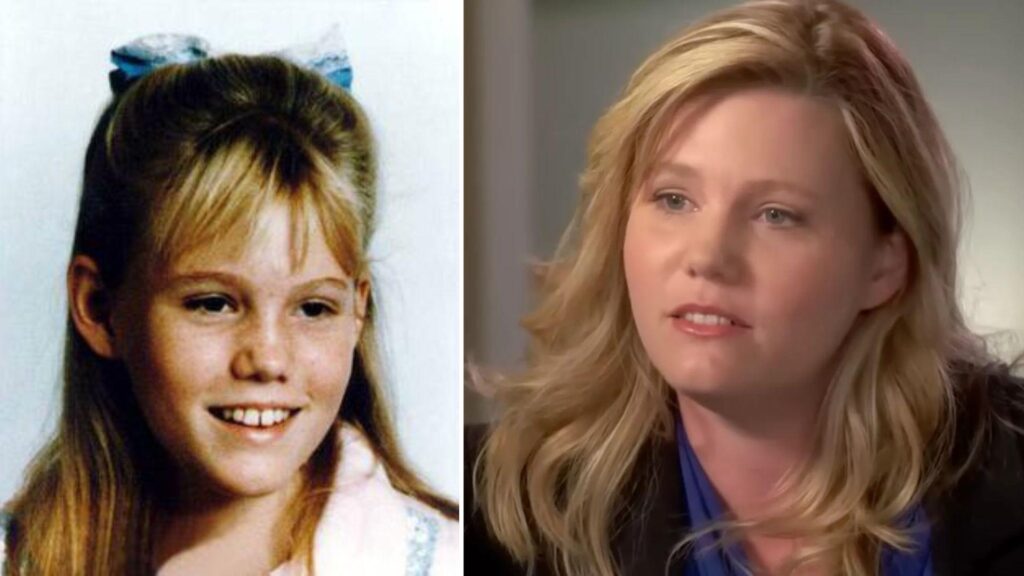
At 8 am on June 10, 1991, 11-year-old Jaycee Lee Dugard was having breakfast at her home on Washoe Boulevard, California. Like any typical school day, she checked on her sleeping baby sister, Shayna, and said goodbye to her stepfather, Carl Probyn.
She walked uphill on the road from her home toward the bus stop at the corner of Pioneer Trail. Halfway up the road, a grey metal sedan suddenly pulled beside her and cut her path.
In the driver’s seat of the 1970s Mercury Monarch was Phillip Garrido and his wife, Nancy. At first, Jaycee thought they were going to ask for directions, but Phillip pulled out a taser gun and fired.
Jaycee fell to the ground, and Nancy jumped out of the car, circling around to collect the wailing 11-year-old. Nancy dragged Jaycee into the backseat of the car, and they made a hasty U-turn, speeding away.
Carl heard Jaycee scream from the driveway as he was working on his van.
He looked up and saw what looked to be a girl being forced into a car, before it sped off. Several of Jaycee’s schoolmates waiting at the bus stop also witnessed the abduction as it happened.
Since the van was not an option at the time, Carl jumped onto his mountain bike and pedalled furiously down the street to catch the car, but it accelerated too quickly. Realising he couldn’t catch them, Carl ran into a neighbour’s house and called emergency services.
Inside the car, Nancy stripped Jaycee of her clothes to change her appearance. Jaycee did manage to hide a small butterfly ring from the couple.
Nancy forced Jaycee down onto the floorboards of the backseat and covered her with a blanket. The girl was in and out of consciousness because of the pain of the taser, but she still begged them to let her go.
She cried out, “If you’re holding me for ransom, my family doesn’t have a lot of money.” The couple just laughed among themselves, saying they could not believe they had gotten away with it.
Immediately, Carl called the police, and law enforcement reacted quickly, flooding the region with officers and setting up roadblocks at the main choke points leading out of South Lake Tahoe.
Despite the quick response, though, it still took 20 minutes to set it up so the police could systematically block the traffic. But by that time, Phillip and Nancy Garrido were long gone.
They were already driving toward the basin’s exit and slipped past the checkpoints minutes before CHP could lock down the area.
The Couple Behind the Abduction
Phillip Craig Garrido was born to Manuel and Patricia Garrido on April 5, 1951. He grew up in a working-class family, and they recalled him as a sweet young boy during the early years.
In school, Garrido was charming and popular with the girls. He also had above-average intelligence, scoring an IQ of 110. However, things changed in 1968, when he was 17, following a devastating motorcycle crash.
The accident dealt him severe head trauma and had significant effects on his personality. His father, Manuelo, said, “My son was ruined after that. The drugs, crazy behaviour, all that stuff started then.”
This pattern spiralled into substance abuse and sexually motivated crimes. By 1972, Garrido was arrested for sexually assaulting a 14-year-old girl.
The case was dismissed, though, for lack of evidence, as the girl refused to testify against him in court. The next year, in 1973, Garrido married his former high school classmate, Christine Murphy.
However, the marriage was defined by ongoing domestic violence. Christine said Garrido would go on binges and then beat her mercilessly when she threatened to leave.
Four years later, in 1976, Garrido abducted casino employee Katherine Gallaway in Reno, Nevada. He forced the woman into his vehicle and took her to a prepared storage area where he assaulted her for eight hours.
A police officer noticed Garrido’s car outside the unit and saw that the warehouse door was locked. He found Garrido just as he was coming out, and Gallaway screamed for help.
Following the arrest, Garrido was convicted of rape and sentenced to 50 years in prison. One would think this was the end of his story, but it was just beginning.
Nancy Garrido, his wife, maintained an insulated life before she came to know Phillip. She was born in Bexar County, Texas, in 1955, as the second child in a large working-class family.
Though her youth was marked by Geographic instability, as records show, the family moved frequently.
By the late 1970s, Nancy had moved to Kansas. Her life shifted when she visited an incarcerated uncle at the Leavenworth Federal facility. During the visit, she crossed paths with Phillip Garrido and became infatuated with him.
He spoke to her at length about religion and the bible. They also began a heavy mail correspondence while he was behind bars.
On October 5, 1981, Nancy married Phillip Garrido in a ceremony within the Leavenworth prison walls. Criminologists claim that Nancy showed a capacity for denial and an attraction to abusers.
In August 1988, Garrido was released from federal prison on parole. The two moved across the country into Garrido’s mother’s home in Antioch, California. Eight months after his release, Nancy completed clinical training and became a Certified Nursing Assistant.
The outward image of a quiet, working nurse and a happy marriage was proven otherwise when she later helped her husband abduct Jaycee Dugard.
The Hidden Compound

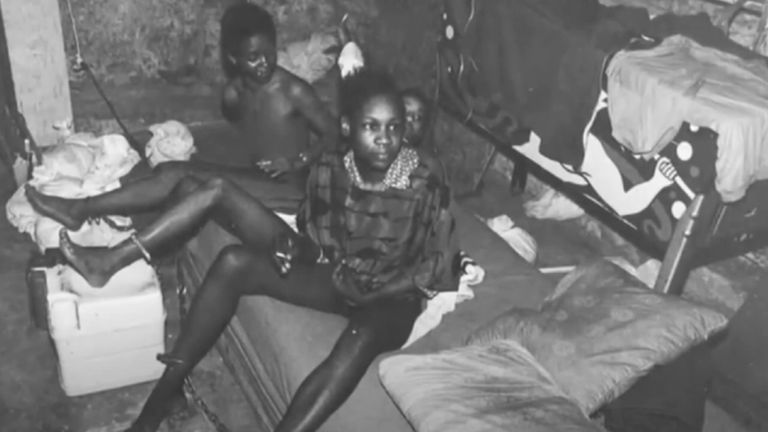
Garrido drove the girl to his mother’s home at 1554 Walnut Avenue, Antioch. There, he restrained her and put her in a shed.
Garrido also threatened Jaycee, saying he put Dobermans outside the doors to the shed and they would attack if she tried to flee. A few days after kidnapping her, Garrido sexually assaulted Jaycee in the shed.
This would become a weekly occurrence for the next three years.
To keep her from screaming, Garrido eventually provided her with a television, but restricted Jaycee from watching the news. She spent nights falling asleep to the QVC shopping channel.
In 1993, Garrido failed to show up for a failed drug screening test as part of his parole requirements. He appeared before a judge, and his assigned representative argued that it was just a technical issue.
The judge sentenced Garrido to 38 days in prison, and because it was considered a minor violation, they did not investigate his affairs further.
At the time, Nancy was in charge as Jaycee’s jailer. Instead of taking the opportunity to end the abduction, Nancy maintained the strict regime set by her husband until he returned.
In 1994, Garrido fathered Jaycee’s first child when she was 14 years old. She got no prenatal medical care. She gave birth to her daughter on a mattress inside the shed.
Nancy used a pair of scissors to cut the umbilical cord. The baby’s birth also changed Jaycee’s reality, as she now had to survive for her child.
In 1997, at the age of 17, Jaycee gave birth to her second daughter in the same conditions in the shed. As the girls grew, the prison backyard continued to expand.
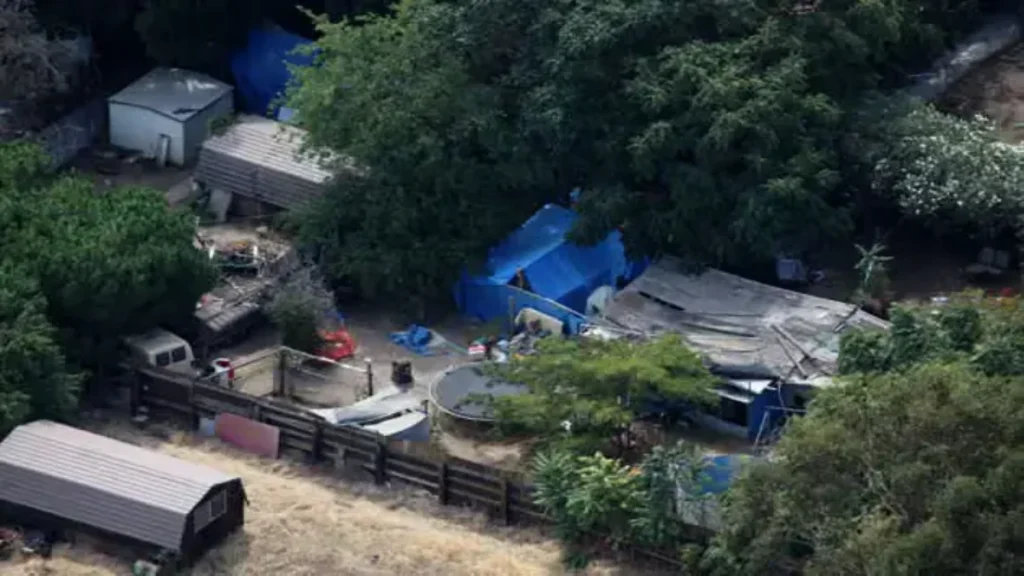
Garrido constructed a compound web of sheds, tents and covered walkways that were obscured by trees and high fences. Jaycee was also not allowed to spend significant time outdoors until her second daughter was born.
She was eventually given a tent of her own and allowed to plant a garden, which she later described as the closest thing to freedom that she experienced during the captivity.
That Futile Search and Missed Opportunities
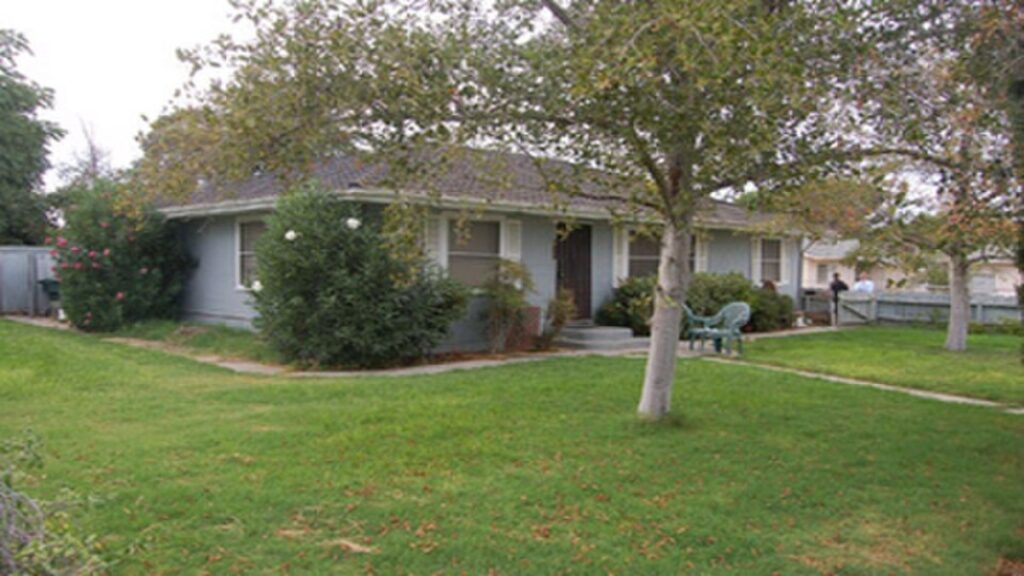
Back in Meyers, the search for the girl grew each day and eventually included elements from local, state, and federal law enforcement. The neighbourhoods were extensively searched and witnesses re-interviewed for leads.
Thousands of tips were called in over the first months, but none of these panned out.
On June 11, 1991, Jaycee’s mother, Terri Probyn, held a press conference to plead with the kidnappers on behalf of her daughter. The El Dorado County Secret Witness program also offered $5000 for any information that would lead to Jaycee’s safe return.
The Dugard family also offered another $5,000 for information. Despite the reward money and media coverage, the investigation yielded no leads extending to the Bay Area.
Had they done so, they would have stumbled upon Phillip Garrido earlier, as he was already a registered sex offender with a history of kidnapping in the state.
Over time, Garrido exerted his control over Jaycee through fear and religious manipulation. One source that was familiar with the case stated that Garrido frequently told Jaycee that if she tried to get away, God would kill her and her family.
She did not try to escape for eighteen years. Police, however, failed to bridge the gap and get to her despite opportunities to do so.
In late 2006, the authorities were called to Garrido’s house following reports from neighbours that there were multiple children and young women living out of tents in his backyard.
His next-door neighbour, Damon Robinson, noted that he felt an instinct that something was wrong. He became suspicious of Garrido’s mannerisms, noting the unsettling way he stared and even interacted with Damon’s own children.
An unidentified deputy was dispatched to Garrido’s home. Rather than conducting a procedural welfare check, the officer questioned Garrido for a few minutes outside his home.
He did not, at any one time, go inside Garrido’s house to look at his backyard. Because the officer had too many pending calls at the time, he dismissed the complaint and let Garrido off with a warning for a zoning violation.
Because of this missed chance, Jaycee Dugard and her daughters remained trapped in the compound for a further 3 years until they were finally rescued in August 2009.
The Discovery
On August 24, 2009, Garrido visited the UC Berkeley campus to get permission to hold an event for a group which he called “God’s Desire.” At the time, he was accompanied by two teen girls who were Jaycee’s daughters.
Lisa Campbell, at the University of California Police Department’s special events, said Garrido appeared unstable. She also noticed the girls who accompanied him were hypervigilant and extremely submissive.
It was as if they were in a cult, and the entire situation triggered alarms in her mind. When they ran a search on Garrido, they discovered he was a convicted and registered sex offender.
Garrido’s parole officer was also unaware that he had children. Hence, Campbell scheduled Garrido to return to Berkeley the following afternoon. In the meantime, they called his parole officer in Concord.
His parole officer, Eddie Santos, ordered Garrido to report to the office for an emergency meeting. Garrido brought his whole family, including his wife, the two girls, and another woman, who identified herself as “Alyssa.”
Garrido claimed the daughters were his nieces, but the investigators were not convinced. When the group was separated and questioned individually, the story fell apart.
“Alyssa” was re-identified as Jaycee Dugard, and she was now 29 years old. Garrido confessed to the abduction in 1991 as well.
The next day, Jaycee was reunited with her mother and younger sister.
Charges and Sentencing
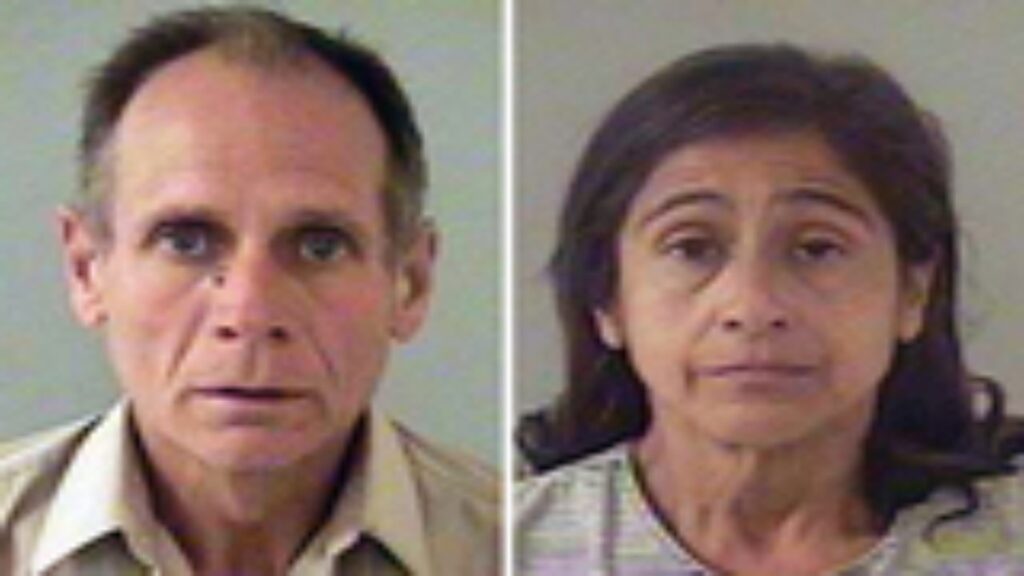
A formal trial was set for August 2011; defence attorneys determined that if the case went to a jury, Jaycee and her two daughters would be forced to take the witness stand.
Nancy’s attorney, Stephen Tapson, said his client refused to go to trial because she could not bear to have the girls go through the trauma of testifying in open court. The prosecution agreed to reduce the severity of Nancy’s charges if Phillip Garrido pleaded guilty to everything.
In April 2011, during a hearing, the defendants officially changed their plea to guilty on 14 counts of kidnapping, sexual assault, and videotaping their crimes. Nancy pleaded guilty to one count of kidnapping and one count of forcible rape as an aider.
Judge Douglas C. Phimister sentenced Phillip Garrido to 431 years in prison, to life. Nancy Garrido was sentenced to 36 years to life.
Jaycee expressed relief that both she and her children would not have to testify at the trial. She gave a statement, ” I chose not to be here today because I refuse to waste another second of my life in your presence… You do not matter anymore.”
Phillip Garrido was transferred to the maximum-security California State Prison, Corcoran. Nancy Garrido was sent to the Central California Women’s Facility.
Aftermath and Jaycee today
Both Phillip and Nancy remain incarcerated in separate maximum security prisons in California. Considering Nancy would only be able to seek parole when she is in her late seventies, her defence attorney conceded that she would likely die in prison.
The Office of the Inspector General in California determined that the parole office committed failures that led to missed opportunities to rescue Jaycee. Before the trial of her captor, Jaycee was issued a settlement of $20 million as compensation for the failures of the California justice system.
Following her rescue, Jaycee spent time healing. She had to learn basic life milestones as an adult, including driving, managing finances, and navigating public spaces safely.
In 2015, she collaborated with clinical psychologists on presentations at Harvard Medical School and Yale University, campaigning against the term ‘Stockholm syndrome’. She argued that it led to victim-blaming.
Jaycee has also authored two highly successful memoirs to share her journey. These include ‘A Stolen Life‘ and ‘Freedom: My Book of Firsts‘.
She is also the founder of the JAYC Foundation to help those who have been abused or traumatised. The Garrido property at 1554 Walnut Avenue, where Jaycee was kept for 18 years, has since been demolished.
Read next
In 1987, police entered Gary Heidnik’s home after a woman managed to escape. Inside, they discovered Sandra Lindsay’s remains in a pot and found two women alive in the basement, chained without clothes to a sewer pipe.