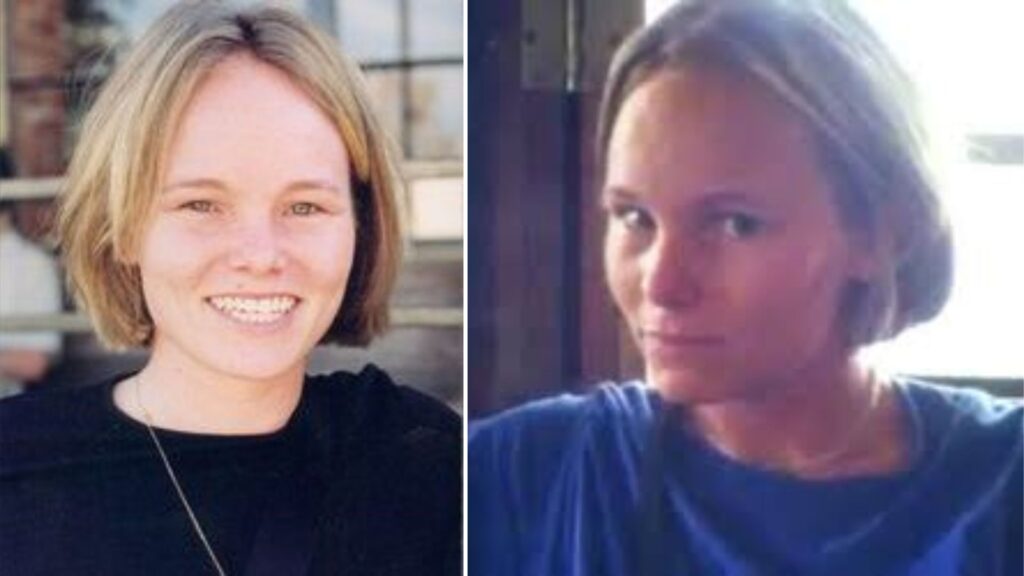
Early on March 18, 2000, a couple jogging along Canyon Creek Road, off the Mount Baker Highway, noticed clothing near a curve, with some pieces tied to trees. Down a steep embankment, they saw a badly damaged Jeep and called police.
The vehicle was traced to Leah T. Roberts, 23, from North Carolina. She had left home on March 9 without telling anyone where she was going, and her white 1993 Jeep Cherokee was now sitting wrecked and abandoned in Whatcom County.
Investigators would later point to a basic problem at the scene. The SUV showed major damage from the drop, yet the interior offered little that suggested a person had been hurt inside it, and there were no obvious signs of blood.
A paper trail placed Leah in the Pacific Northwest days earlier. Receipts found in the vehicle showed gasoline purchased in Brooks, Oregon, in the early hours of Monday, March 13. Another receipt showed a movie ticket purchased that afternoon in Bellingham.
That ticket, from Bellis Fair Mall, was time stamped 2:10 p.m. and was for “American Beauty,” according to the Whatcom County Sheriff’s Office. The details mattered because they were among the last hard points on the timeline that investigators could anchor.
Leah’s disappearance has always been told in two tracks: her sudden decision to leave and what happened on the road near Mount Baker. Friends and relatives described a young woman trying to steady herself after personal losses.
By 2000, loved ones said Leah was interested in spirituality and wrote poetry and journal entries. She was also coping with the deaths of both her parents and had been seriously injured in a car crash several years earlier, the Charley Project reported.
The same source described her as deeply drawn to Jack Kerouac, especially “The Dharma Bums,” a novel set partly in the Whatcom County area. It is a detail that becomes hard to ignore once her route ends near the Cascade foothills.
Leah left North Carolina on March 9 and did not share her destination, the sheriff’s office said. She drove a white Jeep Cherokee with a North Carolina plate number listed as JVP 2881. Nine days later, the vehicle was found wrecked on a logging road.
Her family quickly understood the stakes. In a WRAL report published days after the Jeep was found, her brother Heath Roberts traveled to Washington to help search. He told the station he feared she might not be okay and asked for public help.
Another WRAL story, years later, described the case in the same blunt terms: Leah left the Triangle area after her parents died, her wrecked Jeep turned up in Washington, and investigators were left with a damaged vehicle and very little that explained where she went next.
The basics from Whatcom County are short and stark. The vehicle was recovered on March 18, and inside were receipts that put Leah in Oregon early March 13 and at a Bellingham theater that afternoon. There is no official public account of confirmed movement after that.
Cat food inside the car suggested Leah had not traveled alone. The sheriff’s office said the presence of cat food led investigators to suspect she may have taken a small kitten with her from North Carolina. Friends and later writeups identify the kitten as Bea.
The Charley Project adds detail about the crash location and what was scattered nearby. It places the wrecked Jeep near an embankment off the Mount Baker Highway at the foot of the Cascades, about 85 miles north of Seattle, and says personal items were strewn around the scene.
Among the items the Charley Project lists are a guitar, compact discs, and a checkbook. It also reports that $2,500 was tucked inside a pair of Leah’s pants, a detail that investigators and family members have long used to argue robbery was unlikely.
The same account describes blankets placed over broken windows. That small choice, if accurate, suggests someone stayed with the vehicle long enough to think about exposure and shelter, rather than leaving immediately after the crash.
WRAL, in its 2015 report, described what investigators emphasized: the SUV went over an embankment at a high rate of speed, yet the physical traces did not line up with a typical injury crash. Heath Roberts told the station there was no blood and no windshield marks.
Those details sit alongside the timeline from receipts. Gas in Oregon four days after she left North Carolina suggests a fast drive west, and the Bellingham movie ticket suggests she reached a public place in daylight hours, at least long enough to purchase admission.
Investigators also tried to answer a basic question: was Leah in the Jeep when it went off the road. Wikipedia’s summary of investigative findings states that authorities found no blood, no seat belt stretching, and no other interior evidence consistent with someone inside at impact.
That same summary says investigators concluded the Jeep may have been empty when it crashed, and that the scene looked staged. It is a sharp claim, and it helps explain why the case has endured, even as long stretches produced few public updates.
In the days after the wreck was found, investigators and family worked backward through Leah’s last known stops. The sheriff’s office public page focuses on the receipts and the ticket, because they are concrete evidence that survives time better than memory.
Other accounts describe possible sightings near Bellis Fair Mall beyond the theater transaction. Wikipedia says police interviewed two customers at the mall’s sit down restaurant who remembered Leah at the counter on March 13, talking about Kerouac and her trip.
One of those men told police Leah left with a third person he heard her call “Barry,” and he provided a description for a sketch, according to that same account. Other patrons did not corroborate the third person’s presence, leaving investigators with a thin lead.
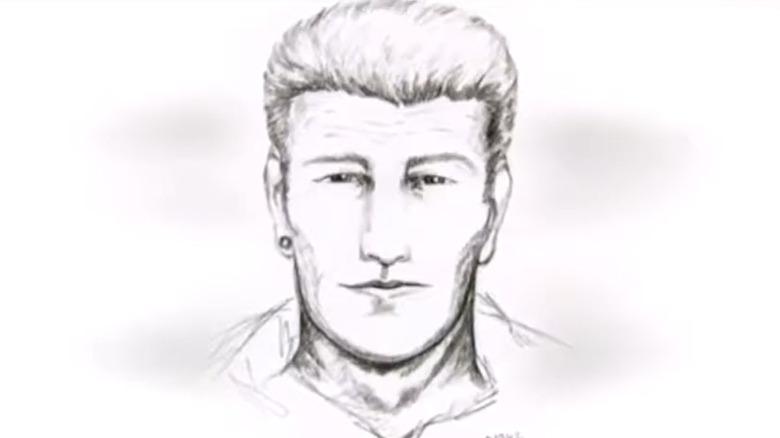
Another tip surfaced soon after. The Charley Project reports that a witness believed he and his wife saw Leah at a Texaco gas station in Everett, Washington, shortly after the vehicle was found, and that the woman appeared disoriented and unable to recall her identity.
Wikipedia describes the Everett call in a way that became part of the case’s lore: a man phoned the Whatcom County Sheriff’s Office, said his wife had seen Leah wandering confused at a gas station, then panicked and hung up before identifying himself.
Both accounts converge on the same point: investigators considered the tip credible, even though it was incomplete. A tip with a missing caller is hard to test, yet it offered a narrative that fit the limited evidence from the crash scene.
Search efforts in the area around the crash were extensive, but did not publicly resolve the central question. Wikipedia states that for two weeks in April 2000, police searched near the crash site using helicopters, metal detectors, and dogs trained to detect human remains.
The metal detectors were used for a specific reason, according to that summary: Leah had a metal rod implanted in her leg after a serious crash years earlier, and searchers hoped it could help locate her if she was nearby. The search did not turn up evidence.
Back in North Carolina, family members tried to hold onto facts they could explain to the public. In 2000, WRAL reported that police had very few clues and were asking for help, while Heath Roberts framed the effort as a race against uncertainty.
As the months became years, the case shifted from immediate search to sustained advocacy. WRAL later reported that in 2004, volunteers traveled roughly 3,000 miles retracing Leah’s route around the anniversary of her disappearance, trying to generate attention and tips.
That effort became the seed of a larger project. In a 2017 WRAL report, the Community United Effort Center for Missing Persons described its multi state “On the Road to Remember” tour, which highlights missing persons cases across the country and was inspired by Leah Roberts.
The tour’s structure is almost ritualistic: stops in multiple cities, each tied to a missing person, with local law enforcement and volunteers participating in events intended to draw attention. Monica Caison, a leader with the CUE Center, told WRAL communities often hold small pieces of information.
Kara Roberts, Leah’s sister, has been the public voice of the family for much of the case’s life. In that 2017 WRAL report, she said law enforcement in Washington had been active, but that the family still did not have answers.
Kara also appeared on national television in 2005 with Caison on CNN’s “Larry King Live,” discussing Leah among a group of missing persons cases. In the transcript, Kara describes the effort to keep Leah’s face visible and to keep hope alive through years of uncertainty.
Caison, in the same segment, laid out what she said investigators believed were the two broad possibilities: that Leah was injured and left the area on foot, or that foul play occurred and the scene was staged. She characterized the odds as roughly even, based on her discussions.
While advocates worked the public side, investigators continued to examine physical evidence. Wikipedia’s account says the FBI became involved because the Jeep was found on federal land, and that investigators located Leah’s mother’s engagement ring under a floor mat inside the vehicle.
The ring detail carries weight because it is specific and intimate. According to that summary, friends said Leah wore the ring constantly and would not have taken it off voluntarily. The discovery did not solve the case, but it added to the sense she left belongings behind.
The most striking investigative development came years later, after a review of the physical handling of the Jeep. Wikipedia states that in 2006, detectives re examined the vehicle and found it had not been fully processed for evidence when it was first brought in.
During that re examination, the summary says, investigators opened the hood and found a wire had been cut in a way that would allow the Jeep to accelerate without anyone pressing the gas pedal. The implication was direct: the crash could have been intentional rather than accidental.
Investigators also reported finding an unidentified fingerprint under the hood and male DNA on an item of Leah’s clothing, according to the same account. These are the kinds of leads that can remain inert for years, waiting for a match that never arrives.
Those developments pushed detectives back toward the limited witness information from Bellingham. Wikipedia says police sought fingerprints and DNA from the man who claimed Leah left the mall restaurant with “Barry,” in part because no one else confirmed the story.
The witness’s fingerprint did not match the one found under the hood, Wikipedia reports. It also states that the results of DNA testing connected to that witness were not disclosed publicly, leaving outside observers to guess about what, if anything, the tests eliminated.
Whatcom County’s public case page does not include those later forensic details. It stays focused on core identifiers and the receipt trail, likely because those facts are stable, and because the agency’s goal is a practical one: to prompt a call if someone has information about Leah’s whereabouts.
That same public page lists Leah’s height as 5 feet 6 inches and weight as 130 pounds, and reiterates that she left North Carolina March 9, 2000. It also notes the cat food in the car and the suspicion that a small kitten traveled with her.
The Charley Project’s description adds small identifying details about jewelry, including multiple rings, and repeats the core timeline: leave March 9, vehicle found March 18. It also reflects the investigative uncertainty, noting there was no clear evidence of foul play at the scene.
In other words, the case lives in the gap between what can be documented and what can be inferred. The receipts and ticket show movement. The wreck shows force. The absence of blood and the later wire finding raise questions. None of it locates Leah.
Even the last confirmed stop in Bellingham is defined by a purchased ticket, not a confirmed sighting caught on camera. The sheriff’s office records a transaction at Bellis Fair. Other summaries add memories of conversations in a restaurant. They do not add a verified departure point.
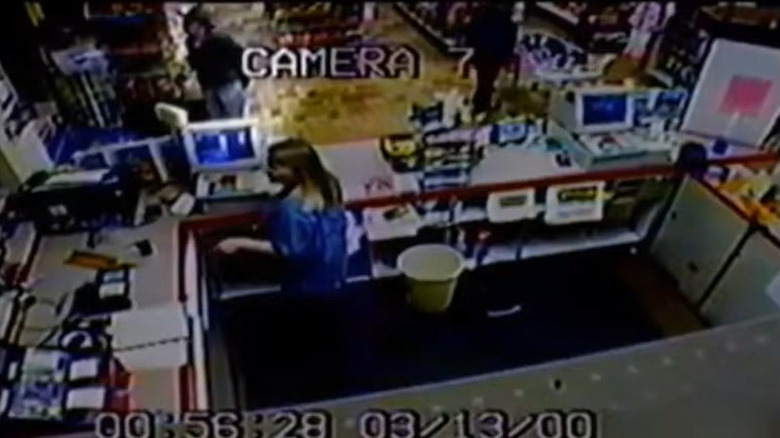
The Everett tip remains one of the few narrative leads that moves beyond the crash scene. It suggests a person walking, confused, alive, and briefly visible in a public place. It also remains unconfirmed, because the caller vanished, and no name or security footage has been publicly tied to it.
Family members have often emphasized that Leah’s case did not begin with a criminal record, a runaway pattern, or a clear break with her life. WRAL quotes Kara saying it was unlike Leah to go that long without calling to let people know she was okay.
In 2000, Heath Roberts framed the disappearance in practical terms: there were very few clues, and the family needed public help. That same blunt reality has shaped every anniversary. A missing person case depends on tips, and tips depend on attention, even when attention fades.
The most durable facts remain the simplest ones. Leah left North Carolina on March 9. Gas was purchased in Brooks, Oregon, in the early hours of March 13. A ticket for “American Beauty” was purchased at 2:10 p.m. in Bellingham.
Her Jeep was found wrecked and abandoned on March 18 on a logging road near the Mount Baker Highway. At the crash site, investigators did not see the kinds of injuries or blood that would normally follow such damage, and years later they found signs the crash may have been staged.
Everything else is a set of possibilities that officials and family have had to hold in parallel. Injury and disorientation, a ride from a stranger, an intentional act by someone else, an encounter that turned dangerous. Those frames remain, because the evidence has never closed them.
A quarter century later, the sheriff’s office still hosts Leah’s page with a phone number for tips. It is an unusually plain ending for a story that includes a cross country dash, a wrecked vehicle, and no confirmed trace of the driver afterward.