




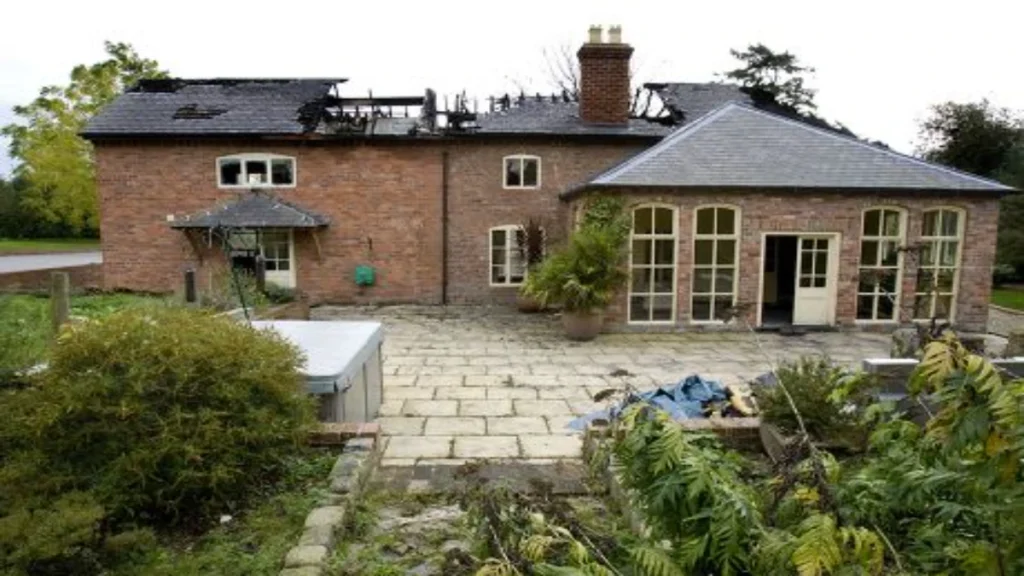
At about 4 a.m. on August 26, 2008, the Shropshire Central fire control got an emergency call to respond to a fire at the Osbaston mansion residence.
When they arrived, firefighters were unable to access the residence due to a large horse box. By the time they got in, it was already too late, as everything was in ashes.
50-year-old Christopher Foster, his wife Jill Foster, 49, and their 15-year-old daughter, Kirstie Foster, were the only human casualties of the fire.
Emergency personnel and police sifted through the debris, finding the bodies of three horses and four dogs, which were assumed to belong to the family.
Initial assessments of the events revealed the horse trailer had been deliberately placed at the front of the property to delay the firefighters. This eliminated the possibility that this was just a tragic accident.
Footage recovered from the security cameras gave investigators the sought-after answers.
At 3.12 am, a motion sensor camera was triggered when Chris stepped out of the home. He was seen carrying the bodies of his dogs into their family stables.
The cameras then showed Foster going around the stables and courtyard with heavy buckets and siphoning piping. Chris then interacted with the external heating oil tank, making a rigged pipeline to flood the property with kerosene.
According to West Mercia Police accounts, the videos obtained then showed Chris walking the estate grounds with a .22 calibre rifle.
Chris was also seen driving the family’s horsebox down the driveway and parking it in front of the electronic gates. After parking it, Chris was depicted getting out of the vehicle and shooting the tyres.
He was last seen calmly walking away from the outer structures as they burst into flames. Chris got into his house at 3.49 am. Firefighters arrived at the Osbaston house at 5.15 am after getting the emergency call, an hour earlier.
Who was Christopher Foster?
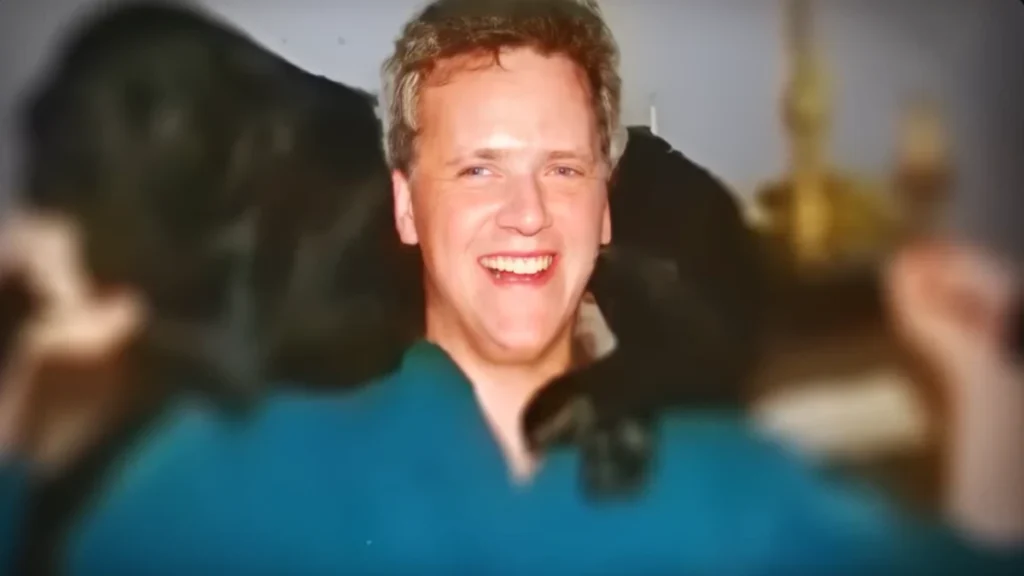
Christopher Foster was characterised by his mother, Enid, as a proactive achiever who sought opportunities for financial achievement from a very young age.
He shared aspirations with his younger brother, Andrew Foster, of following in the footsteps of their late father, who was a sales director.
They both wanted to be successful in business, though despite their common goal, Christopher and Andrew had a strained relationship since childhood. Andrew revealed that when they were young brothers, Christopher had sexually abused him.
Andrew said this was because of their family dynamic. Christopher was perceived as more confident and self-assured. He cast a long shadow over his quieter, more reserved sibling.
Both of them did maintain a close relationship with their mother, Enid. She loved them both but harboured a particular fondness for her first son.
In 1987, Christopher Foster married Jill, a housewife, who later gave birth to their only daughter, Kirstie, in 1993.
Chris’s journey to wealth during the 1980s, when he worked as a salesman for a local company in Wolverhampton. He led an average living, selling mattresses and cheap pizza boxes for insulation.
Then his fortunes dramatically took a turn for the better following the 1988 Piper Alpha oil platform disaster. The oil rig explosion on July 6, 1988, led to a devastating fire that went on for several days, claiming 167 lives.
After witnessing the fire’s damage, Chris was inspired and identified a niche market for fire-protected insulation tailored to gas and oil rigs.
Several companies in the sector expressed immediate interest, but they wanted proof of concept before committing to a contract. To meet the requirement, Chris took a risk and mortgaged the Foster house to fuel a demonstration.
During this test, his product, UlvaShield, displayed significant resilience compared to other oil rig insultations of that period. It even earned a rare A-1 fire rating. Major oil corporations placed significant orders for the insulation, and this propelled Chris into millionaire status overnight.
As his business expanded, Chris also saw a rise in turnover, from £50,000 to £1 million a year. And according to his personal assistant, it was almost as if Chris was placed on earth to spend money.
He allocated himself a monthly salary of £10,000 but was reported to have regularly withdrawn money from the company’s accounts for personal use. By 2004, his net worth was believed to be £10 million.
Following a shopping excursion that year, Jill was perusing the pages of Shropshire Life Magazine when she stumbled on a house. The Osbaston house, spanning 16 acres, captured her attention.
This property boasted a private lake and even had riding paddocks. Despite the asking price of £1.5 million, the property still needed work. Jill was so taken by the house that Chris submitted an offer the following morning.
The couple sold their home and moved into the Osbaston mansion. Chris also invested a further £50,000 into a swimming pool and landscaping at the residence.
A Life of Opulence and Impulse
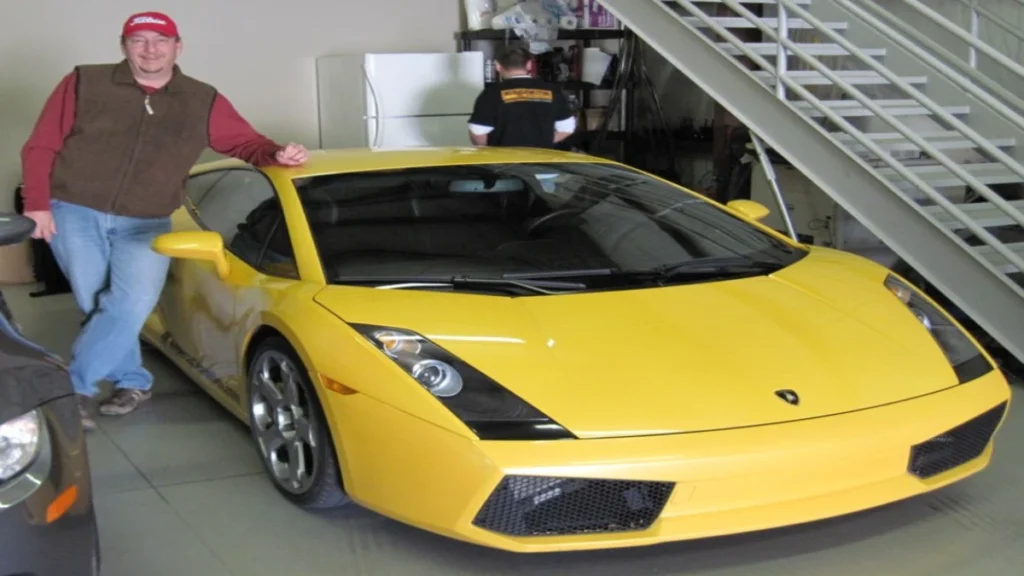
After settling into the home, Chris indulged in a lavish lifestyle, acquiring one Porsche himself and another for his wife. He also bought a James Bond-style Aston Martin, a Range Rover, a tractor, and a Ferrari.
Kirstie was also enrolled in an exclusive private boarding school. Chris bought her a number of horses, and she spent time with them whenever she was not in school. She was described by friends as quiet, caring, and kind.
Chris bought four dogs and many doves. He kept a personal assistant and housekeeper around, and the house was adorned with over £200,000 worth of antique furnishings.
Chris’s most expensive hobbies, though, centred on shooting. This is evident considering his ownership of numerous high-priced guns. He frequently participated in shooting parties, sometimes extending for three days. These resulted in bills of more than £8,000 per session.
Chris also had a tendency to leave firearms scattered across the residency. Occasionally, when his doves caused a mess on his vehicles, he would shoot them.
In one incident, Kirstie’s Labrador began bothering the sheep. As he deemed the dog uncontrollable, Chris took it down the road and shot it.
Chris’s appetites and impulsive lifestyle were not sustainable. Though many acknowledged his prowess as an entrepreneur, he lacked follow-through and the long-term vision his company needed.
Acquaintances and friends alike described Chris as impulsive. He had a thirst for instant gratification and quickly severed ties with partners he fell out with.
Chris was very preoccupied with social status and always wanted others to be envious of what he had. It was also evident that Chris wanted to completely cut ties with his Wolverhampton origins. In a short time, Chris and Jill ascended to higher social circles.
They would often go on holidays at top-tier resorts in exotic destinations. These extravagant holidays ramped up costs to the tens of thousands of pounds per excursion.
To the outside world, it was a picture of opulence brought on by success in his business. However, unbeknownst to many in his circle, Chris was stretching his financial limits. He would cover the expenditure by withdrawing funds from the insulation empire.
Debts and Financial Ruin
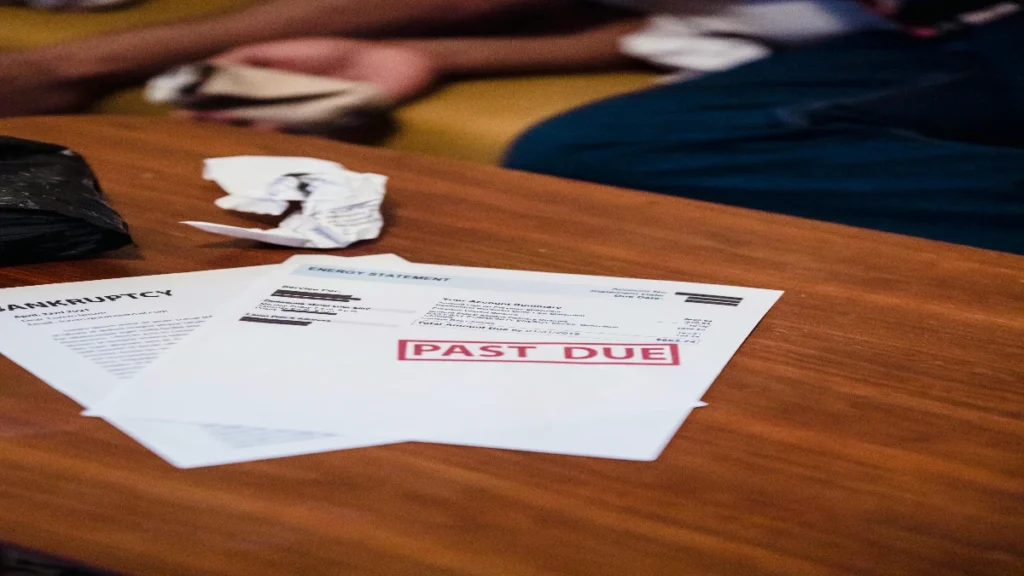
This resulted in a financial imbalance with money flowing out to expenditure rather than coming in through the business.
In 2003, Chris had signed an exclusive contract with a company called DRC that gave them sole rights to produce the oil rig sealant, for which he held the patent. This was the beginning of woes as he had tied himself to one client.
In just a year, the extravagant spending caught up with him, and in 2005, Chris decided to go behind DRC’s back to sign a second contract with another company in California for the sale of his product.
DRC Distribution discovered that Chris had done business with the undercutting supplier in September 2006. After they found out, DRC sued Foster’s company in the High Court for breach of contract.
Chris was also found to be a poor taxpayer, who routinely failed to pay standard corporation taxes, National Insurance, and VAT. This and other financial indiscretions came out during the court proceedings.
Following a protracted legal battle, Foster lost the case. His solicitors agreed to pay the damages and legal costs, which totalled £800,000. To avoid paying the distribution company and its tax bills, Chris tried to siphon his movable assets into a new holding company.
The High Court immediately stopped this and placed a £3-million freezing order on his assets, opting to liquidate the company. DRC Distribution legally acquired all of Ulva Limited’s assets and patents.
On February 28 2008, Lord Justice Rimer ruled that Christopher Foster was “bereft of the basic instincts of commercial morality.”
In June 2008, with his assets frozen and the court order in effect, Chris was left facing a debt of approximately £1.8 million. This included £1 million to DRC Distribution and £800,000 in unpaid taxes to His Majesty’s Revenue and Customs.
Delusion and Depression
Despite being in dire straits between late 2007 and mid 2008, Chris tried to carry on as if nothing significant were happening in his life.
At the same time, Chris and his accountant, Terrence Baines, were also having a dispute. Baines reported him to Inland Revenue for tax evasion. To address the mounting tax obligations, Chris tried to borrow from banks to ease the financial strain.
Chris had already remortgaged the Osbaston mansion three times and tried to do so a fourth time, but the courts stopped him before he could. This was due to the freezing order in October 2007 on Chris’s assets.
The land registry records indicated that the liquidators obtained a court order preventing him from remortgaging the mansion again.
Not to be dissuaded, Chris went on to overdraft from more than 20 different bank accounts. These funds he used to temporarily conceal his deep debt.
People who knew Jill could not say for certain if she knew the full extent of her husband’s situation, but she did not show a reduced rate of spending and did not share anything with close friends that indicated distress.
Chris did express to friends that he had a strong unshakeable bond with his possessions and family’s well-being. On one occasion, during a conversation with a friend about houses, he emphatically declared that he could not lose the Osbaston mansion unless it was in a body bag.
Seeing that the walls were closing in, Chris sought professional assistance. Following the loss of the case in February 2008, he confided in his doctor, William Grech, that he had feelings of depression and suicidal ideation.
He even began taking antidepressants, but his doctor did not believe that he would take his own life. On August 21st, a friend reached out to Chris via text, asking how he was doing. Chris replied, “Not good. Things are coming to a head for me soon.”
The catalyst finally came on the August bank holiday weekend of 2008. Chris came across a letter from the Bailiffs that was attached to his front gate.
The letter conveyed news that they intended to return on Tuesday to reclaim the Osbaston Mansion and other assets.
The housekeeper said that when she showed him the letter, Chris appeared perplexed, but retained his composure. This became the trigger for the sequence of events that led to the familicide.
On Monday the 25th, the Fosters were invited to an event featuring a barbecue and clay pigeon shooting, to which Chris and the family obliged. The event was hosted by John Hughes, a millionaire luxury car dealer.
At the event, none of the attendees noticed anything off with Chris, Jill or Kirstie. Witnesses claim Chris was his usual cheerful self. They had no idea what was boiling underneath his veneer.
The week preceding that weekend, Chris spent his days browsing and researching suicide websites. He has also been reminiscing over older photographs of him, Jill and Kirstie, taken during better times.
That evening, Chris wanted to leave earlier than usual, but Jill wanted to stay on a little longer. They finally left at 8.30 pm, getting home in less than 15 minutes.
The security camera captured their last time together as they came back from the party, and Chris parked the Range Rover. Jill retired to bed soon after.
Later that night, at about 11.30 am, Chris went upstairs to tell Kirstie to stop texting her friend and to sleep. She was reluctant to do so, so Chris switched the internet off at midnight. This prompted Kirstie to conclude the conversation with her friend.
Murder and Aftermath
Investigators assessed that at 3 am, Chris took his silenced pistol, entered the room where his wife was sleeping and shot her in the back of the head.
He then went to Kirstie’s room and did the same to her. The home security cameras showed Chris walking out to the dog kennels with his rifle. Each of the dogs was shot in the head as well.
Chris went to the barn, which had the horses and executed the animals in the same fashion. He rigged the domestic oil tank to the main house’s cellar and drove the horse box in front of the gate to block any first responders.
He then walked back into the house, knowing it would also be soon engulfed in flames. In the footage, Chris was methodical and robotic. Devoid of the distress of anger.
Considering his past experience with fire insulation, he knew exactly what was needed to destroy the house. The extreme heat caused by the blaze had turned the interior structures into a clay oven. It also caused the upper flooring to collapse.
A pathologist from the home office determined Jill and Kirstie died by gunshot to the head before the fire. Christopher Foster died by smoke inhalation.
In April 2009, John Elery recorded that Christopher Foster killed his wife and daughter, then took his own life. The three Fosters were buried on December 19, 2008. Relatives held separate funerals for Kirstie and Jill.
Christopher Foster’s funeral service took place hours later. Andrew Foster claimed he had no interest in claiming any of the remaining stake in his brother’s assets or his remains.
The case exposed significant systemic issues, as Chris’s doctor did not have a protocol for alerting authorities that his patient was suicidal. Police chiefs had to create guidelines for improved communication between healthcare and firearms licensing departments.
The local council also eventually issued a decree to demolish the Osbaston House shell. It was cleared and sold off.