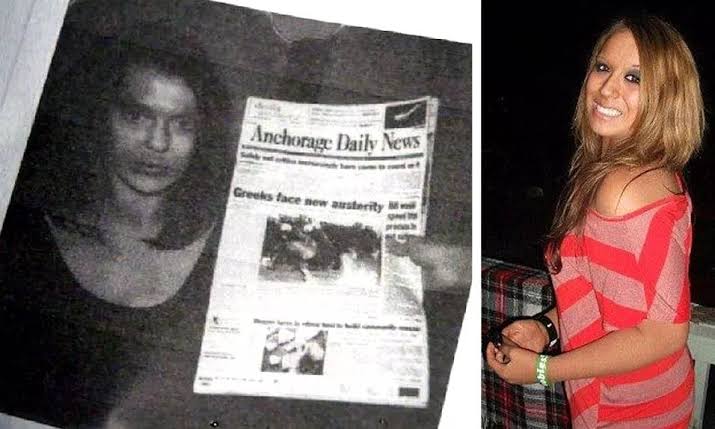
Samantha Tessla Koenig was 18 years old and lived in Anchorage, Alaska. In early 2012, she worked as a barista at the Common Grounds coffee stand on Tudor Road, a kiosk that stayed open later than many others.
On the night of February 1, 2012, Koenig was working near closing time when a masked man approached the stand. She was later reported missing after she did not return, and early public descriptions said surveillance video showed her leaving with an armed man.
Investigators later said the abductor was Israel Keyes, a 34 year old Anchorage contractor. At the time, he lived in Anchorage and was the single father of a young daughter. They said he had selected that specific coffee stand beforehand, comparing other locations and choosing Common Grounds for its hours and layout.
According to the later law enforcement account, Keyes walked up just before closing, wearing a ski mask, and ordered a coffee. When Koenig handed it over, he pulled a gun and demanded money, turning the interaction into a robbery setup.
Koenig complied, and Keyes forced his way inside the kiosk. Investigators said he tied her hands with zip ties, asked where her car was, and learned she did not have a vehicle waiting nearby that night.
Keyes then forced her out of the coffee stand and toward Tudor Road. The later account said Koenig tried to break away and run, but Keyes chased her, tackled her, and controlled her with the gun to stop her escape.
After the struggle, they crossed Tudor Road to a parking lot between an IHOP and a Dairy Queen, where Keyes had left a white pickup truck. Police later said he had prepared the truck by removing tool boxes and license plates.
Investigators said Keyes bound Koenig in the truck and drove away. While driving around Anchorage, he told her it was a ransom kidnapping, and Koenig reportedly told him her family did not have much money to pay.
Keyes told her the money could be raised through public help, according to the police summary. He also tried to keep her cooperative by claiming she would be returned unharmed if she followed instructions during the abduction.
During the drive, Keyes realized Koenig did not have her cell phone, which mattered to his plan. Investigators said he drove back to the kiosk, re entered it, and retrieved the phone while leaving Koenig bound in his truck.
After retrieving the phone, investigators said Keyes sent two text messages from it. One went to Koenig’s boyfriend and another went to the coffee stand owner, crafted to make it seem like Koenig had a bad day and left town.
The police account said Keyes removed the battery from Koenig’s phone after sending the texts. That step limited tracking and also helped support the story he had created through the messages about her leaving town for the weekend.
Keyes then focused on money access. Investigators said he asked Koenig for a debit card, learned she shared a bank account with her boyfriend, and was told the ATM card was in a truck she and her boyfriend shared.
According to the law enforcement narrative, Koenig provided the location of her home and the PIN for the card. The account presented this as a direct exchange during the kidnapping, driven by Keyes’s need to run a ransom and withdrawal plan.
Keyes then took Koenig to his own neighborhood. Police later said he put her in a shed in front of his house, kept her bound, turned up a radio to mask noise, and warned that he had a police scanner.
The federal indictment later alleged that Keyes confined Koenig and intentionally killed her early the next morning. Separate public statements from Anchorage police said investigators believed she died within hours of the abduction.
While Koenig’s disappearance became public, the police investigation focused on the last known footage and the fact she vanished from her workplace on Tudor Road. Her father made early public appeals, and a reward effort developed as the case expanded.
Keyes did not stay in Anchorage through February. The FBI later published a timeline stating that from February 2 to February 18, 2012, Keyes flew to New Orleans, went on a cruise with his young daughter until February 11, then drove from New Orleans to Texas.
Investigators later said Keyes returned to Anchorage on February 17, 2012. After returning, he began preparing a physical ransom demand, built around a photograph and a typed note designed to convince the family Koenig was alive.
The law enforcement account said Keyes retrieved Koenig’s body from the shed and took steps to make it appear she was still alive. He took a Polaroid style photo of her tied up and staged the image to support a ransom narrative.
In the same description, the photo showed Keyes’s arm holding a copy of the Anchorage Daily News dated February 13, 2012. Investigators said he photocopied the picture and used a manual typewriter to type a $30,000 demand.
Keyes then placed the ransom note and photo in Connor’s Bog Park in Anchorage. Investigators said he hid it under a memorial flyer for a dog named Albert, then used Koenig’s phone to text her boyfriend that the note was “under Albert.”
Anchorage police recovered the note after the boyfriend received the message and went to the park area described in the text. The recovery turned the case from a missing person search into an active ransom and tracking operation.
The federal indictment later described a key ransom step as occurring on February 24. It alleged Keyes used Koenig’s phone to send a text message demanding that money be placed into the bank account connected to the stolen debit card.
Koenig’s father, James Koenig, deposited money into the account connected with the ATM card, including community donated reward funds. Investigators used this to track withdrawals in real time and build a travel pattern for the suspect.
Withdrawals began appearing in Anchorage and then outside Alaska. The law enforcement account said the withdrawals appeared in Arizona, New Mexico, and Texas, and investigators determined the person making them was driving a white Ford Focus.
A court document summarized by local reporting described several specific withdrawal attempts and successes during early March. It described ATM activity in Arizona and New Mexico, then Texas, alongside surveillance observations of a white Ford Focus.
That same reporting described how a bulletin went out and officers watched for out of state rentals matching the vehicle description. In Lufkin, Texas, officers spotted the white Ford Focus at a hotel and kept observing the driver.
On March 13, 2012, Keyes was pulled over in Lufkin after a speeding violation, according to the court document summary. He presented an Alaska license and gave a travel story that officers found inconsistent with what they were seeing.
During the stop, officers saw maps with highlighted routes and cash bundled with rubber bands, according to the same account. A search of the vehicle then turned up items central to the Koenig case, including her cell phone.
The Alaska Public Media summary said the ATM card was found in Keyes’s wallet and Koenig’s phone was found in the car. Those discoveries connected the fraud trail directly to the missing person case and allowed authorities to detain him.
Keyes was initially handled through financial fraud charges tied to unauthorized debit card use. Alaska Public Media later reported he was returned to Anchorage and arraigned in federal court there on March 27, 2012, on an access device fraud charge.
While he was in custody, investigators pursued the location of Koenig’s remains based on information developed in the case. Authorities publicly stated they believed she died within hours of the abduction, and they worked to confirm what happened.
By early April, search activity focused on Matanuska Lake, northeast of Anchorage. The FBI later published a photo caption stating that members of the FBI dive team, with Anchorage police and state troopers, searched the lake on April 2, 2012.
Anchorage Daily News later listed April 2, 2012, as the date FBI divers recovered Koenig’s body from Matanuska Lake. The recovery moved the case from kidnapping investigation to a confirmed homicide case with a known victim.
On April 5, 2012, Alaska Public Media reported that the Alaska state medical examiner’s office confirmed the body recovered from Matanuska Lake was Samantha Koenig. The same report said no cause of death had been released at that time.
Federal prosecutors then moved on the broader case package. On April 18, 2012, the U.S. Attorney’s Office in Alaska announced a federal grand jury indictment charging Keyes with kidnapping resulting in death, receiving and possessing ransom money, and access device fraud.
The indictment alleged Keyes abducted Koenig from the Common Grounds coffee stand on Tudor Road on February 1, 2012, took her to his white pickup truck across the street, confined her, and intentionally killed her early the next morning.
It also alleged Keyes stole a debit card from a vehicle connected to Koenig, obtained the PIN from her, and sent text messages from her phone to conceal the abduction. Prosecutors said he demanded ransom into the linked account and withdrew it across states.
In December 2012, after Keyes died in custody, Anchorage Daily News reported authorities said he raped and strangled Koenig in the shed outside his West Anchorage home. That report also said he left Alaska on a cruise and later disposed of her remains in Matanuska Lake.
That same period is when the Koenig case became the doorway into a wider Keyes investigation. Authorities said he admitted to killing Koenig and other victims, including Bill and Lorraine Currier in Vermont, and investigators believed additional victims existed.
In 2013, the FBI publicly asked for assistance and stated that, based on the post arrest investigation, Keyes was believed to have committed multiple kidnappings and murders across the country between 2001 and March 2012. The FBI also described his travel and planning patterns.
The FBI timeline described Keyes’s approach as heavy on preparation, including travel, buried caches, and selecting victims he did not know. In that public timeline, the Koenig case was listed as an admitted abduction and murder with disposal at Matanuska Lake.
Keyes remained in custody at the Anchorage Correctional Complex while federal proceedings were pending. He died by suicide on December 2, 2012, before trial, which ended the prosecution but not the larger investigation into his claimed and suspected crimes.
After his death, the FBI released information about writings found in his cell and said the writings were discovered beneath his body. The FBI said laboratory review found no hidden code or message and no investigative clues about other possible victims.
The Koenig case, in terms of confirmed process, had a clear chain of dates. February 1 brought the abduction from the coffee stand, February 24 brought the ransom text allegation, March 13 brought the Texas arrest, and April 2 and April 5 brought recovery and identification.
The central physical and digital evidence described publicly included the staged ransom note and photo, the use of Koenig’s phone for texts, the tracked ATM withdrawals, and the recovered phone and card during the traffic stop. Each piece tightened the timeline and location trail.