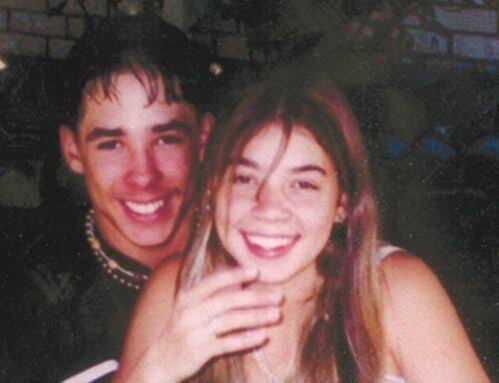
Nicholas “Nick” Kunselman and Stephanie Hart Grizzell were teenagers in Jefferson County, Colorado, and students at Columbine High School in 1999. Less than a year after the Columbine shooting, they were killed in a separate, still unsolved double homicide.
Nick was born March 15, 1984. Stephanie was born October 28, 1983. Friends and family described them as high school sweethearts who spent a lot of time together and moved through the same school community.
On April 20, 1999, Columbine High School was attacked by two students who killed 12 students and one teacher before taking their own lives. Dozens of others were injured, and the event dominated the school’s daily life afterward.
Public reporting later said Nick and Stephanie had met earlier in middle school and were close friends before they became a couple. After the 1999 school shooting at Columbine, people close to them said they leaned on each other more.
By early 2000, Nick had a job at a Subway sandwich shop a few blocks south of Columbine High School. The store was in unincorporated Jefferson County, though it used a Littleton address and mailing designation.
The Subway location connected to the case was at 6768 West Coal Mine Avenue in Littleton, Colorado. That address appears consistently in the sheriff’s office case summary and later reward announcements tied to the investigation.
The night of the killings was February 13 into the early minutes of February 14, 2000, Valentine’s Day. Investigators later fixed the discovery time at about 12:47 a.m., when the scene was found and reported.
Stephanie drove to the Subway that night to wait for Nick as he finished his shift. Reporting years later described it as a late night meet up at the end of his work shift, close to where they lived and went to school.
According to both law enforcement summaries and later local reporting, another Subway employee drove past the restaurant after midnight and noticed something that felt wrong. The lights were still on inside when the store should have been closed up.
That employee went inside the store. Behind the counter, the employee found Nick and Stephanie dead. The sheriff’s office summary described them as being found behind the counter area inside the restaurant.
Investigators determined the pair had been shot. The Jefferson County Sheriff’s Office described the deaths as the result of an unknown intruder or intruders who shot them inside the Subway restaurant.
In the sheriff’s office account, Nick was working at Subway and Stephanie was there waiting for him to get off work. The location and timing made the case immediately feel like a targeted nighttime attack rather than a daytime confrontation.
Because the discovery happened after midnight, the key window in the case became the period between the end of normal business and the moment the bodies were found. Investigators have never publicly pinned down the exact minute of the shooting.
The scene was described as a homicide investigation from the beginning. It was handled by the Jefferson County Sheriff’s Office, which had also been deeply involved in the Columbine investigation during 1999, a fact that shaped local attention.
Publicly released summaries do not describe the caliber of weapon, the number of shots, or the exact positions of the victims at the moment they were shot. Those details are typically held back in open cases as potential future corroboration points.
What has been stated publicly is that the shooter or shooters were not immediately identified. The case became a high profile double homicide quickly, partly because the victims were Columbine students and the timing was ten months after the school attack.
Early in the investigation, police released a suspect description. Reporting described the suspect as a white male believed to be about 16 to 20 years old, roughly 5 foot 7 to 5 foot 8, and about 150 to 170 pounds.
The same reporting included clothing details tied to that description. The person was described as clean shaven with blondish hair, wearing blue jeans, tennis shoes, a black ball cap, and a black coat with a red lining or a red shirt.
Investigators also produced suspect sketches over time. Crime stoppers updates and law enforcement messaging have referenced multiple sketches that came from different witness descriptions, an indicator that some observations did not align perfectly.
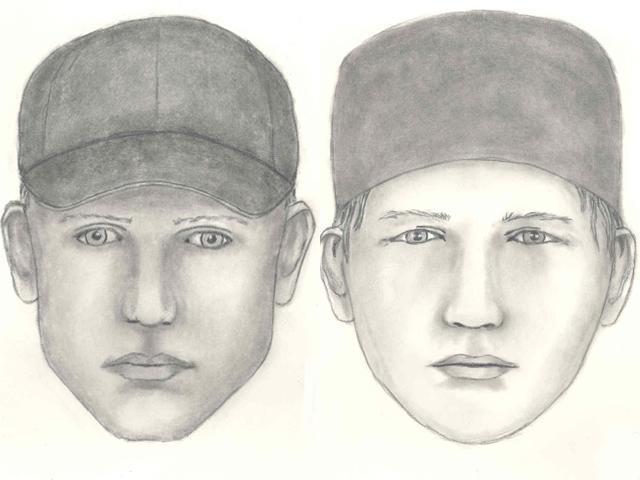
The suspect description generated a flood of tips. Investigators received information from across the country, and the case produced several confessions after it drew national attention, but those confessions were later dismissed as false.
The flow of tips did not translate into a public arrest. In the years that followed, families and investigators continued to describe the case as solvable, but dependent on one missing piece of information that had not been shared.
One line of attention that surfaced publicly involved drugs. In later reporting, investigators said suspicions arose that a drug ring may have been operating out of the Subway store, which pushed detectives to review related cases and interviews.
Investigators interviewed people connected to more than 50 drug cases while trying to see whether any of that activity intersected with the killings. That work did not produce evidence strong enough to publicly link a drug operation to the murders.
In that same reporting, an investigator noted that nothing appeared to have been taken from the store, which complicated simple robbery theories. The store later closed, though the closure itself has not been presented as proof of motive.
Public statements have also emphasized that evidence exists, but not enough to identify an offender. In 2017 reporting, investigators described the file as massive, including dozens of binders and hundreds of interviews accumulated over time.
One investigator described the case file as 40 binders, with more than 150 items of evidence and hundreds of interviews. Evidence was sent to multiple labs, including repeated submissions for testing as technology improved.
Investigators also addressed forensic limits. They said they pursued DNA testing multiple times and performed standard fingerprint work, but described the DNA as scant and said it had not produced an identified suspect through available comparisons.
The scarcity of usable forensic material matters because it shifts the case toward witness memory, offender behavior, and the possibility of someone privately knowing the shooter. That is why law enforcement messaging keeps returning to tips.
A second structural problem is the late night setting. Fewer people are awake, fewer cars are on the road, and fewer casual witnesses exist. Investigators in the case have said there were not many people around the area at the time.
Because of the Columbine connection, the case gained a specific label in local media and true crime spaces. Many later references call it the “Subway murders” because of the location and because the victims were found behind the counter.
The core facts remain fixed across official summaries. Two teenagers were found behind the counter at the Coal Mine Avenue Subway just after midnight on February 14, 2000. Investigators concluded they had been shot by intruders.
Beyond that core, many operational details remain unreleased. Investigators have not publicly clarified whether the door was forced, whether the suspect used a ruse to enter, or whether the encounter began before the store officially closed.
Investigators also have not publicly clarified whether the offender demanded anything, spoke to the victims, or moved them. Those are the kinds of details often held back to preserve the ability to test future confessions.
Over the years, the public has seen periodic reward increases designed to shake loose information. The sheriff’s office and Metro Denver Crime Stoppers have repeatedly framed the case as one where someone knows a critical detail.
In February 2021, the sheriff’s office posted an update stating Crime Stoppers increased the reward in the case to $100,000, paired with an appeal for information leading to an arrest.
In February 2024, CBS Colorado described the reward as increased up to $100,000 again, and noted that a contribution from Subway’s franchise headquarters was part of the reward funding described in the public appeal.
Other reporting around the same anniversary described a $60,000 reward figure, reflecting how rewards can change across time and campaigns. The consistent message, regardless of amount, is that tips remain the path to an arrest.
The Jefferson County Sheriff’s Office has also maintained public contact points for the case, listing the cold case unit and Crime Stoppers channels. The repeated use of anonymous tip routes signals continued concern about witness reluctance.
As of the most recent official summaries and anniversary reporting, there has been no public suspect named and no charges filed. The case remains listed as an active cold case homicide, with periodic review and outreach.
There were also later deaths among people connected to the event, though not in the form of a cluster of unsolved murders. For example, survivor Anne Marie Hochhalter died in 2025 from complications tied to her paralysis, later ruled a homicide.
Another survivor, Austin Eubanks, died in 2019 after a coroner determined he died of a drug overdose.