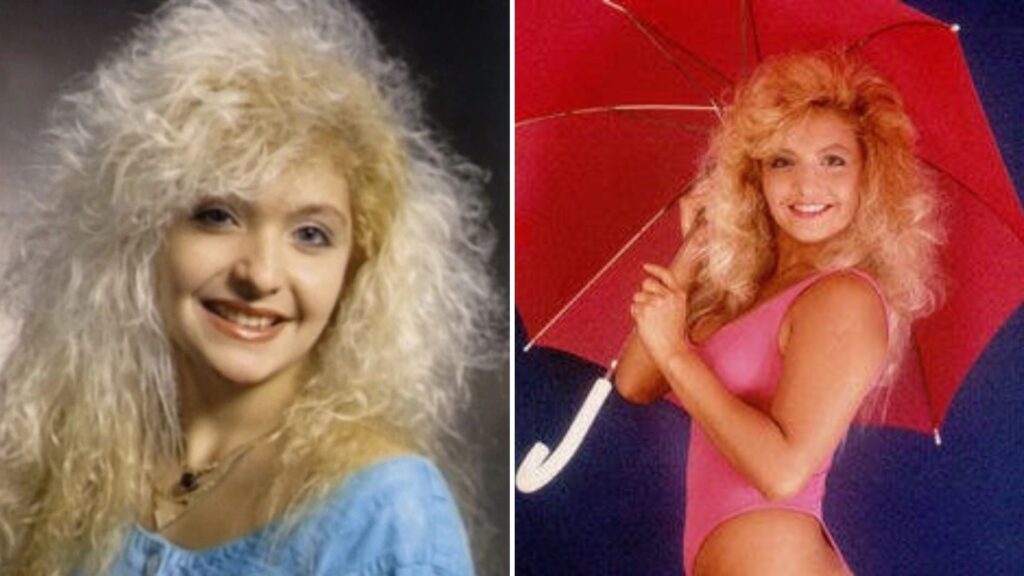
Kimberly Pandelios was a young mother in Northridge, California, trying to turn small modeling jobs into something steadier. On February 27, 1992, she told people she was heading to a photo shoot.
Friends described her as ambitious and hopeful, with one foot in everyday life and one foot in a dream career. She was also taking business classes while picking up part time modeling work.
She was a Cuban native, and her mother later spoke about how trusting she could be with people who seemed professional. That trust mattered because the job offer sounded ordinary, like many small gigs.
Investigators later said she had answered a modeling recruitment advertisement placed by someone claiming to be a magazine photographer. The name attached to that contact was “Paul,” and she agreed to meet him.
The plan was simple on paper. Kimberly would drive to meet this photographer, do the assignment, and come back. Nothing about it sounded like a final goodbye.
That day, she was seen wearing a blue suit, a white blouse, and high heels, the kind of outfit chosen to look capable and put together. Around 1 p.m., she drove toward Angeles Crest Highway.
The meeting point was near the Angeles National Forest, close to the Monte Cristo campground area. It was the sort of place that could feel quiet and private, which is exactly why it later drew so much attention.
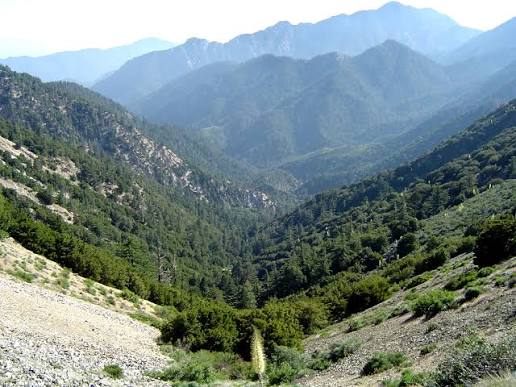
After Kimberly vanished, the first hard clue came from the road, not from a witness. Her Chrysler Laser was spotted off Angeles Crest Highway, parked on the shoulder north of the campground.
A deputy initially saw the car appearing vacant and in good condition. Later, the same car ended up burning, with investigators treating the fire as something set on purpose, not an accident.
The Los Angeles Times later reported the burning car was discovered off Angeles Crest Highway, about 50 yards from the Monte Cristo campground. Kimberly was still missing, and the car felt like a message.
Investigators recovered items around the vehicle that added a grim edge. They found an empty charcoal lighter fluid container, a plastic lighter, and a handcuff key in the vicinity of the car.
Her husband told investigators that she had made several calls to someone named “Paul” about the possible photo shoot. Those calls became a thread detectives would pull much later, after years of silence.
A month later, hikers found her appointment book at the bottom of a bridge near a creek. It was another sign that Kimberly had reached the forest, and then the trail had been disrupted.
Searches in the area did not bring her home. A year passed with public worry, scattered tips, and the feeling that the mountains could hide almost anything if luck ran out.
On March 3, 1993, hikers found a skull in the Angeles National Forest, about 100 yards from where authorities had called off a search a year earlier. The case shifted from missing to homicide.
Court records later described additional discoveries near the spot, including a pelvic bone. The location was isolated, wooded, and close to the Monte Cristo campground area that had already been searched.
A bra similar to Kimberly’s was found in the vicinity, along with pantyhose. Both appeared cut in ways investigators interpreted as deliberate, suggesting someone used a sharp object during the attack.
A forensic recovery team later found more remains and items, including her fractured mandible, hair, fabric, and her ring and earrings. Handcuffs were also recovered near the remains.
At the time, the cause of death could not be determined from the remains, according to reports from the mid 1990s. That uncertainty left space for theories and for wrong turns.
One of those wrong turns became highly public. In late 1995, after the murder of model Linda Sobek, sheriff’s officials named photographer Charles E. Rathbun as a suspect in Kimberly’s unsolved killing.
Authorities said Kimberly had been an acquaintance of Rathbun, and her mother told reporters she believed the photographer might have been “Paul.” A witness also claimed to have seen them together before she disappeared.
That period shows how messy the investigation looked from the outside. A high profile case nearby, a similar setting, and a suspect who drew attention, while Kimberly’s own case stayed unresolved.
Years went by, and the case cooled. The forest stayed the same, and Kimberly stayed absent from her child’s life, with answers stuck behind a wall of time and missing proof.
The break that changed everything came in 2004, when detectives reviewing old cases found information that pointed to someone else. Sheriff Lee Baca described it as the result of cold case work.
That suspect was David Rademaker, a parolee from Burbank. Prosecutors charged him with abducting and murdering Kimberly, more than a decade after she disappeared.
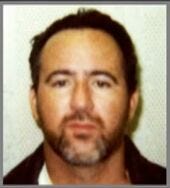
Investigators said Rademaker used false identities to solicit teenage models through ads in weekly papers. They also said he ran a phone sex line, and that the “Paul” identity fit his pattern.
Federal court records later stated that the “magazine photographer” Kimberly answered turned out to be Rademaker, and that the promised shoot was used as a trap. That became the backbone of the prosecution story.
Phone records were part of what tied him to her, according to later summaries of the case. The Unsolved Mysteries update also said investigators benefited from testimony by a teenage girl Rademaker had been harassing.
In the Ninth Circuit summary of the evidence, Kimberly met him at the Angeles Crest Highway location and rejected a sexual advance. The prosecution’s account then described an assault and drowning in a nearby creek.
The same court record describes a deputy spotting Kimberly’s car that evening, then later the car being set on fire with charcoal lighter fluid. It says a 14 year old girl was present during the burning.
That girl, identified in court records as C.H., later cooperated with law enforcement. During recorded conversations, Rademaker admitted setting fire to the car while she was present, while denying the killing.
Another major witness was a teen referred to as M.K., who later became publicly identified in coverage as Manya Ksendzov. Court records say she told police Rademaker confessed to killing a blonde model.
The appellate summary says Rademaker told M.K. the murder had been featured on Unsolved Mysteries, and he claimed the show got details wrong about the suspects. That detail became part of the narrative at trial.
By then, the case had transformed from a disappearance with scattered clues into a courtroom story with a timeline, witnesses, and a suspect with a history of crimes involving minors.
A jury convicted Rademaker of first degree murder. The jury also found true a special circumstance tied to kidnapping, which matters in California because it can raise the stakes at sentencing.
In 2006, the Los Angeles Times reported he was sentenced to life in prison without the possibility of parole. His attorney said he would appeal, and Rademaker continued to say he was innocent.
The defense attacked the kidnapping theory in particular, arguing there was no evidence Kimberly was moved against her will. That point stayed central because it shaped how the jury was asked to think about the crime.
Appeals later focused on how jurors were instructed about the movement required for kidnapping. The Ninth Circuit decision describes the jury instruction issue and explains why courts still upheld the conviction.
The Los Angeles Times also reported that the defense argued Ksendzov had a motive to lie and noted there was testimony suggesting Kimberly might have been alive two days after the date prosecutors described.
Even with a conviction, the story never becomes simple. The case has physical clues in the forest, a burned car, and late emerging witnesses, which can feel solid and fragile at the same time.
For Kimberly’s family, the public record captures only pieces of who she was. The rest is private, carried by the people who expected her back that afternoon and never got that return.
The Angeles National Forest, where hikers found her remains, has been described in news coverage as a place where bodies can be hidden and sometimes never found. Kimberly’s case became one of those remembered names.
Her disappearance began with a photo shoot offer and ended in a recovery site near a campground. Everything in between depends on reconstruction, testimony, and the question of what happened in those quiet miles.