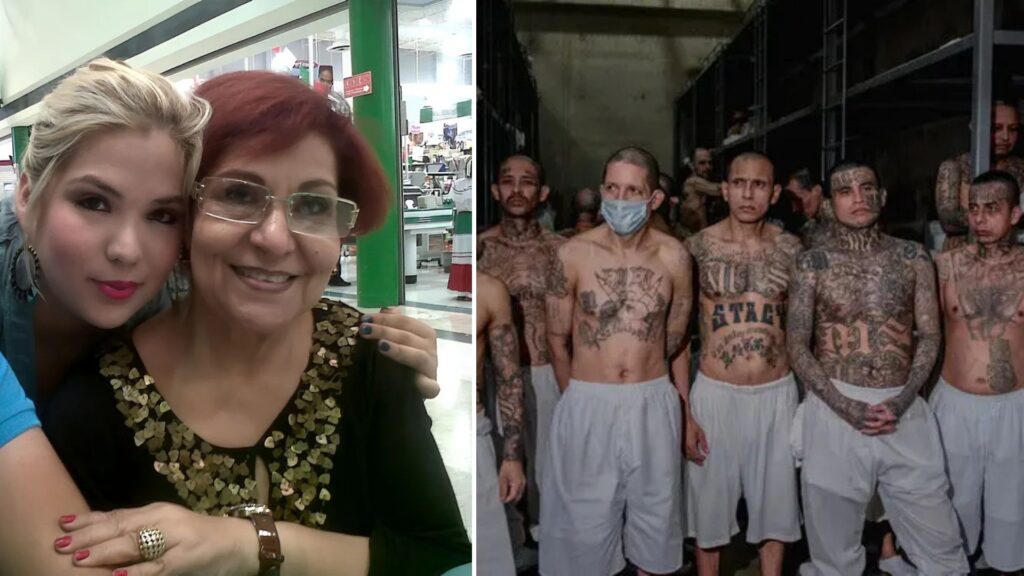
San Fernando, Tamaulipas sits in Mexico’s northeast corridor, a place long tied to cartel violence and mass-grave discoveries, and that backdrop shaped what came next. Miriam Elizabeth Rodríguez Martínez, a local businesswoman, turned into an investigator after her daughter vanished and the official response stalled.
Even the starting date is contested in reputable reporting, and that affects every timeline that follows. The Guardian and CEJIL place the abduction in 2012, while Proceso and Infobae place it in January 2014 and describe her daughter as a minor at the time.
The daughter is identified across sources as Karen Alejandra Salinas Rodríguez. The Guardian describes her as 14 when she was abducted, while Proceso and Infobae describe her as 16, and other later summaries sometimes give different ages. This uncertainty is a documented feature of the public record.
On the ransom phase, the most specific description in the accessible reporting comes from Proceso. It reports that Miriam took out a bank loan, sold goods from her business, and paid what she was told was a ransom for her daughter’s release. Proceso states she learned later, through an accused person’s statement, that her daughter had already been killed.
The Guardian’s version is shorter but points the same direction, describing her frustration with inaction and her decision to start her own investigation. In that account, she eventually located information implicating Los Zetas and found her daughter’s remains, a step that then triggered arrests.
In Proceso’s reconstruction, the paper trail becomes a map. It reports that Miriam spent late 2014 reading statements from detained suspects and using those declarations to build leads, especially leads about where bodies had been taken and who else was involved. That document-reading phase is described as methodical and prolonged.
One of those leads pointed to El Arenal, a rural area linked in earlier years to clandestine graves and, in other reporting, to official corruption and cartel control. Proceso says Miriam personally dug there until she found bones and then called a Ministerio Público agent to formally collect and secure the remains.
Proceso adds a technical limitation that shaped her next steps: specialists in the United States analyzed the recovered fragments but could not reconstruct a single complete body because the remains were so broken up. The report says a final opinion tied the fragments to six individuals, including a minor whose genetic profile matched Karen Alejandra.
That is why, in Proceso’s telling, her search did not end even after a burial. The report says she interred what was identified as her daughter’s remains and continued investigating, driven by two objectives that can be tracked in her actions: locating more remains and finding every participant connected to the crime.
The “detective work” that later made her story travel globally is described most plainly in the 2020 Infobae account and echoed in later book coverage. Infobae reports that she operated with a pistol, fake identification cards, and disguises, using those tools to approach families and gather names, addresses, and routines.
Infobae’s description is specific about how she did it without announcing herself as a victim’s mother. It says she cut her hair, dyed it, and posed as a pollster, a health worker, and an election official. The point was access: a reason to speak with relatives who might talk when they thought it was ordinary business.
The same account describes her building a private intelligence system that did not depend on police databases. Infobae says she kept notes in a notebook and carried them in a black briefcase with her laptop. The notes tracked small facts, because small facts linked people to places and schedules.
That approach also reduced reliance on a single tip or a single witness. Instead of waiting for a confession or a breakthrough, the reporting describes her collecting repeated fragments: who someone called “grandma,” which cousin was trusted, which town a person returned to, what job they were doing after leaving a cartel crew.
Infobae presents a pattern: she would enter a suspect’s orbit through family members who were not expecting danger. It says she invented excuses to meet grandmothers and cousins, and that, without realizing the stakes, they shared small identifiers that allowed her to locate a person’s daily movements and then alert authorities.
In that same reporting, she is not described as making arrests herself. The mechanism is consistent: she gathered and verified information, then pushed law enforcement to act, then watched the detention happen. Infobae frames her role as the reason “a decena” ended up behind bars, though the outlet’s story is a journalistic reconstruction.
The Guardian similarly describes her work as the driver of at least one major arrest, saying her findings led to the imprisonment of a principal suspect in her daughter’s murder. The Guardian does not detail her disguises, but it supports the core claim that her investigative labor directly produced prosecutorial movement.
Proceso supplies names and dates that show how her leads intersected with police actions. It reports that two young suspects, Uriel Ulises “N” and Cristian Josué “N,” were detained in San Fernando in September 2014 by the Federal Police, and it frames those arrests as tied to her insistence and pressure.
Proceso then describes how the case widened beyond San Fernando. It reports that, after studying statements and tracking another participant, police detained Alejandra “N” in Boca del Río, Veracruz, on June 7, 2017. In the Proceso narrative, this arrest sits inside the same chain that began with her reading declarations in 2014.
El País, reviewing Azam Ahmed’s later book, adds a different kind of detail: how she built relationships with security actors because normal channels were not producing results. In the El País summary, she contacts a Navy officer she knew and triggers an operation after recognizing her daughter’s computer in public.
El País recounts that episode as Ahmed reconstructs it: the Navy detained two women in a plaza, pressed them for information, and then moved with Miriam to a dump site connected to the group. El País describes a shootout with Los Zetas and a scene of clothing, identifications, and bodies, presented as part of the book’s reported narrative.
Because that episode involves actions by armed forces and alleged killings, it needs careful framing. The El País account is not a released government report, and it does not quote a court file. It is an account of Ahmed’s reconstruction, published as a review, and should be treated as reported narrative, not adjudicated fact.
What is clear, across sources, is that she kept returning to the same workflow: identify a person, confirm a location, document the link to Karen’s case, then escalate the information to authorities until an arrest happened. Infobae describes this as a multi-year campaign that tracked suspects across towns and states.
The Penguin Random House description of Ahmed’s book provides a tight snapshot of how he portrays her field tactics at a later stage. It says the story opens on an international bridge, where a 56-year-old Miriam stalks “target number eleven,” after dyeing her hair red as a disguise, and then orchestrates an arrest.
Publisher copy is not a substitute for court evidence, but it matters here because it matches the recurring elements found in other reporting: disguise, surveillance, and a focus on making the arrest happen rather than confronting a suspect directly. It also establishes that “target counting” was part of her organizing system.
Infobae’s report adds another practical point: she studied what people did after they left a cartel cell, because that was where they became findable. It says she learned jobs and routines, including street vending, taxi driving, selling cars, and childcare work, then used those routines to time arrests.
That focus on ordinary routines is consistent with how Proceso describes her reading statements and then traveling to match names with places. In that account, she did not treat a confession as an ending. She treated it as a list of tasks, and each task was a person whose whereabouts had to be pinned down.
By 2016, her work was no longer only about Karen. The Guardian describes her founding a group of families who searched together for missing relatives. Proceso gives the organizational names, saying she founded the Colectivo de Desaparecidos de San Fernando and later joined others to create a statewide search community.
Those organizations also changed her risk profile. The Guardian reports she requested protection after a key suspect escaped from prison in Ciudad Victoria and says the state later claimed it sent extra patrols. Other statements and reports emphasize that families searching for the disappeared are frequent targets, and her case became an example.
A separate timeline conflict appears again around the prison escape issue. Infobae describes a March 2017 escape involving more than 20 prisoners, says some of the escapees included people jailed through her efforts, and reports that three later went to her home to kill her. Proceso ties her homicide to escapees as well.
Her killing, however, has competing scene descriptions even in reputable sources. The Guardian reports that gunmen burst into her home and shot her 12 times. Proceso reports that she was followed after leaving her business, was shot as she got out of her vehicle at her house, and died about 10 minutes later at a hospital.
Despite those differences, the core facts align: she was killed in San Fernando on May 10, 2017, Mexico’s Mother’s Day, and the killing was widely treated as retaliation for her pursuit of cartel-linked suspects. CEJIL’s statement frames her as a human rights defender and calls for a serious investigation.
Proceso reports the state prosecutor’s theory of participation in her homicide with four names: Alfredo Misael “N,” Edwin Alain “N,” Erick Leonel “N,” and Juan Manuel Alvarado “N.” It says two were prison escapees, and it describes investigators tracing the vehicle used in the attack and arresting Alfredo Misael as the vehicle’s owner.
Proceso also reports what Alfredo Misael allegedly told investigators: that he was hired to support escapees from the Ciudad Victoria prison “with the mission” of carrying out an operation against a woman in San Fernando. It says he identified others by nicknames, including “El Diablo,” “El Aluche,” and “El Flaco.”
The same Proceso article describes investigative friction after her death. It reports that one suspect, Edwin Alain “N,” was serving a long sentence for other crimes and had not been accused of her murder, and it describes the killing of Juan Manuel Alvarado during an attempted arrest in October 2017.
By 2020, Proceso framed the institutional outcome as incomplete: two sentences for “autores materiales,” no identified “autores intelectuales,” and other suspects unwilling to speak or jailed on different charges. A Dónde Van Los Desaparecidos, publishing the same reporting, repeats that summary and emphasizes the absence of a known organizer.
Through all of this, the most consistent thread about her “detective work” is that it was built around access, documentation, and pressure. The disguises and false IDs described by Infobae were not theatrical props in that account. They were practical tools for entering conversations where real names, addresses, and travel habits slipped out.
Her pistol, described in Infobae as something she carried while doing this work, fits the same category in the reporting: a defensive measure in a place where she understood the consequences of being recognized. Infobae describes her husband finding her after the attack, with her hand near her bag and the pistol inside.
El País, looking back through Ahmed’s book, describes the larger logic that framed her choices: she collected clues because the formal justice system moved only when forced, and she forced movement by handing officials usable information. That same review says the people she helped imprison later organized her killing from inside prison.
CEJIL’s 2017 press release strips the story down to institutional basics and still lands on the same point: with authorities failing to search effectively, families end up doing the investigative labor themselves, exposing them to retaliation. It cites Miriam’s case as proof and calls for protection measures that match the risks.
By the time later coverage turned her life into broader cultural reference, the facts that stayed stable were the ones grounded in repeated reporting: a mother in San Fernando pushed beyond formal channels, located her daughter’s remains, and helped drive arrests. The methods are described differently by outlet, but the pattern is consistent.
Sources used
- The Guardian, David Agren, May 12, 2017, “Mexican woman who uncovered cartel murder of daughter shot dead.”
- Proceso, Carlos Manuel Juárez, May 11, 2020, “Miriam Elizabeth: tres años sin justicia.”
- A Dónde Van Los Desaparecidos, Carlos Manuel Juárez, May 11, 2020, “Tres años sin justicia en el asesinato de Miriam, la madre activista.”
- Infobae, staff report, Dec. 13, 2020, “Miriam Rodríguez, la mujer que persiguió a los asesinos de su hija…”
- El País México, Dec. 6, 2023, “Cuando Míriam Rodríguez se inventó una trinchera.”
- CEJIL, May 16, 2017, “The murder of activist Miriam Rodríguez in Mexico highlights the dangers…”
- Penguin Random House (publisher page for Azam Ahmed), Sep. 26, 2023 / Sep. 17, 2024 editions, “Fear Is Just a Word.”
- New America, Sep. 26, 2023, “Fear Is Just a Word: A Missing Daughter, a Violent Cartel…”