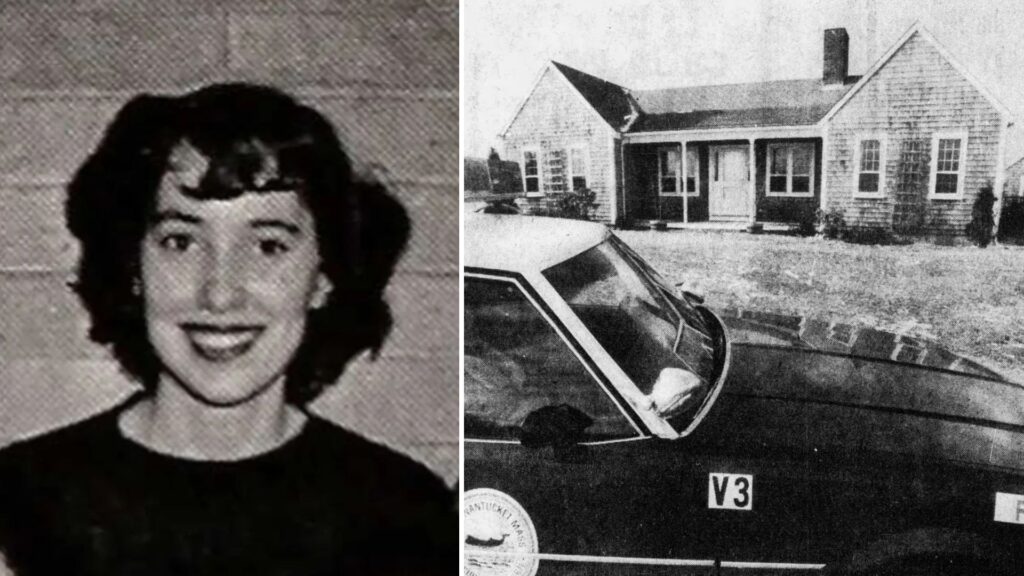
Dr. Margaret Kilcoyne went to bed around 10:00 pm Friday, January 25, 1980. Her brother, Leo Kilcoyne, was staying at her Nantucket, Massachusetts home for the weekend, and she asked him to wake her by 6:00 am for early mass at a nearby church.
Leo agreed and settled into a guest room adjacent to Margaret’s bedroom. Early the next morning he heard her alarm, but when he went into her room to confirm she was awake, she was gone. At some point overnight, the 50-year-old had disappeared.

It was bitterly cold when Margaret vanished, with temperatures well below freezing. Her car was still in the driveway, and Leo could not imagine why she would go out walking in weather like that. He searched around the house and found no note.
Her boots and coat, which she normally wore when she went outside, were still by the door. When there was still no sign of Margaret by 7:00 am, Leo called the Nantucket Police Department and reported her missing.
Margaret was a well-respected doctor and researcher who taught classes at Columbia’s medical school. She lived in New York, and had bought the home on the island of Nantucket ten years earlier to use as a vacation home.
She had come to the island several days earlier to enjoy some time off from work. She told relatives her research had resulted in what she described as a dramatic discovery.
She said she was going to be announcing it to the world in a few months and was extremely excited about it. Margaret planned to celebrate her discovery with a huge party.
Margaret began her healthcare career as a registered nurse, graduating from the Boston Children’s Hospital School of Nursing in 1951. She then went to Boston University and completed a bachelor’s degree.
She later enrolled at the University of Vermont’s medical school. After graduating in 1964, she completed her residency at Columbia Presbyterian Hospital.

After deciding her main interest was hypertension, Margaret moved on to Harlem Hospital and became director of their hypertension department in 1970. She remained there until 1973, when she took a position at Columbia University.
At Columbia she taught and conducted research on adolescent hypertension. She published many papers on hypertension, was recognized as an expert, and was seen as level-headed, making it completely out of character for her to voluntarily disappear.
Nantucket police found nothing unusual inside Margaret’s house. Leo told them he had not heard anything out of the ordinary overnight, and investigators confirmed there were no signs of forced entry. Her bed was unmade, suggesting she got up and left in a hurry.
When asked what he thought happened, Leo said he feared Margaret had walked down to the ocean and drowned herself. Detectives were not so sure and pointed out the wind chill put the overnight temperature at minus 35 degrees.
They did not believe she could make the mile-long walk to the ocean without a coat or shoes. The entire beachfront was extensively searched, but they found nothing to suggest that anyone had been on the frozen beach.
Because Nantucket was serviced by ferries and commercial flights, detectives checked passenger lists and found Margaret had not left by boat or commercial plane. Private planes, though, landed and took off after the small airport closed for the night, and no passenger lists were available.
Detectives and volunteers combed the island of Nantucket, hoping to find clues to Margaret’s whereabouts. They found nothing, and after several days, the search was called off.
Investigators admitted they had no idea what had happened to her, but were certain they would have found her if she had been anywhere on the small island.
There was little progress until February 3, 1980, when four people walking their dogs found Margaret’s sandals, passport, bank book, and a $100 bill about a mile away from her home, placed in a clearing.
The belongings were neatly stacked in a clearing that had been searched thoroughly during the initial search effort. Investigators insisted the stack was not there when the area was first checked.

After the items were found, detectives and volunteers launched another massive search for Margaret. They combed wooded areas, scoured the beachfront, and checked inside unoccupied summer homes.
Helicopters and airplanes scanned the area from above, and divers cut through ice to search a nearby pond and around the perimeter of the island. Once again, they failed to find clues about Margaret’s whereabouts.
Investigators interviewed everyone associated with Margaret, but none were able to shed any light on her disappearance. The night before she went missing, Margaret and Leo had dinner with Richard and Grace Coffin, who owned a Nantucket gift shop.
The Coffins told detectives Margaret had been in good spirits and excitedly described what she believed was a huge medical breakthrough. Richard noted, “She was very elated about the whole thing — her discovery. The four of us joked a lot. She was far from depressed.”
Leo agreed nothing seemed wrong that night. “She was not depressed at all.” He said he had seen no warning signs that she was thinking about committing suicide.
To Leo, it remained inexplicable. “There was never any indication she would ever do something like that. What happened to her is a complete mystery.” He had traveled from Canada after Margaret called to tell him about her research discovery.
He explained, “It was a very big discovery. She had found a way of isolating the causes of hypertension. I went down to Nantucket to see her because she was so elated, so excited about her breakthrough.”
Anticipating more relatives would soon travel to Nantucket to see her, Margaret went grocery shopping the day before she went missing. She purchased $650 worth of food and spent another $250 on liquor, despite the fact that she rarely drank.
Oddly, she purchased everything in multiples of three and told the checkout clerk she was going to have a huge party to celebrate her discovery. She said she planned to rent three houses for guests to stay, but there was no indication she actually tried.
Two weeks after Margaret was last seen, Nantucket police continued daily searches. Capt. George Rezendes told reporters, “Every day there’s two or three people out there. We’re still checking the area.” They still could not determine what had happened.
On February 8, 1980, searchers found a brown blouse rolled up into a ball under a bush about 150 yards from where her passport and other belongings had been found. It was the same size and brand as blouses hanging in Margaret’s closet.
Police believed the blouse was hers, and Nantucket Police Chief Paul Hunter said it had been intentionally hidden. “It was pretty obvious the blouse had been placed where we found it.” He then explained what the brush looked like where it lay.
Chief Hunter said the find appeared deliberate. “It was rolled up and on the ground under scrub oaks, quite a mess of them. Capt. Rezendes had to crawl in to get it.”
Chief Hunter believed the blouse had been intentionally hidden, yet he said he had no idea why Margaret would do it there at all. “Day by day, it’s getting more confusing.”
As word spread, police heard from people who believed they had seen Margaret on the mainland, fueling speculation she had managed to get off Nantucket. Two people were convinced they saw her in West Yarmouth.
One man said she asked him for directions to Hyannis Airport and said she needed to get a flight back to Nantucket. He told police he was absolutely certain it was Margaret, but added that she appeared somewhat confused.
Officials conducted another air search on February 21, 1980. Capt. George Rezendes was confident she was not going to be found on the island.
Rezendes said from the air, “We had a damned good view. We could see rabbits and birds and a few patches of snow, but didn’t turn up anything [related to the search.]”
Chief Hunter said that when he first learned of Margaret’s disappearance, he assumed the worst at the start. “Until her belongings were found, I thought we had a typical case of suicide.”
After interviewing many of Margaret’s associates, he said he changed his mind. “We now think there is a strong possibility she is alive…maybe the things were placed there to throw us off the trail.”

Six weeks after Margaret vanished, Hunter told reporters the evidence pointed elsewhere. “We have definitely eliminated murder, kidnapping, any sort of foul play, and the evidence points very clearly away from suicide.”
He added, “In fact, it now points to a deliberate attempt to make believe it was a suicide.” Hunter suggested at least one of Margaret’s relatives had helped her disappear.
He questioned the family involvement, saying, “We haven’t heard from her brother in weeks. If it was your sister, wouldn’t you be calling us all the time?”
Months passed with no progress. By the time Nantucket was flooded with tourists eager to spend their summer holidays on the beach, it seemed the island had forgotten. Detectives continued investigating each tip, but leads soon ran out and the case went cold.
A year after Margaret vanished, investigators still had no idea what had happened to her. Chief Hunter, however, did not believe she had killed herself. “I think she’s alive. I’ve felt that way all along.”
On the second anniversary, Leo stated he believed his sister had killed herself and that nothing the police said could change his opinion. Chief Hunter told reporters there was simply no evidence to support the suicide theory.
Hunter said that was especially true if Margaret had been the one who left her belongings in the clearing. The items were a mile from her house, in the opposite direction of the beach.
He said it was unrealistic to believe she walked a mile through the woods, dumped her belongings, then backtracked over a mile and a half to reach the beach so she could throw herself into the ocean.
Chief Hunter admitted the case had become an obsession for him. “There had not been one day in the last two years that I have not thought about it…she’s constantly on my mind.”
Years went by, and Margaret’s fate remained a mystery. In January 1989, the case made headlines again after Leo filed a petition to have his sister declared legally dead so he could dispose of her $200,000 estate.
In his petition, he noted, “None of Dr. Kilcoyne’s family or friends have heard from her. From all facts known, it is apparent that Dr. Kilcoyne is deceased and not voluntarily away from her family, friends, and associates.”
Investigators disagreed with Leo’s theory, pointing out there were no footprints on the beach and nothing to suggest Margaret had been suicidal. They continued to argue the evidence did not match a suicide scenario.
Chief Hunter stated, “I am convinced, as I have been all along, that she is not dead. I think she got off the island for some reason we do not know and is living somewhere else.”
Nantucket Fire Chief Bruce Watts was blunt. “My feeling is that she’s still alive. I feel strongly that the whole thing is the biggest scam ever perpetuated on this town.”
In July 1989, a probate judge granted Leo’s petition and declared Margaret dead in the eyes of the law, closing a nearly decade-long investigation into her disappearance.
Although many investigators believed she was still alive, there was little they could do to prove their theory. Margaret’s true fate may never be known.
Dr. Margaret Mary Kilcoyne was 50 when she went missing from Nantucket, Massachusetts in January 1980. The circumstances surrounding her disappearance are murky and it’s unclear if she intended to harm herself or simply wanted to run away from her life and start fresh somewhere new.

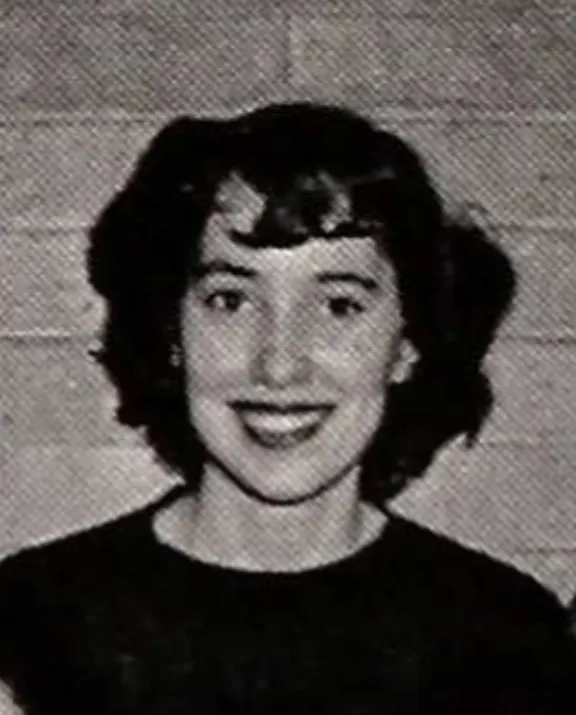
Margaret had red hair and blue eyes, and at the time of her disappearance, she was 5 feet tall and weighed 140 pounds. She was thought to be wearing only her nightclothes when she left the house, as her coat and shoes were left behind.
Margaret was declared legally dead in 1989, but her body has never been found and some investigators believed she was still alive at the time. If you have any information about Margaret, please contact the Nantucket Police Department at 508–228–1212.