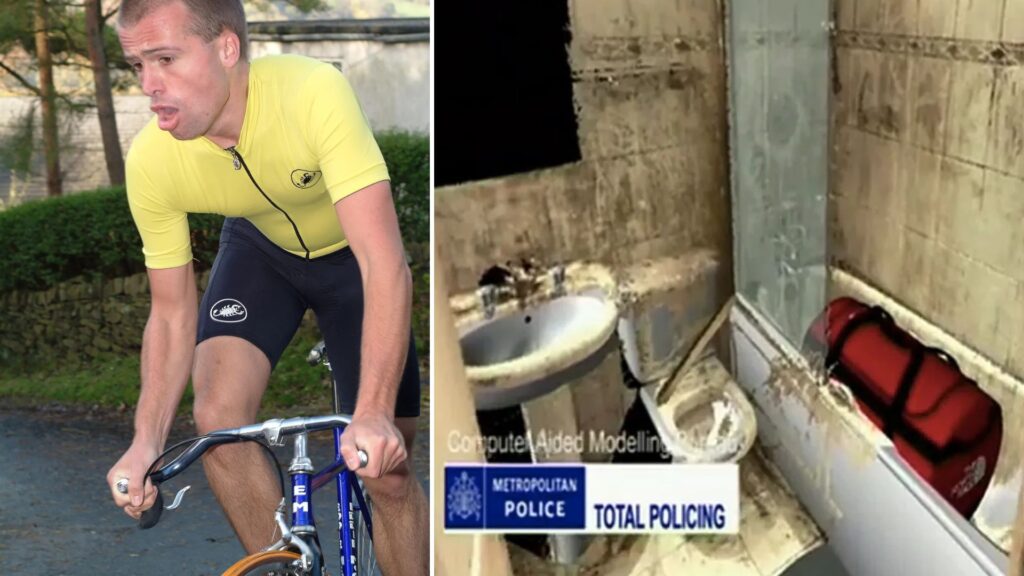
Gareth Williams was a 31-year-old GCHQ codebreaker on secondment to MI6 when he was found dead on 23 August 2010, inside a zipped, padlocked red North Face holdall placed in an empty bathtub at his Pimlico flat.
The keys that could open the padlock were found inside the bag with Williams, positioned underneath his body, and the bag itself showed no obvious tearing or damage consistent with a struggle during confinement, according to testimony.
A 2012 inquest concluded his death was “unnatural” and likely involved a crime, and the coroner said she was satisfied, on the balance of probabilities, that he was killed unlawfully, while also saying evidence was insufficient for a formal unlawful killing verdict.
In 2013, Metropolitan Police statements described the most probable scenario as a solo accident, while acknowledging gaps and contradictions. Police said they could not categorically rule out another person being involved.
A further independent forensic review began in January 2021. Police said its findings, delivered in November 2023, produced no new DNA evidence and identified no further lines of inquiry, and they reiterated they would review any new information.
Timeline anchored to reported dates
Police and media reporting consistently place Williams as last seen alive on 15 August 2010. Eight days later, on 23 August, he was found dead at his London flat, with his body described as badly decomposed from time in the bag.
Reuters reporting tied the workplace trigger to missed attendance: Williams was scheduled to attend a work meeting on 16 August but did not appear, and there were additional expected meetings that week he also missed, according to inquest-era testimony.
At the inquest, a witness described standard workplace escalation after a non-arrival, saying action would typically be taken within two to four hours. In this case, the record discussed in court involved a much longer delay.
Reporting and inquest coverage repeatedly state MI6 failed to report Williams missing for days, and the coroner later criticised that delay. The MI6 chief apologised publicly through counsel after the inquest, according to ITV coverage.
Location and scene basics
Williams was found inside his flat in Pimlico, central London, which later reporting described as an intelligence service “safe house” and close to MI6’s headquarters. That context was repeatedly noted because it shaped access assumptions.
The holdall was a red North Face bag, zipped and secured with a padlock. It was placed in an otherwise empty bathtub. Investigators and the inquest treated the bag closure and lock as central technical issues.
The body position was described as curled up or folded inside the holdall. Reuters used “curled up” and “folded in the fetal position” language, and those descriptions mattered because they framed what physical positioning was possible.
One recurring evidence point is the absence of the victim’s prints where they might be expected if the entry was self-managed. Reuters in 2013 reported detectives found no palm prints on the side of the bath.
Another recurring point is the padlock itself. Reuters in 2013 reported investigators found no traces of Williams’s DNA on the padlock, and that absence remained one of the pieces police described as difficult to explain cleanly.
Bag dimensions and survival window
The inquest record described the bag size in at least one television account as 81cm by 48cm, and that measurement was used in court to discuss confined-space timing and what actions could be completed inside.
ITV reported pathologists told the inquest Williams would have suffocated within about three minutes if he was alive once inside the bag. That short window became important for any theory that required deliberate self-locking.
Some reporting framed the physiological mechanism as rapid breathing limitation and rising carbon dioxide in a sealed space. For readers, the key detail is timing: a few minutes to incapacitation means any complex steps must occur fast.
That timing also affects the “accident” scenario. If the fatal mechanism was suffocation in a sealed bag, the difference between “possible” and “probable” depends on whether a person can zip and secure the bag completely before impairment.
What toxicology and the postmortem could and could not answer
The cause of death was not established in a conventional, single-line manner, and reporting repeatedly stresses the limitations created by decomposition and time. Inquests and later police summaries treated poisoning and suffocation as leading candidates.
ITV said pathologists described poisoning and asphyxiation as the foremost contenders. Reuters in 2012 similarly reported pathologists believed the likeliest cause was either poisoning or suffocation but could not be sure which.
Several sources reported toxicology tests found no traces of alcohol, drugs, or poison, though “no trace” in public summaries does not necessarily mean every substance can be excluded, especially after decomposition.
In practical terms, the public record leaves a gap: the body condition reduced certainty around mechanism and timing. That gap matters because the bag mechanics question is difficult enough even with a clear medical cause.
DNA: what was reported, what was corrected, and what stayed unresolved
A key inquest-era point was that small components of DNA from another contributor were reported on the bag, and that detail was used to argue contact by someone other than Williams. Reuters reported Sebire referenced “small components” of another DNA contributor.
Reuters also reported police found blood believed to be Williams’s and “small components of another contributor’s DNA,” as presented through Sebire’s testimony. That combination was cited to support continued third-party consideration.
The public record also includes a major forensic handling error: The Guardian reported LGC apologised after a typographical error meant investigators chased a non-existent suspect, and a later review identified the partial profile as a scientist involved in the case.
Even without debating intent, the practical impact is clear. If a partial profile is mis-entered and treated as a new suspect, time and investigative energy are redirected, and the family’s expectations are raised and then collapsed.
Later reporting about police work after the inquest suggests multiple trace marks existed but could not be developed into full profiles. The Independent reported a re-investigation found 10 to 15 DNA traces that technology could not develop into full profiles.
Fingerprints and “absence evidence” issues
Fingerprints and palm prints became major points because of what was missing rather than what was present. Reuters in 2013 reported detectives found no palm prints on the side of the bath and no traces of Williams’s DNA on the padlock.
Police spokespeople and later reporting treated those absences as compatible with more than one scenario. A lack of prints can reflect wiping, gloves, limited contact, or conditions that reduce transfer, and none of those explanations is provable from absence alone.
The 2013 police position leaned on the claim that a person could lower into the bag without touching the bath rim. A Guardian report quoted police saying it was theoretically possible to do that.
For technical readers, that is a narrow point. It addresses one absence, not all. It does not directly resolve the padlock DNA absence, the key placement, or the complete closure sequence under a short survival window.
Forced entry and door hardware problems
Several summaries state there was no sign of forced entry, and that finding was used to narrow the intruder hypothesis. However, the inquest-era record includes an important qualifier: door and locks were removed by the time police experts became involved.
That qualifier matters because it reduces the certainty of any entry conclusion. If original lock and door condition are not preserved for forensic inspection, “no forced entry” becomes less about proof and more about what remains observable.
The public reporting does not establish a clear chain-of-custody narrative for the door hardware in a way that resolves the issue. Readers who care about procedure should treat the entry question as constrained by evidence preservation limits.
The keys: where they were found and why it matters
Multiple sources note keys to the padlock were inside the bag. Reuters stated keys that could open the padlock were found inside the bag with Williams, underneath his buttock.
The placement is relevant for mechanical explanations. If a person locks a padlock from the inside, the key’s final location becomes part of the sequence: when the lock closes, where does the key go, and how does it end up under the body.
That detail does not prove murder or accident by itself. It is one of several points that any complete scenario needs to account for, along with timing, body position, and whether the bag could be closed fully from inside.
Demonstrations: “400 attempts” and what that actually means
The “400 attempts” claim comes from inquest coverage describing reconstruction work by two experts using a similar bag. Reporting says they made about 400 attempts between them and could not complete the full sequence of entry and external padlocking.
NDTV’s inquest reporting broke the attempts into two sets: Peter Faulding said he made about 300 unsuccessful attempts, and William MacKay said his assistant made more than 100 attempts, also without success.
Guardian inquest coverage stressed the practical difficulty: entering the bag was manageable, but pulling the zip into position in a way that allows padlocking was the problem point during reconstructions. That was described as painful and fiddly.
These demonstrations do not “solve” the case. They establish that, under test conditions with skilled participants, the full sequence was hard to reproduce reliably, and that matters for probability judgments, not for binary possibility.
“Possible” versus “probable” in official language
Police statements and reporting repeatedly separate “possible” from “probable.” That distinction matters because an inquest can describe what seems most likely on a civil standard, while police emphasise what they can prove in criminal terms.
In the UK, a coroner’s “balance of probabilities” conclusion is closer to “more likely than not.” It is not the same as a criminal conviction standard, and it does not require identifying a perpetrator.
Police, by contrast, tend to emphasise whether evidence establishes circumstances “beyond reasonable doubt” or supports prosecution. A case can remain unresolved even when a process finds one scenario more likely.
Material found in the flat: inventory-level details
Public reporting states police found make-up, a long-haired wig, and unworn women’s clothes and shoes worth around £20,000. Reuters listed that set of items in both 2013 and 2024 reporting.
Reuters in 2012 added brand-level specifics in inquest testimony: shoes and clothing from luxury labels were discussed, including a pair of shoes said to be worth about £1,000, as part of describing what was inside the flat.
Witness testimony in Reuters described a close friend, Sian Jones, saying the clothing was not necessarily unusual in context because Williams gave her expensive clothing as gifts, and she did not believe the items proved an identity explanation.
For detail-focused readers, the key point is evidentiary use. These items can support lifestyle hypotheses, but they do not directly explain the padlock, the closure sequence, or the timing within a sealed bag.
Digital traces and “interest” evidence
Reuters reported police found evidence of visits to sexual bondage websites on Williams’s computer. AP likewise reported investigators found he had visited bondage and sadomasochism sites, including ones related to confinement interests, and police discussed that context.
Reuters in 2013 said detectives found images of transvestites and a picture of Williams wearing only boots. NDTV in 2012 reported the inquest heard of video stored on his phone that appeared to show similar content.
These facts were treated differently by different officials. Reuters reported Hewitt said there was no evidence Williams’s interest in bondage or escapology was linked to his death, even while he acknowledged escapology might have been a factor.
For procedural readers, “interest evidence” has limited forensic value unless it links directly to actions at the time of death. It often explains why a theory is considered, not why it is proved.
Prior restraint incident and relevance
Reuters in 2012 reported the inquest heard that several years earlier Williams had been found tied to his bed at lodgings and unable to free himself, and he told his landlady he wanted to see if he could get free.
That prior incident is often used to argue he was willing to test restraints and confinement. It does not prove the final event, but it provides a documented precedent for self-directed restraint experimentation.
For technical analysis, the prior incident is different in key ways. A bed restraint typically allows breathing and time; a sealed holdall constrains breathing and time, making the risk profile substantially higher.
Other objects noted in early reporting
In August 2010, early Guardian reporting said a mobile phone and several SIM cards were found laid out in a “ritual” manner in the flat. Later summaries did not always repeat that phrasing, but it remains part of early scene reporting.
Because that description comes from early-stage reporting, it should be treated carefully. It indicates arrangement was observed and considered notable, but the public record does not confirm a forensic meaning for the layout.
For readers focused on evidence quality, early scene characterisations can reflect initial impressions rather than validated conclusions. The durable facts are those that recur across inquest testimony and later official statements.
Work context and information barriers
Williams was a codebreaker at GCHQ and on secondment to MI6. Multiple reports describe his London flat as tied to intelligence work and close to MI6 headquarters, which increased attention on who could access the building and flat.
Reuters reporting indicates the case created procedural tension between homicide detectives and intelligence structures. In 2012, testimony and reporting described counter-terrorism officers acting as intermediaries between murder detectives and MI6.
The practical effect of such a conduit is that evidence and interviews can be filtered. That does not prove obstruction, but it creates a measurable risk: homicide investigators do not directly control evidence discovery and disclosure.
The nine memory sticks and what police said they learned late
One of the most concrete “process” failures discussed at the inquest involved electronic media at Williams’s MI6 workplace. Reuters reported an inquest heard MI6 failed to hand over belongings including computer memory sticks to police.
Reuters said the lead detective, Jackie Sebire, told the inquest MI6 agents searched Williams’s electronic media without informing police, and police only learned of the memory sticks on the Monday before that testimony.
Reuters also reported police did not take an inventory of the contents of Williams’s office cabinet because of the sensitive nature of documents, a procedural point that mattered because inventories establish what existed at what time.
For detail-minded readers, the issue is not only the sticks. It is chain-of-custody logic: who had control, when items were examined, what logs exist, and whether homicide investigators had independent access to primary material.
SO15 role and the “who checks what” problem
Reuters reporting identified a counter-terrorism link through Detective Superintendent Michael Broster of SO15, quoted as saying his team should have examined the memory sticks before giving them to MI6, but that he took what evidence he believed was relevant.
This matters because it shows decision-making about relevance occurred inside a restricted information environment. In an ordinary homicide inquiry, investigators seize, inventory, and test broadly, then decide relevance based on results.
Here, the inquest record as reported suggests relevance judgments were made before standard seizure and examination by the murder team. Even if motivated by security, that is a clear procedural deviation from typical practice.
The inquest’s core technical question
Reuters in 2012 quoted Sebire describing the central question as whether Williams could have placed himself in the bag and locked the padlock, or whether someone else was responsible. That technical framing shaped all later debate.
Sebire’s view, as quoted by Reuters, was that a third party was involved in the padlock being locked and Williams being placed in the bag. That position was presented in court as an investigative opinion, not as a proven fact.
The coroner’s approach put the same issue at the centre but used a different standard. She assessed which scenario the evidence most strongly supported, including the failed reconstruction attempts and the lack of expected trace evidence.
The 2012 coroner findings: what was actually decided
ITV reported coroner Fiona Wilcox said the cause of death was “unnatural” and likely involved a crime, and she stated she was satisfied, on the balance of probabilities, that Williams was killed unlawfully.
ITV also reported Wilcox said she was sure a third party locked Williams inside the holdall. This is one of the clearest “who did the locking” statements in public reporting of the inquest outcome.
At the same time, Reuters in 2013 reiterated that the inquest did not deliver a prosecutable identification and that later police work treated the issue differently. The point for readers is that the inquest did not “convict” anyone.
Wilcox criticised the handling of the case across agencies. ITV reported she said police, MI6, forensic providers, and even the coroner’s office fell short of required standards, and she outlined communication and evidence-submission breakdowns.
Missing-person delay and its consequences in the record
Reuters reported that had proper procedures been followed, Williams’s absence would have been reported and acted on within hours, but supervisors waited days, and his body was found about a week after he first failed to show.
This is not a subtle point. Delays change the state of a scene, the value of digital evidence, and the reliability of some toxicology tests. The public record repeatedly frames the delay as an avoidable damage.
ITV reported MI6’s chief apologised after the inquest for the failure to act swiftly when Williams did not show up to work. That apology is often cited because it is one of the few direct institutional acknowledgements.
The 2013 police position: what they said and what they conceded
Reuters in November 2013 reported police said Williams most probably died accidentally on his own, and Hewitt told reporters he was convinced the death was not linked to Williams’s work. That is the core “most probable” shift.
Reuters described Hewitt acknowledging experts had tried and failed to lock themselves into a bag, but police now believed Williams did it. He also said they could not categorically rule out anyone else being involved.
AP coverage similarly reported police hedged their conclusion and acknowledged “evidential contradictions and gaps” for both hypotheses. That phrasing matters because it shows the police did not claim a solved mechanism, only a best-fit scenario.
Reuters in 2013 also stated detectives rejected suggestions the flat underwent a “forensic clean.” That was a direct response to speculation that evidence could have been removed by trained actors.
Re-enactments and the “now proven” claim
The Independent reported police said they had studied videos that emerged following the inquest showing how a person could lock themselves inside a sports bag, and they accepted it was “now proven” such an event could have happened with the same holdall and padlock.
AP also reported police concluded after several reenactments that it was possible for Williams to climb inside the sports bag and lock it. This supports the “possible” argument, but it does not independently establish it happened.
From a technical standpoint, this is the critical distinction: a method demonstration shows feasibility under conditions, but case proof requires matching that method to the specific evidence at the scene, including prints, DNA, and timing.
What police said they found and how they used it
Reuters reported police found make-up, a wig, and unworn women’s clothes and shoes, plus evidence of bondage website visits. Police also described the absence of Williams’s DNA on the padlock and absence of palm prints on the bath.
In 2013, Reuters reported police found images of transvestites and a picture of Williams wearing only boots. Whether those items point to identity, role, or behaviour was debated, but police said it did not explain death.
For readers who want strict evidentiary relevance, these are background elements. They can explain why certain hypotheses were considered, but they do not directly resolve the lock, the closure, and the missing trace evidence.
Family position as recorded in reporting
Reuters reported that in a family statement after the 2013 police conclusion, Williams’s family said they still believed the coroner’s conclusions more accurately reflected what happened, and they repeated anger about MI6’s failure to report him missing promptly.
This matters because it clarifies that the official record contains competing institutional conclusions and ongoing family disagreement. The case is not only “unsolved” in public; it is contested in how authorities framed probability.
The 2021–2024 review: what it was meant to do
The later forensic review was framed publicly as a response to advances in DNA analysis and renewed attention to trace evidence. The Guardian reported the decision followed reporting that new methods might allow further study of a hair found at the scene.
Reuters and Sky reported police said a further forensic review was commissioned in 2021 and did not throw further light on the case. Police said findings were delivered in November 2023 and disclosed there was no new DNA and no new lines.
The significance is procedural. A review implies the case file was reopened at least for evidence reassessment, and that modern lab methods were applied again. The reported outcome suggests those methods did not produce an identifying profile or new suspect line.
What the 2024 update actually said
Reuters reported Detective Chief Inspector Neil John said no new DNA evidence was found and no further lines of inquiry were identified. The reporting also reiterated that police would review any new information or evidence.
Reuters repeated key scene details in that context: Williams was found curled up inside the zipped and padlocked holdall, in the London flat described as an intelligence service safe house, and tests found no traces of alcohol, drugs or poison.
The update did not publicly endorse one explanation over another beyond repeating prior positions. It functions as a status report: the evidence was re-checked, the known constraints remained, and no new forensic lead emerged.