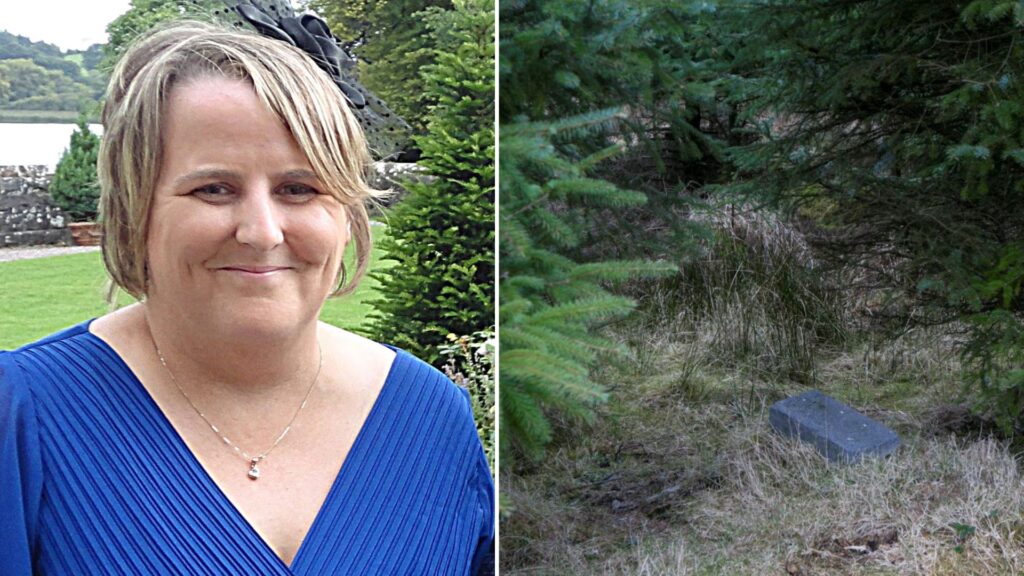
The moment the case shifted did not begin with a suspect or a confession. It began on a wooded stretch of Killakee Mountain, where a professional dog trainer went looking for a dog that would not come back.
It was September 13, 2013, more than a year after Elaine O’Hara was last seen. Her disappearance had sat in the system as a missing-person file, unresolved and slowly cooling.
When the dog ran into undergrowth and refused to return, the trainer pushed in after it. In a clearing, she came upon skeletal remains and clothing, then contacted the landowner and gardaí.
Investigators would later say she was identified through dental records. Even then, the recovery was incomplete, the kind of detail that carries its own quiet horror because it speaks to exposure, scavenging, time.
Three days earlier, the first of several “breakthroughs” had occurred about 20 kilometres away, on a bridge over the Vartry Reservoir near Roundwood, County Wicklow.
That week, the reservoir was unusually low. The Irish Times reported evidence that the water had fallen from a normal depth of roughly 20 feet to about two feet after a warm summer, leaving objects visible that would usually remain hidden.
Three men standing on the bridge noticed something in the water and decided to retrieve it. What came up was a bag. Inside were clothing, rope and handcuffs, items that looked out of place even before anyone knew a missing woman might be involved.
They left the items on a wall at first, then returned the next day and brought them to Roundwood Garda station, according to trial coverage. At that point, detectives still did not have Elaine O’Hara’s name attached to what was in the bag.
Only later did the significance sharpen, when a garda returned to the reservoir repeatedly and conditions finally allowed a clearer search by sight and touch. What he recovered on September 16 included keys with loyalty cards, rope, a leather mask, and a knife, among other items described at trial.
In the reporting, one detail keeps reappearing because it explains how a submerged cache could survive long enough to matter. An engineer in charge of the reservoir told the court that June 2013 was the driest summer since 1995 and that the water level dropped rapidly, by more than what was typical.
That unusual drop exposed a set of objects that investigators would later frame as concealment, an effort to sink evidence rather than destroy it. It also created a rare window in which ordinary people could see what was lying below.
From there, the file stopped being a missing-person case and became something else. The Irish Times described the sequence as a “remarkable coincidence,” first the reservoir find, then the skeletal discovery on the mountain, close enough in time to become one combined investigative story.
Elaine O’Hara, 36, was last seen at about 6.15 p.m. on August 22, 2012, near Shanganagh Cemetery in south Dublin, according to the opening of the prosecution case as reported by the Irish Times.
The same coverage describes how a “shiny object” drew anglers to the reservoir bag on September 10, 2013, and how gardaí only later connected the items to a missing woman through identifiers on recovered property.
A Dunnes Stores loyalty card attached to a keyring was among the links that led back to O’Hara, as reported in court coverage. Once that connection was made, the reservoir area became a crime scene and searches intensified.
In later reporting, the case would be described as a study in modern policing, where the physical and the digital run side by side. A set of keys or a pair of glasses can matter as much as a message thread, because each piece helps attribute a life, and a relationship, to a particular person.
The glasses became a story of their own. An underwater search on October 7, 2013, recovered glasses that a Specsavers retail director said could be linked through an internal code and prescription records to Elaine O’Hara, evidence that was later laid before the jury.
The items pulled from Vartry were described in blunt lists at trial: clothing and restraints, a blindfold and a gag, rusted chains and handcuffs, and the kinds of small objects that look ordinary until they are placed in a criminal narrative.
From the beginning, the prosecution framed those objects as part of a hidden relationship and a plan to keep it hidden even after it ended in death. The defense, in turn, argued about what could and could not be safely inferred from what lay in the water.
What made the case different from many murder trials was how heavily it leaned on communication. The Irish Times reported that the State contended a large volume of messages incriminated Graham Dwyer, and that many were sent through pay-as-you-go phones used for secrecy.
Dwyer, a south Dublin architect, pleaded not guilty. He would later be convicted, but for much of the trial reporting, the repeated emphasis is on what the jury heard rather than what the public already believed.
According to Irish Times coverage, the prosecution alleged the messages showed a pattern that escalated over time, combining control, threats, and a fixation with knives. They argued the texts were an essential building block in proving who was speaking and what was intended.
At the heart of the prosecution case were what became known as the “master” and “slave” phones, two Nokia handsets recovered from the reservoir, which prosecutors argued were used almost exclusively for contact between Dwyer and O’Hara.
I want to stick my knife in flesh while I am sexually aroused… I would like to stab a girl to death some time.
— Graham Dwyer, Text from 083 phone, June 2011
My urge to rape, stab or kill is huge. You have to help me control or satisfy it.
— Graham Dwyer, Text from 083 phone, 2011
The reporting makes clear that the jury heard messages that were explicit, violent, and in parts humiliating. The Irish Times described prosecutors pointing to exchanges that combined sexual role language with threats, punishment, and references to knives and killing.
Even in the same article, the prosecution’s approach is practical. They argued that mundane messages also mattered, because they could tie a pseudonymous phone to real-life events, including family details, and make attribution harder to dismiss as coincidence.
The last day Elaine O’Hara was seen, August 22, 2012, became the pivot point. The Irish Times later reported that the trial was told a text on that day instructed her to “go down to the shore and wait,” a line that sounds ordinary until the rest of the case catches up with it.
Prosecutors contended she met Dwyer that day and that he murdered her at Killakee, the same area where her partial remains were found 13 months later. The defense disputed the State’s narrative, but the mountain stayed fixed in the timeline.
The “remarkable coincidence” the court heard about was not only the closeness of the two 2013 discoveries, but the way one led to the other. The reservoir find created a fresh investigative pressure, and the mountain discovery made that pressure urgent.
Once gardaí had a name tied to the reservoir items, the search widened. The case, as covered, becomes a layered reconstruction: what she did, where she walked, what she carried, and which objects might have traveled with her last.
The prosecution argued that some of the items recovered from Vartry were meant to be submerged and forgotten. The logic was simple: if you cannot erase a relationship, you can try to sink the traces of it.
The Irish Times reporting on the conviction notes that jurors asked to see all the knives involved in the case, including knives recovered from Vartry and knives found at Dwyer’s workplace, an indication of how central the idea of a weapon became to deliberations.
Those requests also hint at the trial’s emotional landscape. Mr Justice Tony Hunt later remarked, in Irish Times reporting, that even with decades of professional experience he did not find the material easy and described it as “pretty horrendous.”
The prosecution’s theory, as reported, was that the killing was done for sexual gratification and that the relationship’s structure, including dominance language, helped explain why Elaine O’Hara stayed in contact and why the communications were hidden.
The defense response, in broad terms, attacked attribution and inference. In appeal reporting, courts repeatedly returned to the idea that text messages, independent of certain categories of phone data, remained powerful and largely uncontested evidence.
A text message from Elaine O’Hara in which she allegedly tells Graham Dwyer: “I’m not into blood anymore,” was among more than 400 read to a jury at the Central Criminal Court.
Another, from an 083 number allegedly used by Mr Dwyer and sent to Ms O’Hara, said, “Still dying to knife someone, worried I might do it.”
The first message was dated March 25th, 2011, at 3.22pm and was sent from the 083 number, Mr Guerin said.
“Hi Elaine, hope you are keeping well”. Ms O’Hara responded: “Who’s this please?” The 083 number returns with “This is an old friend . . . We used to play together and I miss it terribly . . .”
Mr Guerin outlined further exchanges and then a message from the 083 number said, “I tried to get you out of my mind but can’t, “David”.”
“Yes it is you, I knew it,” Ms O’Hara said, followed by, “I’m not into blood anymore.”
The conversation continued and the 083 number said: “There is a girl in the USA who asked me to do something you asked me to do . . . thinking about it.” The 083 number also said “I got this phone just so it couldn’t be traced.”
He also asked if she had ever thought about him. “Honestly yes, but then I think of the blood,” Ms O’Hara said.
On March 26th, from 3pm, there were more texts, including one from Ms O’Hara directing the recipient to go into a café at Belarmine Plaza, where she lived, sit down and text her to say he’d arrived.
On March 27th, Ms O’Hara texted: “A bit sore today sir, punches killing me.”
The 083 number responded she was lucky she was “hurting from punches and not stab wounds”.
Later that day, Ms O’Hara texted, “Any news on baby?” to which the 083 number responded, “Not yet, has to happen this week,” Mr Guerin said.
At one point, Ms O’Hara inquired if it was okay for her to have someone else and the 083 number responds that she should get his “prints on the kitchen knife” and “the more DNA in the flat the better”.
She said the other guy is “kind and gentle”.
On March 31st, Ms O’Hara again complained she is covered in bruises and the responder suggests “sudocrem” at night and arnica cream, and wearing a polo neck. “It’s going to be impossible to play and not leave bruises,” he said.
There is also a discussion about the “one in the USA”. The 083 number said it would cost thousands and he “can’t wait that long, can’t wait to stick the knife in”. Ms O’Hara said, “You are not getting me, never again,” and the response was, “You might not have a choice.”
He then said he will find someone out walking to knife and asked: “If you ever want to die promise me that you will let me do it.” The response was, “Yes, sir, I promise,” Mr Guerin said.
The texts also include a discussion about carrying Ms O’Hara out of her apartment tied up in a suitcase. She then said: “You will drive yourself mad, sir . . .” He responded “Stab, stab, stab, rape, kill,” and she answered, “Grow up, sir.” “You are going to get an hour’s punishment for that,” was the answer.
On April 2nd, in a further exchange, the 083 number said “I’ll be there in 20 minutes, leave the door open, be naked in bed, pretending to be asleep.” Later, Ms O’Hara complained of marks on her neck from him “pretending to cut me”. She apologised “about yesterday”.
“Don’t worry about it, just don’t ever untie yourself again”, was the response, Mr Guerin said.
On April 8th, a text from the 083 number said, “There are lots of fluids I’d like to see drip from your body.”
In other texts, Ms O’Hara’s death is discussed. Ms O’Hara said when she wanted to do it before, he didn’t make it easy. The 083 number said, “I wasn’t ready before, am now with this untraceable phone, all you have to do is get into the car . . . it would be painless”.
He said he would use chloroform or drugs. Ms O’Hara said he would never do it as he had left too much DNA at her place and she was “not good at cleaning”. “Don’t worry, I am,” was the response.
In March 2015, Irish Times coverage described analysts compiling thousands of messages sourced from devices and backups, and prosecutors using that compilation to show continuity of contact, even when the relationship went quiet and then surged again.
This is where the case becomes less about a single night and more about a pattern, a long conversation that the State said revealed intent. It is also where reporting repeatedly emphasizes “allegedly,” reflecting how messages were attributed during trial.
The Guardian’s sentencing coverage described the material heard by jurors as among the most graphic and disturbing, including video evidence shown in court and messages filled with fantasies of rape and murder.
The court heard a series of text messages from the start of their relationship in 2007 between O’Hara, 36, and Dwyer in which he was referred to as “Master” or “Sir” and her as “Slave”. Overall there were 2,600 text messages filled with rape and murder fantasies.
When O’Hara was hospitalised after a suicide attempt in August 2012, one of Dwyer’s text messages read: “You must be punished for trying to kill yourself without me.”
And when she pleaded with Dwyer to make her pregnant, he replied in another text trying to persuade her to help him kill another woman. “Ok, a life for a life. Help me take one and I will give you one,” he texted her.
Dwyer visited an alternative sexual underground website to fulfil his deep-seated fantasies to spill women’s blood during sex acts. He came across O’Hara, who had a history of self harm. Early on in their master-slave relationship, Dwyer told O’Hara via another mobile phone text: “My urge to rape, stab, kill is huge. You have to help me control or satisfy it.”
The Guardian also framed Elaine O’Hara as vulnerable and isolated, a woman with significant mental health struggles who became “quarry for a dangerous predator,” language that reflects the publication’s interpretation of the relationship dynamic presented at trial.
Irish Times reporting, by contrast, stays anchored to courtroom steps and evidentiary claims. It describes how the jury was led through timelines, how lawyers debated what could be proven, and how physical recovery from Vartry was described in itemized detail.
On March 27, 2015, Dwyer was found guilty of murdering Elaine O’Hara at Killakee Mountain on August 22, 2012, after the jury deliberated for three days, according to the Irish Times report of the verdict.
He was later sentenced to life. Guardian reporting described it as a mandatory life sentence and emphasized the gap between Dwyer’s outward respectability and what prosecutors said he hid, the contrast that made the case so consuming for the public.
A murder conviction is usually the end of the story for the courts. For this case, it became the start of a second story, one about the legality of how modern states retain and use phone data to investigate serious crime.
After conviction, Dwyer pursued a series of challenges that reached Irish courts and the Court of Justice of the European Union. The Irish Times reported that he successfully challenged part of Ireland’s 2011 data-retention law, and that the CJEU in 2022 found Ireland’s regime breached EU law.
That legal win did not overturn the murder verdict. Courts had to decide a narrower question: even if the retention regime was unlawful under EU law, did that automatically make the evidence unusable in his criminal trial.
In March 2023, the Court of Appeal dismissed Dwyer’s conviction appeal. The Law Society’s Gazette summarized the court’s position as finding the trial was not unfair and the verdict not unsafe, and describing the call-data evidence as “very limited.”
The Court of Appeal also emphasized that other evidence, including text messages, was at least as compelling and was not controversial in admissibility terms. Even if the call-data evidence had been excluded, the court said it would still dismiss the appeal.
Dwyer secured a further appeal to the Supreme Court because of the broader public importance of the phone-data issues. That appeal culminated in a final ruling on July 31, 2024.
The Courts Service lists the Supreme Court decision as The Director of Public Prosecutions v Graham Dwyer, with a neutral citation of [2024] IESC 39, and records the result as “Dismiss Appeal,” delivered July 31, 2024.
Reporting on the ruling described the Supreme Court as unanimously rejecting the appeal and holding that mobile-phone data evidence had been admissible. The Law Society’s Gazette also noted the court’s view that even without the disputed data, the remaining evidence was more than sufficient.
The Irish Times report of the ruling included a similar point, saying the evidence was overwhelming and that attribution of the messages was an essential building block, supported by evidence beyond the disputed location and traffic data.
This legal saga matters beyond one case because it touches how states balance privacy with criminal investigation. For the O’Hara family, it meant years of hearings and headlines after a conviction that most families hope will close the door.
In a statement reported by the Irish Times, the family described the long journey from missing-person investigation to murder trial to years of challenges, and expressed relief that the Supreme Court upheld the earlier decisions.
For investigators, the story has always been that the truth did not rise all at once. It surfaced in stages, first in a reservoir that fell unusually low, and then in a mountain clearing where a dog would not come back.
The sequence is part of what makes the case linger. A bag glimpsed in shallow water, a set of keys with a loyalty card, a prescription code inside a glasses frame, and phones that carried a private world of messages.
That is also why it has the shape of a modern cautionary tale. The violence was old, but the evidence trail was contemporary, and it depended on ordinary objects surviving long enough to be noticed.
In the end, the courts treated the case in two halves. The first was a murder trial built on messages, objects, and attribution. The second was a privacy fight that ended with the Supreme Court leaving the conviction in place.
What remains, after verdicts and rulings, is the original fact that anchored everything else. Elaine O’Hara went missing after being seen near Shanganagh in August 2012, and her partial remains were found on Killakee Mountain in September 2013.