The longer Ben McDaniel stayed missing, the more his equipment started to feel like a second witness. His body was never recovered. His tanks were not pulled from the cave. His lights were not found in silt. Yet people who knew diving kept circling one question.
If Ben went into that cave at Vortex Spring on August 18, 2010, what did he take with him, and what did he leave behind. The answers mattered because in cave diving, gear choices often reveal training, habits, and risk tolerance.
Scuba diving is not a cheap pastime, even at a basic level. Many open water divers rent equipment because they do not dive often enough to justify owning everything. Ben was different. He had been diving for years and was diving constantly.
During the four months before he vanished, he was living in a beach home his parents provided while he tried to rebuild his life. His family had the means to support him, and they were willing to fund what he needed for a diving related future.
In the week before he disappeared, he visited Memphis for his mother’s birthday. His mother later described him putting on all the gear he had acquired in their living room, like a full demonstration of the new world he had built for himself.
He also wrote his mother a letter that read like a quiet confession of gratitude. It thanked her for support, described his love and appreciation, and said the Florida stay had allowed him time to follow his heart and search for direction.
That tone matters because it contrasts with how divers described him later. Around family, he sounded humble and grateful. Around the water, he often sounded eager, driven, and at times uncomfortably confident in what he could handle.
A major point of debate became what he wore. Ben used a full body wetsuit, not a drysuit. In a spring that stays around 68 to 69 degrees year round, long deep dives can become punishing without better insulation.
Drysuits trap a layer of air and keep water from seeping against the skin, which can help with warmth and comfort on long dives. Many recovery divers wore drysuits during the search and said it was strange Ben did not invest in one.
One recovery diver, Rob Neto, was quoted saying that the wetsuit model in question would not be enough thermal protection for long dives in 68 degree water, and that his limit in that suit would be about an hour.
There are explanations that do not require mystery. Ben was not a fully trained cave diver. He may have thought he could tolerate the cold. He may have planned to buy a drysuit later. He may have seen it as too expensive for the moment.
The more serious concern raised by divers was not warmth. It was navigation. In caves, a nylon guideline is the lifeline. Divers reel it out, anchor it, and keep constant contact so they can find the exit in darkness or zero visibility.
This account says recovery divers believed Ben did not lay his own line. Instead, they suspected he relied on the dredging pipe that runs along the cave floor, part of the system used to remove silt and keep the cave passable.
That choice is viewed as extremely risky. A pipe does not provide tactile direction markers, and it cannot be clipped to. In low visibility, a diver can follow the pipe the wrong way and mistake deeper water for the route out.
It is unclear whether Ben avoided a line because he did not know proper technique, because he was copying what he saw others do, or because he believed the cave was simple enough that a pipe was good enough.
Ben’s tank configuration also drew scrutiny. Back mounted tanks can be bulky in restrictions, so cave divers often use side mounted tanks along the flanks. Ben used a side mounted setup, but questions persisted about whether he was properly trained.
Some divers said Ben claimed he took a side mount class, but others doubted he completed it. Teaching side mount to open water divers was not widely accepted then, and some divers criticized instructors who enabled advanced setups without full cave training.
The account describes Ben building a homemade side mount rig from gear he already owned, which suggested self teaching. That theme kept repeating. The gear looked like an attempt to match cave divers, but the process lacked formal structure.
His actual tanks were described as AL80s, aluminum tanks that hold around 80 cubic feet of compressed air at 3,000 psi. They are common in open water diving, but some divers consider them large for tight cave restrictions.
Divers also fixated on the yellow tank boots on his tanks. Tank boots can protect surfaces and prevent rolling, but cave divers often remove them. Some instructors require removal because boots can snag, wedge, or complicate tight squeezes.
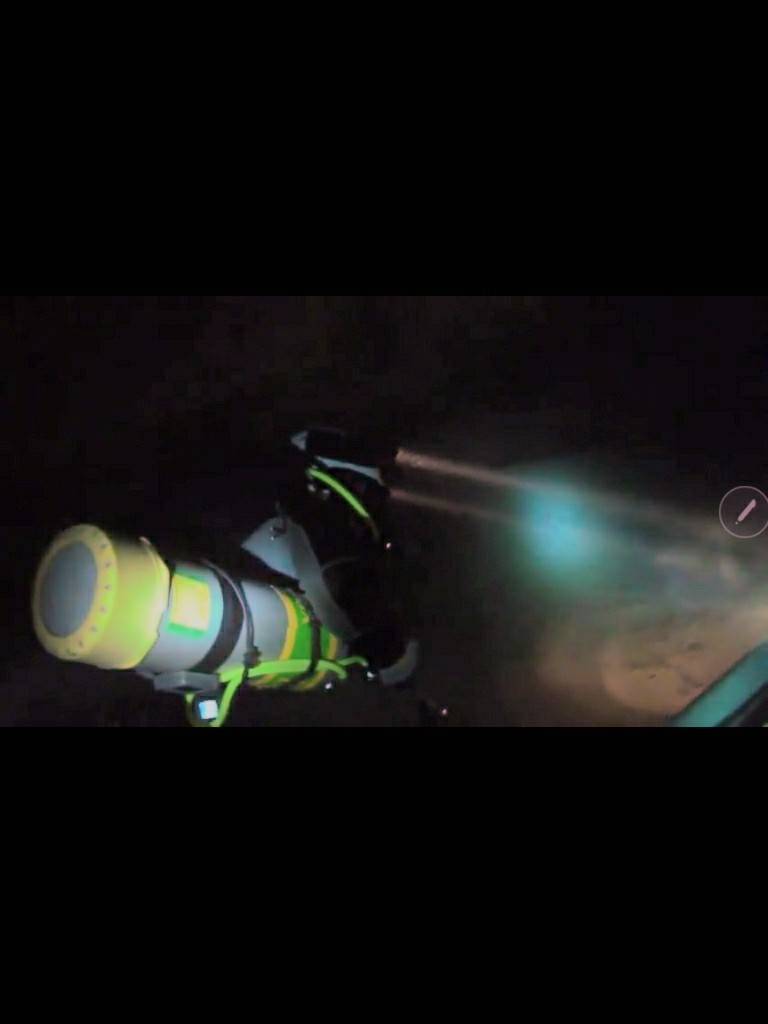
Divers who reviewed video said the combination of boots, hard weights, and an eight inch wide tank profile made it hard to imagine Ben clearing the tightest restrictions described by the recovery team, especially given his size.
One diver suggested a tank boot could wedge in a crack like a climbing nut and become immovable. Another argued the video showed buoyancy control and finning that did not look steady enough for deep penetration against flow.
Then the discussion moved from hardware to gas. In screenshots from video taken weeks before the disappearance, Ben’s tanks appeared to have green and yellow stickers often used to mark Nitrox.
Nitrox contains a higher percentage of oxygen and less nitrogen than regular air, and divers use it to reduce nitrogen exposure and extend allowable time at certain depths. Using it requires training because oxygen exposure becomes dangerous at depth.
This account says Ben was not certified to use Nitrox. It remains unclear whether his tanks actually contained Nitrox or simply had labels that were never removed. If they did contain Nitrox, the next question becomes who filled them and how.
The deeper issue is that even Nitrox has limits. At higher oxygen percentages, going too deep can lead to oxygen toxicity. This account notes common blends and describes how a mix can become unsafe as depth increases.
Oxygen toxicity is not subtle when it hits hard. Symptoms listed include respiratory irritation, dizziness, agitation, disorientation, and the most feared outcome, convulsions, which can lead to a regulator being lost and drowning within seconds.
A buddy can sometimes save a diver in a convulsion by holding them through the brief seizure and restoring the regulator, but Ben was diving solo. If convulsions occurred at depth, survival chances drop sharply.
Recovery divers in this account emphasized that deep restrictive dives typically require other gases like helium blends to manage both oxygen exposure and nitrogen effects. They were reportedly baffled by the idea that Ben might have been diving deep with air or Nitrox.
The account also raises a practical question. It is unclear whether Vortex Spring provided helium at the time. Some comments suggest the search teams used helium, but the site’s public information referenced air and Nitrox. That uncertainty matters.
If Ben truly went as deep and as long as some entries claimed, then air and Nitrox alone make the plan look unsafe. That leaves only a few options in this framework, that he embellished, sourced gases elsewhere, or obtained them improperly.
Divers suspected he could have used temporary certification cards to appear qualified, or that staff might not have checked closely. Nitrox fills cost more, and a shop may focus on payment rather than paperwork, though that remains speculation here.
Valve style became another point. Divers online noted Ben’s tanks used yoke valves, which rely on a rubber o ring to seal. Yoke is common in shallow diving, but many cave divers prefer DIN valves that thread in and reduce failure risk.
A blown o ring can dump a tank quickly. In open water, that is serious but sometimes survivable. In a cave, where there is no direct ascent and the exit is distant, a rapid loss of gas can turn fatal immediately, especially for a solo diver.
Again, there are mundane reasons. Ben might not have known the difference well enough. He might have planned upgrades later. He might have assumed routine checks were enough. But divers saw yoke as another sign of mismatched priorities.
Then came the purchase that made his family hopeful. Ben bought a dive computer, and after he vanished, relatives initially believed it might function like a tracking device that could point to his location.
The device did not have GPS. A friend said it recorded dive details such as depth and time, and that GPS was something Ben had considered for a future purchase. The computer was designed for complex gas management, not rescue location.
Ben’s dive computer was identified as a VR3, a model capable of handling multiple gas mixes and advanced calculations. It could tell a diver when to switch gases or tanks, a feature that fits side mount diving where divers alternate regulators.
The issue was cost and priorities. The VR3 was described as selling around $1,400 to $1,600 at the time. Divers pointed out that money could have paid for significant formal training, including multiple cave related courses.
A dive computer can support good decisions, but it cannot replace training. Divers stressed that gas planning needs backup methods and understanding. If a computer fails, a diver still needs to know where they are in the plan and what to do next.
This is where the gear story tightens. None of Ben’s choices prove he died. Yet when viewed together, divers saw a pattern, expensive tools paired with gaps in formal instruction, and a willingness to push ahead without completing foundations.
Some choices could be explained by frugality and restraint. He may have been trying not to overuse his parents’ money. He may have prioritized what he thought mattered most. He may have delayed drysuit training and other upgrades for later.
Other choices look like impatience. Using a pipe instead of laying line. Keeping boots on tanks. Using yoke valves. Carrying labels that suggest Nitrox while lacking confirmed certification. Buying a powerful computer while leaving classes unfinished.
The contradiction is that these risks sound like the recipe for a fatal cave accident, yet his body and equipment were not found in the areas where an accident would usually leave traces.
That is why the next step in this series turns toward the one gear linked to him that did appear during the search, three stage tanks found in strange positions that raised new questions about what really happened after the gate.
Divers from online forums summed up their view in blunt terms. One recovery diver said many people believe gear can elevate them to the level of top rescue divers, but that ability takes years and hundreds of dives, not purchases.
Another diver wrote that there is no magical equipment that saves someone in a crisis. When something goes wrong, skills and knowledge are what bring a diver back. Ben did not come back.