




At around 11 am on April 1, 2014, 21-year-old Kris Kremers and 22-year-old Lisanne Froon bid their host family in Boquete, Panama, goodbye and set off for the forested slopes surrounding the Baru volcano.
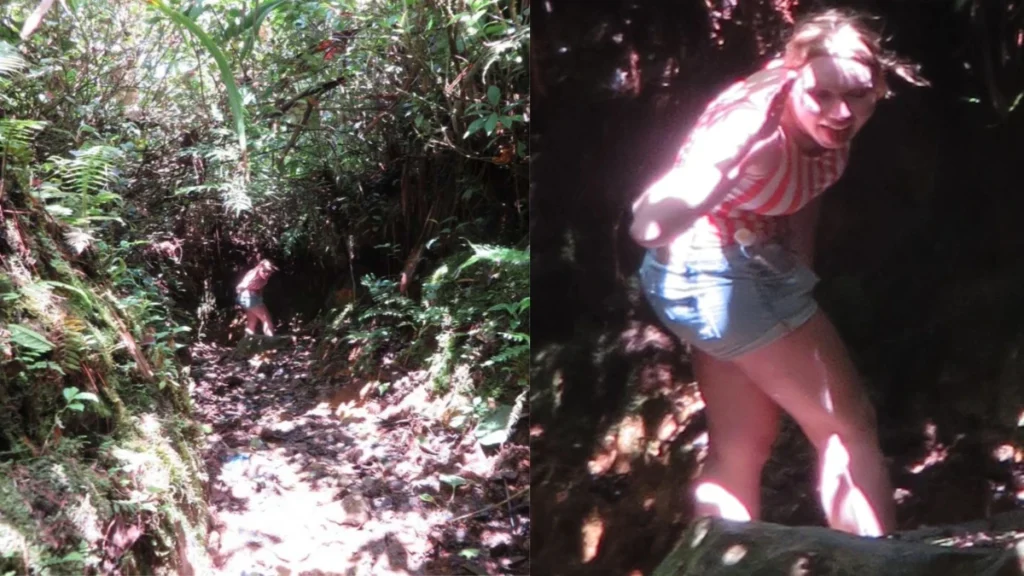
The sky over Boquete was deceptively clear that Tuesday morning. Kris and Lisanne laced their boots, grabbed two bottles of water and took Blue, their host family’s dog, for company on the hike.
At 11 am, a local restaurant owner near the trail’s base spotted the women as they began their hike. They were wearing light summer clothes and had a single blue backpack, indicating they had only planned on a short hour walk.
The girls had told their host family they would be back by evening. Ahead of them lay the El Pianista trail, which was a route locals typically hiked in an afternoon.
It was roughly 2.5 miles and a 1,900-foot climb through dense woods overlooking the Panama Continental Divide. Nothing about that day suggested it would end any differently for the girls than the multitude of other tourists who had walked the same trail.
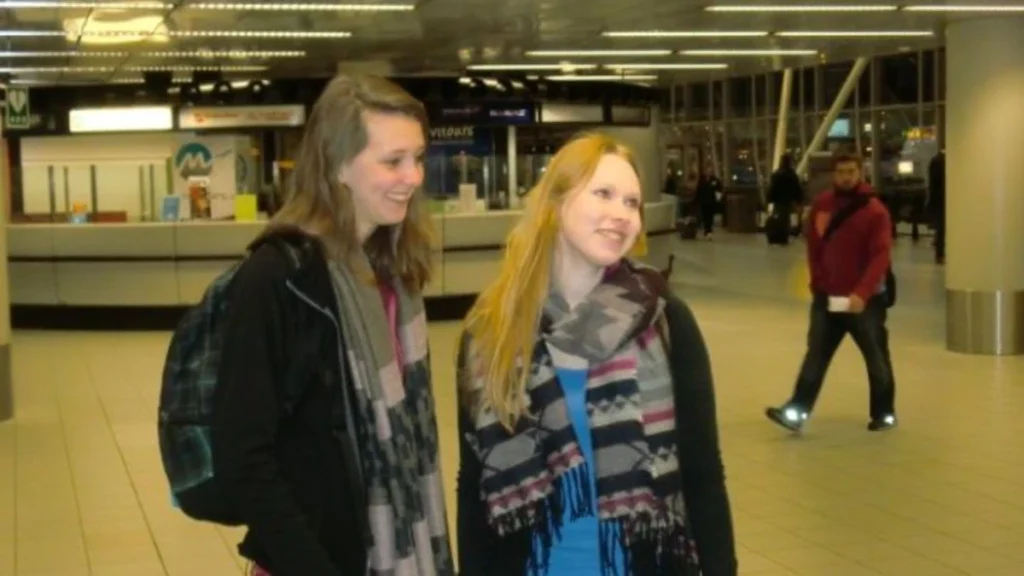
Kris and Lisanne had been in the country for three weeks, after waitressing for six months at a café in Amersfoort to save up for the trip. They had also planned to spend a month after their holiday volunteering with children and studying Spanish in Boquete.
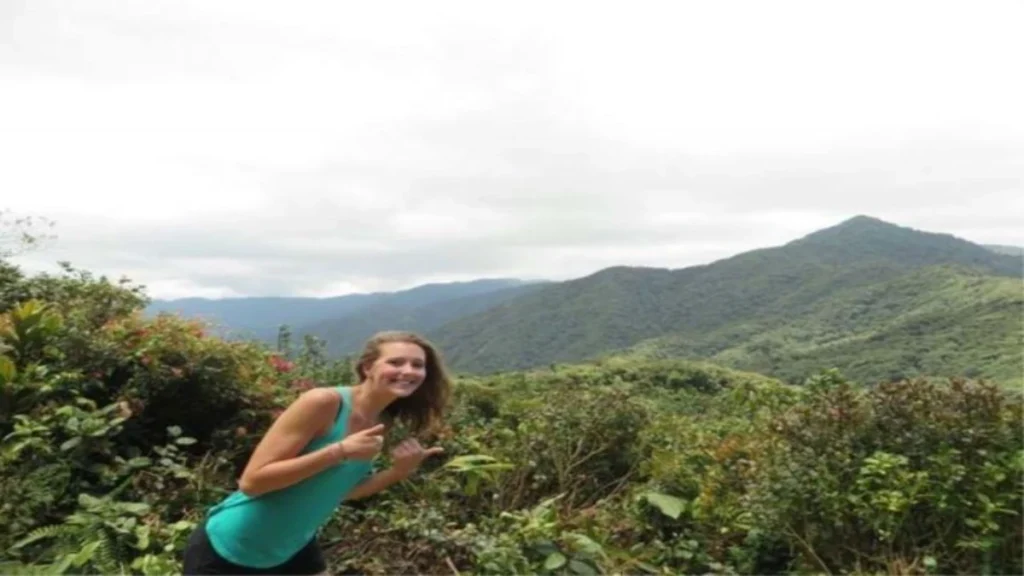
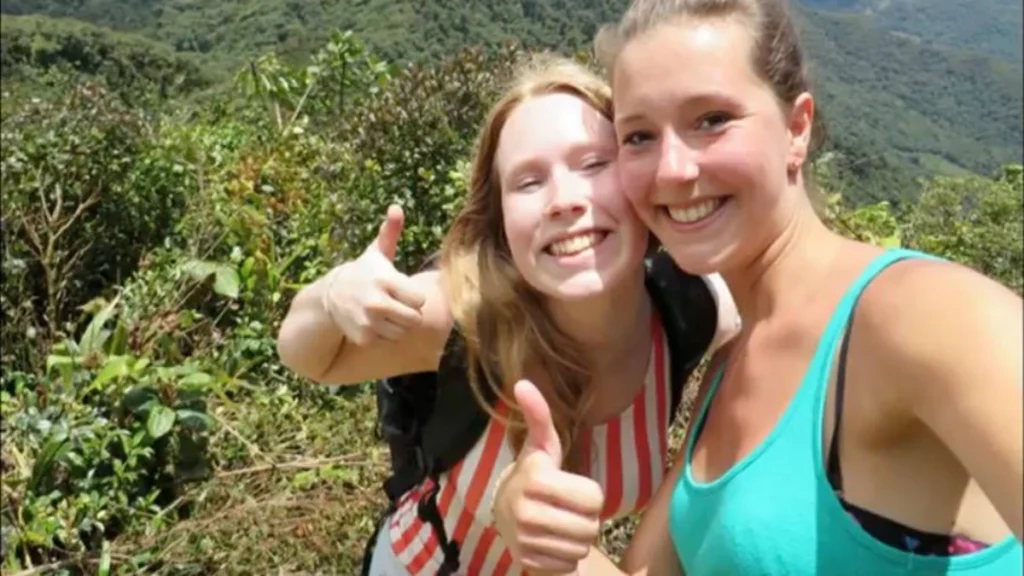
The hike up the trail was uneventful, and by 1 p.m., they reached the summit of El Pianista. They took a series of photos, and Kris was all smiles at the summit.
The atmosphere and the weather were completely relaxed. Blue, the dog, was visible in the background. Now, this was the natural turnaround point for tourists and probably where Kris and Lisanne should have called it a day.
Instead of turning around and hiking down to Boquete, the two decided to cross the Continental Divide into La Amistad National Park.
Though they did not know it at the time, that miscalculation would change everything. La Amistad was largely uncharted and considered highly dangerous, even for prepared campers.
Here, they were only dressed for a few hours outdoors. Jeans, boots, and sunglasses. No tent or extra provisions other than water. The first warning sign happened that evening after Blue trotted back into Boquete alone.
Feeling somewhat uneasy as the night wore on, the host family called Lisanne’s mother, Diny, in the Netherlands to ask if she had heard from the girls. She confirmed that she had not.
The Report
The next day, Kris and Lisanne missed a scheduled meeting with a local guide, and their host family became even more concerned, so they opted to contact Panama’s National System of Civil Protection.
At first, the government did not take the report seriously, and it took several days before they initiated something resembling a coordinated search.
Meanwhile, in the Netherlands, Kris and Lisanne’s parents began to panic as the days wore on, due to the silence of it all. The girls were notorious for constantly texting home while they were overseas, so their being quiet after they mysteriously vanished during a hike meant something was seriously wrong.
By April 3rd, the locals had begun combing the trail on foot, but it wasn’t enough. There was no sign of them.
On April 6th, the girls’ parents, Hans and Roelle Kremers and Diny and Peter Froon, landed in Panama with Dutch detectives in tow.
The Panamanian authorities now scrambled and to save face, sent along a contingent of police and dog units to conduct ground and air searches for ten straight days. They searched the riverbanks, undergrowth and cliffside brush for any sign of the two women.
A $30,000 reward was also advertised for information leading to their recovery. After days of searching, one frustrated Dutch investigator stated, the women “could not have simply disappeared from the trail”.
Ten days in, and the search yielded nothing. No trail disturbances to go on, or straps from the women’s clothing. There was also no immediate evidence that the women had fallen prey to predators.
It was as if they had been magicked off the trail by an unseen force.
Ten Weeks of Nothing, then a Backpack
In early June 2014, Northern La Amistad National Park and the Boquete region experienced heavy rains. These caused the water levels in nearby rivers to rise rapidly, tearing down trees and washing debris downstream.
On June 11th, an indigenous Ngabe woman named Irma spent the day working in a rice field and began walking back home. As she was walking down a section of the riverbank, she spotted a blue nylon bag wedged between a boulder and a washed-up tree trunk.
It was Lisanne’s backpack.
What struck investigators wasn’t just the contents; it was the condition of the bag. After ten weeks of exposure to tropical weather and rivers, the backpack should have been waterlogged, sun-bleached, and significantly rotten.
Instead, everything inside was dry and mostly intact. There were two pairs of sunglasses, Lisanne’s passport, a water bottle, two bras, a Canon PowerShot camera, and $83 in cash.
The bag also contained Lisanne’s Samsung Galaxy S III and Kris’s iPhone 4. It was almost like the bag had been packed the day before, or even that morning.
The phones provided the first reliable data authorities could use in two months. Forensics showed that both devices had stayed intermittently active for almost ten days after the women went missing on April 1.
Between them, Lisanne and Kris placed 77 emergency calls to Panama’s 911 and the Netherlands’ 112, but none connected. The stretch of jungle they were stranded in had zero cell coverage.
Police noted that the first attempt to call for help was made at 4.39 pm on April 1, the same day they set out. Not after days of wandering, or a week out.
That meant whatever went wrong began almost immediately after they crossed into the cloud forest. On days two and three, calls were repeatedly made from both phones, but all failed.
Battery anxiety seemed to take over on the fourth day as the women drastically reduced their attempts. Forensics surmised that they turned on their phones that day only to check for a signal, rather than to place calls.
On April 6, the nature of phone activity changed drastically, creating one of the most debated mysteries of this case. The iPhone was turned on multiple times, but the correct SIM card PIN was never entered again.
Some proponents argue that Kris may have gotten hurt or passed away from exposure, leaving Lisanne to use her iPhone. Under stress and in a state of delirium, Lisanne may have forgotten Kris’s iPhone PIN.
The other theory is that an abductor or malicious third party took possession of the phone and turned it on periodically to see if search teams were closing in, but they were not able to bypass the lock screen.
As if the repeated attempts to unlock the phone were not suspicious enough, a look into the Canon’s camera gallery made things significantly more confounding. Alongside the day’s shots of the hike were 90 images taken in complete darkness.
Most of the photos were clustered into a single three-hour overnight window on April 8, 2014. One week after the girls went missing.
The photos depicted a black canopy and a rock with what appeared to be fabric knotted around it. One frame was described as a strand of hair caught in the flash.
Analysts were split on the meaning of this evidence. Some believed the flash was being fired deliberately while the camera was pointed upwards into the trees, in hopes that someone searching by air would catch the light.
Others gave a simpler, darker explanation. Someone was fumbling with an unfamiliar camera in the dark after they had taken it from the incapacitated woman. But that still would not explain why they returned it all in a bag after two months.
Recovering Mixed Remains
A few weeks later, in late June, searchers still looking for Lisanne and Kris found a Wildebeast brand hiking boot wedged near the riverbank. Inside the laced boot was a human foot still wearing a sock.
DNA testing confirmed that the foot, along with a femur also recovered nearby, belonged to Lisanne Froon. As the teams pushed deeper along the rugged riverbanks, they discovered other fragments.
30 additional bones turned up. They were not clustered in one area but spread wide as though the river had spread them over weeks. By November, DNA testing confirmed these belonged to the two women.
By the end, investigators had recovered only about a third of their combined remains. Mixed in with their bones were remains of at least three other individuals completely unconnected to the case.
The other remains were attributed to the area’s grim history, entailing unexplained missing hikers, local criminal elements and previous notable serial killers who hunted in the region.
The girls’ remains themselves also did not tell a clear story. Lisanne’s bones still had small amounts of soft tissue, consistent with decomposition in a tropical climate. Kris’s, on the other hand, were bleached.
They almost looked stripped and did not match the surrounding soil chemistry. Investigators have not been able to fully explain this development in the case.
Pathologists looked for cut marks on the bones or signs that there may have been a weapon used. Under magnification, they found nothing.
A Dutch forensic specialist who examined the boot with the foot inside concluded the bone showed no fracture patterns typically left after a fall. This contradicted the theory that they had fallen from a cliff.
None of the other remains could provide any other evidence as to their cause of death.
Officially Ruled an Accident
Panama’s investigation changed shape more than once. First, they named it an open missing person’s case; then it became a suspected homicide. In March 2015, they officially declared it an accident, saying Kris and Lisanne likely lost the trail, grew disoriented in the cloud forest and fell from one of the cliffs lining the Culebra River.
They determined the women either died from the fall or drowned in the river. The Dutch National Criminal Investigation Service also posted a review, flagging gaps in Panama’s handling of the investigation.
However, they stopped short of offering an alternative that could reopen the case.
After having spent three agonising months in limbo, clinging to the hope their children were somehow still alive, the discovery shattered the Kremer’s and Froon families.
The Froons were deeply traumatised, but ultimately leaned toward accepting the official narrative given by the Panamanian government and Dutch forensic teams. To process their grief, the family travelled back to Boquete.
Guided by the local teams, they walked up the El Pianista trail to see the geography and erected a small memorial cross at the summit where their daughter was last seen alive and smiling.
Kris’s parents, Hans and Roelie, reacted a bit differently. Hans publicly questioned why his daughter’s pelvic bones were discovered completely bleached and free of animal gnaw marks. Lisanne’s bones still had soft tissue on them.
The Kremer family hired their own forensic specialists to challenge the case. They labelled the Panamanian force as a shoddy and lazy outfit, openly stating the local government rushed to rule the deaths an accident just to protect Boquete’s million-dollar tourism industry.
Unfortunately, they were not able to gain headway either to determine what happened to the girls or their cause of death.
The Case that refuses to sit still
In September 2014, Kris and Lisanne’s remains were brought home and buried in the Netherlands. Both families, especially the Kremers, were unsatisfied with the result but were glad there was something to hold on to.
The disappearance of Kris Kremers and Lisanne Froon remains one of the most intensely debated mysteries of the 21st century. More than a decade later, journalists, forensic analysts and independent researchers keep circling back to the aspects of the case.
The 77 failed calls, the backpack that looked pristine despite ten weeks in the jungle, ninety photographs in absolute darkness and the bones, which could not agree on how they got there, all yield more questions than answers.
Dutch authors Marja West and Jurgen Snoeren were granted unprecedented access to the official police files and forensic data. This culminated in the 2021 book, ‘Lost in the Jungle’, which concluded that Lisanne and Kris died accidentally.
This prompted significant pushback from readers who accused them of accepting a sanitised official narrative. Others maintain that the jungle provides no explanations in these cases. It’s simply unforgiving enough on its own.
For more stories on unsolved mysteries or heroic escapes, explore our articles on the Disappearances of Lauren Spierer and the Tromp Family.