On June 2, 1985, Officer Daniel Wright was responding to a routine shoplifting call at a lumberyard in South City with no idea the turn his night would take. A sales clerk had seen an Asian man hiding a bench vice under his jacket, and they threatened to call the police.
When Wright arrived on the scene, he pulled up next to a 1980 Honda Prelude. He was then approached by a clerk and a bearded man. The clerk pointed to a vice that was in the open trunk of the Honda Prelude. He said that the suspect had placed it there before taking off.
Wright looked into the car and saw a bag that he believed had a handgun. On closer inspection of the bag, he found a loaded revolver and a silencer.
The bearded man then approached Wright and showed him a sales receipt. “I’ve paid for the vice my friend took; there’s no need for the police.”
Wright walked over to his patrol car and radioed in the Honda’s registration number. He then asked the bearded man who the vehicle belonged to, to which the bearded man replied, “Lonnie Bond.”
Wright was then informed by dispatch that the Honda’s registration number “838WFQ” belonged to a Buick, which was registered in Lonnie Bond’s name. Wright advised that swapping registration plates was a criminal offence and asked the bearded man for identification.
The man gave him a driver’s license with the name Robin S. Stapley from San Diego. This activated Wright’s spider senses even more, considering the bearded man looked much older than the age given on the license.
Wright picked up the gun and asked him if he knew it was illegal to carry a silenced weapon. “It’s not mine, it belongs to Lonnie. I just use it to shoot beer cans,” he replied.
Wright then relayed the weapon’s serial number to dispatch. It was registered to Robin S Stapley. He promptly placed the man under arrest after indicating the gun was registered in his name.
After reading him his rights and handcuffing him, Officer Wright placed him in the rear of his patrol car. Wright returned to the sales clerk to get a description of the other individual, and he broadcast, “Asian male, slight build, about twenty-five, last seen wearing a parka.”
Wright took the man to the South City Police station and put him in an interrogation room. Among his possessions was a travel receipt with the name Charles Gunnar.
Another officer then confirmed that the vehicle identification number on the Prelude indicated it belonged to Paul Cosner, who had gone missing nine months earlier.
When the bearded man was questioned about Charles Gunnar and Paul Cosner, he turned white. He also asked for a glass of water and a piece of paper.
“Are you going to write a confession?” Wright asked.
“No, just a note to my wife.”
He then scribbled a short note and put it in his shirt pocket. The man then muttered that he didn’t think a bench vice would bring him to this point. When Wright asked him to repeat what he had just said, the man said, “My friend’s name is Charlie Chitat Ng, Chitat, pronounced Cheetah, and Ng, pronounced Ing.”
He also confessed his real name was Leonard Lake, and that he was wanted by the FBI. After saying this, Lake took what appeared to be a pill from his lapel and swallowed it. In seconds, he was convulsing, and his eyes rolled back.
Wright called for assistance, but Lake was barely alive by the time the paramedics carried him off. He was left wondering what would drive a man to take his own life because of a stolen vehicle and a few mentioned names.
Investigations zero in on the Vehicle to the Residence
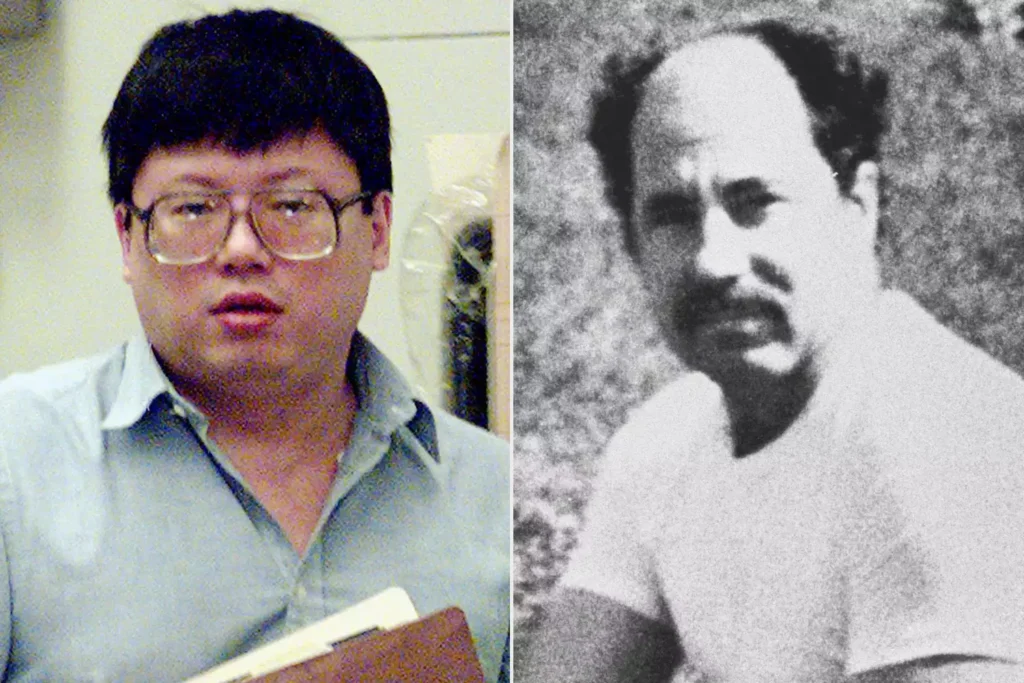
Police also discovered bloodstains in the front passenger seat of the Honda Prelude and a bullet hole near the sun visor. The car’s original owner, Paul Cosner, traded in used cars.
Before he vanished, he told his girlfriend he was meeting with a ‘weird-looking guy’ to show him the car. This prompted the entry of San Francisco homicide investigators.
Detectives Greg Gotta and Rich Keaton took the lead. On looking through the vehicle, they found a utility bill addressed to Claralyn Balazs at one of the properties on Blue Mountain Road in Wilseyville, Calaveras County.
Aside from the loaded 22. Calibre pistol and silencer, a pair of handcuffs, a stun gun, military surplus gas masks, and a leather bondage kit. The bullet hole had dried spatter, which was consistent with a contact shot.
Forensic analysis confirmed that the calibre matched the 22. Keaton and Cotta drove to Wilseyville, where they found Claralyn Balazs, Lake’s second ex- wife. She proved cooperative, saying that since their divorce, she has allowed him to use the cabin. She also signed a consent form authorising a search of the property.
The Property and Bunker
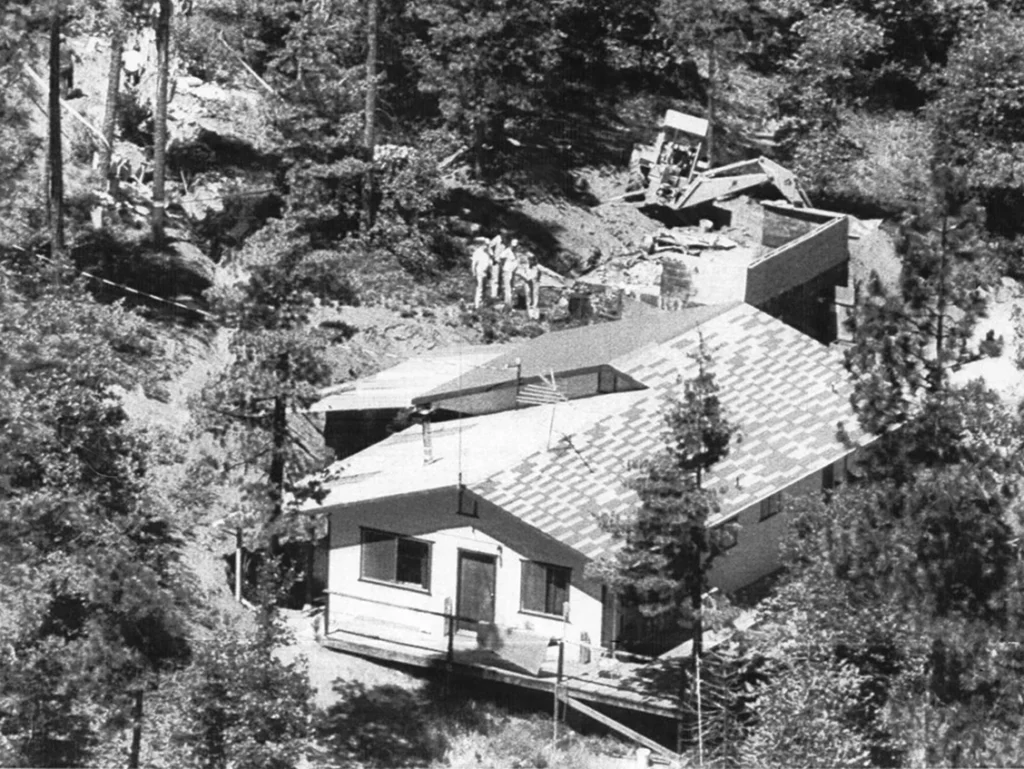
Behind the main cabin, there was significant overgrowth. There was also a cinder-block structure with a steel door, locked with a padlock. After breaking in, the detectives were assaulted by the smell of decomposition.
Though they only saw a military cot with restraints, a bucket toilet, and a roll of toilet paper. Behind the bunker was a ditch line running along the edge of the property. There, they found the first bones mixed with ash.
This evidence prompted involvement by the Calaveras County Sheriff’s Office, the California Department of Justice, and the FBI, all of which contributed to the search on the property.
They would find 45 pounds of bone fragments and ash recovered from two bonfire sites. Forensic anthropologists would classify these as from three adult males, three adult females, one child, and an infant.
Many of the fragments showed evidence that the bones had been broken before burning. The child’s teeth showed incomplete root development, indicating they were likely under age 2.
It was not until the fifth day before the first bodies were found. These were the skeletal remains of two people, with their bones sawn into sections and severely burned.
Incidentally, the same day the police found the skeletons, the doctors at Kaiser Permanente Hospital switched off Lake’s life support, and he died.
There was a metal ammunition box near the northwest tree line, along with a hand-drawn map. This map led to gallon plastic buckets buried eighteen inches beneath the dirt.
The first bucket had a collection of envelopes. Each of them had a name and a date. Inside were the personal identification items, social security cards, driver’s licenses, and credit cards.
Investigators linked the names to missing-persons reports from 1983 to 1985. There were 25 different names. The other bucket contained journals and videotapes that Lake had written.
Lake’s mother, Gloria Eberling, also visited the property during the investigations. She told Sheriff Ballard that she had come because she was concerned about her other son, Donald. He had also disappeared two years before then.
Investigators had determined by this time that Lake was a survivalist who feared the onset of nuclear war. His goal was to build a series of bunkers across the United States with weapons, supplies, and a harem of female sexual slaves.
The Journals
The earliest entries in the journals referred to Lake’s memoranda from 1982 to 1983. He called it Operation Miranda, which was a physical setting for his sexual fantasies, as well as security in a post-apocalyptic world.
Lake wrote about what he called the M-Ladies. These would be captured, processed, and held in the bunker as slaves.
Women would be evaluated according to physical condition, compliance, and willingness to be retrained as their pets. He journalled, “God meant women for cooking, cleaning house, and sex. And when they are not in use, they should be locked up.”
He also wrote about releasing captives into the surrounding woods and then pursuing and recapturing them. In the 1983 entries, Lake recorded killing his younger brother, Steven Lake, whom he previously described as a leech.
Lake then wrote a forged letter to his mother, pretending to be Donald. He said he had moved away to live with drug dealers in Reno, Nevada. The entries also detail the murder of Charles Gunnar, who was a close friend of Lake and the best man at his wedding to Claralyn.
Investigators noted that Lake assumed Gunnar’s financial identity soon after his murder. The 1984 entries continue in the same vein but ramp up with stolen identities, financial records, and other observations. He also apparently took a trip to San Francisco, where he identified potential victims and their routines.
In some entries, Lake wrote that Ng was initially very hesitant to get involved in the plan. He then documented Ng’s gradual desensitisation to murder and the realities of captivity.
The entries also corresponded with the disappearances of Harvey Dubs, Deborah Ann Dubs, and their one-year-old son, Christopher Dubs. Harvey and Christopher were killed immediately after arriving at the property.
Investigators also determined that the assault Deborah suffered in the tapes was so severe that she could not have survived what was recorded.
The November 1984 entries recorded the theft of Paul Cosner’s Honda Prelude. Lake answered the advertisement Paul put in the paper. The journal did not mention what happened to Paul afterwards.
The Video-tapes
Four videotapes were recovered from the bunker and the buried bucket. They were labelled and catalogued by victim number, date, and duration.
By this time, Lake had set up a victim cataloguing system after capturing people. In one of the tapes, a woman was seated in a chair bolted to the floor. She was identified as Kathleen Allen, Michael Carroll’s girlfriend.
It later came to light that Michael Carroll shared a cell with Charles Ng at Fort Leavenworth. Ng had been imprisoned for weapons theft and desertion from the Marines. He was paroled and dishonourably discharged in 1984 before meeting Lake.
Kathy was seated while Leonard Lake stood behind the camera, speaking to her. Lake told her that Carroll is dead and that she now belongs to him and Ng. He also explained that she would be forced to cook, clean, and provide sex when needed. In the video, she was terrified and asked about her baby, who had been murdered long before then.
In the second tape, a young woman named Brenda was in the same seated position as Lake addressed her. In this tape, she was blindfolded and tied. Lake was explaining that he was now a part of his ‘Operation Miranda.’
He also stated she would be kept alive if she cooperated with domestic work and sex. Brenda was begging for information about her baby. Lake told her, “Your baby is sound asleep, like a rock.” Brenda then eventually agreed to cooperate. Later in the tape, she was heard taking a shower with both men.
The third video was of Deborah Dubs. She was seen restrained, and Lake explained to her that she was a long-term captive. As in the previous videos, he explained to her that she would be kept in the bunker and would provide sex for them. In the video, she appeared confused and terrified.
The fourth video in the collection appeared to be of the Operation Miranda Manifesto Tape. In the recording, Lake described a fear of societal collapse. He also explained the need for female captives to rebuild society in a post-apocalyptic world.
The flight of Charles Ng
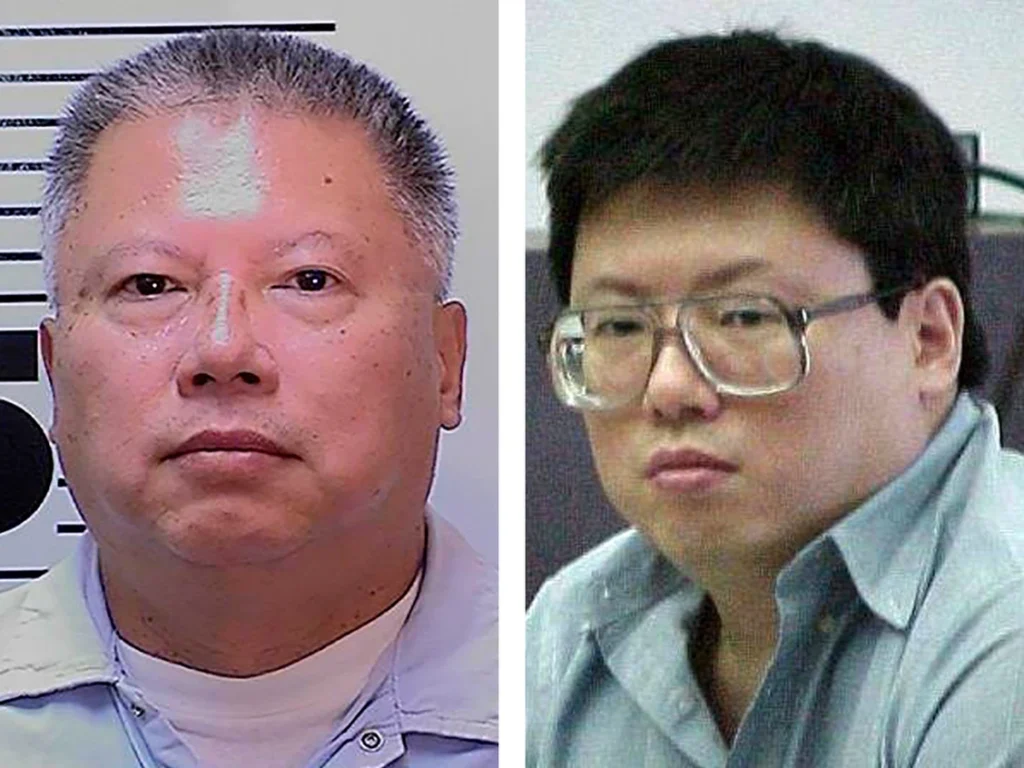
While Charles Ng did flee on foot, he was not caught in California. He crossed the Canadian border and surfaced in Alberta. His penchant for shoplifting is what got him caught, as it had before.
On July 6, 1985, two security guards from the Hudson Bay store stopped him as he tried to leave with grocery items in a backpack. He drew a gun on them and shot one guard in the hand before being overpowered and taken into custody.
What followed was a battle over extradition as Canada was opposed to surrendering suspects to jurisdictions where they could face the death penalty.
Tom Ryan from the California Department of Justice brought 17 cases to the Canadian High Court in 1988. The court only recognised 12 of these as grounds for extradition.
Finally, he was extradited to the United States in 1991. Ryan was on the flight with him and recounted to the media that he put his foot on the chain connecting Ng’s ankle restraints and kept it there the entire time.
Trial and Justice
Despite the plethora of evidence, what followed was the most drawn-out trial in California. Ng used every tool in his arsenal to delay trial proceedings. He filed actions against the state of California, making formal complaints about poor treatment, motion sickness and diet.
He also went through 10 lawyers, filing suits against some of them. Others even ended up defending him a second time. In 1994, he issued a challenge to Judge Donald McCartin, forcing him to disqualify himself from the case.
The initial trial began in 1998. Despite the apparent video evidence, Ng said that he was just an observer as Lake committed the kidnapping, rape, and murders. He also said that childhood abuse influenced him to act in such a manner.
A psychiatrist gave an analysis that Ng had dependent personality disorder. On February 24th, 1999, NG was convicted of eleven counts of first-degree murder.
The presiding judge, John Ryan, stated, “Mr Ng was not under any duress, nor does the evidence support that he was under the domination of Leonard Lake.” He was sentenced to death by lethal injection or lethal gas.
The Prosecution of his Case Cost the state $20 million
The California Supreme Court upheld the conviction and death sentence in July 2022. Though Ng still has other federal appeals in motion.
While he is still on death row, the possibility of his execution is slim. California placed a moratorium on the death penalty under Governor Gavin Newsom in 2019. The order halts executions in the state, citing the fairness of the death penalty.