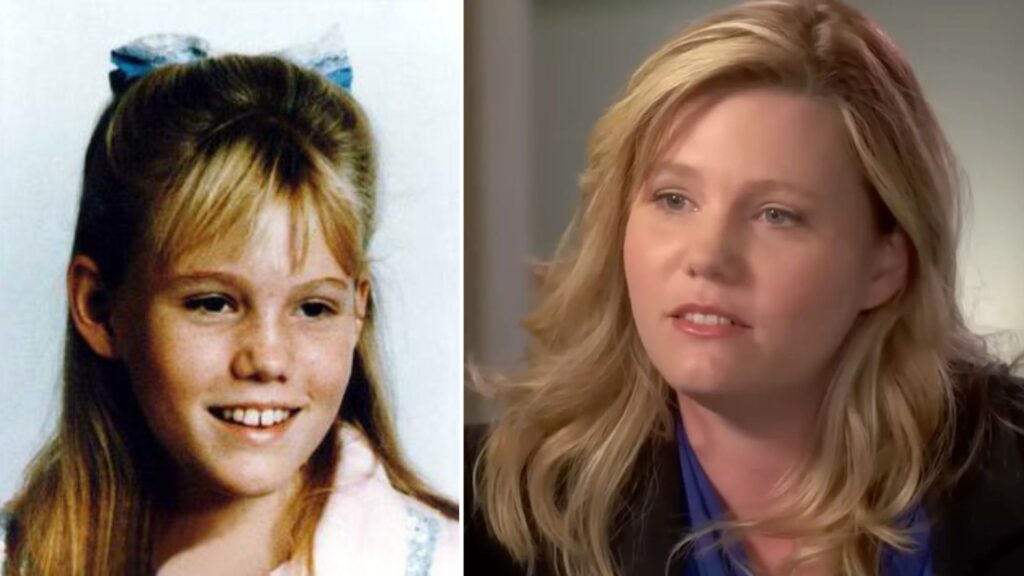
On Aug. 26, 2009, Phillip Garrido walked into a parole office in Northern California with a woman and two girls, and he expected the meeting to end like the others. He sat down, talked, and tried to keep control of the story.
The woman did not use the name Jaycee Dugard. Garrido called her “Allissa,” and the girls stayed close, quiet, and watchful. The details around them did not fit the file in front of the officer.
By the time the questioning tightened, Garrido’s account began to shift. Then the separation happened, the kind of routine move that feels small until it changes everything, and the truth surfaced: Jaycee Dugard, abducted as a child in 1991, had been hidden for 18 years.
The next morning, Aug. 27, 2009, Jaycee reunited with her mother and family. The nation heard the same sentence in different forms, and it landed the same way each time. She was alive.
Jaycee Dugard biography and family before the kidnapping
Jaycee Lee Dugard was born May 3, 1980, in Anaheim, California. Her mother, Terry, raised her, and Jaycee’s biological father, Kenneth Slayton, was not part of her day to day upbringing.
When Jaycee was 7, Terry married Carl Probyn, a carpet contractor who became Jaycee’s stepfather. The family grew again in 1989, when Terry and Carl had a daughter, Shayna.
In September 1990, the family moved from a suburb of Los Angeles to South Lake Tahoe, looking for what parents always claim they are chasing. Clean air, a small town, and a place where the girls could grow up feeling safe.
Terry later described Jaycee as thriving in that setting, with the mountains and the quiet giving her room to open up. The move was meant to shrink danger, not bring it closer.
June 10, 1991 abduction South Lake Tahoe bus stop
On the morning of June 10, 1991, Jaycee was 11 and walking to her school bus stop in South Lake Tahoe. It was a short route, close enough that the scene did not feel like a place where a child could vanish.
Phillip and Nancy Garrido drove up alongside her in a gray car, according to later accounts and Jaycee’s testimony. They had brought a stun gun, and they used it as Jaycee walked toward the stop.
Nancy pulled Jaycee into the vehicle, hid her under a blanket, and the car sped away. Jaycee later recalled hearing voices in front, then a line that chilled people when it became public. A man said he could not believe they got away with it, and he laughed.
Carl Probyn witnessed the abduction. He chased after the car on his bike, then ran to a neighbor’s house to call 911 when he could not keep up. Jaycee’s classmates were nearby, waiting for the bus, and the fact that it happened in broad daylight became part of the case’s permanent horror.
The community mobilized fast. People passed out flyers, organized fundraisers, and hung pink ribbons around town because pink was Jaycee’s favorite color. Terry kept repeating the same idea in public, because it was the only one that left space to breathe. As long as Jaycee was alive, there was hope.
Phillip and Nancy Garrido planned the kidnapping
Years later, the public learned that the Garridos had prepared for what they did. According to interviews later given to police, they bought a stun gun before traveling to the South Lake Tahoe area.
That detail mattered because it framed the abduction as a decision, not an impulse, and because it matched the calm speed of how it unfolded. Pull up, strike, grab, conceal, leave.
The Garridos drove Jaycee roughly 120 miles to Antioch, a Bay Area suburb, where they lived. Jaycee pleaded to go home, telling them her family did not have money if they wanted ransom.
It was a rational guess from an 11 year old trying to make sense of strangers. The response, as Jaycee later testified, was silence that functioned like an answer. They did not take her for money.
:max_bytes(150000):strip_icc():focal(999x0:1001x2):format(webp)/jaycee-dugard-7-542654d5e7114b06aa7785a84afe123a.jpg)

Jaycee Dugard captivity Antioch backyard sheds and tents
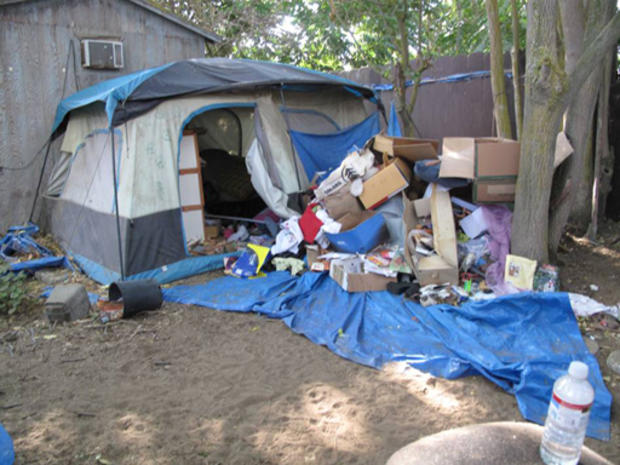
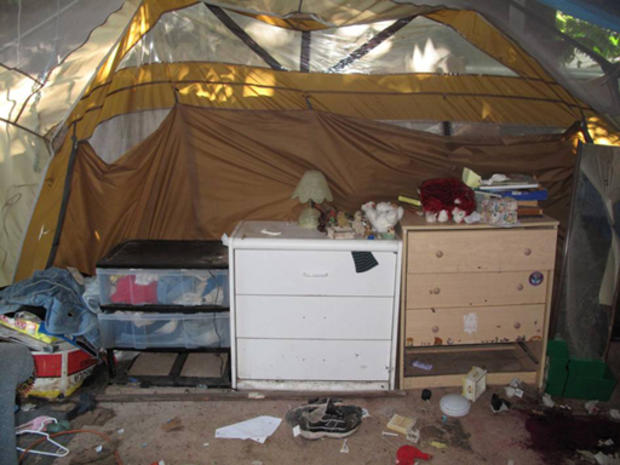
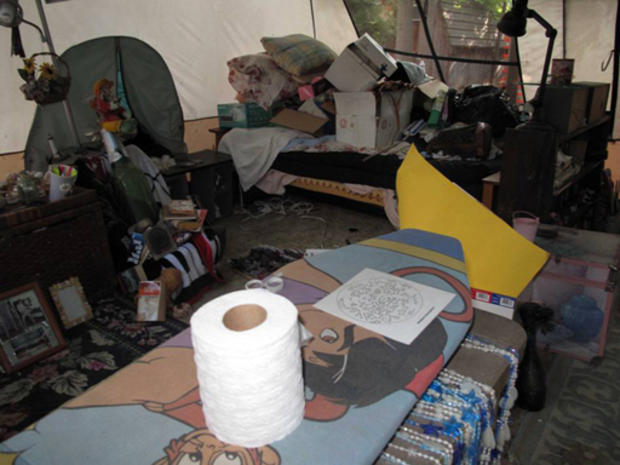
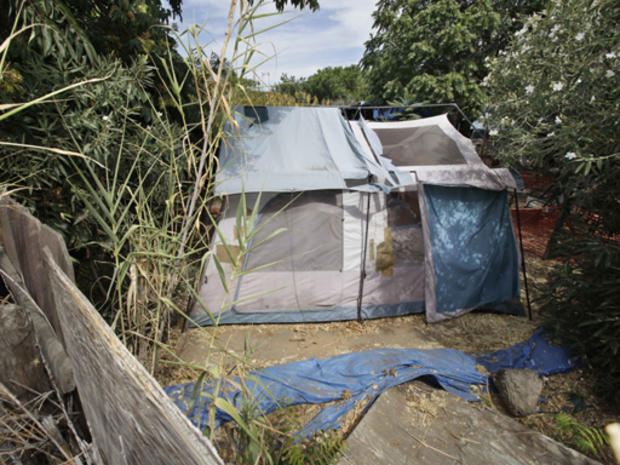
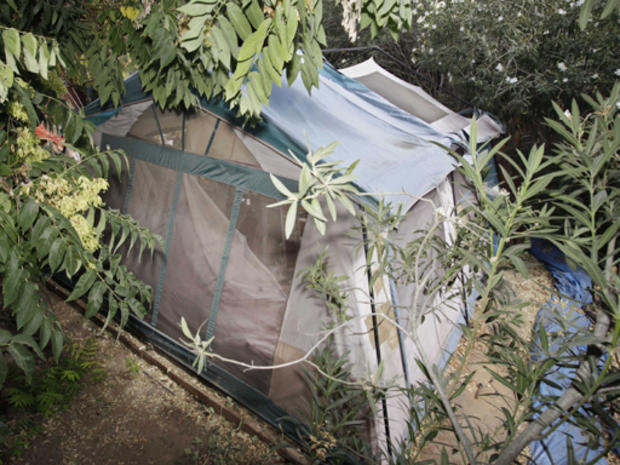
Jaycee’s captivity happened behind a house, in structures that were easy to overlook if you only looked the way people usually do. Authorities later described a backyard space made up of tents, shacks, and dilapidated sheds.
Jaycee later wrote that Phillip restrained her and kept her unclothed in the early period after the kidnapping, using handcuffs as part of that control. She described the compound as a place designed for isolation, not for living.
Phillip raped her shortly after the abduction, according to Jaycee’s later accounts, and the assaults continued for years. She also wrote that he forced her to dress up and wear makeup for his fantasies, shaping her appearance as another method of possession.
In her memoir, Jaycee described Phillip telling her he had a “sex problem” and claiming he took her so she could serve as an outlet, framing himself as a person “saving” others by hurting her. It was an explanation built to keep her trapped in his logic.
The details were consistent in one central way. Jaycee’s captivity was not a single act. It was a structure, reinforced over time through confinement, threats implied by power, and repeated sexual violence.

Jaycee Dugard rape timeline and the births of her daughters
Jaycee later said the rapes continued weekly until August 1994, when she gave birth to her first child. She was 14. In later interviews, she described her daughter as a turning point, not because life became easier, but because she finally had someone who belonged to her in a place built to erase her.
After the first birth, Jaycee said the frequency of the assaults decreased but did not stop. The pattern shifted again in 1997, when she became pregnant a second time, and she gave birth to another daughter in November 1997. She was 17.
The girls grew up in the compound with a family story constructed for them. They knew Phillip was their father, but Jaycee said they believed Nancy was their mother and that Jaycee was their older sister.
Jaycee wrote that the children never attended school and were never taken to a doctor. She tried to teach them herself in the backyard, building lessons out of what she had, because she could not accept that they would grow up without words, numbers, or options.
Her choice to focus on the girls shaped everything about survival. Even when freedom felt imaginable, she measured risk through them, because escape for one person can be a different thing than escape for three.
How a convicted sex offender stayed hidden in plain sight
One of the most disturbing facts about the case was not something the Garridos built in their backyard. It was what already existed in the criminal record.
Phillip Garrido was a convicted sex offender, on parole for a 1976 kidnapping conviction. The public learned that as Jaycee’s story broke in 2009, and it created a second question that never really left the case.
How did a man on parole keep a kidnapped child, and later two children, undetected for 18 years. How did a supervision system fail to notice the difference between a file and a life happening behind a house.
Those questions fueled official scrutiny and years of public anger. They also shaped the emotional backdrop of Jaycee’s rescue. Her reappearance was miraculous, and it was also an indictment.
UC Berkeley suspicion campus permit and the “daughters” who raised alarms
In August 2009, Phillip Garrido showed up at the University of California, Berkeley, seeking an event permit to distribute religious flyers. He used the campus as a stage, the same way he had tried to use systems before.
A manager on campus, Lisa Campbell, later described him as unstable. A campus police officer, Ally Jacobs, ran a background check and discovered he was a convicted sex offender.
Garrido returned on Aug. 25, 2009, bringing the two girls. Campbell and Jacobs watched them closely, and what they saw troubled them enough to act.
Jacobs later said she noticed their appearance and their affect, describing them as extremely pale and emotionally flat, with a kind of stillness that did not feel like teenage shyness. She also said her instincts shifted from professional to personal, because she was a mother.
Campbell and Jacobs could not lawfully hold Garrido, and they did not have evidence of a specific crime in that moment. So they did something more basic, and more effective. They called his parole officer.
The parole officer told them what should have been impossible. As far as the parole file indicated, Garrido did not have daughters.
That discrepancy drove the next day. A parole officer can demand a meeting. A parole officer can ask questions, separate people, and verify identities. The UC Berkeley call pushed the system to use its own power.
Aug. 26, 2009 parole office confession and rescue
On Aug. 26, 2009, Phillip Garrido was summoned to his parole officer’s office. He arrived with Nancy, Jaycee, and the two girls. Garrido called Jaycee “Allissa” and presented a story meant to keep the lines blurred.
When authorities questioned the group, Jaycee initially did not reveal her true identity. The hesitation later became fodder for speculation, but in the room it functioned as what it was. A survival reflex shaped by years of punishment and control.
Garrido eventually confessed. After that, Jaycee identified herself as Jaycee Dugard, the missing child from South Lake Tahoe. Police took Phillip and Nancy into custody, and the girls were removed from the couple’s control.
The next morning, Aug. 27, Jaycee reunited with her mother, Terry, and her sister, Shayna. Family members later described the reunion as sensory and overwhelming, the kind of embrace that tries to make up for time in seconds.
The National Center for Missing and Exploited Children’s president, Ernie Allen, described the case as both amazing and horrendous, emphasizing one fact that mattered most. Jaycee was alive.
Why Jaycee did not escape and the Stockholm Syndrome question
After Jaycee’s rescue, commentators floated the idea of Stockholm Syndrome, the term used when captives develop positive feelings toward captors as a coping mechanism. The discussion grew for two reasons.
Jaycee had not escaped during 18 years, and she initially used another name when questioned. To outsiders, those details can look like consent when they are actually conditioning.
Jaycee rejected that framing directly. She said she never forgot who Garrido was and that she adapted to survive her circumstances. She described the Stockholm label as degrading, because it implied affection where there had been coercion.
In testimony, Jaycee also gave a practical reason that did not require psychology jargon. She said she could not leave because she had the girls. Their presence changed the math of every risk.
When a captor controls where you live, what you eat, and when you sleep, the idea of escape becomes a question of consequences. Jaycee described living inside that reality and making choices meant to keep her daughters alive.
Charges against Phillip and Nancy Garrido after Jaycee’s rescue
After the rescue, prosecutors charged Phillip and Nancy Garrido with kidnapping and false imprisonment and filed multiple counts connected to rape and sexual abuse. Reporting at the time also referenced allegations involving child pornography.
Phillip initially entered not guilty pleas, even after confessing during the parole office confrontation. The shift from confession to courtroom posture is common in major criminal cases, where defense strategy and legal definitions shape what happens next.
In April 2011, both Phillip and Nancy pleaded guilty to kidnapping and rape charges. The plea prevented a trial that would have required Jaycee and her daughters to relive the most painful years of their lives under cross examination.
The case moved from the shock of discovery to the machinery of sentencing. The court’s job became translating harm into numbers, and those numbers were always going to sound surreal.
Phillip Garrido 431 years sentence and Nancy Garrido 36 years to life
In June 2011, a judge sentenced Phillip Garrido to 431 years in prison. Nancy Garrido received a sentence of 36 years to life.
As part of the plea resolution, they waived certain appeal rights tied to their sentences. Public attention soon shifted to parole eligibility rules, with reporting later indicating the Garridos could become eligible for parole hearings as early as 2034.
Eligibility is not release, but Jaycee has spoken about the idea with clarity and alarm. She pointed to Phillip’s earlier case, where he had been sentenced to life plus decades and still returned to the world after roughly 11 years.
That history shapes how Jaycee talks about punishment. She has said Phillip belongs in prison, not because prison fixes anything, but because confinement is the only condition that prevents him from harming someone else.
Jaycee Dugard life after captivity rebuilding and privacy
After the rescue, Jaycee and her daughters moved in with Terry in an undisclosed location in Northern California. Jaycee retained custody, and the family tried to build ordinary days on top of extraordinary damage.
In October 2009, Jaycee told PEOPLE she was happy to be back with her family and emphasized the love and support around her. It was a statement that did not try to summarize what happened, because no statement can.
Over time, Jaycee began reclaiming basic parts of adult life. She learned to drive. She adopted pets. She started doing things she once wrote down as wishes, experiences that felt impossible inside a backyard compound.
She also chose the kind of public presence she could control. Jaycee wrote a memoir, A Stolen Life, published in 2011, and later released Freedom: My Book of Firsts in 2016, which framed recovery through milestones rather than through courtroom language.
Jaycee founded the JAYC Foundation to support families dealing with abduction and trauma. The work reflected a pattern in her public life. She tells enough to be useful, but not so much that she loses ownership.
Jaycee Dugard daughters now and the choice to protect their stories
Jaycee has kept her daughters’ personal lives largely private, and that boundary has remained steady even as public curiosity stayed intense. She has spoken about them with pride and care, describing their resilience and the hurdles they have cleared.
In 2016, she said the girls were attending college. She framed that detail as a victory in itself, a marker that their lives had moved beyond the walls and rules of the compound.
Jaycee has also explained why she does not share more. She believes her daughters deserve the right to their own stories, told in their own way, if they ever choose to tell them.
That decision matters in a case built on stolen autonomy. The public learned Jaycee’s name because strangers took her. Her adulthood, as she has described it, has been shaped by making choices that belong to her.