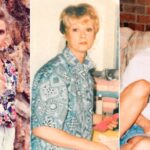
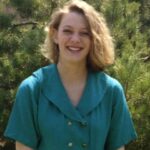
On April 25, 2009, seventeen-year-old Brittanee Drexel walked out of the Bar Harbor Hotel in Myrtle Beach, South Carolina, into the early evening crowds along South Ocean Boulevard. She was supposed to be on a family trip in New York, not on spring break in a resort town.
Her visit to Myrtle Beach had never been approved at home. She had traveled from New York with slightly older acquaintances and, by that Saturday, her text messages to her boyfriend showed a trip going wrong. She felt pushed out of the group and wanted to leave early.
Around 8 p.m., Brittanee left Bar Harbor for a 1.5-mile walk down Ocean Boulevard to the Blue Water Resort, near Twentieth Avenue South, where a longtime acquaintance from home was staying. The street was busy with tourists, neon signs, and spring break traffic.
CCTV cameras inside the Blue Water lobby captured her arrival at about 8:33 p.m. She wore a black and white tank top, shorts, flip flops, and carried a beige purse. The video showed a typical teenager on holiday, with nothing unusual in her manner or movements.

Upstairs, she visited friends, including twenty-year-old Peter Brozowitz, a club promoter from back home. After roughly fifteen minutes, she headed out again. Cameras recorded her leaving alone around 8:45 to 8:48 p.m., stepping from the lobby back onto the sidewalk.
During those minutes, Brittanee continued texting with her boyfriend. She complained that the others had gone out without her and said she intended to walk back to her own hotel. At 8:58 p.m., she sent a final message saying she was returning. From that point, her phone went silent.
By 9:15 p.m., when she still had not responded, her boyfriend started calling repeatedly. He contacted her friends in Myrtle Beach and realized none of them knew where she was. That night he alerted Brittanee’s mother, Dawn Drexel, in New York, who understood immediately that something was wrong.
Myrtle Beach police were notified by the next morning. Detectives obtained the Blue Water footage that documented Brittanee’s last known movements and began interviewing the people around her, including Brozowitz, his roommates, and the two girlfriends who had traveled with her from New York.
Officers later said Brozowitz seemed snarky and defensive in interviews, but his account, spending the rest of the evening in his room with friends, was supported by others. Investigators eventually announced that they found no evidence he, or Brittanee’s travel companions, played any role in her disappearance.
Attention turned to the walk that should have taken only twenty minutes. From the Blue Water, near Twentieth Avenue South, Brittanee intended to go north along South Ocean Boulevard back to Bar Harbor, staying on the main strip lined with hotels, restaurants, and crowded sidewalks.
Ocean Boulevard was well lit and packed that night with teenagers, families, and tourists moving between the beach and cheap motels. Yet the city’s surveillance network barely touched the area outside the hotel. Once Brittanee left the Blue Water’s cameras, no other known footage showed where she went.
Myrtle Beach officials later acknowledged that, at the time, the city owned only about twenty municipal cameras in high-traffic areas, many using aging low-resolution equipment. After the Drexel case, police pushed for an expansion. Dozens of new cameras were installed along the boardwalk and Ocean Boulevard beginning in 2010.
Inside Brittanee’s room at Bar Harbor, officers found her clothes and belongings still packed, as if she planned to come back and eventually travel home. There was no sign she intended to run away, which reinforced family insistence that she had not left voluntarily.
With little to work with on the ground, investigators turned to technical evidence. Brittanee’s cellphone records showed the device leaving the Myrtle Beach area late on April 25 and moving south along U.S. Highway 17, hitting a series of towers that traced a route down the Carolina coast.
At approximately 11:57 p.m., the phone registered a final ping near the border of Georgetown and Charleston counties, close to the North Santee River and the rural community of McClellanville, roughly fifty to sixty miles from Myrtle Beach. After that signal, the phone dropped out completely.
The data suggested that within three hours of walking out of the Blue Water lobby, Brittanee’s phone had been carried far beyond walking distance, almost certainly in a vehicle. Overnight, the search shifted from the resort strip to the remote Lowcountry in Georgetown County and northern Charleston County.

For eleven days, law enforcement agencies from Myrtle Beach, Georgetown County, and Charleston County worked with the FBI, organizing large searches around the final ping. Teams on foot, horseback, ATVs, and helicopters swept woods, swamp, and sand roads along the Santee River, as well as potential dump sites closer to Myrtle Beach.
Despite the scale, nothing conclusive appeared. The geography was unforgiving. Georgetown County is largely rural, a patchwork of maritime forest, wetlands, and scattered communities between small towns. The area investigators focused on lies south of McClellanville, near the bends of the Santee River.
When authorities revisited the terrain years later, they noted that in 2009 it had been essentially wilderness. A planned subdivision called Harmony Township existed mostly on paper, leaving unbuilt tracts of woods and swamp that hid activities from casual view and complicated the search.
From the start, Brittanee’s family understood what that meant. In briefings, they heard federal agents discuss the possibility that a body left in those swamps could be destroyed or hidden by alligators and wild hogs. It was a blunt assessment of how quickly evidence might disappear.
Search teams scoured boat landings, fishing camps, and hunting sites on narrow dirt roads. They dragged sections of the river, walked levees, and pushed through dense undergrowth, but the vegetation and standing water offered countless hiding places. Even with helicopters overhead, the landscape resisted systematic coverage.
In December 2009, months after the first searches, investigators found a pair of sunglasses near a rural boat landing in the same region. The design resembled a pair Brittanee was known to wear, raising hopes. Laboratory work, however, could not prove that they had belonged to her.
Officers began looking closely at who lived along those back roads, where isolation and a maze of unmarked tracks offered cover for illicit activity. Their working view was that whoever had taken Brittanee likely knew the area well and could move through the marsh and woods without attracting notice.
That belief later fed a theory that drew national attention and then collapsed. In June 2016, based on statements from jailhouse informants, the FBI announced that Brittanee had been kidnapped by local criminals, held at a stash house near McClellanville, and then killed and dumped in an alligator-infested swamp.
Agents publicly named two men, Shaun and Timothy Taylor, as possible participants in a trafficking ring and offered a twenty-five-thousand-dollar reward. The story of a hidden house, a captive teenager, and a body fed to alligators moved quickly through national outlets and true-crime communities.
Under scrutiny, the informant’s account unraveled. He eventually admitted lying about crucial details, and prosecutors never charged the Taylors in connection with Brittanee’s case. The episode kept the disappearance in the headlines but steered attention away from another man already familiar to investigators.
Raymond Douglas “Ray” Moody had been living quietly in Georgetown County since 2004 in a low-cost motel and apartment complex called the Sunset Lodge. His presence on the coast traced back to a serious criminal record that began decades earlier in California.
In 1983, Moody was convicted there of a series of violent sexual assaults, including the abduction and rape of a nine-year-old girl, and was sentenced to forty years in prison. He served twenty-one years before being released on parole and returning to his hometown in South Carolina.
Under the law, Moody had to register as a sex offender. In Georgetown County, he worked at a small carpentry and cabinet shop and lived at the Sunset Lodge. The official record shows relatively minor contact with local authorities in the years just before Brittanee vanished.
In September 2008, he was arrested for indecent exposure, a charge later reduced to disorderly conduct. In February 2009, deputies cited him for failing to update his sex-offender registration, an offense that ended with a two-hundred-fifty-dollar fine. At the time, he drew no wider suspicion.

When Brittanee disappeared, Moody initially blended into the investigative background, one name among many as officers reviewed sex-offender registries along the coast. In a near miss, a Georgetown County deputy stopped him for a traffic violation on April 26, 2009, the day after Brittanee vanished.
The stop took place in Surfside Beach, just south of Myrtle Beach. The deputy issued a ticket and let him go. There was nothing visibly suspicious in the vehicle, and at that point investigators had not yet realized that Brittanee’s phone had traveled into Georgetown County.
As leads thinned, detectives revisited registered sex offenders more methodically. Moody’s criminal history and his address near the last phone ping made him stand out, but there was still no direct evidence. For two years, his name circulated internally without resulting in an arrest.
In August 2011, a new tip pushed him back to the front of the file. A young woman, later reported as either his daughter or a close relative, called police after hearing disturbing comments allegedly made by Moody’s longtime girlfriend about his possible involvement in the disappearance.
Myrtle Beach and Georgetown County investigators executed a search warrant at Moody’s room in the Sunset Lodge and formally designated him a person of interest. They also interviewed him at his workplace, watching his reactions closely as they asked about Brittanee.
Detectives later recalled that he appeared evasive. At one point, when pressed, he told them, “You are smart, you will figure it out.” The line stuck with investigators, but the search produced no physical evidence tying him to the teenager. Without forensics, prosecutors had little to take into court.
By 2013, despite thousands of tips and sporadic search efforts, Brittanee’s case was considered cold. There was no body, no identified crime scene, and no DNA. Investigators had to rely on witnesses and informants whose motives and reliability required constant checking.
For her family, the passage of time did not translate to acceptance. Dawn Drexel drove to South Carolina immediately after Brittanee vanished and later moved to Myrtle Beach, determined to stay close to the investigation and to the place where her daughter had last been seen.
She became the public voice of the search, giving interviews, organizing vigils, and challenging suggestions that Brittanee had simply run away. She criticized any public statements hinting that her daughter might be dead when no body had been found, arguing that such comments risked softening investigative urgency.
In 2009, she appeared on “The Dr. Phil Show” with Peter Brozowitz and pressed him about his account of the final evening. Over the years, the case was profiled on Investigation Discovery’s “Disappeared,” Oxygen’s “Final Moments,” and an ABC “20/20” special titled “The Darkest Night,” alongside steady local coverage.
Online, thousands joined Facebook groups dedicated to the case, where they shared updates, theories, and words of support. In 2015, more than 5,500 people signed an online petition urging the U.S. Attorney General to review the case, reflecting public concern that progress had stalled.
The case attracted academic attention as well. A University of South Carolina Honors College essay titled “We Are Brittanee Drexel” examined the community’s response and argued that sustained public pressure could influence how institutions handle long-running missing-persons investigations.
Investigators acknowledged that the visibility helped and complicated their work. The attention ensured a steady flow of tips, some trivial, some important, and required careful sorting to avoid chasing every rumor while still recognizing that crucial information might arrive from an unexpected source.
All of this unfolded against the backdrop of Myrtle Beach’s spring break economy. Each year, tens of thousands of young people, including high-school students, crowded its beaches and inexpensive motels. Many traveled without parents, sharing rooms, drinking, and walking the strip late into the night.
Dawn Drexel had originally refused permission for the trip, warning her daughter that unsupervised spring break travel was risky. Brittanee went anyway with older acquaintances, hoping for a week at the beach. Her texts later showed that the social dynamics quickly grew tense and uncomfortable.
Local police were used to the petty crime that came with tourism: thefts, fights, and disorderly conduct. At the time, officials tended to play down concerns about organized trafficking, saying they saw little evidence that extensive networks were targeting young visitors along the strip.
Later research produced a different picture. A 2019 South Carolina task-force report ranked Horry County, which includes Myrtle Beach, as the county with the highest number of reported human-trafficking incidents in the state, underlining vulnerabilities in areas that depend heavily on transient tourism.
Separate crime analyses in the 2010s suggested that a person in Myrtle Beach faced about a one-in-fifteen chance of becoming a crime victim, a rate higher than many larger cities. City leaders disputed the framing but could not ignore that the numbers added to public unease.
Whatever the statistics, conditions on Ocean Boulevard in April 2009 were straightforward. Crowded sidewalks, shifting groups of strangers, and stretched police resources created a setting in which a teenager walking alone might feel reasonably safe yet still encounter someone looking for an opportunity.
Investigators later said that Raymond Moody and his girlfriend, Angel Charmaine Vause, were driving through the area that night when they spotted Brittanee walking alone. To anyone else, their vehicle was just another car inching along in spring break traffic.
Years later, technology helped make sense of what happened next. By 2019, detectives reexamined Brittanee’s cellphone data using improved geolocation analysis. The refined work showed her phone initially moving at walking speed along the strip, then suddenly traveling at the pace of a car heading south.
That pattern reinforced the conclusion that Brittanee had been picked up rather than gone off on her own. It strengthened the focus on suspects who had vehicles, knew the back roads toward Georgetown County, and had opportunity that night. Once again, Moody stood out.
In 2022, South Carolina authorities quietly revived active surveillance on him. Investigators approached Angel Vause and she agreed to cooperate, wearing a hidden recording device as she discussed Brittanee with Moody in an effort to capture incriminating statements on tape.
Around the same time, Moody’s defense attorney contacted the Horry County solicitor to signal that Moody was willing to provide information about the case if any prosecution remained at the state level rather than shifting to federal court. The overture suggested pressure was beginning to build.
On May 4, 2022, officers arrested Moody on a charge of obstruction of justice, a step that allowed them to keep him in custody while they pursued leads. Over the next several days, with Angel cooperating and investigators confronting him, Moody began to talk in detail.
He eventually gave what officials later described as a full confession. Moody said that on April 25, 2009, he and Angel were driving near Myrtle Beach when they saw Brittanee walking alone and decided to offer her a ride, suggesting they could smoke marijuana and relax.
According to his statement, Brittanee accepted, perhaps reassured by Angel’s presence. Moody drove south out of Myrtle Beach along coastal routes toward Georgetown County, then turned off near the Santee River to reach a secluded campsite bordered by trees and not far from the water.
At the campsite, the three spent some time together before Angel left the immediate area. Moody told investigators that he wanted sex, Brittanee refused, and he responded by attacking and sexually assaulting her. It was the account he eventually repeated in court.
Moody said he then strangled her with his hands, fearing what would happen if she reported the attack. He wrapped her body in a blanket and hid it in nearby woods, later telling Angel that Brittanee had left with friends and giving no indication of what he had done.
The next day, April 26, he returned alone. He moved Brittanee’s body from the initial hiding place to another spot off a rural dirt road and buried her in a shallow grave beneath tree cover, farther from the campsite that had drawn so much early attention in 2009.
When investigators renewed intensive work in Georgetown County in 2022, Moody led them back to that second site. On May 11, search teams followed him along a rough track off Old Town Avenue and uncovered skeletal remains buried under the forest floor about 2.5 miles from the Sunset Lodge.
Alongside the bones and fragments of clothing, searchers recovered a single blue-tinted contact lens. Brittanee had one blind eye and was known to wear colored contacts. They also found a small ring believed to be her nose piercing, additional indicators that they had located the right grave.
Forensic experts with the South Carolina Law Enforcement Division tested the remains and confirmed Brittanee’s identity. On May 16, 2022, Georgetown County Sheriff Carter Weaver held a press conference announcing that Brittanee had been found and that Raymond Moody was charged in her kidnapping, rape, and murder.
Prosecutors filed counts of murder, kidnapping, and first-degree criminal sexual conduct, in addition to the obstruction charge already in place. They alleged that Moody abducted Brittanee from Myrtle Beach, sexually assaulted her, and killed her that same night, then hid and later reburied her body in the Georgetown County woods.
Moody waived his preliminary hearing the day the identification was announced. Facing his own confession and the recovery of the body, he chose not to go to trial. In October 2022, he pleaded guilty in a Georgetown County courtroom to all three major charges.
In exchange for the plea, prosecutors agreed not to seek the death penalty, which South Carolina law permits in certain aggravated murders. The judge sentenced Moody to life in prison for murder and two consecutive thirty-year terms for kidnapping and sexual assault.
In a brief statement at sentencing, Moody said he had been a monster when he took Brittanee’s life and added that he was very sorry. For Brittanee’s family, the apology carried little weight. They had spent thirteen years searching and had now heard how she died.
Dawn Drexel told Moody she hoped he would suffer in prison for the rest of his “useless life.” Brittanee’s stepfather, Chad Drexel, described the shock of learning specific details of the killing and of knowing a future filled with milestones had been taken from their daughter.
Law-enforcement officials called the outcome bittersweet, combining long-sought accountability with permanent loss. After the hearing, Brittanee’s remains were released to her family, who organized celebration-of-life services in both Myrtle Beach and their New York community, gatherings shaped by grief and the long campaign for answers.
Brittanee’s case is often discussed alongside other disappearances involving young women in tourist settings, particularly the 2005 disappearance of Natalee Holloway, the Alabama teenager who vanished during a graduation trip to Aruba after leaving a nightclub with acquaintances. Both cases began with ordinary vacation rituals.
In each, an outgoing teenager far from home was last seen at night in a resort environment and then never returned. For years, both families had no body. Brittanee’s mother, Dawn, and Natalee’s mother, Beth Holloway, became central advocates, pressing authorities and the media not to move on.
In 2023, Joran van der Sloot gave a detailed confession in Natalee Holloway’s case, eighteen years after she disappeared. Moody’s admission in 2022 came thirteen years after Brittanee’s death. The timelines underscored how long these cases can remain unresolved even when families and investigators refuse to let them fade.
Another frequently cited parallel is the disappearance of Amy Lynn Bradley, who vanished from a Caribbean cruise ship in 1998 while traveling with her family. Like Brittanee, she disappeared from a vacation environment; unlike Brittanee, her fate remains unknown despite persistent efforts by relatives and investigators.
One pattern emerges across these investigations. Tourist destinations concentrate strangers, temporary workers, and visitors who disperse quickly. Witnesses leave the jurisdiction, records are scattered, and crimes can unfold in spaces that feel public but offer offenders anonymity, especially when surveillance is incomplete or outdated.
In Brittanee’s case, hundreds of spring breakers left Myrtle Beach within days, taking with them any unrecognized memories of a teenager getting into a car or arguing with someone near a hotel. In Natalee Holloway’s case, investigators faced the added complexity of an American missing in a foreign jurisdiction.
Researchers who study such cases note that predators in resort communities often rely on lowered inhibitions and temporary anonymity. Victims are away from their usual support networks, and local offenders know the side roads, secluded areas, and blind spots in security that visitors rarely perceive until it is too late.
Advocates and investigators point out that families, in turn, become long-term partners in the search for truth. The public pressure, media attention, petitions, and community organizing that surrounded the Brittanee Drexel case helped keep the file active through years when leads were scarce and answers distant.