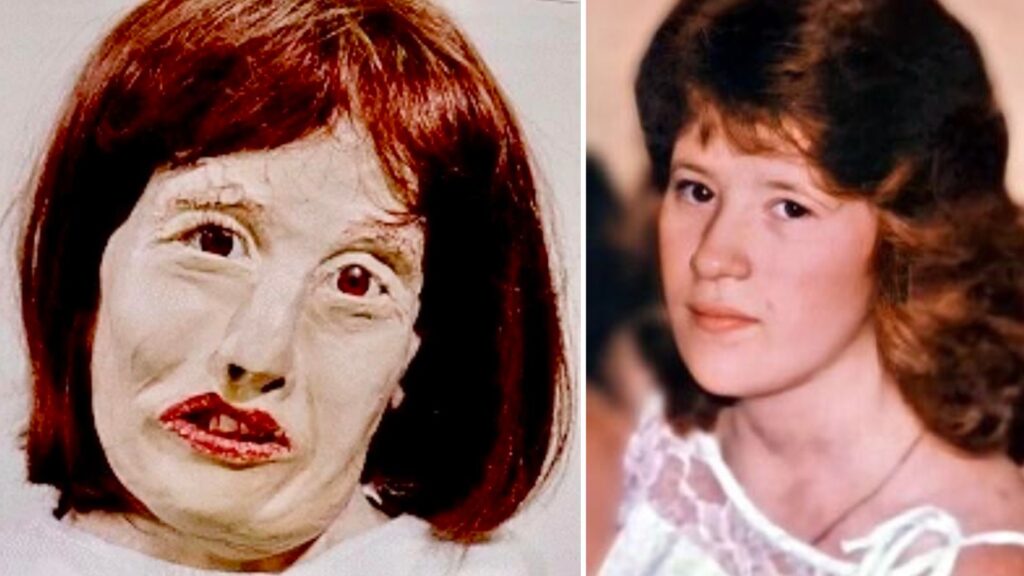
Susan Lund was born on November 29, 1967. She was 25 years old in December 1992 and lived in Clarksville, Tennessee, with her husband, Paul Lund, and their three young children.
Investigators later described her as last seen by family on Christmas Eve, December 24, 1992. Reports from that period also described her as pregnant at the time, in early pregnancy.
On the evening of December 24, Susan left her home on foot at about 7:30 p.m. She was reportedly walking to buy groceries at a nearby store, commonly described as a local grocery or a Winn Dixie.
Accounts from her family and later reporting said the grocery store closed early for Christmas Eve. Susan did not return home after leaving, and her absence was noticed that night and into the following morning.
Her husband reported her missing. Multiple agencies searched for her in Clarksville and the surrounding area. Early searches focused on likely routes and places she could have reached on foot that evening.
At the time, investigators also considered the possibility that Susan left voluntarily. Some early police statements and later summaries of local reporting described law enforcement as leaning toward a voluntary departure.
Within days of Christmas, police received reports of possible sightings. One reported direction involved Hopkinsville, Kentucky, where she was said to have been seen during the week after Christmas.
Those reported sightings were never confirmed as Susan. They shaped early assumptions in the case, including the idea that she might be alive and outside Clarksville, rather than injured or held locally.
Local archives later summarized the Clarksville Police response as pulling back the search within roughly two weeks. The stated belief, based on reported sightings, was that Susan had left the area by choice.
Paul Lund disagreed with that assessment and described reasons he believed his wife was in danger. One detail repeatedly mentioned was her checkbook, which she had with her, but which showed no activity after she vanished.
In late February 1993, a local newspaper report described Paul relaying another alleged sighting. He said someone reported seeing Susan near Interstate 65 around Louisville, Kentucky.
That reported sighting described a woman who looked thin and pale and appeared to be wearing the same clothing Susan had worn when she left home. That report also remained unverified.
While Susan was still a missing person in Tennessee, a separate investigation began in southern Illinois. On January 27, 1993, two girls found a human head in Wayne Fitzgerrell State Park.
The discovery site was along a wooded roadway inside the park, in Jefferson County, near the town of Ina, Illinois. Investigators documented brush and roadside vegetation consistent with the head being left near the road.
The Illinois case began as an unidentified remains investigation. The victim was initially described as a white female, and early estimates placed her age roughly between 30 and 50.
Investigators also estimated she likely died two to three days before the discovery. With only the head recovered, the medical examiner could not determine a full cause of death.
The manner of death was ruled homicide. The limited remains meant investigators had fewer avenues for injury reconstruction, and the case centered on identification and how the remains came to the park.
Police documented physical characteristics for identification. They described long reddish hair and a pin shaped mole in the left ear, along with extensive dental work.
The dental work included a silver point filling, and investigators noted the possibility of prior orthodontic treatment such as braces. Those details were used for comparisons against missing person records.
Investigators also noted skeletal asymmetry that may have been visible in the face during life. They discussed the possibility of neck issues and, in early analysis, considered torticollis, sometimes described as wry neck syndrome.
The unidentified victim became known as Ina Jane Doe, a label tied to the nearby town. Over the years, her case was circulated with forensic images and reconstructions to trigger recognition.
Some early forensic images reflected the theory of a pronounced head tilt. Later reviews concluded that the early depiction likely overstated the asymmetry and did not accurately represent how the woman appeared in life.
For decades, the Illinois victim remained unidentified and the rest of her body was never located. Separately, Susan Lund remained a missing person in Tennessee without a confirmed location or date of death.
Those two cases were not connected at the time. The missing person file in Tennessee and the unidentified victim file in Illinois existed in parallel, each missing a key link that could merge them.
In 2021, the Illinois case received renewed scientific attention. In February 2021, Dr. Amy Michael, an anthropology professor at the University of New Hampshire, approached the Jefferson County Sheriff’s Office.
The goal was a reexamination using updated forensic methods. The reanalysis reviewed prior conclusions, including the earlier asymmetry narrative and how that narrative shaped the public facing reconstructions.
As part of that work, a new forensic image was produced by artist Carl Koppelman. Investigators circulated updated images, including versions presented with and without eye makeup.
At the same time, the case moved toward forensic genetic genealogy. Samples from Ina Jane Doe’s remains were sent to a laboratory to generate a DNA profile suitable for genealogical comparison.
Reporting on the case identified the lab as Astrea Forensics in Santa Cruz, California. The resulting profile was then provided to Redgrave Research Forensic Services for genealogical work.
The DNA data file was uploaded to GEDmatch on February 3, 2022. Genealogists then began reviewing matches, building family trees, and narrowing toward a specific identity.
The genealogy team reported developing a potential match within about a day of beginning the match analysis. That candidate identity was then passed to law enforcement for confirmation.
Law enforcement contacted family members connected to the candidate identity. A sibling provided a confirmatory DNA sample for one to one comparison against the Jane Doe DNA profile.
On March 6, 2022, authorities confirmed that Ina Jane Doe was Susan Lund. The identification resolved the unknown victim case and reframed Susan Lund’s disappearance as a homicide.
A public announcement followed, including a press conference on March 11, 2022. The Jefferson County Sheriff’s Office described the identification process and asked for information about Susan’s disappearance.
The identification also clarified how far Susan had been moved from her last known location. Clarksville, Tennessee and Ina, Illinois are separated by several hours of driving, crossing state lines.
Investigators have not publicly established where Susan was killed or where the decapitation occurred. With only the head recovered, location analysis depends on investigative leads rather than full scene reconstruction.
Illinois investigators have discussed the possibility that the head was thrown from a vehicle traveling along the park roadway. That theory attempts to explain the roadside placement and lack of other remains nearby.
No public suspect has been named, and no arrest has been announced. The case remains an open homicide investigation focused on Susan’s movements after leaving home in Clarksville.
The Tennessee side of the timeline remains the core gap. The known facts end when Susan leaves on foot around 7:30 p.m. on December 24, 1992 to walk to a grocery store.
Key questions include whether she reached the store, whether she met anyone along the route, and whether she entered a vehicle voluntarily or under force. Public reporting has not resolved those points.
Early reports about sightings in Kentucky have never been confirmed, and the later DNA identification suggests those early sightings did not reflect Susan’s actual status after Christmas Eve.
Investigators also continue to seek information about anyone who knew Susan’s routine, her route, or her household situation. Public summaries have mentioned the family’s limited transportation options at the time.
Another unresolved issue is where the rest of Susan’s remains are located. Despite searches and decades of attention, only the head has been recovered, leaving the disposal site for the body unknown.
The forensic profile from the Illinois discovery still matters for investigative comparison. The estimated time since death before January 27, 1993, suggests Susan was alive for some unknown period after December 24.
That window ranges from hours to weeks, depending on what occurred between Clarksville and Illinois. Investigators have not publicly narrowed that window beyond the time since death estimate near discovery.
The original age estimate of 30 to 50 also shows how identification can stall when baseline assumptions are wrong. Susan was 25, which would have excluded her from some early comparison filters.
The revised forensic images and genealogy work corrected that problem by moving away from visual recognition alone and toward family linkage through DNA, followed by direct kin confirmation.
After identification, investigators renewed requests for tips about Susan’s whereabouts on or after December 24, 1992. They asked for information relevant to travel, contacts, and potential witnesses.
The Jefferson County Sheriff’s Office listed Detective Captain Bobby Wallace as a contact point, and also referenced crime tip lines during earlier appeals connected to Ina Jane Doe.
As of the latest public updates, the case is still unsolved. The confirmed case facts are the last sighting in Clarksville on Christmas Eve 1992 and the discovery of her head in Illinois on January 27, 1993.
The confirmed identification milestone is March 6, 2022, when one to one DNA comparison confirmed Susan Lund as Ina Jane Doe. The open investigative problem is the person responsible and the route taken.
Any new progress likely depends on witness information from 1992 to 1993, records of travel or contacts, or physical evidence that can be linked to a suspect through modern DNA comparison techniques.