“I remember playing with a ball with other kids and hearing ‘ping’ sounds around me. It took me a few seconds to realise we were being sniped at…” recalled a Bosnian national who was 5 years old when the siege of Sarajevo started, through a Reddit comment.
For nearly 4 years, going out in the streets of Sarajevo was equivalent to risking your life. During the siege of Sarajevo in 1992, crossing roads was a symbol of courage for ordinary citizens.
These streets of Sarajevo, where the civilians went out fearing their lives at every step taken, later became known as the “Sniper Alley”
The reason why civilians were scared to step out of their houses was these unknown and unseen snipers. Nobody knew where they came from, and nobody knew the reason these supposed “snipers” were behind the lives of normal civilians.
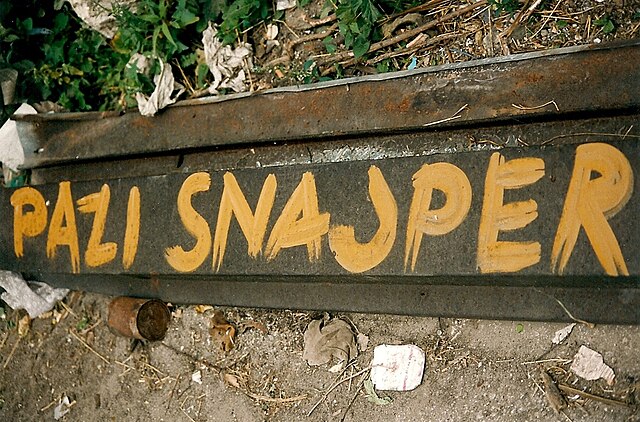
One could find these snipers in the hills and high-rise buildings surrounding Sarajevo. Every turn displayed a warning sign that said “Pazi – Snajper,” which translates to Watch out – Sniper. This was a simple instruction for residents to run quickly to stay alive.
History of the Sarajevo Siege and What Led To “Sniper Tourism”
To clearly understand the Bosnian War and the siege of Sarajevo, you have to understand what Yugoslavia was. Yugoslavia was a socialist Federation located in southeastern Europe that included Bosnia and Herzegovina, Serbia, Croatia, Slovenia, Macedonia, and Montenegro.
Yugoslavia was a place where people of multiple ethnicities lived peacefully alongside those of different religions, under the presidency of Josip Broz Tito from 1953 to 1980.
Tito died on 4th May, 1980, and since then, economic problems and nationalism have arisen among the civilians, which resulted in the downfall of the country. Political leaders increasingly promoted ethnic identity, especially Slobodan Milošević of Serbia, who encouraged the Serbs living outside of Serbia.
In 1991, Slovenia and Croatia declared independence, sparking the war, and Bosnia soon became the next target of the conflict.
Bosnia and Herzegovina was a vulnerable area because it contained people from multiple ethnicities, including Bosniaks (Bosnian Muslims), Bosnian Serbs (Orthodox Christians), and Bosnian Croats (Catholics).
In February-March 1992, Bosnia held a referendum on independence, which Bosniaks and Croats supported, while many Bosnian Serbs rejected the movement and boycotted the vote.
Bosnia declared independence in March 1992, but Bosnian Serb leaders rejected the decision and, by gaining support from the Yugoslav People’s Army and Serbia, established their own political entity, known as Republika Srpska. The key leaders of this movement included the political head, Radovan Karadžić, and the military commander, Ratko Mladić.
The Bosnian war began in April 1922, when Bosnian Serb forces, equipped with heavy weapons, moved to seize strategic territory and surround major cities. Sarajevo, the capital of Bosnia, was surrounded on April 5, 1992, by the Serb armies.
The blockade was imposed, denying the civilians food, power, and water. The Serb artery inflicted great damage on every part of the city, dropping an average of 300 shells every day and targeting schools, hospitals, and homes.
Life Under Siege and the Everyday Struggle of Survival
Sarajevo, the capital of the Republic of Bosnia and Herzegovina, was under a prolonged military blockade during the ethnically charged Bosnian War.
The siege, which lasted exactly 3 years, 10 months, 3 weeks, and 3 days, featured multiple developments.
Serbs controlled most of the major military positions and the supply of arms, and some alleged “snipers” took positions inside the city. Every street became a symbol of danger, while the most dangerous streets remain, Ulica Zmaja od Bosne.
The siege resulted in a 360° turn in the daily life of the citizens. The daily life of the residents revolved around shelling, shortages, and the constant possibility of dying from a sniper shot.
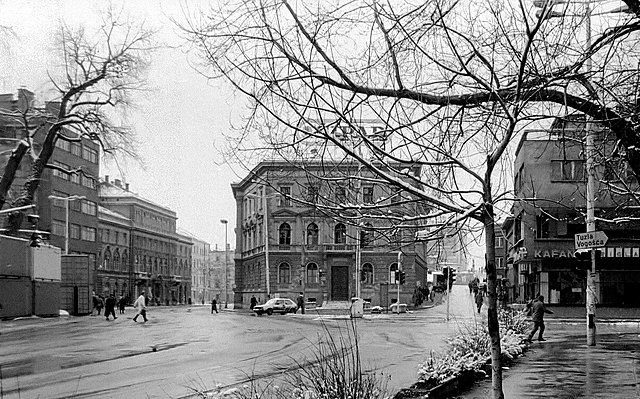
Families adapted to a new routine of living designed entirely around survival: moving only at certain times, avoiding open spaces, and choosing routes based on recent shootings.
Many children in Sarajevo learned to run before they understood what was happening around them. Citizens used to dash across the streets in bursts, timing their movements between gunshots.
Over 11,500 people died by the time the siege was lifted in 1996. Allegedly, the snipers were wealthy foreign nationals from Italy, the U.S., Canada, Russia, Germany, France, and Britain. With no external forces compelling them to act as snipers, they were said to be driven by their own pleasure.
Apparently, the wealthy foreigners paid the equivalent of €80,000 to €100,000 to shoot down humans in Sarajevo. The highest bid was made for killing children and pregnant women, whereas old people could be shot for free.
According to the 17-page legal complaint, submitted to prosecutors by the mayor of Sarajevo, “There were no political or religious motivations—they were rich people who went there for fun and personal satisfaction. We are talking about people who love guns who perhaps go to shooting ranges or on safari in Africa.”
Gunmen used to take Bosnian Serb sniper positions in the hills surrounding Sarajevo, allowing them to get a clear view of the city below. These shooters could easily target movement across the key streets and public spaces.
As per Zilha Mastalic Kosuta, of the Institute for Researching Crimes Against Humanity and International Law at Sarajevo University, the snipers killed 225, including 60 children, with a sniper. These later became the most devastating weapon that was used in the Bosnian War.
Rumours After the War and Suspicions Which Flooded
The Bosnian war ended in 1995, and Sarajevo started rebuilding, but the stories from the siege still lingered. Multiple rumours surfaced among survivors and observers, but there was one that caught everyone’s attention.
Decades later, after the Bosnian war, director Miran Zupanič released a documentary called “Sarajevo Safari”. The documentary was released in 2022, attracting international attention to the siege of Sarajevo.
The documentary showcased the Army of Republika Srpska (VRS) conducting the siege from 5 April 1992 to 29 February 1996. The interviews and testimonies available in the documentary suggest that certain outsiders may have paid to witness or even participate in the sniper activity during the war.
The film presented testimonies from multiple sources, including an anonymous former intelligence officer claiming that organised, sniper tourism actually occurred during the war.
The officials and veterans associated with the VRS Army strongly rejected the accusations. They also called the film propaganda aimed at ruining the image of the VRS and the Serb people.
The documentary is an important attempt to uncover the hidden truth of the past. Survivors expressed mixed reactions: for some, the documentary validated rumours they had heard for years; for others, it risked reopening old wounds that never fully healed.
In 1990, an Italian newspaper called “Corriere Della Sera” reported the rumour, citing the possibility of Italian extremists travelling to Bosnia to spend weekends as snipers. The rumour was also reported in the book called “The bastards of Sarajevo” written by Italian author Luka Leone.
While nothing is confirmed yet, all speculations are under the radar. With growing public interest in the case, there seems to be light at the end of the tunnel.
The Investigation That Brought the Allegation Back into International News
After the documentary’s international release, multiple legal actions began to unfold. In late 2022, Sarajevo’s mayor, Benjamina Karić, filed a criminal complaint with the prosecutor’s office of Bosnia and Herzegovina against unidentified people and responsible members of the VRS.
The case was handled by the country’s Special Department for War Crimes. Along with the report, testimony from witnesses and authors was also submitted to the authorities as additional materials.
One of the most important testimonies during this case was given in 2007 before the International Criminal Tribunal for the former Yugoslavia (ICTY). John Jordan, a former US Marine and firefighter, testified that he had seen individuals described as “tourist snipers” while visiting the Serb fire brigade in Grbavica.
“I have seen individuals who fit that profile on several occasions while visiting Serbian firefighters in Grbavica,” said John Jordan
John Jordan’s testimony, given years before the documentary, was under oath and later cited as supporting evidence that such individuals may have existed. Karić also proposed the hearing of author Luca Leone as part of solid evidence.
Even after all this evidence, the case was opened, but there was no public information on its progress. Because of the lack of public information for almost 3 years, Benjamina Karić sent a new enquiry to the prosecutor’s office regarding the case status by November 2025.
Testimonies and Truths in Italy and Belgium
Because of the lack of response from Bosnia and Herzegovina, an investigation was launched in Italy. Journalist Ezio Gavazzeni and former judge Guido Salvini filed a detailed criminal complaint with the public prosecutor’s office in Milan on January 28, 2025.
After a few months in the spring of 2025, Milan prosecutor Alessandro Gobbies officially opened an investigation. The legal classification of the crime reported is “intentional homicide with aggravating circumstances of equality and basic motives”. According to Italian law, crimes have no statute of limitations and carry a maximum sentence of life imprisonment.
One of the most trusted sources of Gavazzeni was a former Bosnian intelligence officer who said that he first learned of the “weekend sniper” phenomenon in late 1993. It was through documents detailing the interrogation of a captured Serbian volunteer.
According to the prisoner’s testimony, five foreigners, including at least three Italians, had travelled from Belgrade. They were then escorted to the mountains surrounding Sarajevo.
As per Gavazzeni’s complaint, the investigation is focused on Italian citizens, including those linked to the far right. The complaint also mentioned a “Milanese businessman who owns a private cosmetic surgery clinic,” along with others from Turin and Trieste.
The route used by Italian civilians involved a flight from Trieste to Belgrade, followed by a helicopter transit to VRS positions. There are allegations that the operation was carried out by the Serbian state security service, with Jovica Stanišić named as its head.
The amounts were also specified as a package equivalent to €80,000 to €100,000 in modern-day value. Multiple sources in the Italian investigation confirmed the allegation that “the highest price was paid for killing a child” or that “shooting a child costs more.”
As per Al Jazeera, in February 2026, Italian media reported that an alleged perpetrator was under investigation by Italian authorities.
“We are talking about wealthy, well-connected individuals, businessmen who, during the siege of Sarajevo, paid to kill unarmed civilians. They left Trieste for a manhunt and then returned to their respectable daily lives.” Ezio Gavazzeni accounted.
Stating the seriousness of the crime, he said, “(these people) played God and have remained unpunished.”
Around the end of 2025, Belgian member of Parliament Leila Agic reported that Belgian nationals may have participated in the “sniper Safari” during the siege of Sarajevo in 1990. These individuals allegedly paid the Bosnian forces to access the sniper positions from which they could target civilians.
Agic requested the Federal Public Prosecutor’s Office to investigate potential war crimes. However, no names or prosecutions have been confirmed till now. Matteo Salvini, an Italian politician, declined to provide details but twice emphasised Belgian involvement in the case.
A Story Still Unfinished in a City Filled with Mysteries
A total of 11,540 civilians of Sarajevo, including 500 children, were killed during the siege.
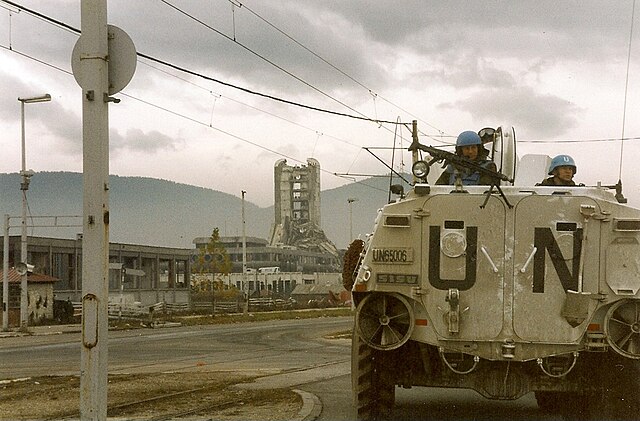
Sarajevo reached the stage of starvation because of the unavailability of food. However, the United Nations, which controls the international airport, organised humanitarian relief for civilians, involving more than 12,000 flights from almost 20 countries.
A “Tunnel of Hope” was also created that connected the city to the airport, allowing the supplies to come through, but the shelling was unstoppable and caused devastating damage in the city of Sarajevo.
The two major attacks that infuriated public opinion were those on the city’s Markale Market. In the first attack, a total of 68 Sarajevans died, and 142 were severely wounded. In the second attack, a total of 43 civilians died, and 84 were heavily injured.
Following these attacks, NATO launched air strikes against the Bosnian Serbs army, forcing them to accept the “Dayton Accords”. The Dayton Accords are a peace agreement between the presidents of Bosnia, Croatia, and Serbia, signed on November 21, 1995, to end the Bosnian War.
The agreement outlines a General Framework Agreement for Peace in Bosnia and Herzegovina. It preserved Bosnia as a single state composed of two major parts, the Bosniak-Croat Federation and the Bosnian Serb Republic, with Sarajevo serving as an undivided capital.
The agreement is known as the Dayton Accords because the negotiations took place at Wright-Patterson Air Force Base, outside Dayton, Ohio. The chief US Peace Negotiator, Secretary of State Warren Christopher, Richard Holbrook led the process.
In November 2017, the International Criminal Tribunal for the former Yugoslavia (ICTY) sentenced the commander of the Bosnian Serb Forces, Ratko Mladić, to life imprisonment for war crimes.