On March 2, 1998, 10-year-old Natasha Kampusch left her family home in Vienna after arguing with her mother, Brigita Sirny, and set off for school.
The household was already tense. Brigita was angry that her estranged husband, Ludwig Koch, had brought Natasha home late the previous night after a weekend visit.
Ludwig and Brigitta were navigating a difficult separation, and the tension between them regularly landed on their daughter. Brigitta informed Natasha that she was no longer allowed to see her father.
As Natasha walked her regular neighbourhood route, 35-year-old Wolfgang Přiklopil was waiting in a white Mercedes-Benz delivery van. He waited until she got close enough, then pounced and forcefully threw the girl into the vehicle.
Natasha tried to scream, but she couldn’t. It was over so quickly. But her mind started going into overdrive to keep her alive.
She began asking her kidnapper questions like what size shoes he wore and whether he intended to sexually assault her.
Peering out as far as she could, Natasha looked for landmarks and turns in the neighbourhood, based on the numerous drives she had taken with her mother. Přiklopil drove the girl 15 miles northeast of Vienna to his suburban home in Strasshof an der Nordbahn.
The kidnapping, though, was not impulsive. Přiklopil had carefully planned this in advance, installing a windowless soundproofed room underneath the garage.
His secret room was so fortified that it took roughly an hour to get inside. A film adaptation of Natascha’s memoir showed that Přiklopil had spent ten months constructing the cellar and planning the abduction after becoming fixated with her.
When they arrived at his home, he wrapped Natascha in a blanket and took her to the cellar. She was only reachable from there through an iron door. He then forced her to take off her shoes, and he burned them, saying, “You won’t be needing them again.”
Přiklopil the Abductor
Born on May 14, 1962, Přiklopil was the only child of Waltraud and Karl Přiklopil. It was a relatively stable upbringing, but he had an unhealthy dependence on his mother.
As a child, Přiklopil had issues with interpersonal relations with his peers. He also had obsessive-compulsive tendencies, which manifested in fixations toward symmetry and cleanliness.
Mental health experts later assessed Přiklopil to be a socially awkward psychopath. He also had a highly inflated ego and a low opinion of others.
After secondary school, he enrolled in a vocational apprenticeship focused on high-frequency engineering and electrical mechanics. Přiklopil graduated and secured a job as a communications technician at Siemens.
Due to his social awkwardness, Přiklopil had never been in a romantic relationship, even up to his 30s. His father’s death earlier in 1977 had also negatively affected his mental health.
Eventually, Přiklopil lost the corporate job at Siemens and drifted into independent home renovation and freelance electronics work.
Přiklopil then withdrew to an inconspicuous life in a suburban home in Strasshof an der Nordbahn. Drawing on his advanced technical background in telecommunications, he crafted a hidden dungeon beneath his garage floor.
Přiklopil reinforced it with soundproofing insulation, so no screams could be heard from the surface and installed a heavy electronic steel door to seal the entrance.
Living 15 miles away from the neighbourhood, Přiklopil spent time scouting the school routes. He noticed 10-year-old Natascha and started tracking her movements, mapping the patterns.
The Cellar
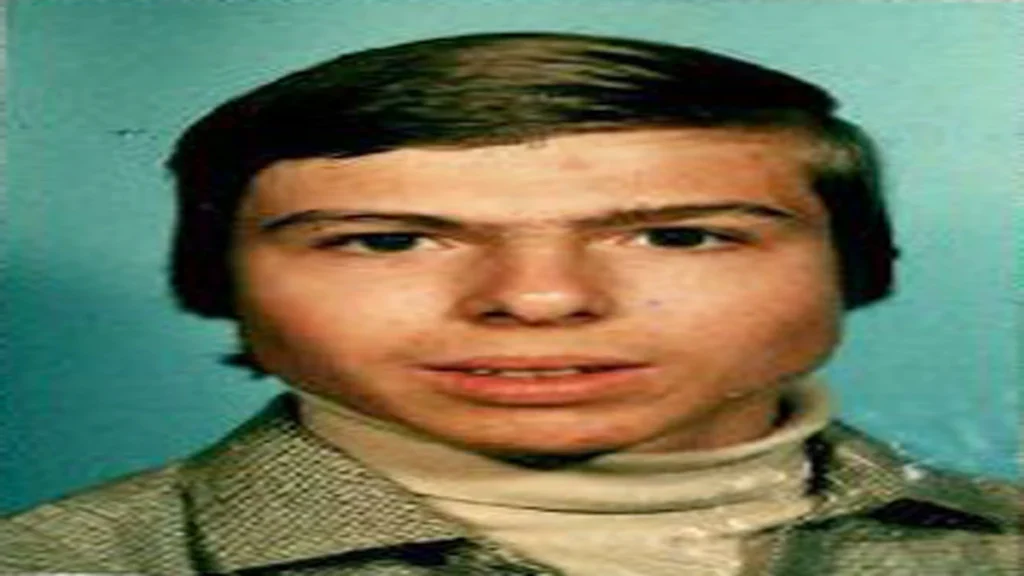
Once Přiklopil brought Natascha to the residence, a trapdoor led to a narrow flight of stairs that opened into a basement. The entrance was a small steel hatch that was concealed by a cupboard.
Natascha tried to keep track of time in the initial months, but soon it was impossible to tell day from night.
He controlled the lighting and electricity, installing a two-way intercom through which he gave commands at random times. Though she analysed the intercom’s three buttons and often pressed the third, which silenced his voice.
Přiklopil bought books and food, along with a television, though viewing was rationed. But he made sure not to visit the chamber on the weekends because his mother usually came to visit the home then.
He also barely gave Natascha any food. Apparently, he instead took pleasure in showing her a plateful of food, then serving her only a small amount.
Přiklopil also banned her from showing any emotion. When Natascha cried, he grabbed her by the neck, choked her, and pushed her head under the tap.
During the early years of the captivity, Přiklopil alternated between cruelty and paternalism. He bought Natascha a computer and surprised her with chocolate eggs on their first Easter.
He also added that her parents hadn’t bothered to pay a ransom, saying, “You’ve seen my face. Now I can never let you go.” Přiklopil demanded that Natascha call him Maestro, but she flatly refused.
The psychological manipulation was measured and constant over the months. It was designed to strip her of any sense of identity outside of the relationship.
The abduction stretched into years, and Natascha entered puberty while in the cell. Přiklopil then dropped the paternal façade.
He began physically abusing and overworking her. Once, he threw a sack of cement at her.
Natascha lamented, “I felt like a battered dog, who is not allowed to bite the hand that beats him because it is the same hand that feeds him.”
The house Přiklopil was previously his parents’, and he wanted to renovate several rooms, so Natascha became the unpaid labour. He forced her to do manual labour beyond her capabilities, including dragging huge slabs of stone.
If Natascha gave him the wrong tool while he was working, he responded violently. Natascha calmed down by imagining an older version of herself saying,
“Right now, you cannot escape. You are still too small. But when you turn 18, I will overpower the kidnapper and free you from your prison. I won’t leave you alone.”
She also studied and documented her surroundings. Natascha educated herself with books and limited television, when Přiklopil allowed it.
She learned to read his moods and manage his volatility, recognising that provoking him brought more punishment. His treatment alternated between gifts and beatings that were so severe she could feel her spine would soon give way.
Natascha attempted suicide multiple times during her captivity. She engaged in small but private acts of resistance, refusing to call Přiklopil by title.
When she gained physical strength from renovation work to strike him, Přiklopil overpowered her and began limiting her food intake to make Natascha weak. Sexual abuse started as her captivity progressed.
A Failed Investigation
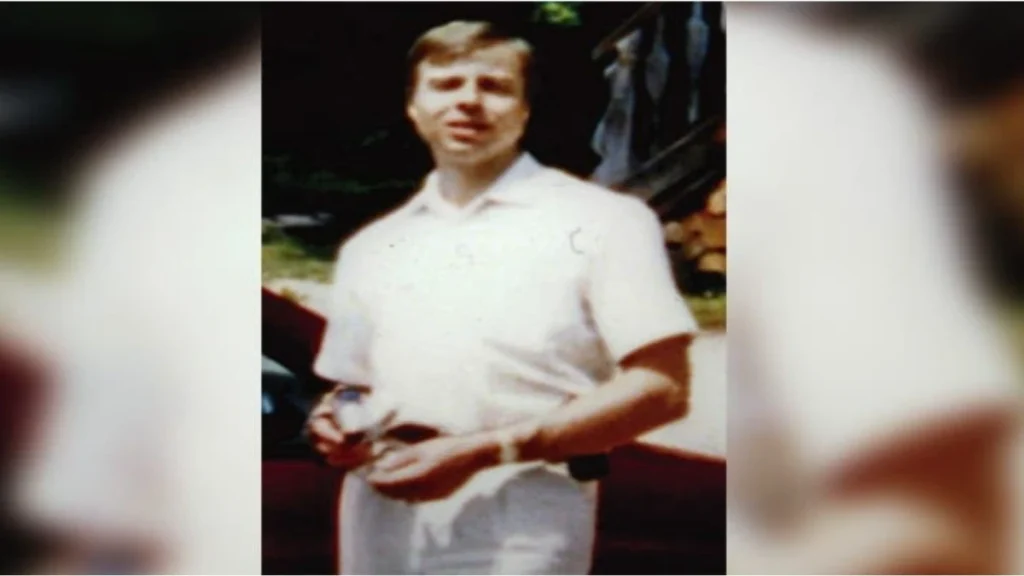
Back at home, when Natascha failed to return, panic immediately set in. Her parents mobilised the police and media, leading to one of Austria’s largest missing child searches.
Hundreds of officers using state-provided resources and search dogs combed Vienna in search of the girl. The only viable piece of information came from an eyewitness who reported seeing the girl being dragged into the back of a white commercial van.
So police tracked down and inspected almost 800 white minivans. Incidentally, this search included Přiklopil’s van, but he told police he had been alone at home on the morning of the kidnapping.
Authorities were satisfied with his explanation that he was using a vehicle to transport rubble from the construction of his house at the time. The police dismissed Přiklopil as a suspect.
With zero concrete leads, the media and investigators turned their attention to Natascha’s parents. Her mother, Brigitta Sirny, was the main target of the rumour mill.
These suggested she had orchestrated the kidnapping and was involved in child pornography rings or had sold her daughter to black market organ dealers. Former Vienna police chiefs even publicly questioned the family dynamic, saying the parents were involved.
When this line of investigation led to a dead end, they focused on the possibility of child pornography rings and organ theft. Officials began to consider the potential of suspects like French serial killer Michel Fourniret.
Since Natascha had carried her passport when she left home, as she had just got back from a trip to Hungary, the police extended the search there.
The trail went cold and stayed that way for eight years.
The Escape
Natascha turned 18 on August 23, 2006. By this time, Přiklopil was starting to allow her to go outside more often. It was short but supervised outings.
On her birthday, he had her vacuum his car in the garden of the Strasshof property. Přiklopil then took a phone call and stepped away.
She remembered later, “Previously, he observed me all the time. But because of the vacuum cleaner whirring in my hand, he had to walk a few steps away to better understand his caller.”
It was the first time during her captivity that she was outside and alone. Natascha tiptoed to the gate, and her luck held. It was unlocked.
Natascha later recalled, “I could hardly breathe, I felt solidified, as if my arms and legs were paralysed. Jumbled images shot through me.”
She ran through the gardens and over fences to get as much distance between her and Přiklopil’s house as possible. After initially getting ignored by passers-by, the girl reached a neighbour’s home, declaring that she had been kidnapped.
The neighbour called the police, who responded quickly and secured Natascha. They wrapped her up and drove her to the police station in the nearby town of Deutsch Wagram.
She was placed in a room with a young female officer named Sabine Freudenberger. At the time, Natascha was in a fragile physical state, weighing only 42 kilograms.
Having missed out on puberty and the typical teen social milestones, she was immediately fascinated by the police officer’s appearance. She admired Freudenberger’s streaked hair and jewellery.
Officers confirmed Natascha’s identity via a specific childhood scar on her body. Forensic teams also took DNA swabs to run against her parents’ genetic profiles, and this officially confirmed her claims.
The police then called her mother and father. That evening, they arrived at the station, and the reunion was described as intense.
Until then, they had no hope of finding their daughter and had to defend against rumours that they had murdered Natascha.
Přiklopil’s Short Flight
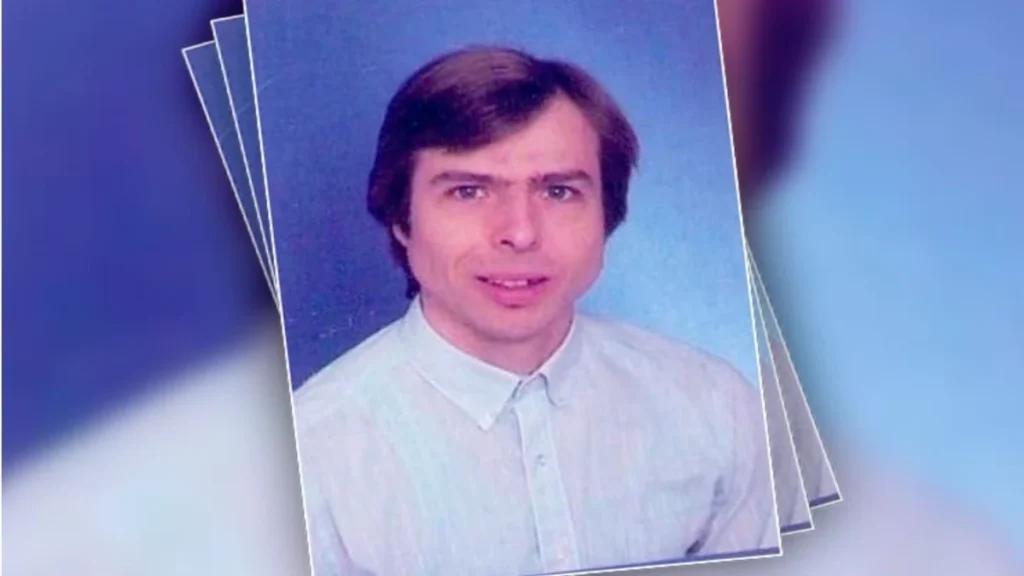
After hanging up his mobile phone, Přiklopil walked back to the white delivery van and found the vacuum cleaner running, but Natascha was nowhere to be seen. He realised she had finally escaped and was probably a long way off.
Realising that she would most likely tell the authorities what happened, he grabbed the keys to his other BMW sports car and sped away from his Strasshof home before the police arrived in the afternoon.
Knowing they would be hunting for him, Přiklopil called his friend and business partner, Ernst Holzapfel. He begged his friend to pick him up at a shopping centre and drive him around, saying it was an emergency.
At the time, Holzapfel had no idea that his friend was a fugitive wanted for abduction. As Holzapfel drove him around the town, he noted that Přiklopil appeared panicked.
He claimed that he panicked because he had just escaped a police breathalyser checkpoint while under the influence. Přiklopil also lamented that the police were going to permanently revoke his driver’s license.
According to later court records, Přiklopil eventually broke down and confessed his true crimes to Holzapfel during the drive. He also revealed plans to get fake Czech immigration documents to begin a new life.
Holzapfel tried to calm him down and urged Přiklopil to turn himself in to the police instead. Přiklopil then asked to be dropped off on Dresdner Straße.
He walked alone to the Wien Nord suburban railway station. Later in the evening, as a commuter train was approaching, Wolfgang Přiklopil threw himself in front of the train.
Police tracked down his abandoned red BMW in a parking lot in Vienna, and Holzapfel was brought to the police station to officially identify Přiklopil’s body.
When the news broke concerning the abduction and Přiklopil’s suicide, his mother was completely blindsided. She could not believe that her son was a brutal kidnapper and sadist.
Life after 3096 Days in Captivity
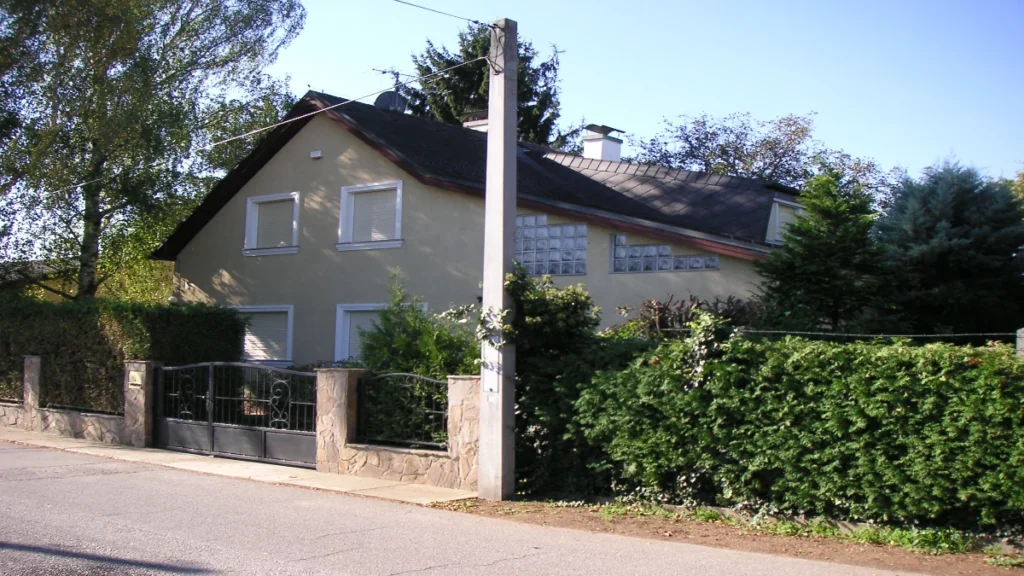
When Natascha was informed that Přiklopil was dead, she had a visceral reaction, breaking down in tears. She even requested permission to see his body at the coroner’s and light a candle for him.
She experienced a form of survivor’s remorse borne from the experience over the years. Later, Natascha said she predicted the outcome during her captivity. “I knew that if I didn’t try to escape, he would kill me sooner or later. And I knew that if I tried to escape, he would kill himself.”
Following hundreds of interview requests from media outlets offering significant sums of money, Natascha finally agreed to be interviewed by the Austrian public broadcaster ORF.
She also released a book, the 3096 Tage, in September 2010. This was adapted into a film.
Natascha released a second book titled 10 Years of Freedom in August 2016. She also briefly hosted a talk show on Austrian channel PULS 4 in 2008, but it aired only three episodes.
She was eventually given ownership of Přiklopil’s home as legal compensation to prevent the property from becoming a dark-tourism attraction. In any case, she could not sue him for damages in criminal court after he committed suicide.
Natascha does not live there but pays for its upkeep and visits to make sure it is not vandalised. The cellar was also filled in.
Because her abduction pulled Natascha out of society at the age of 10, she had to complete her education as an adult. She went on to study psychology to better understand her trauma and the effect confinement had on her mind.
Natascha continues to occasionally appear on television interviews and true-crime documentaries. She also uses her platform to advocate for victims of abuse and human trafficking.
If you’re interested in similar stories on unsolved mysteries and heroic escapes, explore our articles on the Disappearances of Lauren Spierer and the Tromp Family.