Benjamin Wayne McDaniel was born on 15 April 1980 in Memphis, Tennessee. He was the oldest of three brothers and had a great love for the outdoors. He began scuba diving at the age of 15; a hobby that would eventually cost him his life.
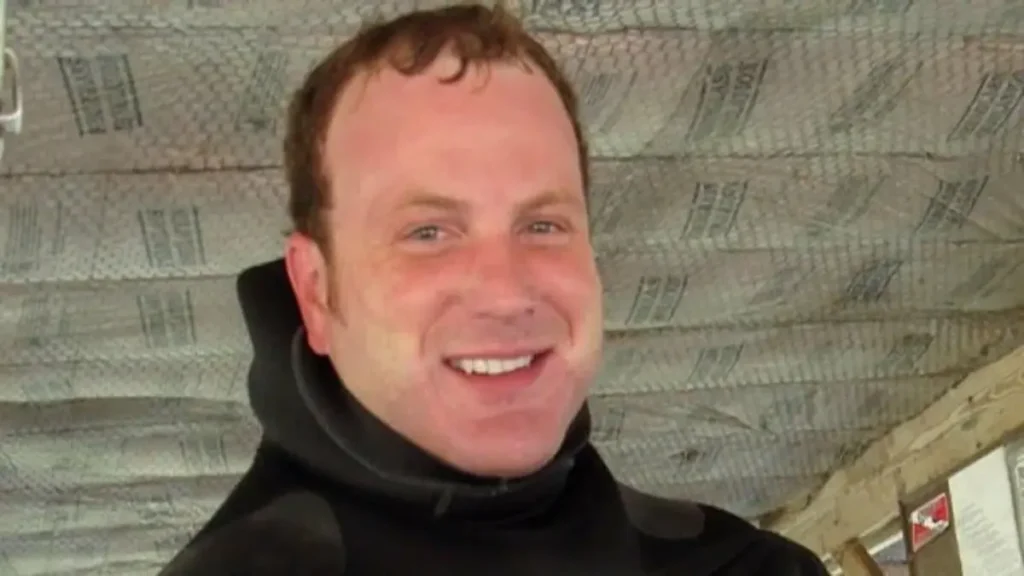
On Wednesday, 18 August 2010, Ben arrived at the Vortex Spring underwater adventure zone in Florida. He had planned 3 dives for the hot summer day. After completing two of the three planned dives late in the morning and early in the afternoon, Ben was seen on security camera footage returning to the dive shop to refill his tanks.
Around 6.30 p.m., Ben McDaniel called his mother using his cellphone. This is the last time his family would hear from him. He also left a friend a voicemail in which he appeared excited about the dive. The sun began to set around 7.30 p.m. as Ben suited up. He swam through the basin and main cavern to the cave’s main entrance, making his way to the locked gate.
Ben was last seen by two divers, Eduardo Taran and Chuck Cronin, both Vortex Springs employees, during the dive while they were enjoying their weekly relaxing dive after the resort closed for the day. On their way out, they came across Ben McDaniel, who was tampering with the gate to enter into dangerous areas he was not certified to enter.
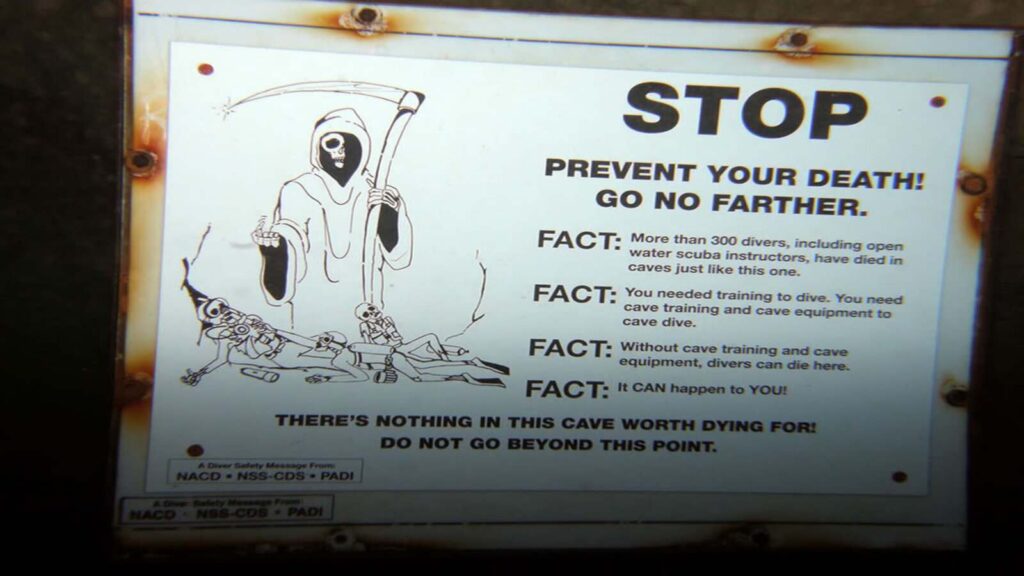
The gate is placed as a warning sign and a deterrent to prevent amateur divers from entering dangerous places. As the two friends swam out of the cave, Eduardo decided to go back and unlock the gate for Ben, thinking it was the safer option. He was worried Ben might overexert himself while tampering with the locks and drown, as he was the last diver of the day.
Overexertion could cause Ben to hyperventilate and use up his oxygen supply quickly, wasting precious minutes that would be crucial if he had trouble during his dive. Ben could also run into other troubles, like needing to cut through a tangled line, getting his bearings straight if he got disoriented, or waiting for the silt to settle if he accidentally kicked it up.
By opening the gate, Eduardo hoped to save McDaniel five or six minutes of air and help minimise exertion, thus reducing the risk. Ben had likely planned his big dive for later in the evening, when everybody had left, and he would be alone in the water so he could explore the cave without the risk of being seen breaking in.
Eduardo suspected that Ben McDaniel had tried to tamper with the gate before 18th August. He thought that if Ben was going to break in and dive, given all the risks involved, it would be better to just open the gate, thus minimising part of the risk. After opening the gate, the two friends returned to the surface, inspected their gear and then headed out for coffee, leaving Ben to his dive.
When Eduardo pulled into the parking lot the next morning (Thursday, 19th) around 10 a.m., he saw Ben McDaniel’s truck, but he wasn’t alarmed. Ben had been a regular at Vortex Spring, logging 250 dives during the four months before his disappearance.
Furthermore, the resort was only an hour-long drive from his parents’ beach home, so he often got there early. It cost $25 a day for scuba divers, so Ben always made the best of his time. On the morning of Friday, 20th, when Eduardo arrived at work, he noticed Ben’s truck in the same spot he had seen yesterday.
This raised alarm bells, and he immediately began asking staff members if they had seen or heard from Ben McDaniel on Thursday or earlier that morning. When it became clear that nobody had seen him, Eduardo called the police and reported him overdue.
While waiting for the police to arrive, Eduardo was the first to suit up and search for Ben McDaniel. If he had drowned, Eduardo could locate the body and tie a rope line to make it easier for law enforcement to locate and surface Ben’s body.
Law enforcement arrived at the scene shortly thereafter. While they were waiting for Eduardo to resurface, another diver surfaced. He reported that he had been diving down the gate, which was left open, but he did not see Ben McDaniel or any signs that he had been there.
The Holmes County Sheriff’s office called Ben McDaniel’s family back home in Memphis and notified them of his likely drowning. Ben’s father, Shelby, mother, Patti and girlfriend, Emily Greener, immediately hit the road for the seven-hour drive to Vortex Springs, Florida.
After informing Ben McDaniel’s family of his disappearance, Law Enforcement called certified drivers and rescue teams to help locate and retrieve Ben’s body. This would prove to be an especially difficult task given the cave’s topography outside which Ben was last seen.
What the Cave looks like
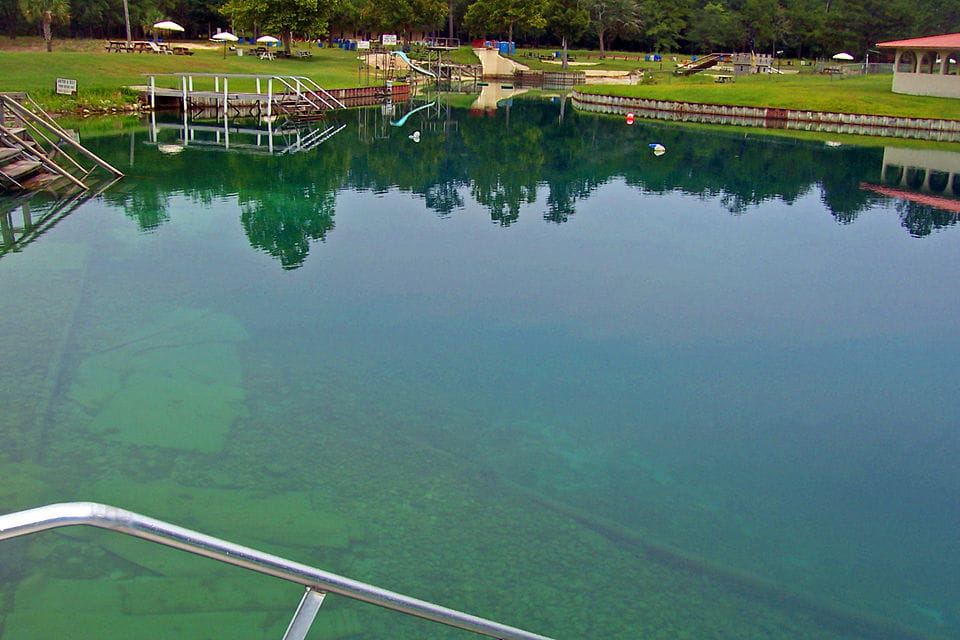
Beneath the surface of the spring, a diver will behold a bowl shaped basin which is 250 feet wide. Open Water (OW) certified divers can dive up to 50 feet deep. The cave’s sloping rocky sides lead to sandy/rocky bottom. The freshwater spring remains chilly throughout the year and produces approximately 28 million gallons of water each day.
Vortex Springs has a dedicated part of the spring reserved for swimmers. This area at a considerable distance from the cave but the splashing and jumping of divers can cause the water to get murky affecting the visibility of the divers.
What made the rescue operation tricky is that there are many different environments loacted in the spring. The begining of the Cave is an overhead environment where sunlight does not reach.
There is a buoyed line of nylon rope floating from the surface of the spring, leading down to the bottom of the basin, past a sign warning untrained divers to keep out at the entrance of the large cavern.
The spring is natural, but the cave which is the main attraction, is artificial. The Dockery family, original owners of Vortex Spring had the spring excavated, opening up the cave for exploration. A pipe was installed to dredge out the sediment, keeping the water beautifully clear. The cave has a sandy bottom, with clay silt in some places, and can experience an occasional collapse.
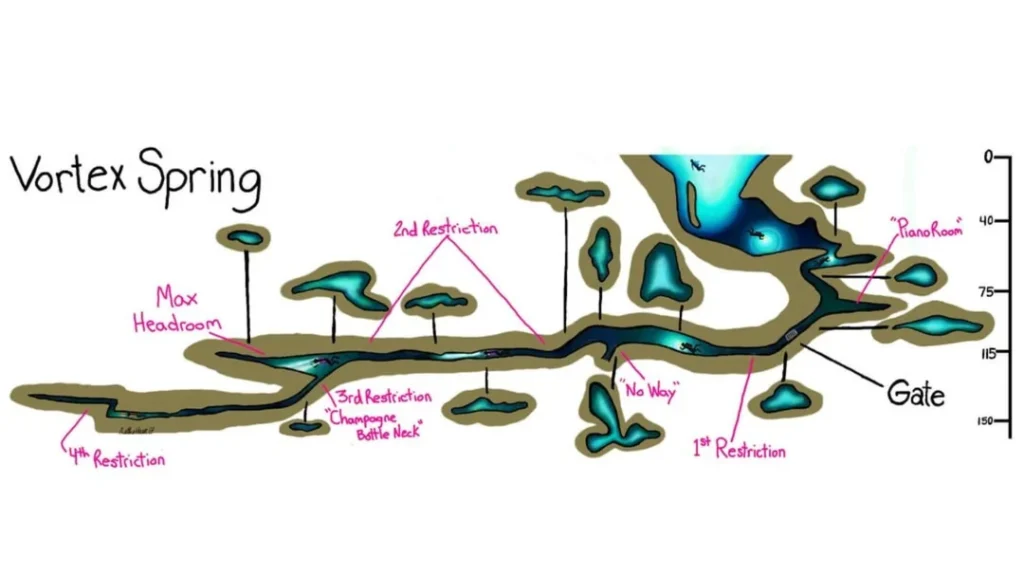
Most caves in Florida can be described like “Swiss cheese,” with many crevices, tunnels, nooks and crannies, multiple passages, and hidey-holes worming all throughout the limestone. Vortex Spring, however, does not have the same features. It’s more like a long tube, shaped like half cylinder, with only one way in and one way out, and very few cracks and crevices that could hide a drowned diver.
36 Day search for Ben McDaniel
The lead investigator for Holmes County, Captain Harry Hamilton, was assigned to investigate Ben McDaniel’s case; because of the technical aspects of searching the cave, Capt. Hamilton decided their police divers didn’t have the right kind of training. He decided to call professionals for underwater search. The investigators thought tons of divers, amatuer and professional alike, would all be jumping to volunteer, but he was mistaken.
The diving experience required to search any underwater cave, let alone one as dangerous as Vortex Spring, is extensive. They would have to be certified in Open Water (OW), Over Head (OH), Full Cave, diving below 30m, using special gas mixes, along with other technical diving and Recovery certification. He realized there just aren’t that many people in the world who would have all that training and experience, let alone in Florida.
Captain Hamilton contacted Jeff Loflin, a very experienced diver asking for help in finding qualified cave/recovery divers for the search. Jeff reached out to different dive shops nearby and was able to find 8 more experienced recovery divers. Jeff became the lead diver, and created three rotating teams.
Team 1 made the first push in the cave looking for Ben McDaniel, Team 2 replaced Team 1 to push further. Team 3 set up the extra tanks the other teams needed, as well as checking all the shallower areas of the cave and basin.
The searching of the basin, caverns, and area around the gate of the cave quickly came up empty; there was no sign of Ben. The recovery divers decided to venture into the dangerously tight restrictions beyond the gate.
The said restrictions are spots where it is difficult to squeeze through. In order to explore the area, dives are required to mount their tanks on their flanks, even remove their tanks and push them through the opening first, then squeeze their body though in some places. The tightest confines even require a diver to turn their head sideways to fit.
The first and only physical evidence found were three Stage tanks. Stage tanks are extra tanks cave divers bring along on long, deep, complicated dives to ensure they have enough air for the dive and for any potential emergencies that could arise. The three mis-matching Stage tanks had Ben’s name written on them, but their locations and condition were bizarre.
As one team surfaced, the next team went down but all came up empty handed. Ben McDaniel’s paced around the water’s edge, waiting for their son’s body to be found. Nobody knew where exactly inside the cave Ben might be, but the best guess was that he was stuck inside the dangerous gated area.
The divers thoroughly searched every crack and crevice, shining their lights into the darkest areas of the cave to no avail. The family’s hope of finding Ben’s remains started fading. Everybody involved in the search were puzzled by one question: What happened to Ben McDaniel and where is his body? It was as if he disappeared without a trace.
When no evidence of Ben McDaniel was found, divers recommended bringing in Edd Sorenson, one of the most experienced cave and recovery divers in the world. When the Holmes County Department got in touch with Edd he was out of country on a vacation.
His vacation was cut short when he decided to come back and help with the search. Sorenson knew the cave was dangeous as two of the rescue divers had nearly died searching for Ben but he decided to try anyways for the greiving McDaniel family.
Sorenson used an underwater scooter, a handheld device to quickly go down the cave, saving oxygen and gaining more time to search for Ben McDaniel. He had to carry smaller tanks so he could squeeze his way to the very end of cave. Sorenson was only the third person ever to survey the cave that far.
Sorenson found no marks in the silt or scratches on the cave ceiling in the deepest parts of the cave. He didn’t find any evidence that would indicate a diver had ventured into the area since is was first surveyed.
During the 36 day long search for Ben McDaniel lab teams conduced over 30 tests to check for signs of decomposition in the water but all the tests came back negative. This marked the end of the search for Ben.
Ben’s family was not satisfaied with the search. They repeately said that the search divers were not looking hard enough. After the Holmes County Sheriff’s Department had officially ended the search, Ben’s family announced a $10,000 reward for anyone who was “brave enough” to find Ben.
The diver community was outraged at this and asked Ben’s family to rescind the reward given the risks associated with venturing deep down the cave. When nobody came forward to attempt the dive in search of Ben McDaniel, his family increased the reward to $30,000.
Ben’s family was later contacted by Jill Heinerth, one of the best female divers in the world known for her underwater documentaries. She offered to film the entire dive- to the very back of the cave to prove Ben was not there. In return she asked Ben’s family to rescind the reward.
Jill’s buddy found a folding shovel believed to belong to Ben McDaniel. Ben’s family became hopeful knowing their son had the same shovel, but the shovel turned out to be Steve Keene’s, the first person to map the cave.
Theories about what happened to Ben
Since no body or gear (with the exception of three stage tanks) was ever recovered during the search, many theories have came out about what happened to Ben McDaniel. Some theories suggest that Ben disappeared voluntarily leaving his old life behind or he was abducted and killed.
Other theories suggest that Ben accidentally drowned while exploring the deepest recesses of the cave and his body is wedged in some crack or buried underneath the sand where it remains hidden.
Some people say that Ben committed suicide by purposefully squeezing into a tight space that search divers cannot go into, knowing he would not be able to get back out. Some theories suggest that Ben was a victim to foul play either during or after the dive.
Ben Mcdaniel’s life before he disappeared
The theory about Ben’s voluntary disappearence becomes plausible when we look at Ben’s personal life before his disappearence. He was going through a challenging emotional, financial and personal period in his life.
Ben was born in a loving and wealthy family. As stated earlier Ben had a great love for the outdoors. He often went on adventures with his younger brother Paul McDaniel who he loved dearly. Ben often went hiking, rock climbing and scuba diving.
Paul died in 2008 due to what was initially believed to be a stroke; when he was only 22 years old. Ben was the first person to arrive at the scene; he tried to revive Paul but he had already passed away when Ben found him.
After Paul’s passing Ben became active in raising money for the foundation his parents had estabalished to research into prevention and treatment of strokes. It was later determined that Paul had died because of a drug overdose.
The sorrow of losing a lifelong companion was great; Ben was deeply affected and still greiving his brother’s untimely death. Paul and Ben used to frequently go rock climbing together. Ben was also going through a divorce. At the same time his counstruction business failed.
Due to the failure of his business, Ben suffered huge losses. He owed $50,000 to the IRS in taxes. Ben’s parents suggested him to take a sabbatical and offered to support him financially during the break. Ben accepted the offer and moved into the family beach home at Santa Rosa Beach on the Emerald Coast of the Florida Panhandle.
He was accompanied by his dog, a chocolate Labrador that he had rescued. His parents and girlfriend say the move was proving beneficial, as McDaniel was beginning to think and talk about moving on from his recent personal setbacks.
He moved to the family home on April 10, 2010; four months before he mysteriously disappeared. He was 30 years old at the time of his disappearence.