




In a windowless interrogation room in Villavicencio, Colombia, two tired men sat across from each other. Detective Aldemar Duran had not slept in three days. The other man was a 42-year-old drifter named Luis Garavito.
Garavito had been taken into custody six months earlier on charges of attempting to sexually assault a child. He had initially tried to impersonate a local politician, but authorities finally verified his identity.
The interrogation went on for hours, but Garavito was silent, giving the same short answers. Then Duran changed tactics. He stopped asking questions and started describing what Garavito had done.
He began with the scenario of a six-year-old being led by a man into a cornfield. This man tied the boy, raped and torture him. He used razor blades to peel the boy’s skin from his fingers. The man also flayed his buttocks and used a screwdriver to puncture holes in the boy’s thighs. Unimpeded by the boy’s screams, the man did this for hours.
Garavito’s hands started to shake. His body began to tremble. The detective continued unfazed. Another story of a boy who was led to the outskirts of town, raped, tortured, and murdered. Then another, and another. Finally, a mass grave of boys between the ages of 6 and 16, and this was just the beginning.
Garavito collapsed onto the desk, sobbing uncontrollably. Tears streamed down his face. He choked out, “I’m sorry, I am a demon. What you found is nothing compared to what I actually did.”
The Origins of La Bestia
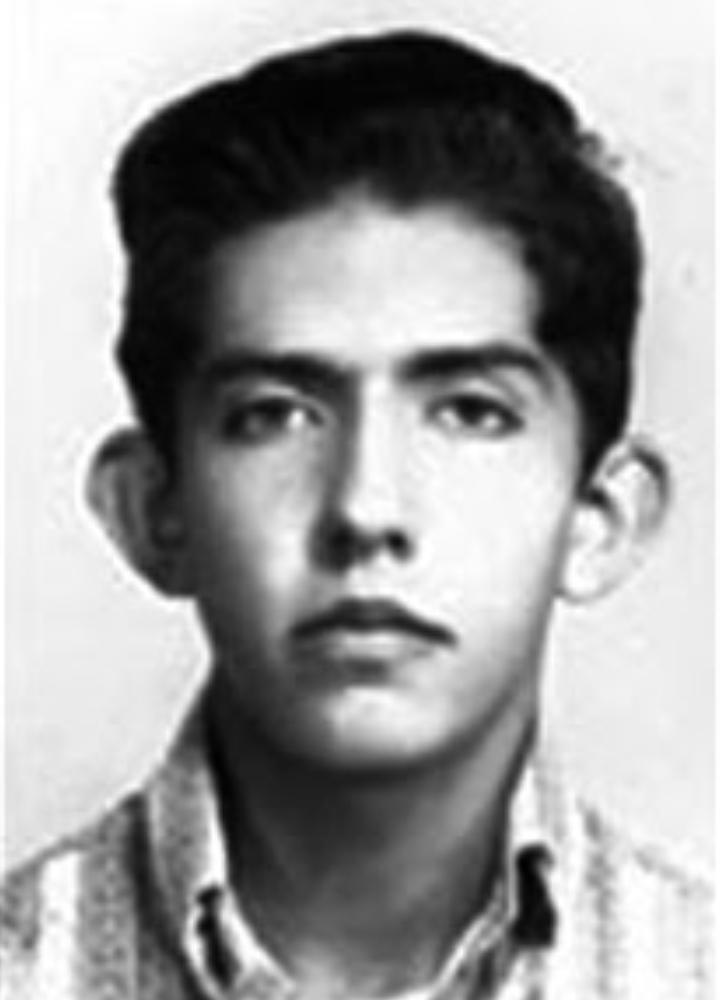
Luis Alfredo Garavito Cubillos was born on January 25, 1957, in Genova, western Colombia. From a young age, Garavito was accustomed to domestic violence, mostly from his father. In his confessions, he would describe his father as an alcoholic and a womanizer.
His father, Manuel Garavito, was notorious for his cruelty. He beat his wife, Rosa Delia Cubillos and the children for any perceived indiscretion.
According to Garavito, the home situation was so tense that he, and his siblings could hardly play or speak in front of their father for fear of being beaten. His mother was also harsh and emotionally distant to them.
Neighbors recounted seeing Manuel beat his wife outside the home, especially when he was drunk. However, in that time of widespread violence due to cartel activity, this was normalized and dismissed as ‘family business’.
On one occasion, a six-year-old Garavito tried to defend his pregnant mother during one of his father’s attacks. Manuel dragged the boy outside, tied him to a tree and assaulted him with the blunt side of a machete. He then left him there overnight.
The constant abuse fueled a growing rage within the boy. Teachers at school described Garavito as aggressive, distracted and restless. He also struggled building relationships with other children.
Garavito was already doing casual jobs, but his father decided it to pull him out of school so he could do it full time. He was instructed that friendships were meaningless and talking to girls was forbidden. Garavito existed only to earn money for the family.
The next few years added a new level of trauma as Garavito was repeatedly sexually abused by a friend of Manuel’s. He also later claimed that he had been sexually assaulted by his father, and by the neighbors.
To deal with the trauma, Garavito began harming animals. He would often kill and skin birds as a way to exert control over something weaker than himself.
At one point, he tried to lure and sodomize a five-year-old boy but was caught. According to his later confessions, Garavito loved the sense of power that the encounter gave him.
His mother evicted him from the house as punishment, but soon afterward let Garavito move back in.
In 1973, Garavito attempted to sexually assault a boy in Bogota. The child screamed for help, and Garavito was apprehended. The case did not go to trial. This time, his father threw him out of the house for good.
Garavito became a drifter who didn’t belong anywhere. He worked on coffee plantations, storefronts, and anywhere that would hire casual labor. But he didn’t last long at any of these places. Garavito often snapped at co-workers, supervisors, and customers.
He was also beginning to experience paranoia, hallucinations, and suicidal ideation, which worsened when he took alcohol. In 1980, Garavito admitted himself to San Juan de Dios Hospital. Doctors there treated him with anti-psychotic medication and therapy sessions.
During one session, he inadvertently admitted that he wanted children to his psychiatrist. They did not catch the meaning then. After a few weeks, he left treatment. He never admitted the true nature of his compulsions.
Garavito also had short-lived relationships with women, which often ended badly, leading him to spiral further.
To soothe himself, Garavito began to rape street children during his lunch breaks. Garavito exhibited dualities in his behavior, however, questioning his deviance. After his crimes, he would read the book of Psalms, seeking an explanation.
He would rape and torture minors in anonymity, using tools like blades, candles, and razor blades on the children.
By the mid-1980s, Garavito was unable to keep steady work in any one location. He quit a job at the supermarket and bought a wooden cart. He sold trinkets and religious artifacts, drifting from one town to another as a vendor. This gave him the perfect disguise.
Towards the late 1980s, he developed an interest in esoteric reading. After reading Mein Kampf, Hitler’s Autobiography, he obtained a fondness for nazi literature because he perceived many parallels in its ideologies paired with his own life experiences.
Then came an instance that would change his trajectory. Garavito had been visiting tarot readers and psychics in the country, and frequently used occult paraphernalia in a bid to seek spiritual guidance.
One day, while he was using a Ouija board, he claimed to have entered a trance. During this trance, he spoke to the devil. The devil asked him if he wanted to serve him, to which he agreed. Then the devil gave him one instruction, and that was to kill.
Though Garavito told the story many times, investigators have dismissed it, seeing it as a way for him to self-mythologize.
Escalation to Mass Murder
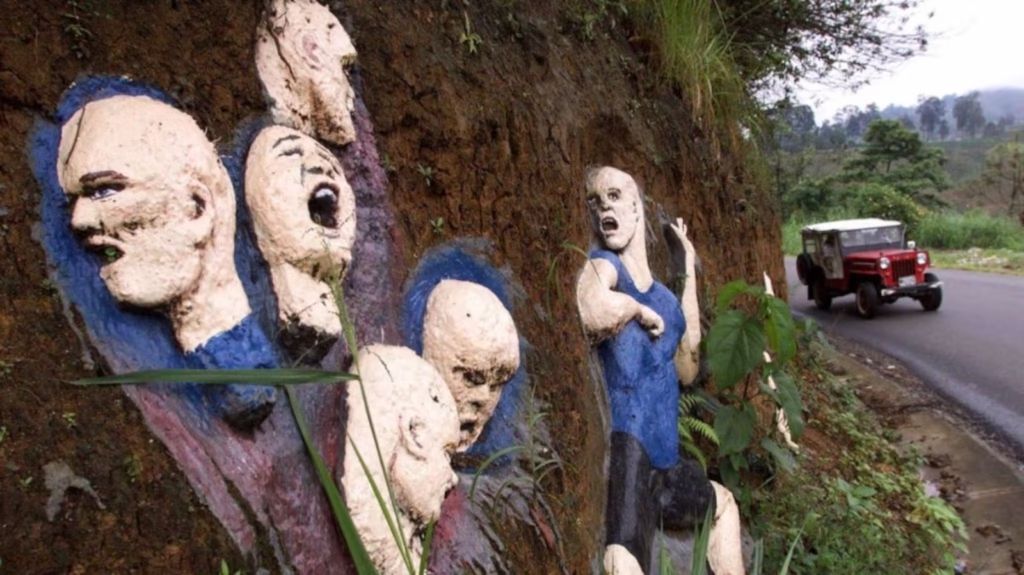
By the early 90s, Garavito had raped 200 boys across Colombian cities and municipalities. The children that he targeted were poor and mostly unprotected.
Even when the cases were reported, the buzz did not go past the local police station. Coordination of child rape between cities did not exist at the time, so no one realized that these isolated incidents were in fact connected.
Garavito also learned that he was invisible, and no one was going to stop him from taking things up another notch. He was also no longer interested in only sexual assault.
Days later, Garavito stepped out of a bar in Jamundi. He said reflections of the moonlight on the water nearby triggered something inside him.
Garavito spotted 13-year-old Juan Carlos walking near the Bazaar and followed him. He also stopped to buy nylon rope and a knife.
Garavito then approached Juan, offering him money in exchange for an errand. He then led the boy out of town to a local railroad. Days later, the boy’s body was discovered with deep cuts to the throat and rectum. The police attributed the attack to gang violence.
Garavito, at his time, discovered that after the initial horror passed, he felt sated. For the next few weeks or months, he would feel almost normal before the impulses returned. Each time, they came back stronger, and the intervals between kills grew shorter.
Over the next few years, he developed different personalities. One of his most favored was that of the priest in a black cassock. He approached children outside the churches after mass, offering work opportunities.
Another persona was that of the ministry executive. He would visit schools, pretending to be from the Ministry of Education, and conduct surveys of the children. The schools even let him speak to children unsupervised.
He would also dress up as a farmer with a straw hat, offering children coffee harvesting jobs. In Colombia, child labor was common in those years.
In the town of Trujillo, he adopted a clownish personality, with a Goofy costume. Children laughed at his jokes, and parents looked past him, believing Garavito to be harmless.
Garavito’s deviousness was apparent in his scouting of regions to find potential victims. He studied each region before hunting, learning local customs and dialects.
His target base was light-skinned boys aged 6 to 16. The poorer they were, the better. Psychologists would later surmise that he was killing his younger self over and over.
His approach would adapt depending on the circumstances. In the coffee regions, he would pose as a farmer in need of help harvesting beans. For sugar cane-based areas, he would ask local children to carry cane stocks to his truck. To street children, he offered drugs or alcohol.
The offered amounts for jobs or errands were slightly more than any day’s legitimate street earnings. This was enough to pique interest, but not too much that it would draw suspicion.
Timing was also essential. He would approach the children at around 10 am. Garavito’s thinking was that it could not be too early, so the parents noticed it. But he also did not want to approach the children in the afternoon, because their leaving at lunch could also raise alarms.
When the child did not return in the evening, the family just assumed they were still working an extra shift to make money. By the next morning, Garavito would have dumped their bodies 20 kilometers away, and be a town away.
Once he identified and convinced a child, he would lead them off to the remote site. There was no time to seek approval from parents. The work had to be done immediately.
On the way, Garavito would also ask about the child’s personal life, struggles and ambitions. This worked to distract, and emotionally disarmed the children.
Once they reached a remote enough area, and the child was exhausted, the mask would drop, and he would pounce. Garavito would threaten the boy, bind his legs, and begin the torture.
After drinking cheap rum, he would violently rape the victim, sometimes before and after death. He would use a razor blade to peel the skin from the victim’s buttocks, while they screamed.
He also used screwdrivers to puncture the bodies repeatedly. He used lighters to burn genitals. Garavito would also cut off genitals and stuff them in the child’s mouths, while they were still alive.
Sometimes, he would remove the eyes. He would also frequently disembowel the child while they were still screaming.
In February 1999, Garavito passed out drunk beside the corpse of a boy, with a lit cigarette in his hand. It actually caused a brush fire, and he had to flee, leaving behind his prescription for his glasses, money and a note with his sister, Graciela Zabaleta’s address.
After the killings, he would return to cheap hotels and perform his normal ritual. He would strip naked, write the name of his latest victim in a blue notebook, and pace his room. He would also beat his chest and read Psalms aloud.
Investigations and Arrest
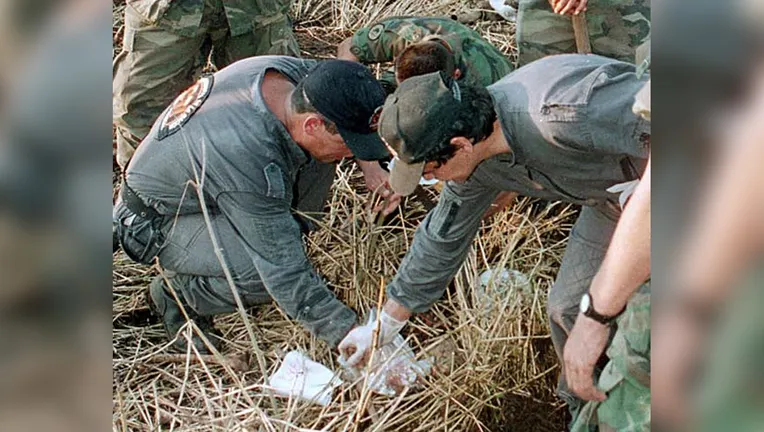
In 1997, a farmer in Risaralda was walking on his land, when detected the smell of decomposition. He followed it and came upon a ravine where he found a mass grave. It was full of boys.
Police, emergency, and forensic teams immediately converged on the ravine. It generated sensational news as the media picked up, and fanned the rumor that a satanic cult was sacrificing children in the area.
This incident motivated government to form a national task force to investigate child murders. Regional police departments also began to share information and they constructed a pattern of events.
Detective Aldemar Duran, headed the task force. He shifted the focus from the potential of a cult to the possibility it was one sole serial killer. This was due to patterns he observed from the victims.
They were boys from impoverished backgrounds. All showed signs of prolonged torture and genital mutilation. Reports also started coming in describing a man who was dressed up as a priest and luring children, or a vendor spotted with children who later went missing.
Garavito finally made a mistake on April 22, 1999, in the Meta department. A homeless man spotted him trying to assault a young boy in nearby dense vegetation.
Garavito fled, and the homeless man marshaled a search. Garavito was soon found and surrounded. When the police arrived, he claimed to be a municipal politician named Bonafacio Moreira Liscano, and he was conducting surveys in the area. Police detained him for attempted sexual assault of a child, while they verified his identity.
A detective traced phone numbers in his pocket to Graciella Zabaleta. When police visited her, and showed her his photo, she confirmed that he was Luis Garavito, her brother.
Detective Duran also flagged his name from the earlier field fire incident, where his field glasses prescription and personal items were found.
Graciella also gave them a box with cut-out passport images which Garavito had left in her care. These were the victims. There was also maps with markings, and dates where Garavito committed his atrocities. Then came the eight-hour interrogation and his eventual confession.
Over the next hours Garavito confessed to murdering 140 boys, then 172, then 193, then he said the real number was more than 300. He drew accurate maps from memory depicting where he killed the boys. Investigators recovered bodies at each one of these sites.
Garavito’s blue book contained the names of almost 200 boys who he killed.
A Quick Trial, and Shocking Sentence
Luis Garavito stood trial in late 1999, charged with the murder of 172 boys. He was also convicted for the murders of four Ecuadorian children.
These he did when he travelled across the border to Ecuador in 1998. Garavito was found guilty of 138 counts. The judge sentenced him to 1,853 years and 9 days in prison.
However, in Colombia, the penal code forbids life imprisonment, so the cap was 40 years. Because Garavito helped the police to find the victim’s bodies, this was reduced to 22 years. The public outrage was immense.
In 2011, Ecuador sought to have Garavito extradited for the murder of the four children but this request was ultimately denied.
In 2021, it became known that Colombia’s national prison institute was requesting Garavito’s early release on the grounds of exemplary behavior.
President Ivan Duque rejected this appeal, saying that for the duration of his administration, Garavito would have to remain in prison.
Garavito suffered, from eye cancer, and leukemia, in his final years. He died on October 12, 2023, in a hospital in Valledupar, Colombia, from a heart attack. He was 66 years old.
Many argued that Garavito deserved life the death penalty for his crimes. Colombian law lacked a method for imposing sentences based on the magnitude of his actions. But they have since increased the maximum penalty for these crimes to 60 years.