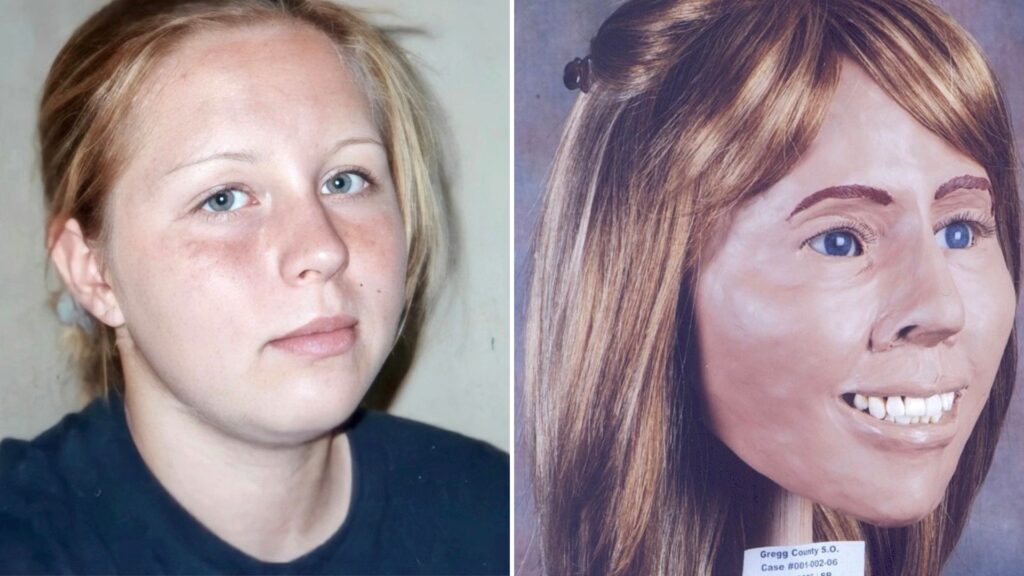
Two hunters in Gregg Couenty, Texas, were headed down a dirt road to target shoot on October 29, 2006. They saw a small fire, and at first, a mannequin was burning. Upon closer inspection, they found it was a human body.
Despite all efforts, it would be several years before investigators identified her. 98% of her body was burned, but she had a lavender shirt on at the time, prompting the forensic team to nickname her ‘Lavender Doe’.
According to Lt Eddie Hope of the Gregg County Sheriff’s Office, “She had wood piled beneath her and wood piled on top of her, and there was, I believe, a gas can lid there, so it looked like somebody was trying to cover their tracks.”
Investigators were able to determine that the victim was a young female in her early 20s or late teens.
The woman’s identity would not be determined, even after the main suspect was taken into custody.
Three volunteers at the DNA Doe Project, an initiative to help give names to unidentified crime victims, made the link between the body and a missing person called Dana Dodd.
Hope himself, along with his whole department, was excited to close the case after years of speculation.
Dana Dodd, the Missing Girl
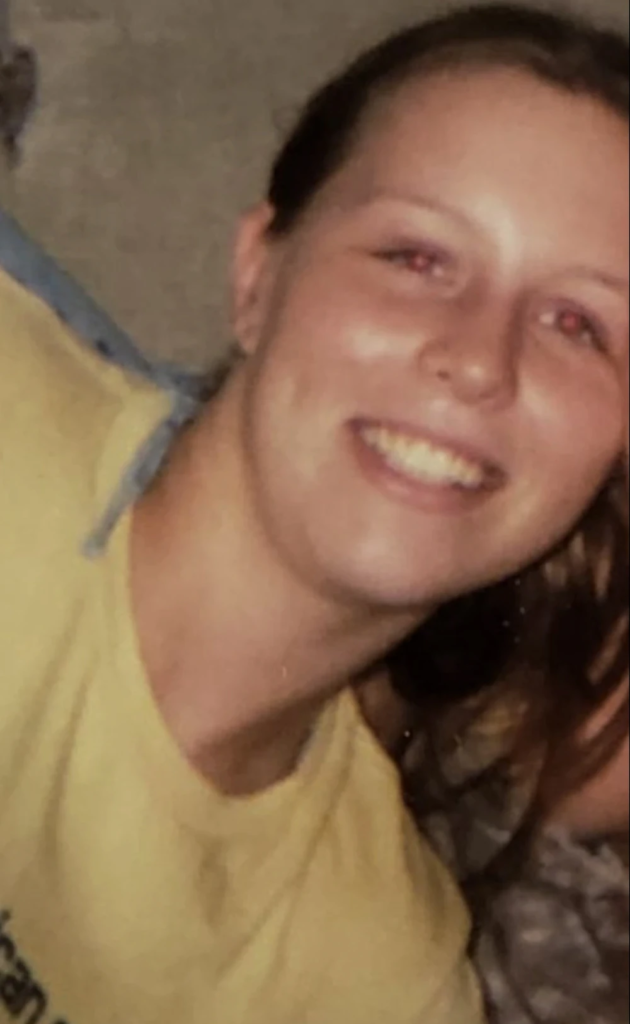
Dana Lynn Dodd was born on September 6, 1985, to a troubled household. Her parents were estranged from birth as her mother left when she was two years old.
Her father struggled with homelessness and often left her to be cared for by others. He also had issues with substance abuse.
When her mother left, she lived with her stepmother for some time. Eventually, Dana began living with her half-sister, Amanda Gadd, in Jacksonville, Florida.
Despite the chaotic upbringing, Dana’s older half-sister and her friends claimed she had a positive, upbeat personality. She fell into the wrong crowd, though, by her early teens, and it became evident that the partying had led to addiction.
When Dana reached 15, she refused rehabilitative assistance from friends or close family and left Florida with a boyfriend. They were going to work as a sales team for a magazine company.
For years, her family had no knowledge of what happened to her, only going on rumours that she was in Ohio at the time.
Family members then began filing missing person reports in multiple states. Hers would be a cold case until Joseph Wayne Burnette confessed to her murder, and the DNA Doe Project would confirm her identity.
After learning what became of her, the Dodd family was touched by the support shown by Texans. Amanda said, “For us to know that somebody took the time out of their day to come and care for her, put flowers on her grave and say, ‘Hey, we don’t know who you are, but we care for you,’ that was our definitive decision of why Dana needed to be here.”
The Investigation and Joseph Wayne Burnette
The initial forensic report found other clues aside from the body’s structure. They knew she was either white or Hispanic. There was no evidence of smoke inhalation via carbon in the lungs, which was odd if the theory was that the fire killed her.
This showed investigators Dana may have been killed at another location and brought to the woods for body disposal. Several individuals living in the area also nicknamed the place a ‘killing field’ because of the number of suspicious individuals who were seen there at night, appearing to do nefarious acts.
The fact that she also had bruising around the throat, consistent with strangulation, supports this lead. Technicians at the lab also checked the body for signs of assault and found a semen sample.
The county sheriff’s office tried to match the body with several names of missing persons from that period, but came up empty. Months later, after the investigation lost significant traction, the police caught a break.
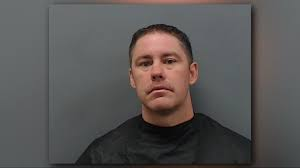
The semen sample recovered from the body got a hit on CODIS, the FBI managed Combined DNA Index System. It belonged to Joseph Wayne Burnett. At the time, Burnett was painting oil wells. He was also a local sex offender.
It was noted that he was residing in Upshur County but had not registered there as a sex offender.
This prompted the local police to issue a warrant for his arrest based on his failure to register. When he was first interviewed, he did confess that he had been with the victim because of his semen being in her, but that he did not kill Lavender Doe.
Because they were unable to place Burnett at the crime scene, the investigation stalled. He did catch the charge for ‘Failure to register as a sex offender’, and was sentenced to 10 years at the Nathaniel J. Neal Unit of the Texas Department of Criminal Justice in Amarillo.
New Developments following the Pearson Murder
The case hit a snag for 11 years before the Longview Police Department contacted Lt. Hope about a missing person called Felisha Pearson. Her boyfriend was listed as Joseph Wayne Burnett. As one can imagine, this greatly piqued Hope’s interest.
This would be a full year after Burnett was released from prison. He was a free man and could be tied to Pearson’s disappearance.
It was Felisha Pearson’s mother who reported her missing. She was told by Burnette that they had been together at a motel in Longview. He allegedly went to get cigarettes, and when he got back, she was gone.
Police immediately arrested Joseph Burnette on July 25th, 2018, but he again denied having anything to do with Felisha’s disappearance. However, a month later, Burnett changed his tune and confessed to killing Felisha.
Kevin Lord and the DNA Doe Project
Kevin Lord was a former software developer and apparel salesman from Killeen, Texas. In his free time, Lord had a hobby of matching missing persons to unidentified victims.
He came across the Lavender Doe case because of its notoriety at the time, while also looking into other missing-person cases in the state. He reached out to Hope, who was by then the point person for the case.
Hope was impressed that someone without a direct interest could care about the case, despite living in a world where everything was fast-paced. The unconventional pair began working together to trace Lavender Doe’s identity.
They were a perfect match. According to Hope, “We just flew together, you know, whatever he needed that he couldn’t get that I could get, law enforcement-wise, he would send it to me.”
Lord also offered high-level software skills that, at the time, were not readily accessible to the sheriff’s office. Lord knew, though, that even with his top-notch skills, he would likely need help from an external party.
This is where the DNA Doe Project came in. The DNA Doe project utilises the DNA obtained from crime victims to create profiles. These are uploaded to public ancestry sites.
Project volunteers find distant relatives of individuals and, from there, work backwards to build their family trees.
Lord then enlisted the services of Lori Gaff and Missy Koski to help create a profile for Lavender Doe. Missy found a descendant of the victim, apparently in East Texas. Her name was Valerie, and she lived only 30 minutes away from where the body was found.
It seemed to be the key to the case, and investigators were excited. When Hope and the team reached her, Valerie had no idea who the victim could be in her family. ‘
Koski went back to the drawing board and found that there were 25 first cousins to the victim who were already registered. As they were building the family tree, they came across Robin Novotny.
She was apparently the right age to be her mother, and Robin was married to a man named John Dodd. According to records, the family dynamic was highly unstable, which sparked the investigator’s interest.
They also had a child called Dana. There were not many records concerning their daughter. She also had a Social Security number that had not been used for decades. Dana had no Facebook, Instagram, or other social media accounts.
As they continued researching this individual, Kevin stated that the hair on the back of his neck began to stand because he knew he had uncovered Lavender Doe’s identity. Nevertheless, they still needed the DNA to match.
He immediately released these findings to Lieutenant Hope. Hope found out Robin was deceased, but was able to reach John’s daughter, Amanda, and gave her a composite picture of what Dana would look like. She broke down and acknowledged that Lavender Doe was her sister, Dana.
Investigators confirmed this with a DNA test of Amanda and matched it to the Lavender Doe samples.
Burnett’s Confession and Sentencing
When Burnett confessed to Pearson’s murder, he also started confessing to burning a young woman several years ago.
Longview detectives called Lt. Hope into the interview room to hear Burnett’s account about Lavender Doe. In the recording, Burnett said, “I went around to the driver’s side of my truck. I opened up my toolbox, and uh, I got a rope out. And I grabbed the rope. And I put it around her neck. And I tightened it up. “
This was more than sufficient evidence to indict him on the second count of murder. But the mystery of Lavender Doe’s true identity remained. Initially, Burnett pleaded not guilty at the arraignment but later agreed to a plea deal.
Burnette famously stated in court, “I want to get this over with. I want everybody to get their closure.” Amanda attended all court sessions, saying she needed to know why he did it.
He was sentenced on December 15th, 2020, to 50 years in prison. This was for each murder, but they were to be served concurrently. He is eligible for parole after 25 years. Amanda indicated she would be there at every session, regardless of how old she is, to ensure he remains there forever.
Burnett’s case comes with regret, considering he was not rehabilitated the first time he served time in prison. It also brings up the question of whether Felisha Pearson would still be alive if he had been caught and convicted of murder after the first arrest in 2007.