Trigger warning: This article contains graphic descriptions of domestic violence, child abuse, sexual abuse, animal cruelty, self-harm, and murder.
“Would you love me if I were a worm?”
Or, if you had a choice, would you willingly choose to be with a woman who had, among other things, tried to strangle one partner on their wedding night, fractured his skull with a frying pan, placed her infant daughter on railway tracks, and later slit a puppy’s throat in front of a man as a warning?
Most people wouldn’t, but someone did.
And he would soon face the fate of Pelops, in quite the literal sense.
The Rot Starts at Home
To understand how it all began, one has to go back to the 1950s in Aberdeen, New South Wales, where Barbara Roughan began an adulterous relationship with Kenneth “Ken” Charles Knight, a coworker of her then-husband, John Roughan. Fearful of small-town gossip and the scandal that would ensue, they soon had to move to Moree, leaving Barbara’s children behind.
The couple soon welcomed fraternal twins in Tenterfield, 1955, one of them being Katherine Mary Knight. Her childhood was anything but blissful. Ken was an alcoholic who, by several accounts, often physically and sexually assaulted Barbara, sometimes even raping her as many as ten times a day.
Barbara would then go on to tell her infant daughters about the details of this abuse, as well as other aspects of her sex life, perhaps sowing the seeds of jealousy, instability, and obsession with being betrayed that would plague Katherine throughout her life.
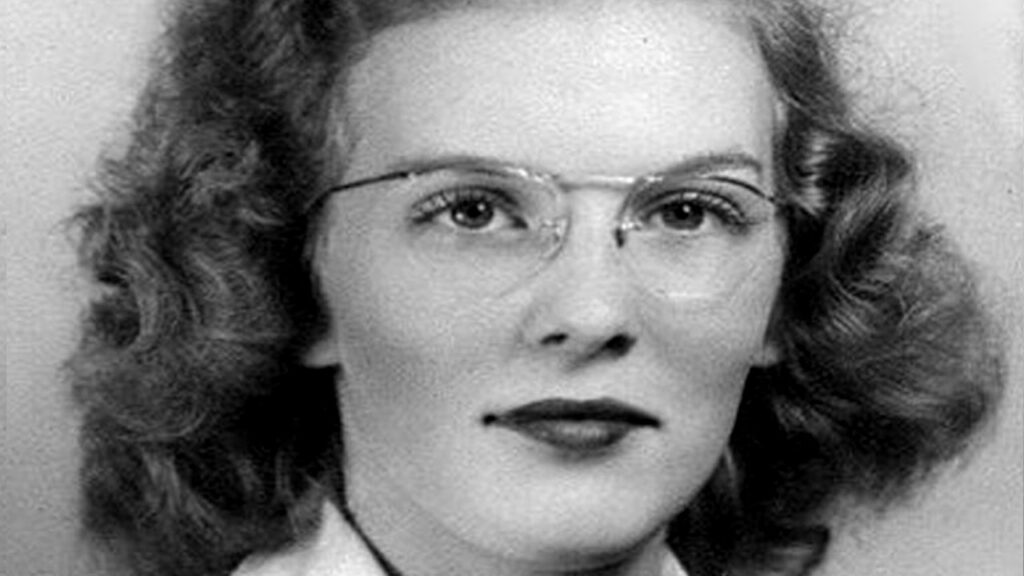
Katherine would later claim that members of her family, excluding her father, had sexually abused her throughout her childhood, and that she had been repeatedly assaulted by relatives from a young age. So normalised was the abuse in Knight’s life that, when she later confided in her mother about a sexual partner demanding an act she did not wish to perform, Barbara’s chillingly dismissive response was to endure it and stop complaining.
School, Violence, and the Abattoir Years
School offered little respite to young Katherine, who was not a particularly strong student and left formal education early, around the age of fifteen. Often described as a temperamental child, she was prone to sudden outbursts. Those who knew her would later recall that she could shift from calm to enraged with little warning, and that once provoked, she could become impossible to control, reportedly assaulting at least one boy at school with a weapon and once attacking a teacher, who had apparently injured her in self-defence.
In contrast, however, her peers later claimed that she was a ‘model’ student when not enraged, and even went on to say that she had “often earned awards for her good behaviour”.
Having not learned to read or write by the age of fifteen, Katherine would leave school to embark upon what she called her dream job: working at a local abattoir and cutting up offal. She seemed to enjoy this work, eventually becoming skilled with knives and carcass dressing, earning her own set of butcher knives, which she hung over her bed at home, stating they would come in handy if needed.
Katherine’s First Marriage
At 18, Knight met fellow abattoir worker David Stanford Kellett in 1973. Kellett was a heavy drinker by then, using alcohol to blunt the trauma of two fatal railway accidents he had witnessed while working in Coffs Harbour, at his previous job.
Kellett married Knight in 1974, reportedly at her own insistence. The pair arrived at the ceremony in fitting fashion, with an intoxicated Kellett riding pillion on the back of Knight’s motorcycle. Barbara would go on to warn Kellet about Katherine’s violent temper, telling him that cheating on or angering her would have serious consequences.
These words would materialise that very night, when Knight attempted to strangle Kellett after he fell asleep, enraged that he had engaged in intercourse with her only three times, ensuring the onset of a great marital life.
Frying Pans and Railway Tracks
In keeping with the tone Katherine had already set from the very first night, the marriage was chaotic, to say the least. In one especially telling episode, while pregnant, she proceeded to set fire to all of Kellett’s clothes and shoes before bringing a frying pan down on the back of his head. His offence was almost laughably ordinary by comparison; he had simply arrived home late from a darts competition after making the finals.
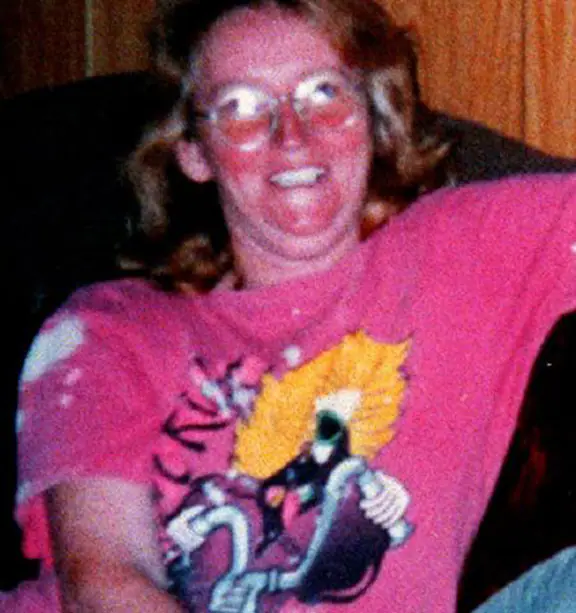
‘You see how easy it is…? Is it true that truck drivers have different women in every town?‘ Knight asked him.
Half dead, Kellett scurried from the scene with his life hanging by a thread. His skull had been fractured, and he could only make it to a neighbour’s house before collapsing. Police wanted to press charges, but Katherine, ever the manipulator, managed to talk Kellett into dropping the charges.
In May 1976, shortly after the birth of their first daughter, Melissa Ann, Kellett finally left Knight for another woman and fled to Queensland, unable to endure the abuse any longer, triggering one of Knight’s most infamous early spirals.
The very next day, she was seen pushing her newborn through the streets in a pram, violently jerking it from side to side, and was soon admitted to St Elmo’s Hospital in Tamworth with what the doctors diagnosed to be as postnatal depression.
Whatever brief respite the hospital may have provided did not last for long. Not long after her release, Knight placed the two-month-old Melissa on a railway line moments before a train was due, and then wandered into town armed with a stolen axe, threatening to kill several people. The baby was rescued only minutes before the train passed by a local homeless man, while Knight was arrested and returned to St Elmo’s, only to be discharged the following day.
The violence was unrelenting. Armed with one of her butcher’s knives, Knight slashed a woman across the face and demanded to be driven to Queensland to find Kellett. When the woman escaped at a service station, Knight instead took a young boy hostage and threatened him with the same knife.
She was quickly disarmed by the police, who reportedly beat her with brooms, and then admitted her to Morisset psychiatric hospital, where she chillingly admitted her intentions to kill the mechanic who had repaired Kellett’s car, then murder both Kellett and his mother once she reached Queensland.
Scared out of his wits, Kellett left the woman he had fled with, came back to support Knight, and remained with her long enough for the pair to have a second daughter, Natasha, in 1980.
Together, they moved to Ipswich, west of Brisbane, where Knight found work at the Dinmore meatworks. The relationship limped on for several more years before finally collapsing for good in 1984, when Knight left him. Kellett was saved.
After injuring her back the following year, she was forced onto a disability pension. With work no longer tying her to Muswellbrook, the government provided her with Housing Commission accommodation back in Aberdeen, bringing back memories of her scarred past.
A Puppy in the Kitchen
In 1986, Knight began a relationship with 38-year-old miner David Saunders, who moved in with her and her daughters only a few months later. The relationship quickly followed the now-familiar pattern Knight displayed. She became obsessively jealous, repeatedly throwing Saunders out of the house, only to chase after him and beg him to return whenever he retreated to his apartment in Scone.
In May 1987, she gave him one of the clearest warnings yet. In front of Saunders, Knight slit the throat of his two month old dingo puppy, as a deliberate demonstration of what she would do if he ever dared to have an affair. She then knocked him unconscious with a frying pan (by now, practically a trademark weapon), grimly reminiscent of what she had once done to Kellett. If there was any illusion that this was merely another volatile relationship, it should have died with the dog, but that was not to be.
A Butcher’s Pinterest Board
In June 1988, Knight gave birth to their daughter, Sarah, and the pair moved into a house together. Knight decorated it in a way that bordered on the grotesque, with stinking animal skins, skulls, horns, rusty traps, leather jackets, old boots, machetes, rakes, and pitchforks covered nearly every available surface, even the ceilings, making it a physical manifestation of her own disturbed inner workings.
The violence, unsurprisingly, did not seem to subside here either. During one argument, Knight struck Saunders in the face with an iron before proceeding to stab him in the abdomen with a pair of scissors. When he fled, her response was to cut up all his clothes. Saunders eventually went into hiding, desperate enough that those around him refused to reveal, or even know, where he was.
Yet even in these tumultuous times, Knight found a way to exploit the legal system in her favour. When the throes of paternity would pull at the heartstrings of Saunders, who later resurfaced to see his daughter, he discovered she had already gone to the police and falsely claimed to be afraid of him, securing an Apprehended Violence Order against the very man she had terrorised enough to go into hiding.
Knight’s next prey would be John Chillingworth, a 43-year-old former abattoir coworker, with whom she got involved in 1991, later giving birth to their son, Eric, in 1992. The relationship lasted only three years before Knight left him for a man she had already been seeing for some time, John Price.
Till Death do us Part
The ‘price’ that John was going to pay was arguably too much. But like those horror films in high school where the protagonist decides to stay in the haunted house, John had, in many ways, already sealed his own fate. Such is the futility of precedence in cases like these.
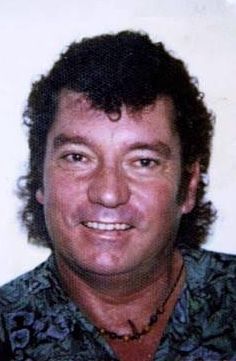
Katherine’s violence was neither hidden nor accidental; by then, it had manifested in an almost textbook fashion across every serious relationship she had ever had. Price knew of Knight’s reputation when she moved into his home in 1995. Still, his children liked her, he was earning good money in the mines, and, aside from the inevitable violent arguments, life at first was, in his own words, “a bunch of roses.”
That illusion, predictably, did not survive.
In 1998, after Price refused to marry her, Knight retaliated by sending his employer a videotape of items he had allegedly stolen from work. Although the items only included expired medical kits that he had scavenged from the company rubbish dump, the accusation cost him the mining job he had held for seventeen years, and he threw her out that very day.
Though the scandal spread quickly through town, Price resumed the relationship a few months later, though this time refusing to let her move back in. By then, the arguments had only grown more frequent, and many of his friends wanted nothing to do with him while he remained with her.
As the months passed, Knight managed to worm her way back into Price’s life, and by 2000, she was once again living under his roof. Arguments only worsened, and in February 2000, a series of assaults on Price culminated in Knight stabbing him in the chest, as was her signature style.
Finally fed up, he threw her out for good, and on the 28th of February, he stopped by the Scone Magistrate’s Court on his way to work, seeking a restraining order in an attempt to keep her away from him and his children. That afternoon, in an offhand comment that would turn out to be prophetic, Price told his coworkers that if he did not turn up to work the following day, it would be because Katherine had killed him.
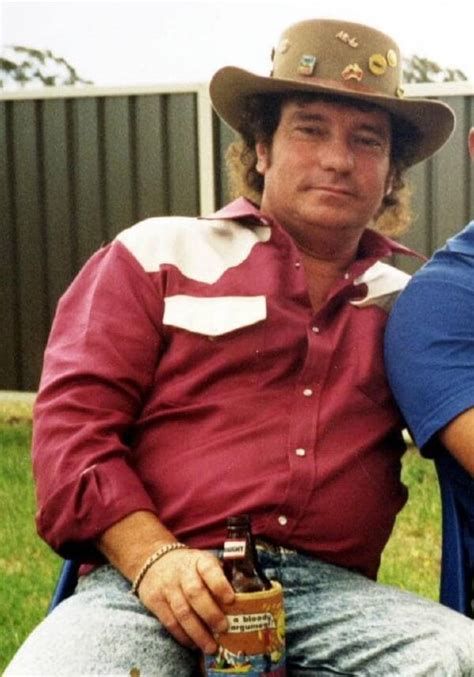
As sane people would, his coworkers pleaded with him not to return home, but Price was adamant that he had to, afraid that if he did not, Knight would channel her anger towards his children instead, perhaps even killing them. This was a terrible choice, which perhaps indicated that Price had at least partially understood what she was capable of, or what was going to befall him.
The Murder of John Price
It was a sweltering night, and Price was asleep with the air conditioner running when Knight returned home around midnight. Earlier that day, she had bought a new set of black lingerie, which she changed into before waking him. The two were intimate, after which Price got up briefly and began walking back toward the bed.
‘He wanted sex, so we had it. He was gentle and kind… (after) he went to the toilet. He was walking back to bed, and that’s it,’ Knight later told investigators. She proceeded to stab Price a total of 37 times, then dragged his lifeless body into the hallway, leaving a trail of blood in her wake, before calmly beginning to skin him.
‘This was carried out with considerable expertise and an obviously steady hand so that his skin, including that of his head, face, nose, ears, neck, torso, genital organs and legs, was removed so as to form one pelt’, a later report noted.
The skin was hung from a meat hook on the architrave of a door to the lounge room, while she decapitated Price’s body and arranged it in a grotesque tableau, with his left arm draped over an empty 1.25 litre soft drink bottle and his legs crossed, posing the corpse deliberately.
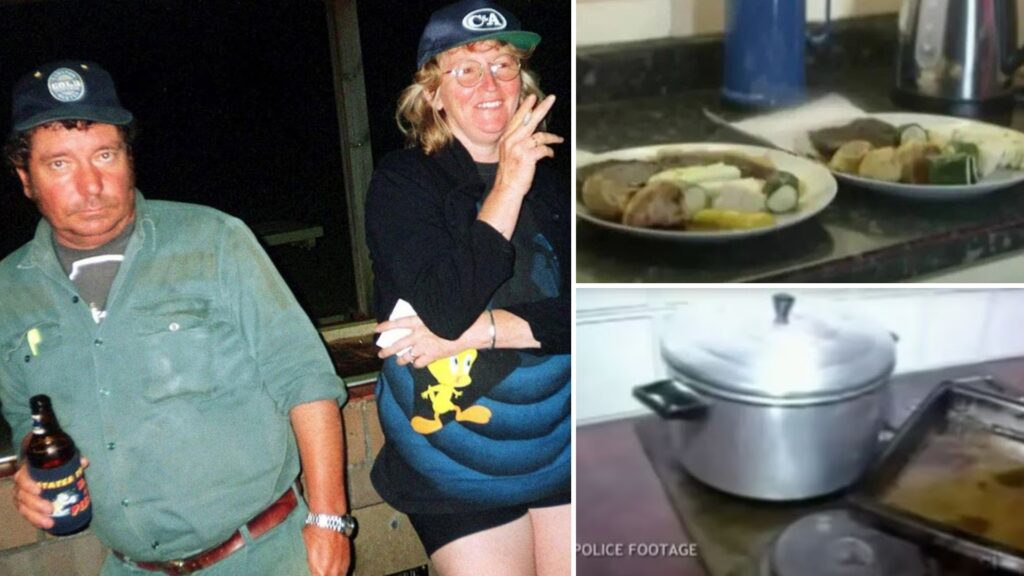
She removed portions of his buttocks and carried the excised flesh into the kitchen, where she prepared what the official accounts would later describe as a “sickening stew” in a large pot, cooking it alongside Price’s severed head and freshly peeled vegetables.
The pieces cut from Price’s buttocks were baked in the oven with additional vegetables, then carefully arranged as meals, seemingly intended for Price’s son and daughter. A third piece was later found discarded on the back lawn, although its purpose could not be ascertained.
Slices of his buttocks were served as “gruesome steaks” for Mr Price’s children, Justice O’Keefe, the presiding judge, said.
Knight had also left behind a handwritten note on top of a photograph of Price. The note, bloodstained and flecked with bits of flesh, read:
‘Time got you back Johathon for rapping [raping] my douter [daughter]. You to Beck [Price’s daughter] for Ross – for Little John [his son]. Now play with little Johns dick John Price.’
The accusations that she made in the note, however, were found to be baseless.
At around 6 a.m. the next morning, a neighbour noticed that Price’s car was still in the driveway and began to worry. When he also failed to show up for work, his employer sent a coworker to the house to check on him. Together, the two men tried knocking on Price’s bedroom window to wake him, but the sight of blood on the front door quickly ended any hope that they had for John’s safety. They called the police.
Even the responding officers, hardened as they likely were by the nature of their work, were left almost incoherent by the scene. An official transcript of a policeman’s reaction from the scene read as follows:
“Oh, my God. Oh my God. Oh my God. What’s this guy got, a chopping list or something? Where’s his head? There’s a guy sitting in front of me having a crap, and his head’s gone. Where’s his head? I have never seen anything like this.. never.. Oh my God”.
Aftermath
At trial, Knight claimed she had suffered abuse throughout both childhood and adulthood, and alleged that her relationship with Price had also been violent. Psychologists diagnosed her with borderline personality disorder, but the court described the murder as “horrendous” regardless.
Although she claimed to remember nothing after the killing, Knight pleaded guilty to murder and was sentenced to life imprisonment without parole, making her the first woman in Australian history to receive such a sentence. The judge found the crime to be among the most serious category of murders, citing its premeditation, the calculated defilement of Price’s body, and the “cognition, volition, calm and skill” evident in her actions.
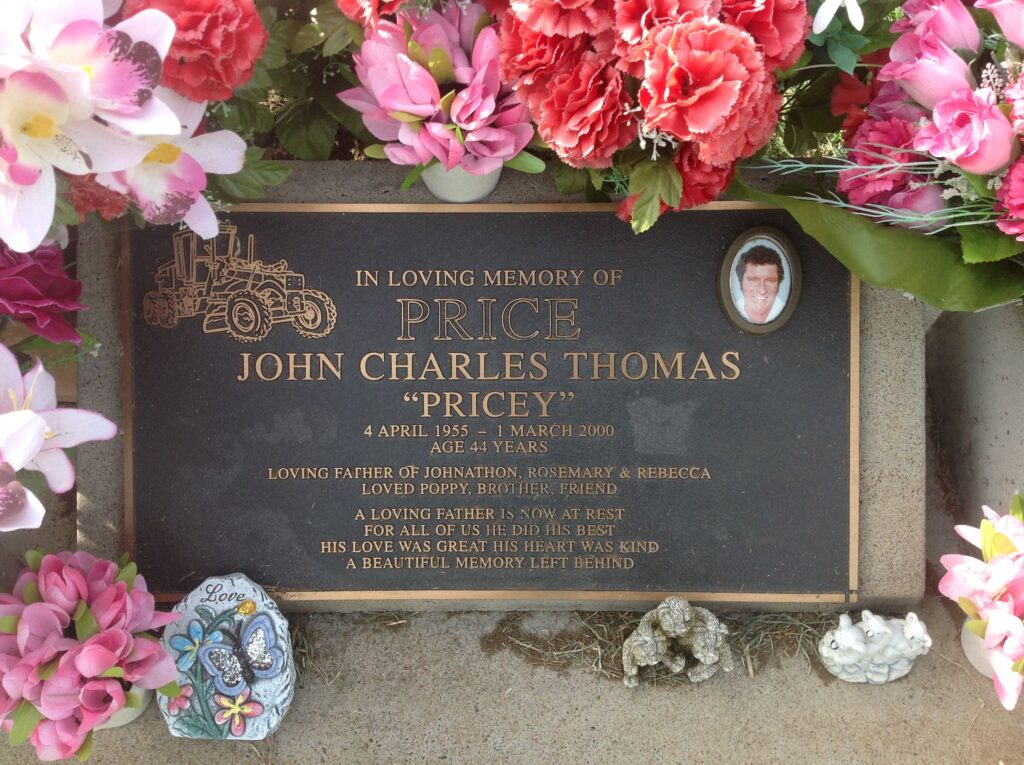
Two decades after the murder, John Chillingworth revealed that he still visited her in prison. He described a woman far different from the fiery, violent figure who had terrorised so many lives.
“She’s aged a bit, a hell of a lot actually. She looks older in the face and her hair, it’s not fiery red.. It’s grey now. She’s also put on a little weight,” he noted.
According to Chillingworth, Knight still harboured hopes of one day walking free, wanting to see her children and meet her grandchildren. He even suggested that, after all these years, he no longer believed she posed a threat to society.
“She has emotions. I’ve seen them. I’ve seen her cry. She is no monster, but she’ll always be caged like one”, a prison inmate noted.