Petrona Lopez was found on April 28, 1923, among the rocks of Rambla Wilson with severe injuries and a deep cut to the neck. After investigating a dubious letter sent to her mother, police later discovered her husband had modified the original and sent it from Brazil to mislead the investigators.
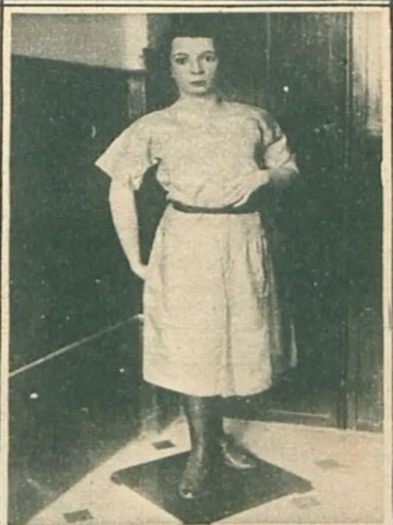
For several weeks in the autumn of 1923, Montevideo citizens would be troubled by the unexplained case of a body found in a quarry.
It was evident she was young and female. The authorities and media released the name Rambla Wilson after she went unidentified for some time. Newspapers also called her the ‘decapitated woman’.
Though the story would weave interestingly involving a wax mannequin in the shop window, a Jewish housewife with eyes for detail, and a murderer who almost got away.
Finding the Body
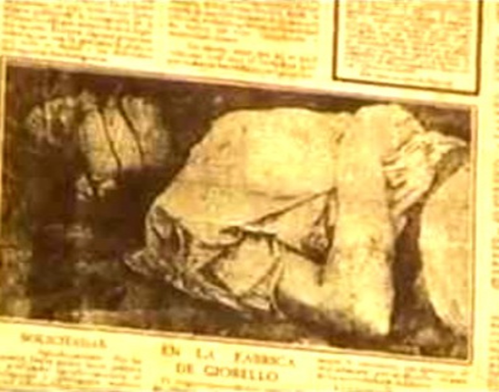
Strollers near the Montevideo quarries of Parque Rodo discovered the body on April 29, 1923. She was found practically decapitated with a gash more than 10 centimetres wide, stretching from one side of the neck to the other.
The medical examiners estimated her age between 22 and 24. She had light olive skin, and a journalist described her as ‘not unattractive’.
No News was published concerning the murder from then until almost a week later. El País, based in Montevideo, ran a story with the headline, “The mysterious tragedy of the Rambla Wilson.” The story also illustrated a corpse in the capital morgue.
Unfortunately, the story did nothing for the investigation. Under the direction of Commissioner Tacito Herrera, the police worked consistently to develop leads, but they did not yield results immediately.
The body remained within the morgue. It was cleaned, and the attendants clothed it, as curious citizens came in hopes of identifying their missing loved ones.
One of these hopefuls was Maria Angelica Ferraris. She studied the girl’s face without giving anything away. Later, Maria would play a role in the unfolding case.
The Mannequin
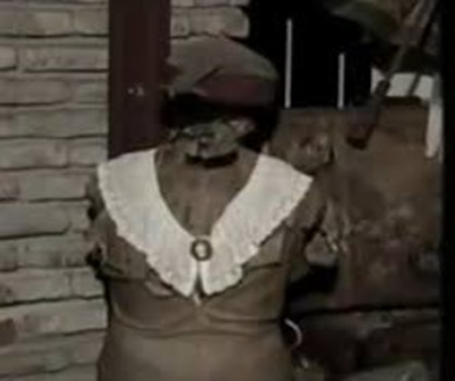
As the days rolled on, all efforts to identify the body were unfruitful. Commissioner Herrera then came up with an idea. He hired a sculptor to craft a mask of the deceased woman.
The Ortega shop was given the contract for the case. They created a full-size doll, dressed in a cream down coat that was buttoned down the back. This was what the victim had on when she died.
As they could not in good conscience display the body to the public in hopes of finding her kin, the best option was to show something in her likeness that would do the same job. This figure was initially displayed at police headquarters.
It was viewed by witnesses, passersby, and arrested individuals, in the hope that someone would recognise her. When that did not work, the police took the mannequin to a more public place.
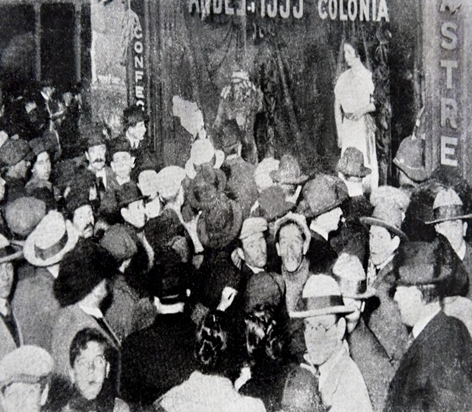
This was the ‘Al Signo Rojo’ tailor shop, owned by Francisco Cammarano, located at 18 de Julio.
Crowds apparently gathered daily at the shop out of morbid curiosity. It became a city sensation. The mannequin stood there for approximately two weeks.
In Early June that year, Mrs Litvan, a Jewish immigrant of Russian origin, passed by the shop window with one of her children.
She immediately paused because she recognised the dress the mannequin was wearing. It belonged to her former maid, Petrona Lopez, who stopped working for her on the supposed day the body was found.
Mrs Litvan returned home and told her husband, Bernardo Litvan, what she had seen. He, in turn, decided they should inform the police of their suspicions.
The police immediately began interrogating Mrs Litvan, but she was careful during her statement. The painted face on the mannequin was not a dead ringer for the plain country girl who worked for her.
As she continued to give details, the coincidences began to add up. The body also had missing teeth and needle marks from hand sewing. There was a recent boot repair in both instances as well.
Before she left the Litvan residence, Petrona had gotten ten pesos in wages. They were in one-peso bills.
The recovered body also had ten one-peso bills tucked into her chest with a handkerchief. At the end of the questioning, it was determined that there were more than ten points of similarity between Petrona, the maid, and the mannequin.
Mrs Litvan described her as a silent woman. Petrona apparently only spoke when spoken to or when necessary. She also never laughed or sang. When her chores were done, Petrona would often go to the attic. She would write letters there or crochet.
Mrs Litvan said she rarely spoke about life in the countryside, but her old-school mannerisms marked her as an outsider in the city.
She received only two letters during her time with the Litvan family. She read them with intense attention, but hid them away when anyone passed by.
On 28 April, Petrona returned from an errand and told Mrs Litvan she wanted to take some time off and go away for a while. When asked for reasons, Petrona did not give any. She was paid for the month and departed soon after.
The Blond Man
Once the police established the mannequin’s identity, they could move forward with the investigation. Almost immediately, they found that Petrona had been frequently seen with a blond man with a red face.
Witnesses said they were together on the morning of the day she disappeared. The man later identified as Javier Alvaro Vega was seen with Petrona at a boarding house in the Aguada neighbourhood. At the time, he was also living with a woman who was not his wife.
Following the murder, Alvaro and his lady friend fled, taking the area, taking to suitcases. One of these matched the suitcase Petrona had carried when she left her employer’s residence.
Police also found a tram ticket for La Transatlantica, set for April 28, with a destination of Parque Rodo. This was the place where Petronas’ body was recovered.
Police also contacted Petrona’s mother, who was in Buenos Aires province at the time. After informing her of the incident, they sought information about the daughter’s background, connections, and any bad circles or habits Petrona may have been involved in in Montevideo.
A False Letter
Petrona’s mother then produced a letter she had received, dated May 10. It claimed her daughter was, in fact, alive and well in Santos, Brazil.
This threw the investigators off because it could have meant Petrona did run away with Vega to Brazil, meaning the body was someone else.
However, many things about the letter did not initially make sense. It began with warm greetings from Petrona to her mom and siblings. She expressed missing them and how she could not wait to see them all. The second part of the letter was colder and out of character. It read that it was more convenient for her and her husband to leave Montevideo for Santos. The letter also gave an address where they could be reached.
Commissioner Herrera was not deterred and contacted Brazilian authorities. Brazilian police, in turn, arrived at Constitucion Street in Santos to find Alvaro at the door. They asked to speak with his wife, at which he claimed she was resting.
The police insisted on seeing Alvaro’s wife and waited until he brought the woman. “No, we want to talk to this one,” said one of the investigators, showing him a photo of Petrona. “This is his wife, isn’t it?”
They asked the woman her name and if she knew that Alvaro was wanted in Montevideo for the murder of his wife, Petrona Lopez. “I don’t know anything.” She replied, looking at Alvaro in shock. “My name is María Angélica Ferraris.”
She went on to recount that they had recently crossed into Brazil as a married couple, with a marriage certificate that Vega had on him.
This piece of evidence helped the police tie everything back to Alvaro. The letter had actually been written and signed by Petrona Lopez while she was still in Montevideo. However, Vega kept it until the right time.
They crossed the border on May 4 with Maria Angelica Ferraris, who at the time was carrying false papers and representing Petrona Hormaeche de Vega. So Alvaro added a postscript to the original letter indicating they had both travelled to Brazil.
Javier’s Confession
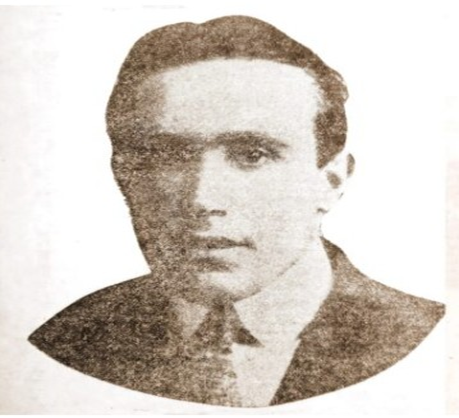
Vega was immediately extradited back to Uruguay via ship and began to unravel. He confessed to the murder and gave a full statement in front of Chief Tacito Herrera.
They had met on the 28th of April at the corner of Rio Branco and Uruguay. They took a La Transatlantica tram to Parque Rodo, before deciding to go fishing at the rambla.
An argument ensued, and violence broke out. Vega described in detail how he stabbed and almost decapitated Petrona.
By this time, the case had drummed up massive publicity, so Vega’s arrival in Montevideo came with significant public hostility. He was immediately jailed at the Carcel de Miguelete.
His fake wife, Ferraris, was remanded to the Asilo del Buen Pastor, or Good Shepherd Asylum.
He was tried and finally convicted of the murder in 1928. Javier was subsequently transferred to the Punta Carreras prison.
Details of the sentence are not readily available, but Vega did not even live out three years of his sentence.
The following year, while being treated for a skin condition at Hospital Maciel, he tried to escape custody. He was shot in the back while fleeing on foot, and he died at the scene.
Despite Petrona’s tragic story, her killer was immediately brought to justice courtesy of police ingenuity and resilience in the face of deception. It was also clear that Alvaro had not thought of a contingency if the letter was not accepted.