
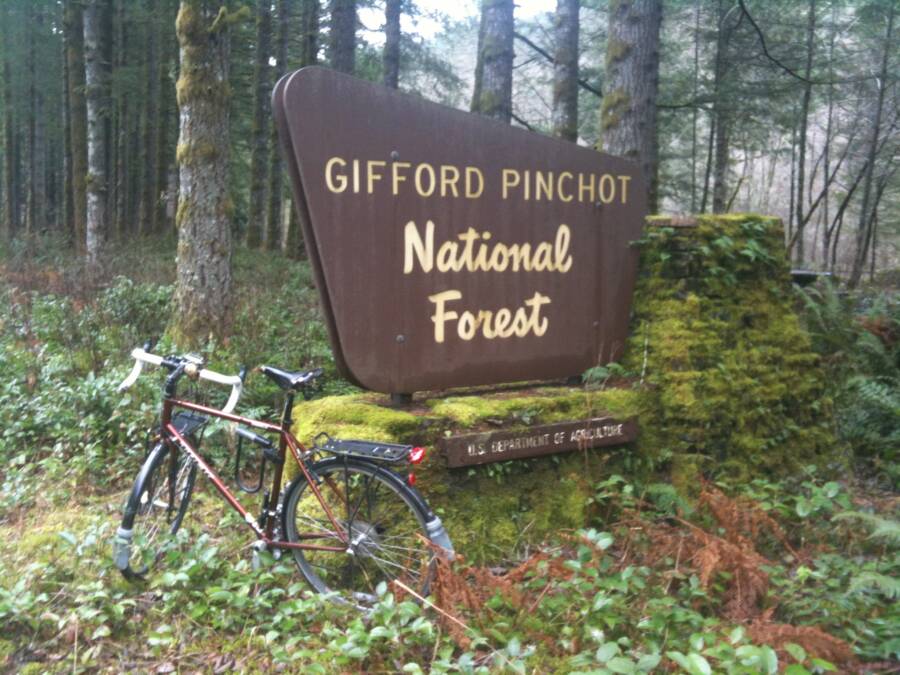
In the late afternoon of June 9th, 2013, 19-year-old Maureen “Anu” Kelly, a Pacific Islander woman, went missing in the Gifford Pinchot National Forest in Washington State.
According to police reports, she was seen leaving a campsite by herself in the nude and barefoot, taking only a small waistpack containing a knife, a compass and matches, and possibly additional small items. Her last confirmed location was Canyon Creek Campground near Cougar, and her friends told police she intended to return the same night as part of a “spiritual quest.”
By the next morning, what had appeared to be a deliberate and unusual choice had turned into a missing persons case in an extremely difficult environment. The terrain was rough, covered with heavy brush and had extreme nighttime temperatures, and the trail simply seemed to stop in the middle of nowhere.
Kelly stood approximately 5 feet, 7 inches tall, weighed between 150 and 160 pounds, had black hair and brown eyes. “Anu” was the name given to her in all public case listings.
Prior to her disappearance, she resided in Vancouver, Washington. Her disappearance was classified in public as a lost or injured missing persons case, rather than a confirmed crime.

At the beginning of the reporting of her disappearance, her brother stated that Kelly was comfortable outdoors, which made the circumstances surrounding her disappearance even more puzzling. Additionally, he expressed concern over her departure because she departed in a manner that didn’t appear to be planned or communicated.
Police investigators reported that Kelly departed the campsite around 5:00 pm on Sunday, June 9, 2013. She wore only a fanny pack and no shoes.
According to police reports, the fanny pack was believed to contain a knife, a compass, and matches. Some reports indicated the pack may have included other smaller items. The content of the pack matters because it demonstrates the extent of the options available to Kelly once she departed the campground.
Friends of Kelly reportedly told police they anticipated her return within a few hours. When she failed to return, her friends contacted the Skamania County Sheriffs Office at approximately 12:00 am to report her missing.
The final piece of tangible evidence the police had was a time, a place, and eyewitnesses. After that, the case evolved into search grid patterns, weather conditions, and the unusual quietness of the forest.
Dave Cox, undersheriff at the time, characterized the area as very remote, very steep and heavily wooded and overgrown. Cox also underscored the implications of departing the campsite completely barefoot and naked as the sun sets.
One estimate indicates the forest encompasses an approximate one million acres and a fit individual could potentially hike approximately 5 miles per day, depending upon the intensity of the hiking. This seems reassuring until you add in the variables of canyon walls, underbrush and the reality of hiking barefoot.
Searchers quickly determined a direction of travel for Kelly. According to reports, she traversed a creek and ascended to the opposite side of the canyon, Forest Road 54.
Sharon Ward, a search dog handler with Pacific Crest Search Dogs, noted the creek crossing was extremely steep and explained the difficulty of descending and ascending barefoot. That detail is ominous, because it suggests either a great deal of determination or a tremendous amount of confusion. It also clarifies why the search became such a hazardous task for the searchers themselves.
Within a short period of time, law enforcement established a command center and initiated ground searches in the immediate vicinity of the campsite. The initial full day of searching yielded no results, and the search was ceased Monday evening at approximately 8:00 pm, primarily due to inclement weather conditions and low visibility.
Weather conditions adversely affected the search efforts during the first two days. Heavy cloud cover precluded helicopter use for scanning the canyon, resulting in ground searchers attempting to locate Kelly, although visibility reduced to approximately a few feet.
Search and Rescue Teams located what appeared to be footprints consistent with Kelly’s size; however, investigators could not definitively state the footprints belonged to her. K9 Units were utilized during the search, and early reporting indicated that none of the K9 units identified Kelly’s scent.
The footprints are one of the only physically identifiable evidence of Kelly that have been publicly discussed. Although the footprints indicate a possible direction of travel, they provide no information regarding what occurred once the trail terminated.
Search parties stated that Kelly’s footprints followed the paved road and then abruptly stopped. This singular fact significantly influenced the subsequent investigation, because it presented two separate possibilities: she continued along the road and collapsed out of view, or she returned to the woods where the underbrush obscured footprints almost immediately.
Teams spent numerous hours attempting to locate the exact point at which Kelly may have exited the paved roadway. Despite extensive efforts, they were unable to confirm whether she was traveling along a path, cross-country or reversing direction into terrain that rapidly conceals a person.
Sheriff Dave Brown issued a press release announcing that all search operations would cease “until the end of the week.” This announcement followed repeated searches yielding no findings related to Kelly.
Deputies continued to monitor the area while the organized search was temporarily halted.
Additionally, Sheriff Brown stated that deputies did not believe foul play was involved. While this does not preclude the possibility of a crime having occurred, it does illustrate what investigators perceived during the initial stages of the investigation: a high-risk wilderness situation, not an abduction scenario.
Nighttime temperatures plummeted precipitously following Kelly’s disappearance. One official reported that it had been in the mid 70s on the preceding Sunday and that the temperature had dropped more than 20 degrees overnight. Nighttime lows were in the 40s.
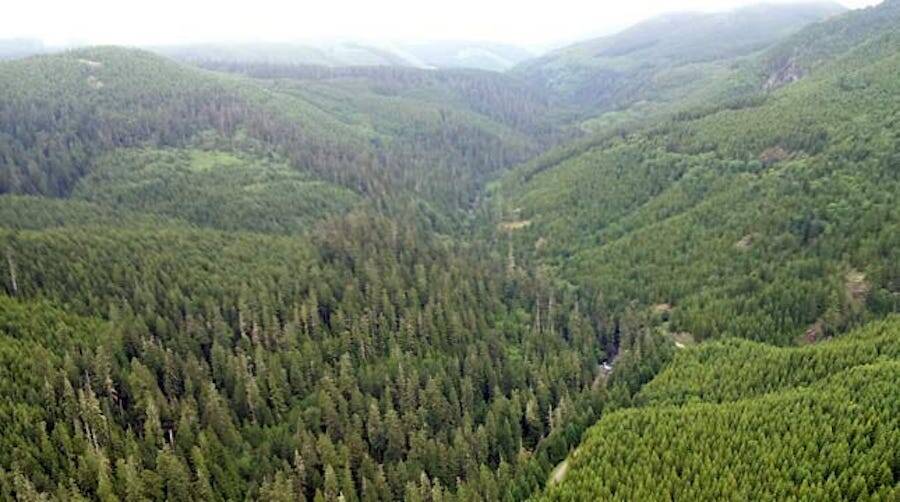
Later, officials provided further details describing rain in the area and nighttime lows in the mid 40s. They spoke candidly about the dangers of hypothermia and exposure, as Kelly had no clothes and no shoes. They also described other hazards that seem commonplace until you envision them while being barefoot: slipping on moss, breaking a leg, becoming wedged in debris, etc. In rugged country, an injury can rapidly develop into a fatal timeline.
By the weekend, a large-scale volunteer search effort was coordinated. Local reporting estimated approximately 75 volunteers participated in the search effort, which originated from a command center at the Mount St. Helens National Volcanic Monument headquarters in Amboy.
The terrain proved hazardous to many of the volunteers. According to local reports, one searcher suffered an ankle injury, and a K9 unit sustained a split paw. The description appears to serve as a cautionary notice regarding the terrain itself.
Despite this effort, nothing was publicly disclosed: no clothing, no pack, no confirmed prints beyond the earlier trail, and no body. Officials stated detectives would continue to evaluate tips and patrol the area regularly.
From the outset, officials consistently referred to the most straightforward explanation: exposure and a wilderness mishap. Official public case summaries indicate investigators believe she likely died in the forest somewhere, although her remains were never recovered.
The rationale is grim but logical. A naked and shoeless person in extremely steep, brush-filled terrain is extremely susceptible to cold, injuries and disorientation, and the window of opportunity to self-rescue closes quickly as nighttime temperatures decrease.
Investigative officials also stated there was no indication Kelly was under the influence of narcotics when she left the campsite. This statement does not dismiss every potentiality, but represents the closest approximation to an official dismissal of the most popular Internet hypothesis.
If Kelly’s footprints indeed terminated at the road, the case separates into two branches of possible explanations. Did she continue along the road and succumb to the elements out of sight, or did she re-enter the woods where the brush rapidly concealed footprints?
If Kelly re-entered the woods, she could have proceeded downward into the underbrush, upward into the dense vegetation, or into gullies that cannot be observed from trails. Searchers can easily overlook a person in dense underbrush even when searching adjacent to the trail, particularly in areas filled with fallen timber.
Another unsettling aspect of the case emerged in ABC’s coverage: the Skamania County Sheriff’s Office did not possess photographs of Kelly for identification purposes. This severely restricts the ability of the public to assist in the case in real-time and demonstrates how quickly the case moved out of reach.
On August 24, 2024, the sheriff’s office released a news bulletin stating that human remains had been discovered in the Big Lava Bed area of the forest. A hiker had discovered a skull and had provided GPS coordinates, but a deputy could not locate the site. The hiker later guided law enforcement personnel to the recovery site on August 15, 2024.
The sheriff’s office indicated that the remains were believed to be associated with a hiker missing since 2013, and that the skull and other remains were forwarded to the Clark County Medical Examiner’s Office for identification.
Subsequent local reporting indicated that investigators believed the Big Lava Bed remains were associated with Kristopher Zitzewitz, the 2013 missing hiker, not Kelly.
This is significant because it eliminated any false closure to the case. Moreover, this illustrates a harsh reality: the region contains the deceased, and it can take as long as ten years for a skull to emerge.
Case listings remain active and continue to list Kelly as missing, with investigators continuing to consider accident/exposure as the most probable explanation, and no confirmed evidence of foul play exists. No public announcement of the discovery of remains linked to Kelly has been made.
If anyone possesses information related to Kelly’s disappearance, one publicized case summary directs individuals to submit tips to the Skamania County Sheriff’s Office at (509) 427-9490. The agency’s mailing address is P.O. Box 790, Stevenson, WA 98648, and NamUs has listed their office address as 200 Vancouver Avenue, Stevenson, WA 98648.