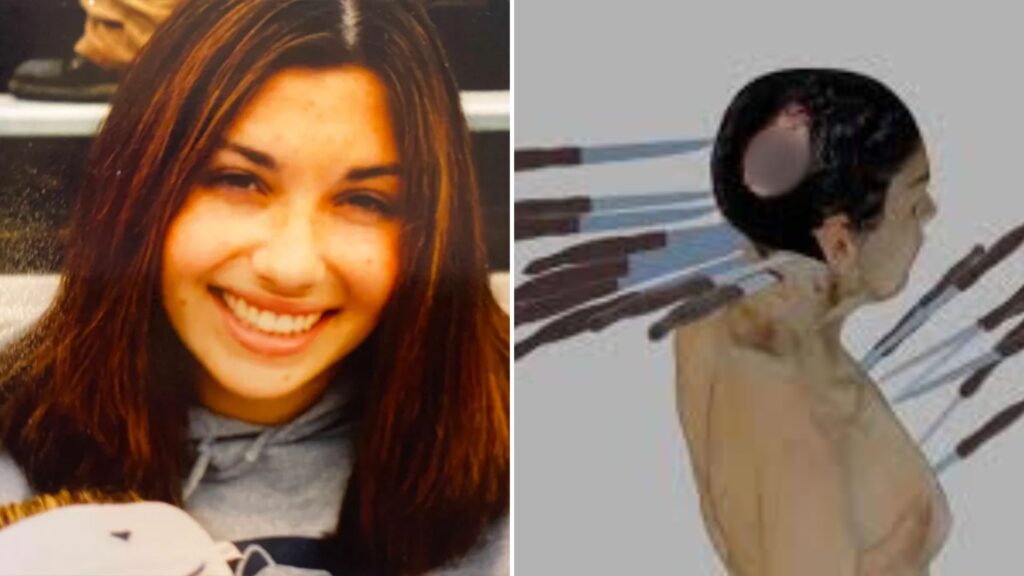
Snow packed the sidewalks of Manayunk on Jan. 26, 2011, the kind of storm that quiets a city by force. Inside a condo building on Flat Rock Road, a locked apartment door became the first detail everyone would argue about.
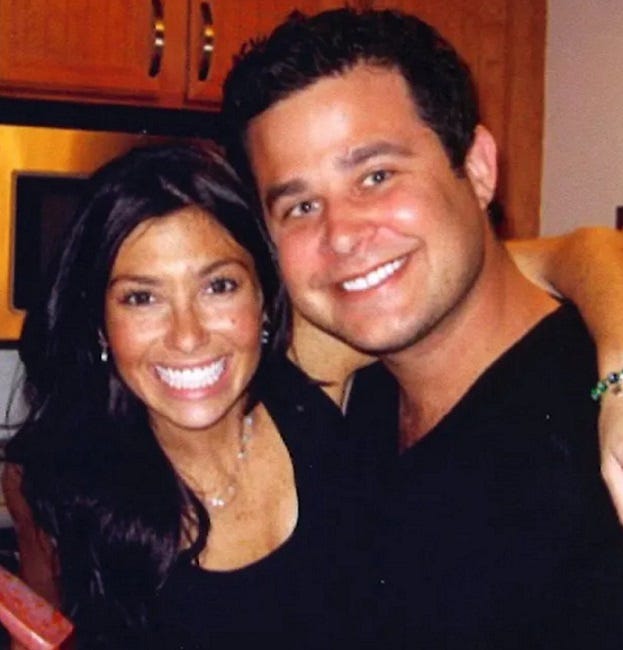
At 6:30 p.m., Ellen Greenberg’s fiancé, Samuel Goldberg, called 911 and told the operator he had walked in to find her on the kitchen floor with blood everywhere. His voice shifted as he tried to understand what he was seeing.
Greenberg was 27, a first grade teacher at Juniata Park Academy, and she had built a life in Philadelphia that looked settled from the outside. Police, paramedics, and later lawyers would keep returning to that kitchen.
The official manner of death would become suicide, even as the early medical findings and later legal fights pushed the case into national attention. The debate never stayed in one lane for long, because the basic facts came with contradictions.
A life that looked ordinary from the hallway
In the weeks before her death, Greenberg was planning a future with Goldberg, the man she lived with in apartment 603. Friends and family described her as dedicated to her students, and early local coverage emphasized the shock inside her school community.
Juniata Park Academy had been her workplace for years, and school district statements after her death focused on her impact as a teacher. Those public tributes arrived while investigators were still using careful language about what they knew.
Even in the first weekend of coverage, police called the case suspicious while also stressing that it had not been officially ruled a homicide. Reporters stood outside the building, pointing to security cameras and a guarded front desk.
Those early statements mattered later, because they set up a public split between two institutions that usually align. On paper, the medical examiner and detectives can disagree, but it is uncommon to see it play out in real time.
The afternoon that ended in a locked door
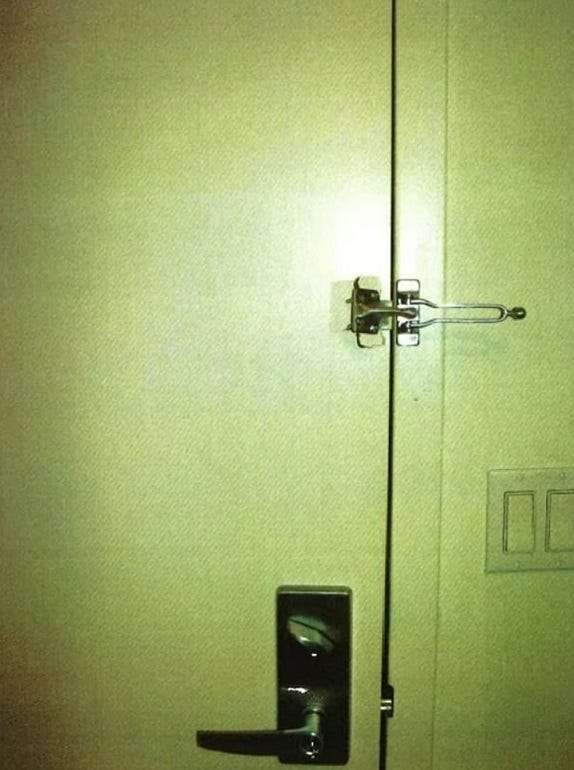
During the storm, Goldberg left the apartment to go to the gym in their building at around 4:45 p.m., according to later reporting based on court discovery. When he returned about half an hour later, the swing bar latch was engaged.
Earlier, Greenberg texted her friend Alycia Young about grades due the next day, and her phone’s last outgoing messages were recorded around 3:40 p.m., according to records later cited in court. Soon after, Goldberg headed toward the building’s fitness center.
Goldberg tried to reach Greenberg through calls, and when she did not respond, he asked the building doorman, Phil Hanton, for help breaking the lock. Hanton later said he told Goldberg it was against policy.
Later, an investigator reviewed Greenberg’s phone and listed Goldberg’s last incoming messages to her, between 5:32 and 5:54 p.m.: “Hello,” “open the door,” “what r u doin,” “im getting pissed,” “hello,” “you better have an excuse,” “what the f–k,” “ahhh,” “u have no idea.”
According to the same timeline in records, he also called her mother, neighbors heard him in the hallway, and he went down to the concierge desk asking for a tool to undo the latch, but was told none was available.
What happened next became one of the case’s most fought over details. Goldberg forced the door open himself and found Greenberg on the kitchen floor, then called 911.
On the recorded call, Goldberg struggled to describe where she was bleeding from until the operator began giving instructions and he noticed a knife lodged in her chest. He said her shirt was a zipper and he could not pull it off easily.
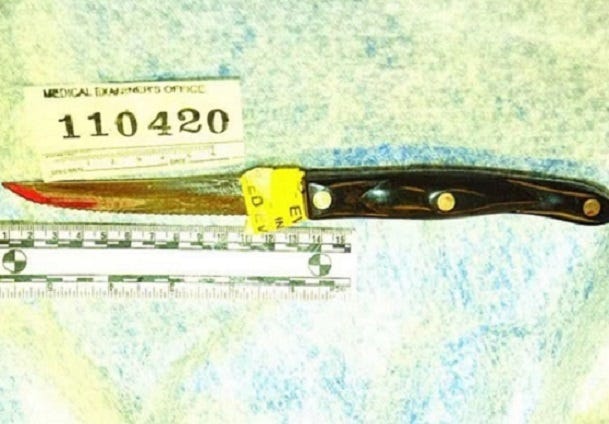
The knife was described as a 10 inch serrated kitchen knife, embedded about four inches into her chest. In the same call, Goldberg said Greenberg had stabbed herself, then hedged, suggesting she might have fallen on it.
The operator told him to stop and wait for police. That call, released years later through civil litigation, became a reference point because it did not match every later description of how Greenberg’s body was positioned when responders arrived.
The first police framing: suspicious, but drifting toward suicide
In the immediate aftermath, police emphasized the setting. A secure building, staff on site, and security cameras suggested controlled access, and reporters repeated the idea that video and entry records could help explain what happened inside.
At the same time, investigators leaned toward a non criminal direction, according to early CBS reporting, and said they were still sifting through evidence. That posture left room for a later shift, but it also created confusion.
Local TV coverage echoed that tension by calling the death suspicious while repeating police language that it had not been ruled a homicide. In many cases, that phrasing is a placeholder, but here it would become part of a larger argument.
By the time the case reached broader true crime audiences years later, people would point back to those first statements and ask how a “suspicious” death became a settled “suicide” without satisfying everyone who read the file.
What the autopsy found
The autopsy the next morning changed the temperature of the case. Assistant medical examiner Dr. Marlon Osbourne found a total of 20 stab wounds, including 10 to the back of Greenberg’s neck, and he ruled the manner of death homicide.
Court discovery later described the wounds in categories: multiple injuries to the chest, one to the stomach area, a gash across the scalp, and the cluster of wounds to the back of the neck ranging from small nicks to deeper cuts.
Osbourne also documented bruises in various stages of healing. Later reporting tied that number to 11 bruises on Greenberg’s arm, abdomen, and leg, details her parents would cite repeatedly as they argued the scene looked staged.
The homicide ruling did not last. In early coverage, police pushed back publicly, saying the death had not been ruled a homicide and suggesting Greenberg had mental health issues, a phrase that became a catchall in later retellings.

Medication, anxiety, and the question of intent
When the case reached national television in 2020, CBS summarized what investigators had pointed to early on: Greenberg had been on anti anxiety medication and had recently started seeing a psychiatrist. That psychiatrist, CBS reported, felt she was not suicidal.
CBS also reported that Klonopin and Ambien were the only drugs found in her system, and noted that both carry warnings about suicidal thoughts and behavior as possible side effects. Those details became part of the official framing.
Other details from that coverage stuck because they were mundane and specific. CBS reported there was no suicide note, and that a half made bowl of fruit salad sat on the counter, suggesting Greenberg had been doing ordinary tasks in the hours before she died.
The lack of a note does not decide a case, but it became one more point in a long list where each side thought the other was cherry picking. Investigators kept circling the same question: what can be proven, and what can be assumed.
A ruling that changed behind closed doors
Osbourne testified later that, at the time of autopsy, he believed he had enough information to rule the death a homicide. He also said police asked him to list the case as pending while they continued investigating.
A few days later, police were already publicly disputing his conclusion, and Osbourne described trying to resolve a central medical issue: whether a wound to Greenberg’s neck or spinal area would have incapacitated her and prevented further injuries.
He said he sought input from neuropathologist Lucy Rorke Adams, describing an informal review at the Children’s Hospital of Philadelphia during heavy snow. The problem, later highlighted in court discovery, was the absence of a formal report or invoice.
Years later, The Philadelphia Inquirer reported that Rorke Adams said she had no recollection of the case, and the office could not produce her report. Still, the neuropathology claim became a pillar of the eventual suicide ruling.
Osbourne and the former chief medical examiner, Sam Gulino, also described being called to a meeting with police and prosecutors, a meeting Gulino called unusual. The testimony suggested investigators were presenting information because they believed the manner of death was different.
After that process, Osbourne changed the manner of death to suicide. The Greenbergs learned about the reversal later, and they would spend years trying to understand who persuaded whom, and what evidence carried the most weight.
The doorman detail that refused to stay settled
In Osbourne’s later testimony, one fact stood out: he said police confirmed that a doorman had been with Goldberg when the door was broken down. In his view, that mattered because it supported the claim the swing bar was engaged from inside.
The civil case produced a conflicting record. Hanton, the doorman on duty, provided a signed declaration that he did not witness the door being broken, and surveillance footage obtained in discovery showed he did not accompany Goldberg upstairs.
Years later, attorney Geoffrey Johnson said Goldberg’s cousin and uncle recalled being on speakerphone with him as he forced the door and heard him scream. The claim drew scrutiny because phone records and video timing did not match that sequence.
In deposition, Osbourne was asked whether he would have changed his homicide ruling to suicide if there was still doubt about whether someone witnessed the forced entry and whether the lock was engaged at the time Greenberg was stabbed. He said he would not.
That answer gave the Greenbergs a line to hold on to. They argued that, by Osbourne’s own reasoning, suicide could not stand if the doorman story collapsed, and they pressed courts to force a change in the death certificate.
The spine testimony and a new argument over timing
The same civil discovery produced testimony from Lyndsey Emery, a pathologist in the medical examiner’s office who later examined a section of Greenberg’s spinal column that remained in storage. Emery did not offer a conclusion on manner of death, but described what she saw.
Emery testified that one injury to spinal tissue was done during the autopsy, but described two other cuts to bone, ligaments, and the dura that she called a real sharp force injury. She said there was no hemorrhaging around those injuries.
In deposition, Emery said lack of hemorrhage can indicate no pulse, and she acknowledged that the absence of bleeding would weigh toward the possibility that Greenberg was already dead when that wound occurred. The Greenbergs’ lawyer called it amazing new information.
A month later, the city filed a written declaration from Emery that offered additional explanations and said she did not fully understand the scope of questions posed in her deposition. The back and forth became part of the larger court fight.

When the fight moved from evidence to standing
By 2019, the Greenbergs had filed suit seeking to change the manner of death from suicide back to homicide or undetermined. They argued a corrected ruling would allow an impartial investigation to be reopened and would clear what they saw as a false conclusion.
Philadelphia argued that a medical examiner’s conclusion is a discretionary professional opinion that cannot be compelled to change, even if someone believes it was wrong. A Temple University law professor quoted in The Inquirer framed it as a limit built into the law.
As the litigation continued, appellate judges criticized how Philadelphia authorities handled the investigation, calling it deeply flawed. At the same time, the legal issue narrowed to whether the parents, as administrators of the estate, had standing to challenge what was written.
In July 2024, the Pennsylvania Supreme Court agreed to take up that standing question, describing it as an issue of statewide importance because death certificate findings can affect compensation claims, restitution, wrongful death suits, and private criminal complaints.
That procedural fight mattered because it shaped what courts could order. A ruling about standing would not decide whether Greenberg died by suicide or homicide, but it could decide whether a family can legally force a change in the first place.
The attorney general review and the digital trail
In 2018, the Pennsylvania attorney general’s office took over the review, after then civil rights attorney Larry Krasner had previously represented the Greenbergs and later became district attorney. The referral was framed as avoiding the appearance of a conflict.
The attorney general’s office said in 2019 that its review supported suicide and that it had closed the investigation. In later reporting, a spokesperson pointed to search history on Greenberg’s computer that included phrases like suicide methods and painless suicide.
The Inquirer also reported a tension in the record: the medical examiner’s April 2011 report said nothing indicative of suicide had been found on Greenberg’s computers, while the attorney general’s office said it did not find that analysis in the district attorney file.
For Greenberg’s parents, the shifting explanations reinforced their belief that the early investigation had gaps that were later papered over. For state officials, the question was whether the available evidence could support reopening, not whether every step felt perfect.
A transfer to Chester County, then an “inactive” case
In August 2022, the case was turned over to Chester County detectives, again framed as avoiding the appearance of a conflict. Chester County reviewed prior investigations, pursued additional steps, and consulted an independent forensic expert, according to an official news release.
On Nov. 8, 2024, the Chester County District Attorney’s Office announced it was unable to move forward with criminal charges and was placing the investigation into inactive status. The office said it could not prove beyond a reasonable doubt that a crime was committed.
The release also stressed a point that can be easy to miss in a headline. Pennsylvania has no statute of limitations for criminal homicide, and the DA said the case was not being closed, even as officials said they would not answer questions.
That announcement did not end the family’s public campaign. It shifted the terrain again, away from prosecutors and back toward the civil system, where the Greenbergs were still trying to force a review of the death classification itself.
A settlement, and the promise of a new review
On Feb. 3, 2025, just before jury selection in the Greenbergs’ civil case, Philadelphia settled two lawsuits and agreed that the medical examiner’s office would conduct an expeditious review of the manner of death. The settlement included an undisclosed amount of money.
The same weekend, Dr. Osbourne signed a sworn verification stating that, based on new information, he believed Greenberg’s manner of death should be something other than suicide. The statement was widely reported as a key turning point, even though he no longer worked for Philadelphia.
For Greenberg’s parents, the point of the settlement was not simply a payout. In interviews, they framed it as a chance to remove the word suicide from their daughter’s official record and to push authorities back toward a fuller investigation.
By July 2025, the family’s attorneys were publicly pressing the city to finish what the settlement promised, saying they were tired of waiting for the reexamination. The city, through a law department spokesperson, said the review was actively in progress.
The 2025 review: a familiar conclusion, new counts
In October 2025, the Philadelphia medical examiner’s office released a new review signed by Chief Medical Examiner Dr. Lindsay Simon, reaffirming that Greenberg’s death was best classified as suicide. Simon wrote that the injury pattern was unusual but still consistent with self inflicted wounds.
Simon’s review also changed key numbers that had been repeated for years. ABC News reported she counted 23 stab and incised wounds, up from 20 in the original autopsy report, and described many as hesitation wounds.
ABC News also reported Simon identified another 20 bruises beyond the initial count, raising the number of bruises to 31. The review said there were no defensive wounds and maintained that Greenberg would have been capable of inflicting the injuries herself.
Simon’s report leaned on records that police and prosecutors had long cited. It said the fiancé’s account of being at the gym was corroborated by surveillance video, keycard swipes, and other evidence, and that his DNA was not found on the knife.
The review also discussed Greenberg’s anxiety and tied it largely to work. ABC30 reported Simon wrote that Greenberg worried about submitting grades that day and feared they might suggest she had previously inflated student grades, a detail meant to explain a sudden crisis.
What remains, fourteen years later
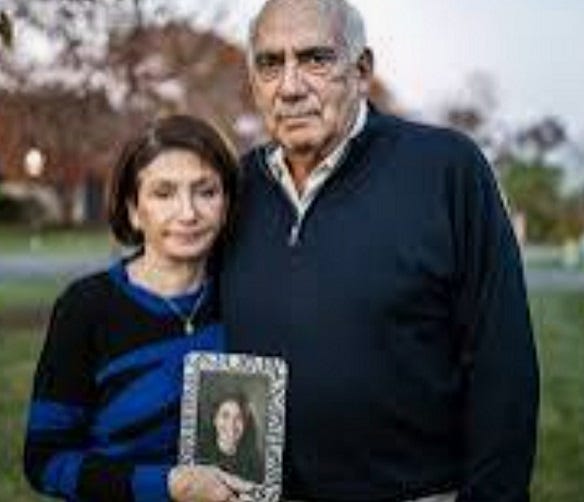
Greenberg’s parents have never accepted the suicide conclusion, and the case remains a public tug of war between official findings and the family’s insistence that the investigation was mishandled. Courts, prosecutors, and medical examiners have each drawn lines around what they can prove.
The Chester County DA’s office has said the evidence does not meet the criminal standard of proof beyond a reasonable doubt, while also leaving the door open to new directions in the future. The Supreme Court case, meanwhile, turned on standing, not on rewriting the facts.
For true crime audiences, the case keeps its grip because it sits at the intersection of medicine, policing, and paperwork. A single phrase on a death certificate has shaped what agencies pursued, what families could ask for, and what the public has argued over ever since.
Sources
- ABC News (Oct. 14, 2025). Teacher’s stabbing death affirmed to be a suicide after review.
- NBC10 Philadelphia (Oct. 13, 2025). Medical examiner’s report rules Ellen Greenberg death as suicide in new review.
- 6abc / WPVI-TV (Oct. 13, 2025). Review of Philadelphia MEO case 11-0420 (Ellen Greenberg) (PDF).
- Chester County District Attorney’s Office (Nov. 8, 2024). News Release: Update to Ellen Greenberg Investigation (PDF).
- CBS News Philadelphia (Nov. 8, 2024). Chester County DA’s office says it’s “unable to move forward” with Ellen Greenberg case.
- CBS News Philadelphia (Feb. 3, 2025). Philadelphia medical examiner to reopen Ellen Greenberg case after settlement with parents.
- 6abc / WPVI-TV (Feb. 6, 2025). Teacher’s stabbing death to be revisited after medical examiner agrees to review case (settlement coverage).
- Supreme Court of Pennsylvania (July 30, 2024). Order granting allowance of appeal in Osbourne, M., et al. v. Greenberg, J., et al. (PDF).
- The Philadelphia Inquirer (July 31, 2024). Pa. Supreme Court takes case of Ellen Greenberg.
- Wikipedia (accessed Dec. 30, 2025). Death of Ellen Greenberg (background overview; verify details against primary reporting).