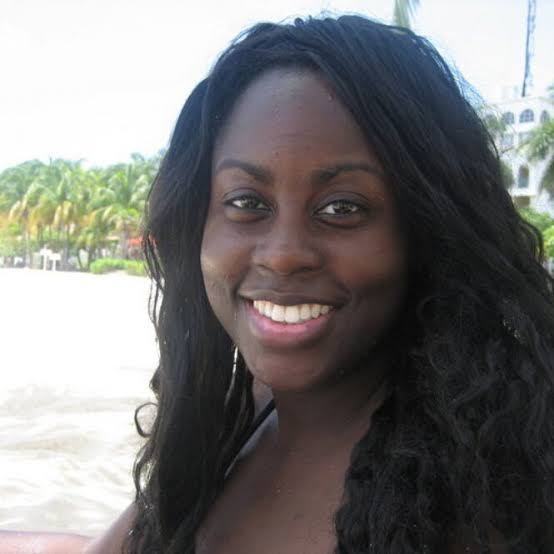
Teleka Patrick stepped off a hotel shuttle in downtown Kalamazoo on a December night in 2013, walked across the hospital parking lot, and seemed to vanish into the dark. Hours later, her car sat abandoned beside an Indiana highway. Months later, fishermen found her in a lake near that same stretch of road. The line between those points is where the questions begin and where most answers still feel incomplete.
Before her name became a headline, Teleka Patrick’s life looked like a long series of achievements. She grew up in New York in a religious family, went on to Loma Linda University in California, and earned both a medical degree and a PhD in biochemistry. Friends and relatives described her as intelligent, driven, and deeply involved in her faith.
In July 2013, she moved to Kalamazoo, Michigan, to start a psychiatry residency through Western Michigan University and Borgess Medical Center. She told people she wanted to be closer to a partner in Grand Rapids, though later investigators would question how real that relationship actually was.
Inside the hospital, she worked long shifts and often unusual hours. Colleagues saw a young doctor trying to prove herself in a demanding specialty. At the same time, small incidents were already hinting that something was not sitting right beneath the surface of that busy life.
On July 10, only days after arriving in Michigan, she flagged down a Kalamazoo Public Safety officer in distress and said someone was after her. The officer contacted the medical school because he thought she might be experiencing mental health problems. A drug test came back clean, which left staff unsure how to interpret the encounter.
Her family later said that they had seen Teleka struggle before. Her ex-husband, Ismael Calderon, told reporters that during their marriage she sometimes heard voices and had delusional ideas, and that she worried about being labelled mentally ill and losing her career. Attempts to push her toward treatment, he said, helped end the marriage.
Relatives tried to keep the public focus on the urgency of her disappearance rather than those old struggles. They stressed that whatever her emotional state had been, it was out of character for her to vanish, and that they believed she was in danger rather than simply hiding.
By late summer 2013, another thread had entered her life. Court records later showed that Grammy-nominated gospel singer and pastor Marvin Sapp obtained a personal protection order against Teleka in September that year. He told the court she had contacted him for over a year, joined his church, come to his home, and spoken with his children.

In the PPO filings, Sapp said she had claimed he was her husband and had sent him hundreds of pages of messages. Police later confirmed that he gave them a thumb drive containing roughly 490 pages of correspondence, none of which he had answered. Investigators said he was never considered a suspect in her disappearance.
Around the same period, Teleka was building a private online world. On YouTube, she posted a set of unlisted videos that looked like messages to an unseen romantic partner. She smiled into the camera, prepared elaborate breakfasts, and spoke to “baby” and “love” as if someone close was meant to receive the clips.
In one clip, she showed a table for two set with omelets and pancakes and told the viewer, “If you were here, this is what would be on your plate.” In another, she greeted an off-screen person warmly and mentioned shared flowers and orange juice from a previous visit. Family members later said they had no idea who she was addressing.
Those videos would only surface publicly after she went missing. At the time she filmed them, co-workers knew her as a busy resident and her family believed she was single. There was already a flight booked for Christmas so she could travel to Florida and spend the holidays with her parents.
The day of her disappearance, December 5, 2013, started like any other day on rotation. She went to work at Borgess Medical Center. At some point she left personal items behind at the hospital, including her mobile phone, which would later complicate efforts to track her movements.
That evening she arranged a ride downtown with a colleague and asked to be dropped at the Radisson Plaza Hotel, a few minutes from her home. The colleague lent her about one hundred dollars in cash for a room, because she said she felt unsafe and wanted to stay somewhere else for the night.
Hotel surveillance cameras later captured her arriving at the front desk around 8 p.m. She appeared in a rush and tried to check in with cash, but did not have enough money on hand and did not use a bank card. Staff later said she seemed agitated and that the interaction felt unusual.
When the room fell through, she chose to go back to her car at the hospital rather than return to her nearby apartment. The hotel shuttle driver picked her up and headed back toward Borgess. He would become the last confirmed person to see her alive.
The driver later told investigators and reporters that she seemed nervous on the ride and kept looking around. As they pulled into the parking lot, he said she even bent down between parked vehicles as if she did not want someone to see her. He saw nobody following her, but her fear felt real to him.
Security footage from the hospital grounds supported parts of that account. It showed Teleka moving through the parking lot in a way that did not look casual. She shifted between rows of cars, stayed low at times, and gave the impression of someone trying to stay out of sight.
After that, the trail left behind by cameras ends. From that lot, she drove away from Kalamazoo in her gold 1997 Lexus ES300. Within a couple of hours, the car would be spotted in a shallow ditch along westbound Interstate 94 near Porter in Indiana, roughly one hundred miles from the hospital.
Around 10 p.m., drivers began calling 911 about a vehicle off the road. An Indiana State Trooper arrived to find the Lexus partly off the shoulder. The car appeared to have a flat tire. Inside were her wallet, credit cards, identification, some cash, and clothing. The keys were missing.
Scent dogs later tracked a trail from the car for about thirty feet toward the highway, then stopped abruptly. Search teams combed the nearby woods and fields but did not find Teleka or any obvious sign of an accident or struggle. At that moment, she was just an unidentified absent driver at a roadside incident.
Back in Michigan the next morning, she failed to appear for work at Borgess. That absence finally triggered concern. She was reported missing on December 6, and investigators in both states had to connect the missing resident in Kalamazoo with the abandoned car already sitting in an Indiana impound lot.
Once that link was made, the case escalated quickly. The Kalamazoo County Sheriff’s Office, Indiana State Police, and eventually the FBI became involved. Friends and family launched social media campaigns, organized prayer vigils, and raised reward money for tips. National outlets picked up the story of the missing young doctor.
As detectives dug into her life, the YouTube videos surfaced and raised new questions. They suggested a secret relationship that no one close to her could identify. When reporters and bloggers began pairing those clips with the PPO records involving Marvin Sapp, public speculation around her private world grew louder.
News sites often described her as “obsessed” with Sapp and repeated his stalking allegations. The PPO said she had joined his church, contacted his children, and gone to his house. Police later emphasized that there was no evidence linking him to her disappearance and that he was never a suspect.
At the same time, interviews with her ex-husband and the July encounter with police pointed investigators toward concerns about her mental health. Calderon spoke about her fear of being branded ill and the pressure she felt as a high-achieving doctor. Advocates from the Black and Missing Foundation warned that those details should not distract from the basic fact that she was missing and at risk.
Her family issued statements urging people to remember her as more than the odd behaviour being discussed online. They described a woman who laughed loudly at her own jokes, pursued medicine with determination, and stayed close to relatives even as training pulled her across the country. They pleaded for anyone with information to come forward.
Through that winter, search efforts continued on land and in the water near where her car had been found. Volunteers handed out flyers, investigators re-checked possible sightings, and private investigators recruited by the family followed leads. The highway, the ditch, and the surrounding fields kept their secrets.
On April 6, 2014, four months after her disappearance, a fisherman on Lake Charles in Porter, Indiana, spotted something in the water. Authorities pulled a body from the lake and began the process of identification. The location sat close to the section of interstate where Teleka’s Lexus had been recovered.
Within days, dental records confirmed what her family had feared. The body belonged to Teleka Patrick. She was thirty years old. There were no clear signs of trauma on the remains. The lake’s cold water and the time elapsed had erased many details that might have answered exactly how she ended up there.
Two separate autopsies, one in Indiana and one in Michigan, concluded that she died by drowning and found no evidence of assault or obvious foul play. Kalamazoo County Sheriff Richard Fuller told reporters that investigators believed she had likely walked away from her disabled vehicle and somehow entered the nearby water.
When divers and recovery teams examined her clothing, they made another discovery. The key to her Lexus was still in her pocket. That detail fuelled new debate about why the car was left in the ditch with the key missing and why she had chosen to walk away from it at all.
Inside the car, investigators found a receipt from a collision shop. She had signed a statement that the vehicle was unsafe to drive and that there was a nail in a tire. Her family wondered why, knowing that, she had taken it out on a winter night and driven onto a major interstate.
By August 2014, the Kalamazoo County Sheriff’s Office formally closed the missing-person investigation. Their conclusion was that Teleka left of her own accord, drove into Indiana, and died in an accidental drowning after leaving the car. Indiana authorities also closed their case once toxicology results confirmed that there were no obvious substances that changed that picture.