Content warning: This article covers sexual violence, coercive captivity, and murder involving teenage victims.
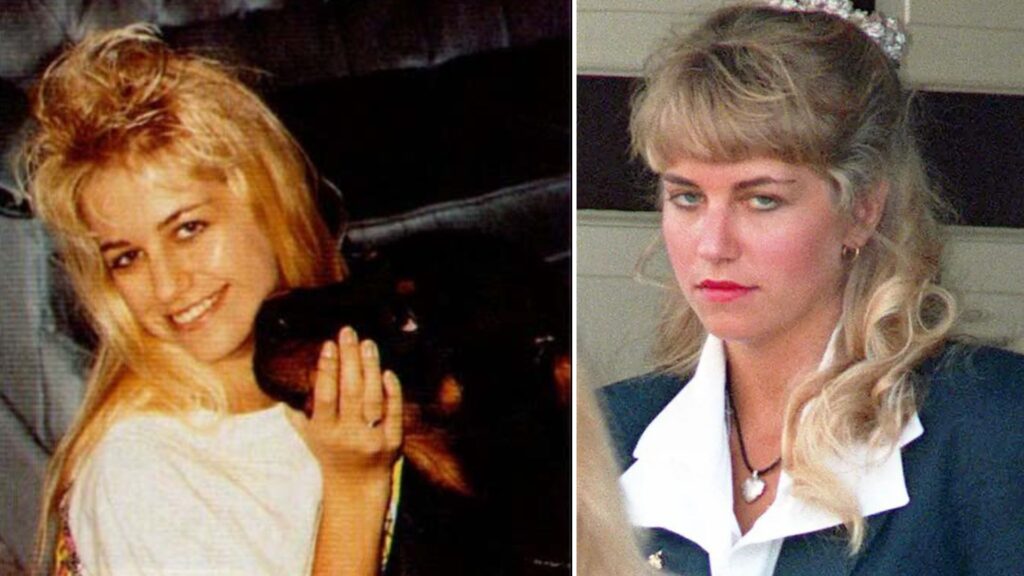
On June 29, 1991, police pulled seven concrete blocks from a lake near Niagara. Inside were the dismembered remains of a missing 14 year old, Leslie Mahaffy. Around the same time, Karla Homolka walked out of a church in a white dress, newly married to Paul Bernardo.
The public later called them the “Ken and Barbie” killers, a nickname that stuck because it framed the core contradiction. Their crimes did not happen in a distant criminal underworld. They happened in suburbs, behind doors that looked like anyone else’s, with routines that blended into the neighborhood.

The predator who already had a name
Before the murders, Paul Bernardo had already left a trail across Scarborough, a part of Toronto. Police and media used a name that sounded like urban folklore, the Scarborough Rapist. It was a pattern of sexual assaults that frightened women on public transit routes and in quiet residential streets.
The cruelty of that period shows up in a later case that became its own scandal. In 1989, Anthony Hanemaayer pleaded guilty after a knifepoint assault on a 15 year old, then served time. Years later, new evidence tied the crime to Bernardo, and the Ontario Court of Appeal acquitted Hanemaayer in 2008.
Karla Homolka entered the story as a teenager working as a veterinary assistant, while Bernardo presented himself as a young professional. A law review summary of the case noted their middle class image and her role in animal care, an everyday job that later intersected with the crimes through access to drugs.
The house becomes the method
The murders connected to Bernardo and Homolka centered around a home base in St. Catharines, Ontario. In the public record, it was described simply as a house. In practice, it served as the place where victims were taken, kept, assaulted, and recorded.
Justice Canada later summarized the core fact that made public anger explode. Videotapes existed that captured vicious sexual assaults committed by both Bernardo and Homolka against multiple victims, including the young women who were later killed. Those tapes came into police hands in September 1994, far too late.
Tammy Homolka, the crime that stayed “accidental” for too long
According to Homolka, her husband Paul Bernardo became attracted to her younger sister, Tammy Homolka, during the summer of 1990 (this attraction was confirmed by Bernardo, during an interview conducted in 2007 while in custody, to have begun in July 1990).
Karla hatched a plan to help Bernardo drug Tammy, seeing an opportunity to “minimise risks, take control, and keep it all in the family.”

In July, “according to Bernardo’s testimony, he and Karla served Tammy a spaghetti dinner spiked with Valium stolen from Karla’s workplace. Bernardo raped Tammy for about a minute before she started to wake up.”
Homolka later stole the anesthetic agent halothane from the St. Catharines veterinarian clinic where she worked. On December 23, 1990, after a Christmas party at the Homolka household, Bernardo and Homolka drugged Tammy with the animal tranquilizer.
The couple subsequently raped Tammy while she was unconscious. Tammy later choked on her own vomit and died. Before calling 9-1-1, Bernardo and Homolka hid the evidence, did the laundry, redressed Tammy (who had a chemical burn on her face), and moved her into her basement bedroom.
A few hours later, Tammy was pronounced dead at St. Catharines General Hospital without having regained consciousness. Bernardo told police he had unsuccessfully tried to revive her, and her death was ruled an accident.

Leslie Mahaffy, taken and reduced to concrete
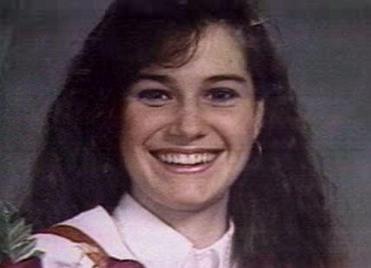
Early in the morning on June 15, 1991, Bernardo detoured through Burlington (halfway between Toronto and St. Catharines) to steal licence plates and found Leslie Mahaffy standing outside her home.
The 14-year-old had missed her curfew after attending a friend’s wake and was locked out of her house. Bernardo left his car and approached Mahaffy, saying that he wanted to break into a neighbour’s house.
Unfazed, she asked if he had any cigarettes. He claimed he had some in his vehicle. When Bernardo led her to his car he blindfolded her, forced her into the car, drove her to Port Dalhousie and informed Homolka that they had a victim.
Bernardo and Homolka videotaped themselves torturing and sexually abusing Mahaffy while they listened to Bob Marley and David Bowie.
At one point Bernardo said, “You’re doing a good job, Leslie, a damned good job”, adding: “The next two hours are going to determine what I do to you. Right now, you’re scoring perfect.”
On another segment of tape played at Bernardo’s trial, the assault escalated. Mahaffy cried out in pain, and begged Bernardo to stop. In the Crown description of the scene, he was sodomizing her while her hands were bound with twine.
Mahaffy later told Bernardo that her blindfold seemed to be slipping, which signalled the possibility that she could identify her attackers if she was set free or lived.
The following day, Bernardo claimed, Homolka gave her a lethal dose of triazolam; Homolka claimed that Bernardo strangled her. They put Mahaffy’s body in their basement, and the day after the Homolka family had a Father’s Day dinner at Bernardo’s and Homolka’s house.
After the Homolkas and their remaining daughter Lori left, Bernardo and Homolka decided that the best way to dispose of the evidence would be to dismember Mahaffy and encase each part of her remains in concrete. Bernardo bought a dozen bags of cement at a hardware store the following day; he kept the receipts, which were damaging at his trial.
Bernardo used his grandfather’s circular saw to dismember Mahaffy. Bernardo and Homolka made a number of trips to dump the cement blocks in Lake Gibson, 18 kilometres (11 mi) south of Port Dalhousie.
At least one of the blocks weighed 90 kilograms (200 lb) and was beyond their ability to sink. It lay near the shore, where it was found by Michael Doucette and his son Michael Jr while on a fishing expedition on June 29, 1991. Mahaffy’s orthodontic appliance was instrumental in identifying her.
Homolka was released from prison on July 4, 2005. Several days before, Bernardo was interviewed by police and his lawyer Tony Bryant. According to Bryant, Bernardo said that he had always intended to free the girls he and Homolka kidnapped.
However, when Mahaffy’s blindfold fell off (allowing her to see Bernardo’s face), Homolka was concerned that Mahaffy would identify Bernardo and report them to the police. Bernardo claimed that Homolka planned to murder Mahaffy by injecting an air bubble into her bloodstream, triggering an air embolism.

Kristen French, daylight abduction and a body close to the first grave
During the after-school hours of April 16, 1992, Bernardo and Homolka drove through St. Catharines to look for potential victims. Although students were still going home, the streets were generally empty.
As they passed Holy Cross Secondary School, a Catholic high school in the city’s north end, they spotted 15-year-old Kristen French walking briskly to her home nearby. They pulled into the parking lot of nearby Grace Lutheran Church and Homolka got out of the car, map in hand, pretending to need assistance.
When French looked at the map, Bernardo attacked from behind and brandished a knife, forcing her into the front seat of their car. From the back seat, Homolka subdued French by pulling her hair.
French took the same route home every day, taking about 15 minutes to get home and care for her dog. Soon after she should have arrived, her parents became convinced that she had met with foul play and notified police.
Within 24 hours the Niagara Regional Police Service (NRP) assembled a team, searched French’s route and found several witnesses who had seen the abduction from different locations (giving police some important details).
French’s shoe, recovered from the parking lot from where she had been taken, underscored the seriousness of the abduction.
Over the Easter weekend Bernardo and Homolka videotaped themselves torturing, raping and sodomizing French, forcing her to drink large amounts of alcohol and submit to Bernardo.
At his trial, Crown prosecutor Ray Houlahan said that Bernardo always intended to kill her because she was never blindfolded and could identify her captors. The following day, Bernardo and Homolka murdered French before going to the Homolkas’ for Easter dinner.
Homolka testified at her trial that Bernardo strangled French for seven minutes while she watched. Bernardo said that Homolka beat French with a rubber mallet because she tried to escape, and French was strangled with a noose around her neck which was secured to a hope chest; Homolka then went to casually fix her own hair.
French’s nude body was discovered on April 30, 1992, in a ditch in Burlington, about 45 minutes from St. Catharines and a short distance from the cemetery where Mahaffy is buried. She had been washed, and her hair was cut off. Although it was thought that French’s hair was removed as a trophy, Homolka testified that it was cut to impede identification.

The turn in 1993: the battered spouse story and the arrest
By early 1993, investigators still lacked leads in the French and Mahaffy murders, and they had not linked Tammy’s death to a wider pattern. Justice Canada records that the investigation broke when Homolka presented herself to police as a victim of spousal assault in January 1993.
After she implicated her husband, Bernardo was arrested. CityNews’ chronology places his arrest at Feb. 17, 1993, at his St. Catharines home.
This is one of the strangest elements in the case, because the public later argued over what that moment truly meant. It was a confession of sorts, and it was also a negotiation. Homolka had information the police needed, and she wanted a deal before she gave it.
Justice Canada summarizes the prosecutor’s dilemma in plain language. Authorities had a strong case against Homolka but lacked enough to convict Bernardo for the murders. Prosecutors saw her cooperation as essential, and that opened the door to one of the most infamous plea bargains in Canadian history.

The deal with the Crown
On May 14, 1993, the prosecutor entered into a resolution agreement with Homolka. In exchange for cooperation and testimony, she would plead guilty to two counts of manslaughter and receive a 12 year sentence.
CityNews’ timeline notes that Homolka was charged May 18, 1993, and sentenced on July 6, 1993, after being convicted of manslaughter.
At that moment, a version of the case settled into public consciousness. Homolka as abused spouse. Bernardo as sadist. A bargain that felt ugly but necessary, framed as the price of ensuring a murder conviction against the main offender.
The tapes that changed everything, and the lawyer who held them
The single most controversial twist arrived after the plea bargain became reality. CityNews reports that on May 6, 1993, Bernardo’s lawyer at the time, Ken Murray, entered the house and removed videotapes depicting sexual assaults on victims including French and Mahaffy.
A CanLII Connects summary of R. v. Murray describes Murray acting on written instruction from Bernardo, removing videotapes depicting gross sexual abuse by Bernardo and Homolka. The same case summary describes legal guidance that eventually pushed toward sealing and court handling.
Justice Canada later states that police discovered the videotapes on Sept. 22, 1994. Those tapes captured sexual assaults committed by both offenders against multiple victims, including the deceased young women.
The timeline is the wound that never closes. A deal was signed May 14, 1993. Homolka received her 12 year sentence July 6, 1993. The tapes arrived in police hands more than a year later. In the public mind, that gap became the case’s second crime scene.
Justice Canada is blunt about the consequence: had authorities possessed the tapes on May 14, 1993, the prosecutor would never have entered the resolution agreement. The bargain would have collapsed, and Homolka’s role could have been charged and argued from a different starting point.
The trial that forced Canada to hear the evidence
In 1995, Bernardo’s trial became the moment the country learned what the rumors had been circling. CityNews’ timeline says jurors began watching videotapes depicting sexual assaults on French, Mahaffy, Tammy, and a surviving victim known in court as Jane Doe.
Jane Doe’s role is important because it shows the victim count extended beyond the three deaths. Justice Canada’s report describes “at least four victims,” with two murdered, Tammy dying during assaults while unconscious, and Jane Doe surviving.
On Sept. 1, 1995, Bernardo was convicted of two counts of first degree murder and sentenced to life imprisonment with a 25 year parole ineligibility period. Justice Canada also notes he was found to be a dangerous offender and sentenced to indefinite detention in a penitentiary.
Why Homolka could not be tried again after the tapes
Public outrage pushed Ontario’s Attorney General to establish an inquiry. Justice Canada summarizes that the inquiry reviewed the May 14, 1993 agreement and the decision not to charge Homolka with murder after the tapes surfaced.
The official report to the Attorney General, available as a public text on Archive.org, addresses whether further proceedings against Homolka were appropriate or feasible. It emphasizes finality in criminal litigation and explains why reopening the case ran into legal walls, even after evidence showed broader involvement.
This is the part that makes the case uniquely infuriating for readers. A “new witness” exists in the form of videotape, yet the system treats agreements as binding, because the stability of plea bargaining and prosecution depends on credibility.
After prison: the life that kept moving
Homolka served her sentence and was released in 2005, a moment that drew protests and intense press coverage. The Guardian reported her release amid public anger and family grief, capturing how the case retained its heat even after the court chapter ended.
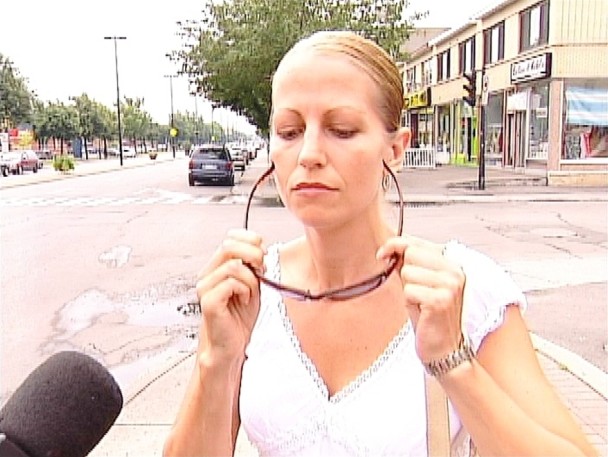
A decade later, CityNews reported Homolka was living in Châteauguay, Quebec, with her children, and stated she married Thierry Bordelais, the brother of her lawyer from the trial era. CityNews also reported she moved to the Antilles in 2007, with later reporting placing her in Guadeloupe.
A Reuters feature described her as having “vanished in 2007” after serving 12 years, and placed the reporting focus on her presence in the Caribbean and the enduring public concern about her proximity to children and community life.
Meanwhile Bernardo remained in custody. A 2023 statement from Correctional Service Canada confirms his transfer to La Macaza Institution in Quebec and reiterates his life sentence and dangerous offender designation, emphasizing the institutional framework that governs his confinement.