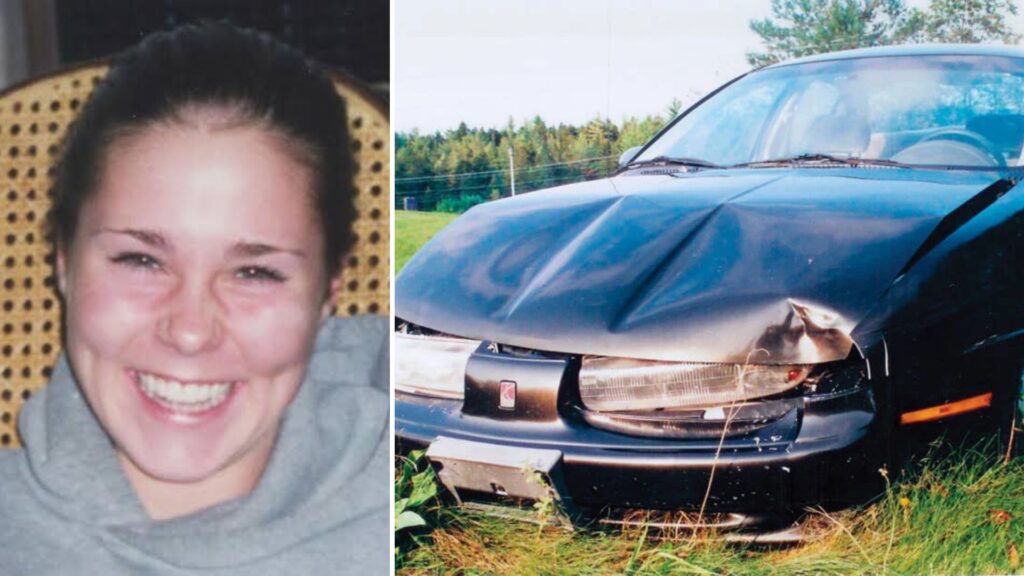
In February 2004, a 21 year old nursing student signed off from campus, packed some things into a tired Saturn, and drove north toward the White Mountains. By that night, her car sat nose in a snowbank on a dark New Hampshire road. She was gone.
Who Maura Murray Was Before That Drive
Maura Murray grew up in a working class family in Massachusetts, the fourth of five siblings in a home that moved between parents after a divorce when she was six. She did well at school, joined sports teams, and built a reputation for discipline and effort.
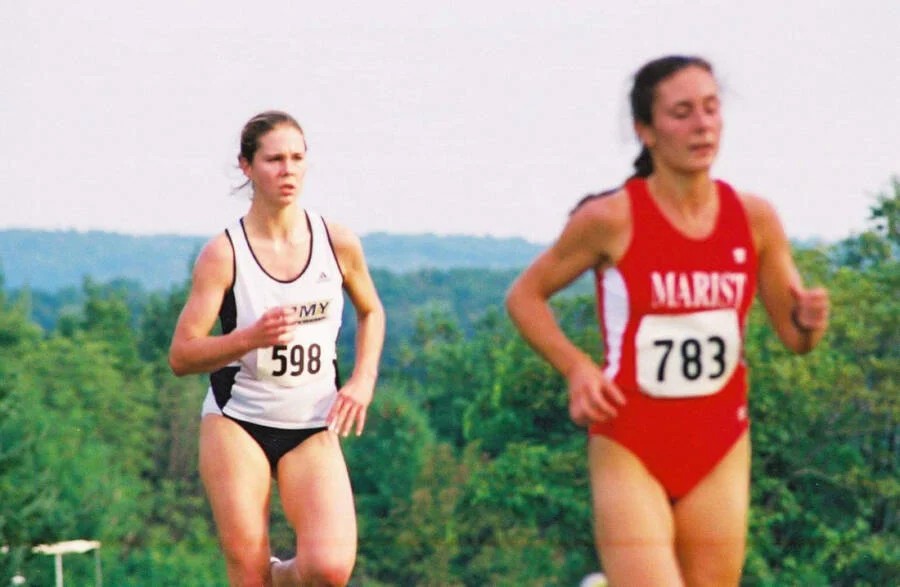
She earned a place at West Point, where she studied for several semesters before deciding military life did not fit and transferring to the University of Massachusetts Amherst to study nursing. Friends and family describe her as driven, competitive, and careful about how others saw her.
On paper, she looked like a standard overachiever, with strong grades and a busy schedule. Off paper, life had started to strain. By late 2003 she had picked up a minor legal issue over a stolen credit card number used to order food, a charge that would be dismissed after good behavior.
Her family later spoke about her long running difficulty with control and stress, including an eating disorder and pressure she put on herself to avoid disappointing her father. Those details come from interviews and later reporting, but they form part of the picture of her state of mind that winter.
The Week Before: Cracks In A Routine Life
On the night of February 5, Maura worked a campus security shift. During that shift she spoke on the phone with her older sister Kathleen and heard about another relapse into drinking after a stay in rehab. After that call, her supervisor later said she seemed checked out and tearful.
The supervisor escorted her back to her dorm after midnight when she appeared unable to keep working. When asked what was wrong, Maura gave a brief answer pointing back to her sister. That moment became one of the first flagged signs that something was weighing heavily on her before she left Amherst.
That weekend, her father Fred visited her at UMass. They looked at used cars and had dinner with one of her friends. Late that night, Maura borrowed his Toyota to go back to campus for a party. On the way back to his motel in the early hours of February 8, she crashed.
She hit a guardrail on Route 9 in Hadley, causing several thousand dollars of damage to the car. Police documented the crash, and her father later said she felt deeply upset and embarrassed about it. It added another layer of pressure on top of everything else happening that week.
Monday, February 9: Quiet Preparations
Shortly after midnight leading into Monday, February 9, Maura searched for driving directions on MapQuest, looking up routes toward the Berkshires and toward Burlington, Vermont. That detail comes from a later review of her computer use in her dorm room.
Around early afternoon that day, she emailed her boyfriend and told him she loved him but did not feel like talking to anyone, promising to call later. She also phoned a condo owner in Bartlett, New Hampshire, near an area where her family had vacationed in the past, asking about availability.
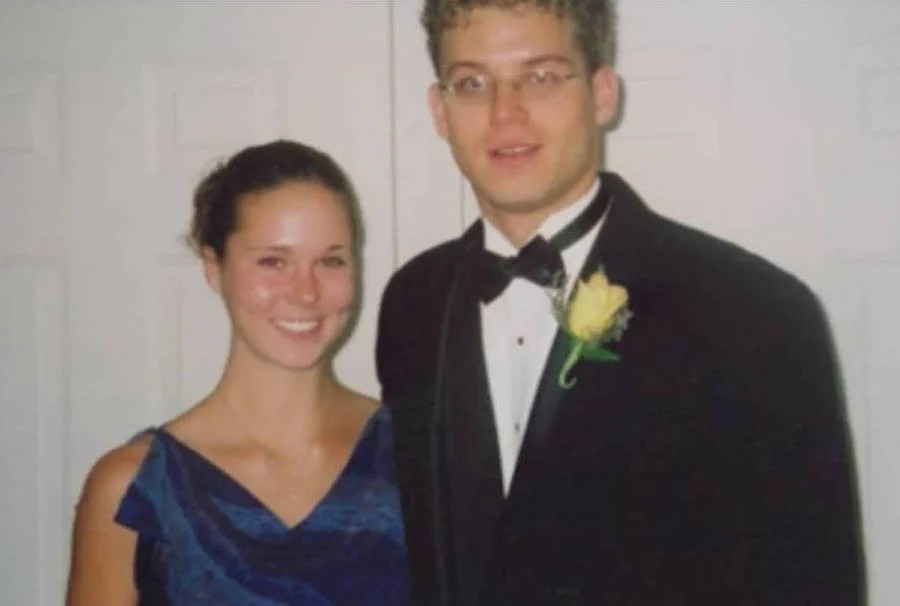
The condo was not rented to her, and there is no public record of a confirmed booking anywhere else. A little later, at 1:24 p.m., she emailed a nursing school supervisor and said she would be away for a week due to a death in the family. Family later confirmed there was no such death.
That afternoon she visited an ATM near campus and withdrew around 280 dollars, essentially clearing her account. CCTV images show her alone at the machine. From there she stopped at a nearby liquor store and bought around 40 dollars worth of alcohol, again alone on camera.
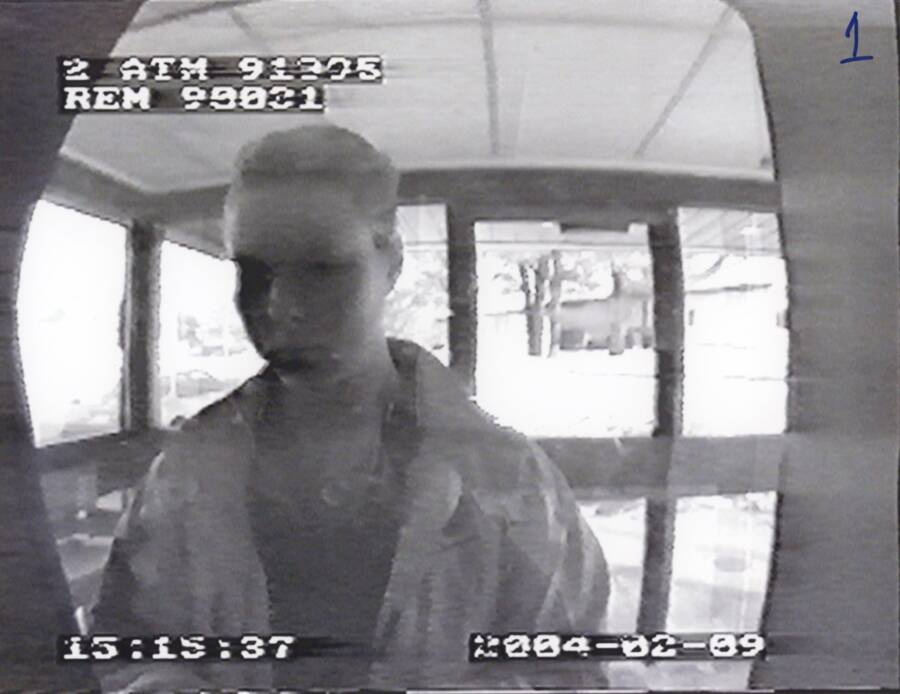
At some point she picked up official accident forms from the Registry of Motor Vehicles, paperwork related to the crash in her father’s car two nights earlier. By mid afternoon, the pieces of her day show a pattern of tying up loose ends, gathering money, alcohol, and documents, and quietly notifying only staff.
Between four and five in the afternoon, Maura left Amherst in her black Saturn. Investigators believe she took Interstate 91 north, then local roads toward New Hampshire, heading into an area she knew from past family trips and hiking visits. Her last known phone activity was a call to check voicemail at 4:37 p.m.
She did not tell friends or classmates where she was going. Later reviews of her emails and calls found no clear explanation of her destination or purpose, only the cover story about a family bereavement and the practical steps of preparing to be away from campus for a short time.
The Road To Route 112
From that point until after 7 p.m., the timeline relies on estimated travel time and later reconstructions rather than confirmed sightings. The usual drive from Amherst to the crash site near Woodsville, New Hampshire, takes several hours in winter conditions. The record does not show any recorded stops on the way.
Sometime after 7 p.m., a resident in the small community along Route 112 heard a loud thump outside her house. Looking out, she saw a car against a snowbank on a sharp curve, facing the wrong way in the eastbound lane. She called the Grafton County Sheriff’s Department at 7:27 p.m. to report an accident.
In early accounts, the 911 log noted that she thought she saw a man smoking in the car, but she later said she believed she had seen a red glowing light that might have been a phone screen rather than a person with a cigarette. That small correction became one of many disputed details.
Around the same time, a local school bus driver, Butch Atwood, finished his route and drove past the scene on his way home. He saw the Saturn off the road and a young woman standing outside the vehicle. He pulled over and spoke with her through his bus window.
According to his statements, he asked if she needed help and offered to call police. She told him she was shaken up but said she had already called roadside assistance and did not need him to contact anyone. He later said he saw no visible blood on her and that she seemed cold and upset.
Atwood drove the short distance home and, from there, called authorities anyway. Phone records place his call at about 7:42 p.m. The roads were snowy, the area lightly populated, and night had already set in. For a few minutes, the scene was simply one car, one driver, and a bend in the road.
When Police Arrived, The Car Was Alone
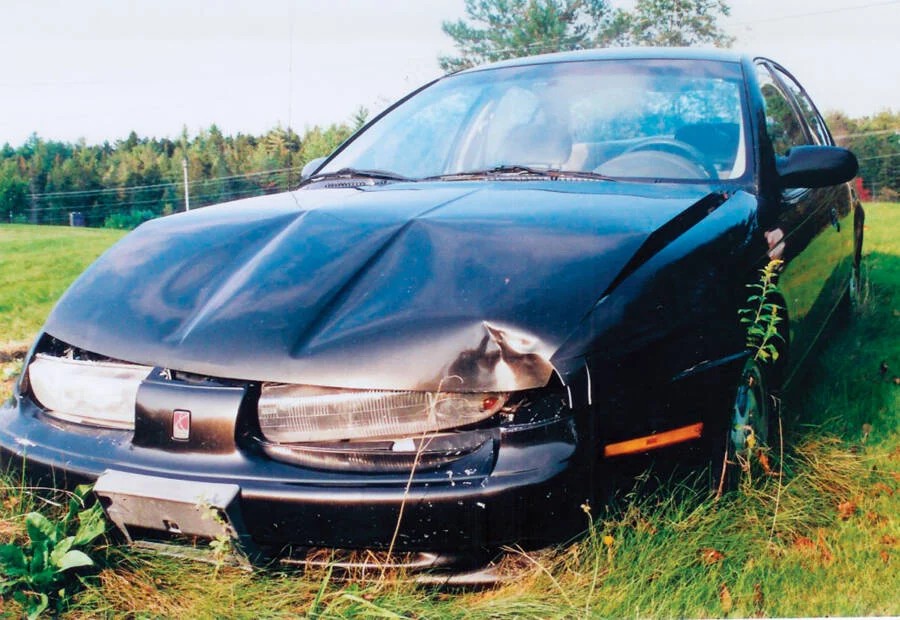
Local officers reached the scene within minutes of that call. The Saturn showed clear signs of impact, with damage to the front and a cracked windshield. Both airbags had deployed, and the vehicle was facing west despite being in the eastbound lane of Route 112.
Inside the car they found some of the alcohol she had bought in Amherst. Later accounts mention a box of wine with evidence it had leaked and an odor of alcohol in the vehicle. Her personal items, including some schoolwork and clothing, were still there. She was not.
There were no clear signs of a struggle around the car, no obvious footprints leading far into the woods that could be followed in the dark, and no stranded driver waiting for help. Officers had an abandoned vehicle in winter conditions on a rural road and a missing young woman who should have been close by.
From that point, the case shifted from routine accident response to something more complicated. What officers did and did not do in the hours that followed, and what the first searches found and missed, sit in [Part 2], which continues from this moment.