This article describes the torture and murder of 17 year old Kelly Anne Bates and includes disturbing details from forensic and court records. Reader discretion is advised.
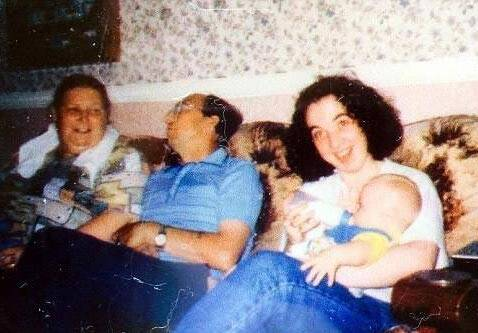
The kitchen smelled of tea gone cold. Margaret Bates stood at the counter in her Hattersley home that November day in 1995, waiting for her daughter, who had not been around for nearly two years. Kelly Anne, sixteen years old, had brought home the boyfriend she had been keeping secret.
When James Patterson Smith entered the kitchen, Margaret felt immediate discomfort. She would later tell the Manchester Evening News that the hairs on the back of her neck stood up. She saw a man who looked like John Denver, but had something rotten about him. She recalled seeing the bread knife in the kitchen and wanting to pick it up and stab him in the back.
She did not. Perhaps she should have. Within five months, her daughter would be dead, drowned in a bathtub after four weeks of calculated torture so extreme that it kept seasoned homicide investigators from sleeping at night.
How Kelly Anne Bates met James Patterson Smith in 1993 and why it still haunts Manchester
How does a smart, athletic seventeen-year-old girl, described as confident and mature beyond her years, end up bound by her hair to a radiator, starved, blinded, tortured, and ultimately killed by the man who claimed to love her? How did a system designed to protect the vulnerable fail so catastrophically that a teenager was tortured to death?
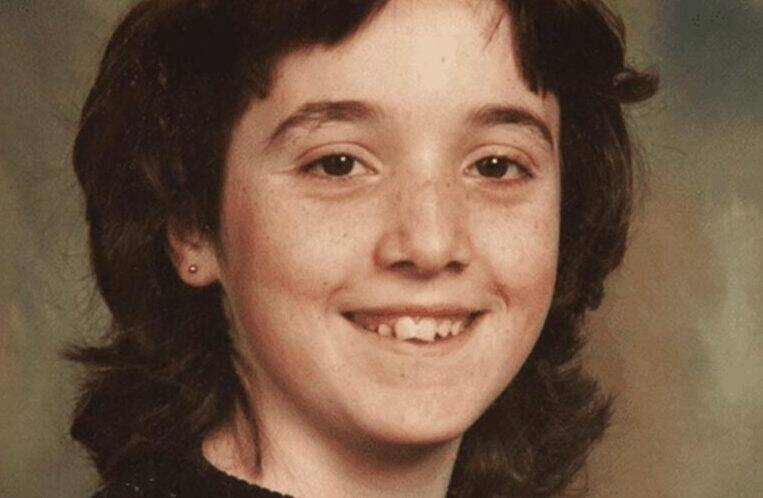
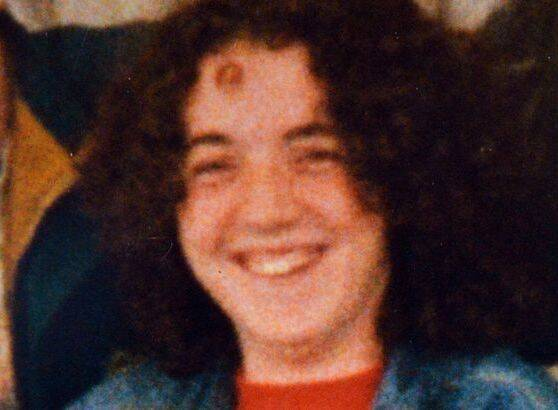
Kelly Anne Bates was born on May 18, 1978, in Hattersley, a working-class suburb approximately ten miles east of Manchester city centre. Her parents, Tommy and Margaret, raised her to be independent and outspoken. She was, by all accounts, the kind of girl who held her own with her brothers, loved sports, and set her sights on becoming a teacher.
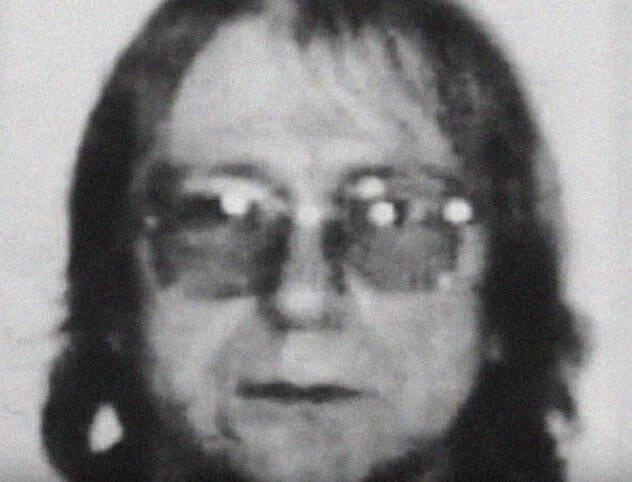
At fourteen, while babysitting for mutual friends in 1993, she met James Patterson Smith. He was forty-eight years old, more than three decades her senior, unemployed, and living alone in Gorton. He walked her home that night to “to keep her safe,” he said. It was the opening move in a grooming operation that would last two years.
Kelly Anne Bates did not know James Patterson Smith had done this before
What Kelly could not have known, and what her parents could not verify because Smith gave a false name and age, was that the man dating their teenage daughter already had a documented history of escalating violence against other women.
His marriage ended in 1980 after a decade of abuse. Between 1980 and 1982, he dated twenty-year-old Tina Watson and beat her regularly, even while she was pregnant with his child. Watson later testified that he used her as a punching bag and once tried to drown her in a bathtub. She escaped.
Then came fifteen-year-old Wendy Mottershead. Smith held her head underwater in a kitchen sink in another attempted drowning and she also managed to escape. In 1980, Smith sought psychiatric help for pathological jealousy, but it didn’t make any difference. Dr. Gillian Mezey, who later examined him for trial, determined he suffered from a severe paranoid disorder with morbid jealousy and lived in a deluded reality.
How Kelly Anne Bates was isolated in 1995 and why her parents could not get her out
For two years, Kelly hid the relationship from her parents. When she finally introduced him in 1995, she lied about his age, claiming he was thirty-two and not forty-nine, and she gave a false name as well.
At 16, Kelly could legally choose to stay with him, and her parents had no clear legal way to stop the relationship, even as they tried to intervene. Margaret noticed the control early. When Kelly visited, the phone would ring with eerie timing just as she walked through the door. Smith wanted to know where she was at all times. Her parents hoped the relationship would collapse under its own weight.
Instead, on November 30, 1995, Kelly moved into Smith’s two-bedroom semidetached house on Furnival Road in Gorton. She assured her parents she would stay in touch, but contact became increasingly occasional.
When she did visit home, she arrived with bruises and bite marks and explained them as accidents. In December 1995, she quit her job at K2 Graphics without explanation. The phone calls grew rarer. In March 1996, Margaret and Tommy received anniversary and birthday cards that appeared to be from Kelly, but only Smith had written in them. When Kelly’s brother tried to visit, Smith said she was not home. When a concerned neighbour asked after her, Kelly was briefly shown at an upstairs window like proof she was still there.
Margaret wanted to go to the house. She told the Manchester Evening News years later that she tried to persuade her husband to go over. She feared Smith had written the cards himself to wind her, or that he had Kelly tied up, or that he had hurt her so badly she could not write them herself.
Officers in the domestic violence unit gave Margaret information leaflets to pass to Kelly. Because Kelly was legally an adult and Smith didn’t have a prior criminal record, police didn’t have grounds to enter the home or investigate further. The system didn’t have a mechanism to check on her welfare without her consent, and Margaret never got the chance to give her daughter the leaflets.
“I have been in the police force for fifteen years and have never seen a case as horrific as this.”
— Detective Sergeant Joseph Monaghan
What forensic evidence shows about the torture of Kelly Anne Bates in March and April 1996
What happened inside Smith’s house in the final month of Kelly Anne Bates’s life can only be reconstructed through forensic evidence. Dr. William Lawler, the Home Office pathologist who conducted the post-mortem, had examined nearly 600 victims. He told Manchester Crown Court he had never seen injuries so extensive.
The pathology report documented more than 150 separate injuries across Kelly’s body. This wasn’t a sudden explosion of violence but systematic torture carried out over weeks, injury by injury, day by day.
Kelly was bound for the entire period. Smith tied her hair directly to radiators, knotting it so tightly around the metal pipes that she could not move her head without tearing her hair from her scalp. The knots were crude but effective.
When police found the house, clumps of her hair with skin and tissue still attached remained tied around radiators in multiple rooms. Some were as big as a fist. He also used ligatures around her neck, tethering her to furniture with rope or cord tight enough to leave deep grooves in her skin. She could not escape or run, and she could barely move her head.
He starved her systematically. Over four weeks, Kelly lost forty-four pounds from her already slight frame. Her body consumed its own muscle tissue trying to survive.
The pathologist noted severe muscle wasting in her arms and legs. Her ribs protruded and her face had become gaunt and sunken. In the final days, Smith denied her water as well as food. The autopsy found evidence of severe dehydration. Her kidneys showed signs of failure. Her organs were shutting down even before he murdered her.
Smith stabbed her repeatedly with kitchen implements, including knives, forks, and scissors. The pathologist documented dozens of puncture wounds across her arms, legs, torso, and face.
Some wounds were shallow, barely breaking the skin. Others penetrated deep into muscle. He stabbed into her mouth, puncturing the soft tissue inside her cheeks. He stabbed her tongue. The stab wounds in her lips went completely through the tissue. The inside of her mouth was so damaged that even if he had given her food, swallowing would have been agonizing.
He burned her with a hot iron. The distinctive triangular pattern of the iron’s base was seared into the flesh of her buttocks and thighs in multiple places.
The pathologist counted at least a dozen separate burn marks. The burns were deep, third-degree in places, destroying skin and fat down to muscle tissue. Some burns showed signs of infection, the edges blackened and weeping, suggesting they were inflicted days before her death and left completely untreated.
He boiled water in the kitchen and poured it over her feet. The scalding caused the skin to blister immediately, then peel away in sheets. Her feet showed extensive damage consistent with having boiling water poured over them repeatedly over several days.
He crushed her hands with deliberate force. The pathologist found multiple fractures in the small bones of both hands. Every finger had been broken, some in multiple places, and the metacarpal bones in her palms were also fractured. The patella in each knee was fractured as well. The force needed to shatter a kneecap is substantial and Smith had beaten her knees with something heavy until the bone gave way.
He mutilated her face and body with a blade. He cut pieces from both ears, slicing away the flesh with scissors or a knife, and portions of her earlobes were missing.
He also cut away parts of her nose, cutting into cartilage. He shaved off her eyebrows, then cut into the skin where they had been. He sliced into her lips, cutting the tissue. Deep cuts ran across her cheeks. The injuries to her face were extensive and clearly designed to disfigure and destroy her appearance piece by piece.
He mutilated her genitals with a blade or sharp object. The pathologist’s report documented extensive cutting and stabbing injuries to her genital area. These injuries were among the most disturbing in the case.
He partially scalped her. Large sections of hair and scalp were torn from her head, partly because she had been bound by her hair for weeks and the constant tension slowly ripped hair and skin from her skull. But the pathologist determined that significant portions had been deliberately torn away, likely grabbed in fistfuls and ripped off.
The prosecution would later argue that these injuries showed Smith’s intent to cause maximum psychological trauma and sexual humiliation. Sometime between five days and three weeks before her death, James Patterson Smith gouged out both of Kelly Anne Bates’s eyes.
Dr. Richard Bonchek, a specialist eye pathologist brought in to examine the injuries, testified at trial about his findings. Both eyes had been completely removed from their sockets. The eyeballs themselves were gone, likely destroyed. The injuries were consistent with manual gouging, likely using fingers or thumbs.
Kelly Anne Bates lived in complete darkness. She was blind, starving, and dehydrated, bound by her hair and neck to radiators and furniture. She could not see her torturer approaching, what he would do next, or anything at all.
The house at Furnival Road became a chamber of horrors. Blood spattered the walls in every room. It was on the ceilings, too. Kelly’s hair, torn from her scalp with skin still attached, remained tied around radiators and furniture. The police who entered the scene found evidence of sustained violence in every room where Smith had kept her.
When James Patterson Smith told Greater Manchester Police it was an accident
On the morning of April 16, 1996, James Patterson Smith walked into a Greater Manchester Police station and calmly reported that he had accidentally killed his girlfriend during an argument in the bathtub. She had inhaled water, he claimed, and his attempts at resuscitation had failed. He added that she often pretended to be unconscious to manipulate him.
When officers arrived at the house on Furnival Road, they found a scene that didn’t resemble an accidental drowning. Kelly Anne’s naked body lay in a bedroom. Blood spattered the walls and ceilings, and clumps of her hair, torn from her scalp with skin and tissue still attached, remained tied to radiators and furniture throughout the house.
What Manchester Crown Court decided in 1997 and what could have prevented Kelly Anne Bates’s murder
The trial began in November 1997 at Manchester Crown Court. Smith denied murder. His defence was that Kelly Anne had tormented him, taunted him about his dead mother, hurt herself to make him look worse, and dared him to harm her. His testimony portrayed himself as the victim of a teenage girl he outweighed by perhaps 100 pounds and had isolated from every support system.
The prosecution called former partners who testified to Smith’s pattern of violence, jealousy, and control. Tina Watson described being his punching bag. Wendy Mottershead described an attempted drowning in a kitchen sink. Evidence of attempted drownings in previous relationships suggested a signature pattern.
The jury deliberated for one hour. On November 19, 1997, they found James Patterson Smith guilty of murder. Mr. Justice Sachs sentenced him to life imprisonment with a minimum term of twenty years. From the bench, he called Smith highly dangerous, and said that, as far as it was in his power, Smith would abuse no more.
The trial was so disturbing that the court took the unusual step of offering professional counselling to all twelve jurors to help them process the photographs of Kelly’s injuries. All twelve accepted the offer.
“I wish I’d killed the monster who murdered our daughter the first time I saw him.”
James Patterson Smith remains incarcerated in the British prison system. As of 2026, he has served twenty-seven years of his life sentence. Kelly Anne Bates would have been forty-six years old had she lived. She never became the teacher she wanted to be or lived the fifty years she should have had.