Twin stories often invoke feelings of inspiration concerning the depth of human interaction and intimacy. Unfortunately, the June and Jennifer Gibbons story involves significant co-dependency and ultimate isolation. Feeling isolated from the larger society, the two sisters turned inward and rejected communication with everyone except each other.
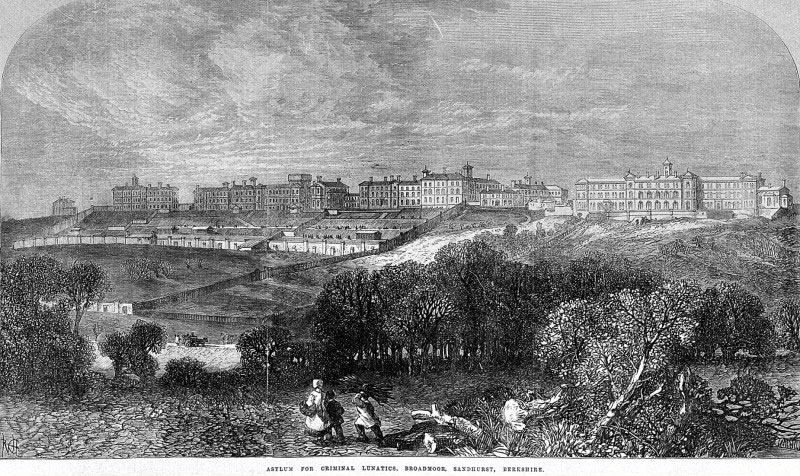
Following a series of the most unfortunate events, the two ended up being the youngest patients at Broadmoor psychiatric facility. There, they shared the same space with criminals such as the Yorkshire Ripper, Peter Sutcliffe, the Kray Twins, and Charles Bronson.
How June and Jennifer Gibbons became the “Silent Twins” at school
Their story begins at a military hospital in Aden in 1963, where their father was stationed. At the time, nothing seemed out of the norm for the identical twins. Soon afterwards, the Gibbons family moved to England as part of the Windrush movement. Unfortunately, this was not a good time for Caribbean immigrants in England.
Once the twins reached the age of speech, their parents quickly noticed that the two were struggling to achieve that milestone. According to a BBC Podcast, June told the interviewer that they had a speech impediment. Apparently, their parents could not understand a word they spoke, and neither could anyone else. This made them draw inwards and isolate to each other. They stopped talking to anyone except each other.
The rumor is the girls spoke a modified version of Baja Creole. This is a mix of English and Creole.
In school, the discrimination went beyond their skin color, considering they would not communicate with anyone else. The bullying was so intense that the school would dismiss them earlier than the others, to reduce the potential for harassment after classes.
Fearing for their lives, the girls grew inseparable, and that is when they got the name, ‘The Silent Twins’. The girls also refused to read or write in class, only choosing to mirror the other twin’s actions.
During yearly health checks, the medic, John Rees, was worried about their reflexes and interactive abilities. When he later spoke to Marjorie Wallace, the author of The Silent Twins’ book, he described a conveyor belt of white arms before happening upon a black one.
He proceeded to prepare what he named, ‘The Little Negress’, for the sting of the needle but she appeared to be in a lifeless, doll-like trance. An identical black girl who also did not react followed her to the needle. Barring the racist designation, he was essentially baffled by their behavior, and called a psychologist to the school for intervention.
Rees, in collaboration with the educational psychologists recruited to the case, decided that the twins should be transferred to the Eastgate Center for Special Education in Pembroke. Their parents, Aubrey and Gloria, also opted not to interfere with the decision being made for their daughters, as they felt it was a precarious situation.
They felt pressure to trust British authorities who knew what was best. At Eastgate, the girls performed better than in their previous schooling. However, during their therapy sessions, they responded with the same downcast eyes and stiffness.
There was also the theory that June wanted to communicate more but was hindered by Jennifer’s control through her eye signals. It was almost as if Jennifer were possessing June. Ultimately, a decision was made to separate the girls and send them to different boarding schools, with the hope that this would break their spell and allow them to interact with others.
This did not have the desired effect. Rather, both June and Jennifer retreated so far inside their psyches that they almost became vegetables. Allegedly, it would take two people to get June out of bed, and she would sit against a wall motionless. When it became apparent that this approach was not working, the girls were reunited.
When they left school at 16, the twins had little else other than the dream of becoming writers. But they noticed how far behind they were in almost everything else, from academic work to social life. Bowing to peer pressure, they started spending time with boys they knew from school in West Wales.
Not being able to judge these were the wrong crowd, the girls were introduced to smoking cigarettes, glue sniffing, and drinking vodka. As June reiterated, they were out of their depth and effectively beyond help. This quickly cascaded into vandalism and violence. The excitement of small-time crime generated a desire for continuous adrenaline and mischief.
The crime spree that led the Silent Twins to Broadmoor under the Mental Health Act
Newspaper reports from that era depict the girls going on a five-week crime spree. The list included breaking into a college, stealing supplies, and setting fire to a local tractor shop. Both twins journaled everything they did, and that was enough evidence for a confession when they were caught.
Interestingly, the parents were completely in the dark about what their girls had been up to. In prison, a psychiatrist evaluated the twins, and he recommended their institutionalization at Broadmoor Hospital under the Mental Health Act.
June recalled the psychiatrist’s damning statement that it was a hospital for people like them, who were psychopaths. This was aside from the fact that the twins would ensure the buildings were empty before setting them on fire, so they did have a respect for life. Similarly, none of their crimes involved a disregard for life. That said, the twins agreed to plead guilty following their solicitor’s advice.
According to June, they expected a sentence of about six months, but the judge threw the book at them, issuing a sentence of an indefinite period based on psychiatric reports. Hence, they were thrown into a more hostile world than they could ever imagine.
Rather than letting them retreat into their world, the doctors began treating the twins with high doses of antipsychotics. June summarized the experience as twelve years of hell, because they did not get to speak.

What happened inside Broadmoor and why only one twin came out
Days following their arrival at the facility, June slipped into a state of extreme lethargy. She attempted suicide within a few weeks and Jennifer attacked a nurse. They were denied access to each other for extended periods.
For a month, June would refuse to speak and respond to questions with a smile. Jennifer was injected with an anti-psychotic that made it difficult to read or write because of vision blurring. Visits from the family were few and far in between. They felt forgotten and lost in the system.
In her diary, June wrote that they worked hard to get time out. They went to the doctor and begged him, saying, ‘Look, they wanted us to talk, we’re talking now.’
He said, ‘You’re not getting out. You’re going to be here for thirty years.’ Those words crushed their souls, bleeding hopelessness into their reality. Despite this, June still fought. She wrote letters to the Home Office and the Queen, pleading for a pardon, but to no avail.
Their stay was also punctuated with flirtations and encounters with other unstable inmates. June’s first boyfriend was there for an armed robbery.
Jennifer’s boyfriend had previously killed two women. June mentioned seeing the Yorkshire Ripper having a meal across the field. She tried to avoid him most of the time despite his perceived interest in her. She also recalled an incident in which Ronnie Kray came to her table, took her hand, kissed it, and introduced himself.
They used to get Christmas and birthday cards from the Kray twins.
At times, Jennifer would have schizophrenic episodes, claiming there was gunfire outside her window. She also accused June of destroying her life and plotting against her. Probably out of devious interest, the staff decided to put them together on the same ward to see what would happen.
They would fight for days on end, kicking and scratching each other. This behavior surprised even the twins, and they would often reconcile afterward.
The twins were transferred to a lower-security hospital in 1993 after 11 years at Broadmoor. Jennifer then took a turn for the worse, after telling her sister she thinks she is going to die soon. They had planned to keep interacting with others. Not to fight or make a mess of things this time. They kept saying to each other, ‘Be happy. ’
However, upon arriving at the Caswell clinic, Tegwyn Williams, the psychiatrist, noticed that Jennifer was not doing too well.
It was clear that it was not a psychological issue but the doctors could not find any medical cause either. This young woman was previously in good spirits, but quickly deteriorated. She died soon after.
An investigation revealed the cause of death to be acute myocarditis, which is an inflammation of the heart. In 1994, June was released. In her writings, she frequently mentions her sister. “She’s still with me after 30 years. Every other morning, I think I’m in Broadmoor, I wake up in the morning, hear the jangling of the keys; it’s still with me even to this day.”
The only publicly available work by either twin is ‘The Pepsi Cola Addict’. The story follows a teen from Malibu who drinks 300 cans of Pepsi-Cola each day. This text is currently available at a few libraries worldwide.
Researchers like director Agnieszka Smoczyńska have also investigated the twin’s body of work through ‘The Silent Twins’, book. Through the author, Smoczyńska gained access to Jennifer’s letters, drawings, diary entries, and poetry.
When she thought of them as artists, she also felt the crucial moment was during their transposition from their inner world to reality. According to Smoczyńska, when directors invent something, they start from this world, which is reality. Then they go further into the inner world or their imagination.
To her, they were mature, tender and funny in their own way. They were withdrawn from the outside realm and immersed in a shared world. Their profound approach to art is yet to be replicated.
In the diaries, Wallace found nothing that demonstrated the twins were a danger to themselves or others. She then became their advocate and the custodian of their biographies and art materials. The twins were widely represented as symbols of the cruelty and ineptitude of the British judicial system and of inbuilt racism.
June currently lives alone near her family. She takes medication every day and can walk, though her speech is sometimes hard to understand. When she is excited, her speech is hurried and thick.
She mentioned her desire for a husband and children to Histon Als, of the New Yorker, but her longing to write seemed to fade more each day. Now that she was better able to communicate, the need to write seemed redundant. She points to a reduction in inspiration. The loss of her sister may have dampened the fuel as well.
She still visits her grave every Tuesday. In her words, “I was born a twin, and I’ll die a twin.”