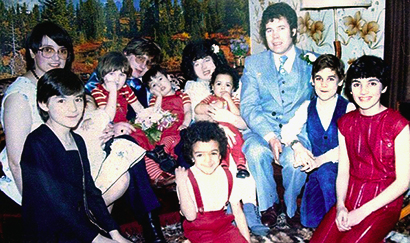
For years, 25 Cromwell Street looked like another narrow, lived in terrace in Gloucester. Then a missing daughter inquiry in 1994 turned the house into a crime scene and exposed Fred and Rose West to the world.
Investigators came to believe the Wests used the home as a controlled environment for abuse, imprisonment, and killing. Bodies were later recovered from the cellar and garden, tying private family life to a long list of disappearances.
The crimes attributed to the couple stretch from the late 1960s to the late 1980s. Victims included lodgers, vulnerable teenagers, and members of their own household, with patterns of coercion and secrecy recurring in case after case.
What makes the story enduring is how long it stayed hidden in plain sight. Neighbors saw a busy house, children coming and going, and tenants upstairs, while authorities missed signals that, in hindsight, look unmistakable.
How the Partnership Formed
Fred West was born in 1941 and grew up in a rural, impoverished environment. By adulthood he had a history of petty crime and instability, alongside allegations of sexual violence that would later frame how investigators read his life.
In the 1960s he married Catherine Costello, known as Rena, and became stepfather to her children. Two early disappearances, Anne McFall in 1967 and Mary Bastholm in 1968, would later be linked to him.
Rosemary Letts was born in 1953 in Devon and was still a teenager when she met Fred. Their relationship began with an extreme power imbalance and quickly became the central fact of her life.
On 29 January 1972, Fred and Rosemary married. The ceremony took place at Gloucester Register Office, with Fred incorrectly describing himself upon the marriage certificate as a bachelor. No family or friends were invited apart from Fred’s brother John, who acted as best man.
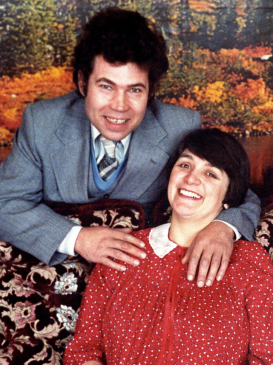
Several months later, with Rose pregnant with her second child, the couple moved from Midland Road to an address nearby: 25 Cromwell Street. Initially, the three-storey home was rented from the council; Fred later purchased the property from the council for £7,000.
To facilitate the Wests’ purchasing the property from the council, many of the upper floor rooms were initially converted into bedsits to supplement the household income.
To maintain a degree of privacy for his own family, Fred installed a cooker and a washbasin on the first-floor landing in order that their lodgers need not enter the ground floor where the West family lived, and only he and his family were permitted access to the garden of the property.
On 1 June, Rose gave birth to a second daughter. The date of her birth led Fred and Rose to name the child Mae June.
Shortly after giving birth to her second child, Rose began to work as a prostitute, operating from an upstairs room at their residence and advertising her services in a local contact magazine.
Fred encouraged Rose to seek clients in Gloucester’s West Indian community through these advertisements.
In addition to her prostitution, Rose engaged in casual sex with both male and female lodgers within their household, and individuals Fred encountered via his work; she also bragged to several people that no man or woman could completely satisfy her.
When engaging in sexual relations with women, Rose would gradually increase the level of brutality to which she subjected her partner with acts such as partially suffocating her partner, or inserting increasingly large dildos into her partner’s body.
If the woman resisted or expressed any pain or fear, this would greatly excite Rose, who would typically ask: “Aren’t you woman enough to take it?”
To many of these women, it became apparent Rose and her husband (who regularly participated in threesomes with his wife and her lovers) took a particular pleasure from seeking to take women beyond their sexual limits—typically via sessions involving bondage, as the Wests openly admitted to taking a particular pleasure from any form of sex involving a strong measure of dominance, pain and violence.
To cater to these fetishes, they amassed a large collection of bondage and restraining devices, magazines and photographs—later expanding this collection to include videos depicting bestiality and graphic child sexual abuse.
Rose controlled the West family finances, Fred giving her his pay packets. The room Rose used for prostitution was known throughout the West household as “Rose’s Room”, and had several hidden peepholes allowing Fred—a longtime voyeur—to watch her entertain her clients.
He also installed a baby monitor in the room, allowing him to listen from elsewhere in the house.
The room included a private bar, and a red light outside the door warned when Rose was not to be disturbed. Rose carried the sole key to this room around her neck, and Fred installed a separate doorbell to the household which Rose’s clients were instructed to ring whenever they visited the household. Much of the money earned from Rose’s prostitution was spent on home improvements.
By 1977, Rose’s father had come to tolerate his daughter’s marriage, and to develop a grudging respect for Fred. Together, he and Fred opened a café they named The Green Lantern, which was soon insolvent.
When Bill Letts discovered Rose’s prostitution, he would also visit to have sex with his daughter. By 1983, she had given birth to eight children, at least three of whom were conceived by clients.
Fred willingly accepted these children as his own, and falsely informed them the reason their skin was darker than that of their siblings was because his great-grandmother was a black woman.
When each of the West children reached the age of seven, they were assigned numerous daily chores to perform in the house; they were rarely allowed to socialise outside the household perimeters unless either of their parents were present, and had to follow strict guidelines imposed by their parents, with severe punishment—almost always physical—being the penalty for not conforming to the household rules.
The children feared being the recipients of violence from their parents, the vast majority inflicted by Rose, occasionally by Fred. The violence was sometimes irrational, indiscreet or just inflicted for Rose’s gratification; she always took great care not to mark the children’s faces or hands in these assaults.
Firstly Heather, and subsequently her younger brother Stephen (born 1973), ran away from home; both returned to Cromwell Street after several weeks of alternately sleeping rough or staying with friends, and both were beaten when they returned home.
Between 1972 and 1992, the West children were admitted to the Accident and Emergency department of local hospitals 31 times; the injuries were explained as accidents and never reported to social services.
On one occasion, as Stephen was mopping the kitchen floor with a cloth, Rose accidentally stepped into the bowl of water he had been using.
In response, Rose hit the boy over the head with the bowl, then repeatedly kicked him in the head and chest as she shouted: “You did that on purpose, you little swine!”
On another occasion, Rose became furious about a missing kitchen utensil, then grabbed a knife she had been using to cut a slab of meat, repeatedly inflicting light scour marks to Mae’s chest until her rib cage was covered with light knife wounds.
All the while, Mae screamed, “No, Mum! No, Mum!” as Stephen and Heather stood by, helplessly sobbing.
Even Fred occasionally became the recipient of his wife’s violence. On one occasion in August 1974, Rose chased after Fred with a carving knife in her hand; Fred was able to slam shut the door of the room into which he had run as Rose lunged at him with the knife, resulting in the knife embedding itself in the door, and three of Rose’s fingers sliding down the blade, almost severing them from her hand.
In response, Rose calmly wrapped her hand in a towel and said: “Look what you done, fella. You’ve got to take me to the hospital now.”
A Private System of Control
Cromwell Street functioned like a closed ecosystem. Fred controlled access, Rose controlled money, and both used fear to keep children quiet. The couple’s ability to appear ordinary outside the home was part of their protection.
Accounts from inside the family describe constant surveillance and shifting rules, where a child never knew what would trigger punishment. That unpredictability mattered, because it taught obedience and discouraged disclosure, even when outsiders asked direct questions.
One stepdaughter later said the abuse was presented as normal and enforced through threats, leaving her trapped in a routine of exploitation. The broader point is simple: the household treated children as property, not as people.
In September 1972, the Wests led eight-year-old Anne Marie to the cellar at 25 Cromwell Street. The child was ordered to undress, with Rose tearing her dress from her body upon noting the child’s hesitation. She was then stripped naked, bound to a mattress and gagged before Fred raped her with Rose’s active encouragement.
After the rape, Rose explained to the child: “Everybody does it to every girl. It’s a father’s job. Don’t worry, and don’t say anything to anybody.”
Making clear these sexual assaults would continue, Fred and Rose then threatened the child with severe beatings if they ever received word she had divulged the sexual abuse she endured at their hands.
Rose occasionally sexually abused Anne Marie herself, and later took extreme gratification in degrading her with acts such as binding her to various items of furniture before encouraging Fred to rape her, or forcing her to perform household chores while wearing sexual devices and a mini-skirt.
Fred and Rose forced Anne Marie into prostitution from the age of 13, telling clients she was aged 16. Rose was always present in the room when these acts occurred to ensure the girl did not reveal her true age.
On one occasion when Anne Marie was aged 13 or 14, Rose took her to a local pub, insisting she drink several glasses of barley wine. Several hours later, Fred arrived at the pub to collect Rose and Anne Marie.
Once they had left the premises, Anne Marie was bundled into her father’s van and beaten by Rose, who asked her: “Do you think you could be my friend?” before she was sexually abused by her father and stepmother.
A separate incident with a teenage nanny showed how the couple tested boundaries with outsiders, using charm and offers of work to bring a vulnerable young person into their home. The victim later reported assault, but the case narrowed.
In October 1972, the Wests hired 17-year-old Caroline Owens as their children’s nanny. They had picked her up one night on a secluded country road as she hitchhiked from Tewkesbury to her home in Cinderford, having visited her boyfriend.
Learning that Owens disliked her stepfather and was looking for a job, Fred and Rose offered her part-time employment as a nanny to the three children then in their household, with a promise she would be driven home each Tuesday.
Several days later, Owens moved into 25 Cromwell Street and shared a room with Anne Marie, whom Owens noted was “very withdrawn.”
Rose, who had begun to engage in prostitution by this time, explained to Owens that she worked as a masseuse when the younger woman enquired about the steady stream of men visiting her.
When Owens herself became the recipient of the Wests’ overt sexual advances, she announced her intentions to leave Cromwell Street and return home.
Knowing Owens’ habits of hitchhiking along the A40 between Cinderford and Tewkesbury, the Wests formulated a plan to abduct her for their shared gratification.
Fred later admitted that the specific intent of this abduction was the rape and likely murder of Owens, but that his initial incentive was to determine whether his wife would be willing to at least assist him in an abduction.
On 6 December 1972, the couple lured Owens into their vehicle with an apology for their previous conduct and the offer of a lift home.
Initially, Owens believed the Wests had been sincere in their apologies and obliged, believing she had simply mistaken their earlier intentions. Rose joined her in the back seat, with the explanation she wanted a “girls’ chat” as Fred drove.
Shortly thereafter, Rose began to fondle Owens, as Fred questioned whether she had had sex with her boyfriend that evening. When Owens began to protest, Fred stopped the car, referred to Owens as a “bitch” and punched her into unconsciousness before he and Rose bound and gagged her with a scarf and duct tape.
In her subsequent statement to police, Owens stated that, at Cromwell Street, she was given a drugged cup of tea to drink before being again gagged and subjected to a prolonged sexual assault from the Wests.
When Owens screamed, Rose smothered her with a pillow, further restrained her about the neck and performed cunnilingus on her. Realising the gravity of her situation, Owens ceased resisting their sexual assaults.
The following morning, having noted Owens’ screaming when one of his children had knocked on the door of the room in which she was restrained, Fred threatened that he and his wife would keep her locked in the cellar and allow his “black friends” to abuse her, and that when they had finished he would bury her body beneath “the paving stones of Gloucester.”
Fred then claimed he had killed hundreds of young girls, adding that Owens had primarily been brought to the house for “Rose’s pleasure.” He and Rose then calmly asked Owens whether she would consider returning to work as their nanny.
Seeing her escape avenue, Owens agreed and vacuumed the house to indicate her belief in becoming an extended member of the family. Later that day, Owens escaped from a launderette she and Rose had entered and returned home.
Although initially too ashamed to divulge what had happened, when her mother noted the welts, bruises and exposed subcutaneous tissues on her daughter’s body, Owens burst into tears and confided her ordeal.
Owens’ mother immediately reported her daughter’s story to police, and the Wests were arrested and charged with assault, indecent assault, actual bodily harm and rape.
The case was tried at Gloucester Magistrates Court on 12 January 1973, but by this date Owens had decided she could not face the ordeal of giving testimony.
All charges pertaining to her ordeal were dropped, and the Wests agreed to plead guilty to the reduced charges of indecent assault and causing actual bodily harm; each was fined £50 (equivalent to £619 in 2024) and the couple were allowed to walk free. When Owens heard this news, she attempted suicide.
Even when police became involved, the consequences were limited, and the couple returned to the same street with the same children. The larger lesson is how easily fear, shame, and procedural barriers can silence a victim.
Disappearances and Murders
The homicide timeline begins before Cromwell Street, with McFall’s disappearance in 1967 and Bastholm’s disappearance in 1968. In 1971, two more women vanished, including Fred’s first wife and an eight year old child.
From 1973 through 1975, several victims were killed and concealed beneath the cellar floor, with investigators later concluding the space was used for restraint and murder. After that period, killings continued, with burials shifting to the garden.
Victims included Lynda Gough, Carol Ann Cooper, Lucy Partington, Thérèse Siegenthaler, Shirley Hubbard, and Juanita Mott. Later victims included Shirley Robinson and Alison Chambers, both teenagers, and finally the couple’s daughter Heather, killed in 1987.
The methods described across cases share themes: grooming or luring, confinement, violence, and disposal designed to delay discovery. When relatives asked questions, the couple often offered a moving story, a new job story, or a runaway story.
Three months after the Wests’ assault trial, the couple committed their first known murder. The victim was a 19-year-old named Lynda Gough, with whom Fred and Rose became acquainted through a male lodger in early 1973.
Gough regularly visited Cromwell Street, and engaged in affairs with two male lodgers. On 19 April, she moved into their home on Cromwell Street. On or about 20 April, other tenants were told that she had been told to leave the household after she had hit one of their children.
This story was later repeated to Gough’s mother when she contacted the Wests to enquire about her daughter’s whereabouts.
When Gough’s dismembered body was found, the jaw was completely wrapped in adhesive and surgical tape to silence her screams, and two small tubes had likely been inserted into her nasal cavities to allow breathing.
Long sections of string and sections of knotted fabric were also discovered with her remains. Gough had likely been suspended from holes carved into the wooden beams supporting the ceiling of the cellar Fred later admitted he had devised for the purpose of suspending his victims’ bodies, and likely died of either strangulation or suffocation.
Her dismembered body, missing five cervical vertebrae, the patellae and numerous finger bones, was buried in an inspection pit beneath the garage.
From their later investigations, police and forensic experts concluded all the victims found in the cellar at 25 Cromwell Street had been murdered in this location, and that, like Gough, each had been dismembered in this location.
Five victims were murdered and buried in the cellar at Cromwell Street between November 1973 and April 1975. The first of these victims, 15-year-old Carol Ann Cooper, was abducted on 10 November 1973.
Cooper lived in the Pines Children’s Home in Worcester, and was abducted after spending the evening at a cinema with her boyfriend. She had been waiting for a bus in Warndon when she vanished, and was likely dragged into Fred’s car, where her face was bound with surgical tape and her arms bound with braiding cloth before she was driven to Cromwell Street.
At the Wests’ address, Cooper was suspended from the wooden beams of the cellar ceiling before her abuse and murder. As had been the case with Lynda, Cooper died from strangulation or asphyxiation, before her body was dismembered and buried in a shallow, cubic grave in the cellar.
Over the following 17 months, four further victims between the ages of 15 and 21 suffered a similar fate to that endured by Gough and Cooper, although the disarticulation conducted upon each successive victim, plus the paraphernalia discovered in each shallow grave, suggests each victim was likely subjected to greater abuse and torture than those previously murdered.
Following the murder of 18-year-old Juanita Mott in April 1975, Fred concreted over the floor of the entire cellar.
He later converted this section of the household into a bedroom for his oldest children, and he and his wife are not known to have committed any further murders until May 1978, when Fred—either with or without Rose’s participation but certainly with her knowledge—murdered an 18-year-old lodger named Shirley Robinson.
Robinson had first met Fred at The Green Lantern café in April 1977, and had taken lodgings with the Wests the same month. She was heavily pregnant at the time of her murder.
Although Rose—herself pregnant at the time—initially boasted to neighbours the child Robinson was carrying was her husband’s, she soon developed a deep resentment of Robinson, and the motive for her murder is likely to have been the removal of a threat to the stability of the Wests’ relationship.
Her body was buried in the garden of 25 Cromwell Street. It was extensively dismembered, but no restraining devices were found with these remains, making a sexual motive for this murder unlikely.
The unborn baby had been removed and had several bones missing. Shortly thereafter, Rose unsuccessfully submitted a claim for maternity benefit in Robinson’s name with Gloucester social services.
As had earlier been the case with Charmaine and Lynda, Fred and Rose allayed the suspicions of anyone who asked about Robinson’s whereabouts by claiming she had relocated to live with her father in West Germany.
The final murder Fred and Rose are known to have committed with a definite sexual motive occurred on 5 August 1979. The victim was a 16-year-old named Alison Chambers, who had run away from a local children’s home to become the Wests’ live-in nanny in the middle of 1979.
Chambers is believed to have lived within their household for several weeks before her murder, and Rose promised Chambers she could live at a rural “peaceful farm” she claimed she and her husband owned.
Her body was also buried in the garden of Cromwell Street, close to the bathroom wall, and although Chambers was likely dismembered, her skeleton was not marked by striations as the earlier victims’ bodies had been.
In an effort to allay any concerns from Chambers’ family (with whom she maintained regular correspondence), Fred and Rose later posted a letter, written by Chambers to her mother prior to her murder, from a Northamptonshire post box.
Heather and Mae West became the focus of Fred’s incestuous sexual attentions after Anna Marie ran away from home in 1979 after enduring a particularly severe beating from Rose to her stomach just days after being discharged from hospital for treatment of an ectopic pregnancy.
The frequency of the abuse endured by Heather and Mae increased when both girls reached puberty. Fred was overt and unapologetic in his conduct, and would justify his actions with the simple explanation: “I made you; I can do what I like with you.”
He further referred to his intentions to impregnate both his daughters on at least one occasion, and would occasionally force all his children to watch pornography with him.
As Heather, Mae and their younger brother Stephen were very close in age, the trio resolved that if their father asked either of the two girls to be alone in a room with him, they would only do so if at least one other member of the trio were present to avoid either girl being raped.
Both girls also developed a regime whereby they would only shower or undress when their father was either out of the house, or as her sister stood guard at the door. Stephen was also informed by his father that he would have to have sex with his mother by the age of 17 (in the event, his parents evicted him from their home when he was 16).
Although the girls were repulsed by their father’s behaviour, Mae—having once endured Fred’s throwing a vacuum cleaner at her when she remonstrated against his fondling her—developed a mechanism whereby she would tolerate Fred’s sexually fondling her, then jokingly brush aside any efforts he made to take the molestation further, whereas in her autobiography, Mae recollected that Heather “was affected quite badly by all of this. Even more than me.”
A strong suspicion remains that, by 1985 or 1986, Heather had been forced to engage in intercourse with her father, as by the mid-1980s, she developed classic symptoms of the distress felt by victims of child abuse: these included habits of her biting her nails until they bled; drinking alcohol; of warily watching her father through the corner of her eye wherever she was sitting or standing; expressing nervous fragility whenever in the presence of males; her sleep being repeatedly broken by nightmares; and her repeatedly bouncing back and forth as she sat on any chair.
This distressful behaviour led to Fred and Rose suspecting Heather had lesbian inclinations, and also resulted in her becoming the increasing recipient of taunts from her father (who had never particularly liked Heather) that she was “ugly” and a “bitch”.
On the occasions Heather remonstrated about the abuse to her mother, Rose would simply laugh at her distress.
Heather also expressed to Mae and Stephen her desire to run away from home and live a nomadic lifestyle in the Forest of Dean, and to never again see any human beings.
Heather did complain to friends about the abuse she and her siblings endured, and her external signs of psychological distress were noted by several of them.
Staff at the Hucclecote Secondary School, which Heather and her siblings attended, are also known to have expressed concern as to why Heather—a studious and obedient pupil—refused to obey orders either to change her clothing for, or shower after, sporting activities.
On one occasion, she was forced to take a shower, resulting in her peers and staff noting her arms, legs and torso were covered in welts and bruises in various stages of healing.
Heather attempted to excuse these injuries as having been obtained in fights with her siblings, but confided in one close friend that they had been inflicted by her parents, adding that her mother considered her a “little bitch” who deserved her beatings.
By the mid-1980s, rumours of Rose’s sex life had reached several of the children’s classmates, and although the West children had been instructed never to divulge details of their home lives to their peers, Heather confided to her friends that many of these rumours were true.
The father of one of these classmates was a friend of the Wests; as such, word soon reached Fred and Rose that Heather had divulged details of her home life—including details of her mother’s promiscuity—to her classmates.
Fred was so concerned by these revelations that he began to escort Heather to and from school.
After Heather left school in the summer of 1986, she applied for numerous jobs in an effort to leave Cromwell Street.
By June of the following year, she had pinned her hopes on escaping the household via obtaining a job as a chalet cleaner at a holiday camp in the seaside town of Torquay; she received notification that this application had been unsuccessful on 18 June 1987. In response, she crumpled into tears before her siblings Mae and Stephen.
That same evening, her whole family heard Heather sobbing aloud as she attempted to sleep, and according to Mae, she “cried all the way through the night”.
The following morning, on 19 June, Heather was “back to her usual self, looking miserable, biting her nails and sitting on the couch bouncing back and forth as she sat” as her siblings left the house to go to school.
When Heather’s siblings returned home, they were informed Heather had left to accept the job she had previously been refused in Torquay (a story the Wests also relayed to other family members); however, Rose told an enquiring neighbour that she and Heather had had a “hell of a row”, and that Heather had run away from home.
Later, to answer their children’s questions about why Heather failed to contact or visit her siblings, the parents claimed that Heather had eloped with a lesbian lover.
When Mae and Stephen suggested they report Heather’s disappearance to police, Fred changed his story yet again, saying it would be unwise to initiate a search for Heather as she was involved in credit card fraud.
On more than one occasion, Fred and Rose persuaded an unknown acquaintance to fake a phone call from Heather to her parents.
In the years following Heather’s disappearance, Fred occasionally jokingly threatened the children that they would “end up under the patio like Heather” if they either misbehaved or divulged the mistreatment they endured to anyone outside the household.
With Rose’s approval, he later constructed a barbecue pit immediately opposite where Heather had been buried, and placed a pine table on her grave for the children of the family to sit upon whenever the Wests held family gatherings in their garden.
Heather’s disappearance, Fred and Rose’s constantly changing stories about their daughter’s whereabouts, plus their allusions to foul play, ultimately led to police enquiries as to Heather’s whereabouts. These enquiries culminated in a search warrant being issued to excavate the Wests’ garden in February 1994.
The killings were also embedded in a wider web of exploitation, including abuse of children in the household and predation on vulnerable girls from care settings. That overlap between violence and exploitation is central to understanding the case’s scope.
1994: The Case Breaks Open
Heather’s disappearance became the hinge. By the early 1990s, concerns about the children and contradictions in the parents’ stories drew attention back to the missing teenager, and investigators began treating the absence as something more than rebellion.
In February 1994, police executed a search warrant at Cromwell Street and started excavating. Early discoveries in the garden quickly shifted the investigation’s scale, leading to deeper searches inside the house and a widening victim count.
Fred West began giving statements that alternated between admission and manipulation. Police recorded many hours of interviews, and his comments ranged from specific claims about individual victims to vague hints about others, creating both leads and confusion.
Before he could face a full murder trial, Fred died by suicide in prison on 1 January 1995. His death ended cross examination of his claims, and it left prosecutors to build the remaining case around physical evidence and witnesses.
Rose West was arrested and charged as the investigation developed. Her position was consistent: she denied murder and cast herself as controlled by her husband, while prosecutors argued she was an active participant in violence and abuse.
Trial, Sentencing, and What Still Feels Unfinished
In 1995, a jury convicted Rose West of ten murders, and she received a life sentence with a whole life order. The verdicts formalized her responsibility in law, even as she continued to contest the narrative publicly.
The aftermath reshaped Gloucester. The Cromwell Street house was demolished in 1996, and the site was redesigned to prevent it becoming a destination for souvenir seekers. For surviving family members, privacy became a form of survival.
Questions remain about whether the confirmed victims represent the full number. Fred hinted at additional killings in other places, and later police searches have pursued leads on long missing girls. The case still illustrates how offenders exploit weak oversight.
Fred and Rose West are known to have committed at least 12 murders between 1967 and 1987; many investigators, authors, and journalists who have studied the case believe there are other victims whose bodies have never been found.
Prior to his suicide, police had recorded over 108 hours of tape-recorded interviews with Fred, both when he had claimed to have acted alone in the commission of the murders, and when he had attempted to portray Rose as being the more culpable participant.
On several occasions, Fred made cryptic hints he had murdered several other girls, but refused to divulge any further information beyond that he had murdered 15-year-old Mary Bastholm in 1968 and buried the body on farmland near Bishop’s Cleeve.
He also claimed to have killed one victim while working on a construction project in Birmingham, and that other bodies had been buried in Scotland and Herefordshire.
“He said to me: ‘Can you remember helping me dig those holes in the garden when you were a kid?’ I said I couldn’t remember, but he said, ‘We did it together, you know.’ Then he said: ‘That’s where the girls were found, in the exact holes’.”
Stephen West, recounting an admission made while his father was on remand at HM Prison Birmingham, 1994
To his appropriate adult, Fred claimed there were up to 20 further victims he and his wife had killed, “not in one place but spread around”, and that he intended to reveal the location of one body per year to investigators.
While on remand, Fred made several admissions as to the fate of the victims buried at Cromwell Street to his son Stephen.
Much of this information was disjointed or told in a third party manner; Fred claimed that he had extensively tortured the victims prior to their murder, but had not raped them, instead engaging in acts of necrophilia with their bodies at or shortly after the point of death.
He also claimed the reason many phalange bones had been missing from the victims’ bodies was because the removal of their fingers and toes had been one of the forms of torture the victims had endured, with other torture methods including the extraction of their nails, acts of mutilation, and cigarettes being stubbed out on their bodies.
Furthermore, the locations of almost all the burial sites of victims—both discovered and undiscovered—was symbolic to Fred, as each had been buried at or very close to the location he had lived in or worked at the time of the victim’s murder.
1967
- July: Anne McFall, (18). McFall’s remains were found on 7 June 1994 in Fingerpost Field, Much Marcle. Her body had been placed in a rectangular pit and covered with loose topsoil. She had been pregnant with a daughter, and her pregnancy had been in its eighth month.
1968
- 6 January: Mary Jane Bastholm, (15). A teenage waitress at a café Fred frequented. Bastholm was abducted from a bus stop on Bristol Road, Gloucester. Fred confessed to police he had killed Bastholm after raping her in his car. She is believed to have been buried in Bishop’s Cleeve. Police were unable to charge Fred with this crime as they had no evidence. Her body has never been found.
1971
- c. 20 June: Charmaine Carol Mary West, (8). Fred’s stepdaughter. Charmaine was killed by Rose shortly before Fred’s release from Leyhill Prison on 24 June, likely in a fit of domestic violence. Her remains were initially stored in the cellar at Midland Road before Fred buried the child’s body in the rear garden of the flat.
- August: Catherine Bernadette Costello, (27). Rena is believed to have travelled to the Wests at 25 Midland Road to either enquire about or obtain custody of her two daughters in mid- to late-August 1971. It is believed Fred killed Rena to avoid any investigation into Charmaine’s whereabouts. She is believed to have been strangled to death by Fred before her extensively mutilated body was buried in Letterbox Field.
1973
- 20 April: Lynda Carole Gough, (19). The first sexually motivated killing the Wests are known to have committed together. Gough was a lodger at 25 Cromwell Street, and shared sex partners with Rose. Following her disappearance, Gough’s mother travelled to Cromwell Street to enquire as to her daughter’s whereabouts, and saw Rose wearing her daughter’s clothes and slippers. She was informed that Lynda had moved to find work in Weston-super-Mare. Lynda Gough’s remains were buried in an inspection pit beneath the garage, which was later converted into a bathroom.
- 10 November: Carol Ann Cooper, (15). Cooper had been placed into care following her mother’s death in 1966. She was last seen alive by her boyfriend in the suburb of Warndon boarding a bus to her grandmother’s home. Fred referred to Cooper as “Scar Hand” in reference to a recent firework burn she had sustained. Cooper was the final victim unearthed from the cellar. Her skull was bound with surgical tape and her dismembered limbs bound with cord and braiding cloth.
- 27 December: Lucy Katherine Partington, (21). Partington was an Exeter University student and the cousin of novelist Martin Amis. She was abducted from a bus stop along the A435. Her precise date of death may have been one week after her disappearance, as Fred admitted himself into the casualty unit of the Gloucester Royal Hospital with a serious laceration of his right hand in the early hours of 3 January, possibly sustained as he dismembered Partington’s body. Her body was discovered in the Cromwell Street cellar on 6 March 1994.
1974
- 16 April: Thérèse Siegenthaler, (21). A sociology student at Greenwich Community College. Siegenthaler was abducted by the Wests as she hitchhiked from South London to Holyhead. Fred mistook her Swiss accent to be a Dutch one, and always referred to her as either “the Dutch girl” or “Tulip”. She was reported missing to Scotland Yard by her family in Switzerland when communication from their daughter ceased. Fred later further concealed Siegenthaler’s remains by building a false chimney breast on her grave.
- 15 November: Shirley Hubbard, (15). A foster child abducted from a Droitwich bus stop close to the River Severn as she travelled home from a date. Aged 15 when murdered, Hubbard had been attending work experience in Worcester, and was last seen by her boyfriend, having promised to meet him the next day. Hubbard’s dismembered remains were found in a section of the cellar known to the family as the “Marilyn Monroe area”. Her head had been completely covered in tape, with a one-eighth-inch (3.2 mm) diameter rubber tube inserted three inches (7.6 cm) into her nasal cavity to enable her to breathe.
1975
- 12 April: Juanita Marion Mott, (18). Mott had been a former lodger at 25 Cromwell Street, but was living with a family friend in Newent when she disappeared. Mott is believed to have been abducted by the Wests as she hitchhiked along the B4215. In his subsequent confessions to police, Fred would refer to Mott as “the girl from Newent”.
1978
- 10 May: Shirley Anne Robinson, (18). Another former lodger at 25 Cromwell Street, Robinson was bisexual and engaged in casual sex with Fred and Rose. At the time of her disappearance, she had been eight months pregnant with Fred’s child, and her baby boy had been due to be born on 11 June. No sexual motive existed for this murder, and the prosecution contended at Rose’s trial that Robinson had been murdered as her pregnancy threatened the stability of the Wests’ relationship. Fred had originally planned to sell their baby to a childless couple and had professional photographs taken with Robinson for this purpose.
1979
- 5 August: Alison Jane Chambers, (16). Chambers had been placed into foster care at the age of 14, and had repeatedly absconded from Jordan’s Brook House. She became acquainted with the Wests in mid-1979, and Fred later claimed to his solicitor that Chambers had died as a result of Rose becoming “too bloody vicious” with her. Her dismembered body, missing several bones and with a leather belt looped beneath her jaw and tied at the top of her head, was buried in the garden of Cromwell Street. This was the final murder where a definite sexual motive was established.
1987
- 19 June: Heather Ann West, (16). Heather was likely to have been murdered because Fred and Rose considered her efforts to leave the household as a threat, as she divulged to her classmates the extensive physical and sexual abuse which occurred at Cromwell Street. Fred claimed he had not intended to kill his daughter, but carpet fibres found on two lengths of rope, discovered with her remains, suggested that she had been restrained and subjected to a sexual assault prior to her murder. Her body was dismembered with a heavy serrated knife and later buried in a hole in the garden, which Fred had his son dig, under the pretence of installing a fish pond. The 1994 police investigation into Heather’s disappearance led to the discovery of her body, and the arrest of both her parents.
- As well as the 12 confirmed victims, police firmly believe Fred is also responsible for the 1968 disappearance of 15-year-old Mary Bastholm, but to date no body has been found. West’s son, Stephen, has said he firmly believes the missing teenager was an early victim of his father, as Fred had openly boasted of having committed Bastholm’s murder while on remand.
- In May 2021, police announced their intentions to excavate the grounds of a café in Gloucester after receiving information that the body of Mary Bastholm may have been buried at this location. This search yielded no human remains. At the time of her disappearance, Bastholm worked at this café and Fred is known to have frequented the premises. Furthermore, he is known to have conducted repair work on the drains of this café in late 1967.
- No forensic evidence linked Fred to the murder of Anne McFall, and he always denied killing her. However, her body had been extensively dismembered, and was missing several phalanges. Furthermore, the cubic dimensions of the grave in which her body was buried match the modus operandi of Fred’s later murders.
Possible additional victims
Police firmly believe the Wests were responsible for further unsolved murders and disappearances. They believed they committed ten murders between 1971 and 1979, at least seven of which were for sexual purposes.
Following the rash of murders between 1973 and 1975, Fred and Rose are not known to have committed any murders until 1978. They committed one further murder in 1979, followed by an eight-year lull until they murdered their daughter in 1987.
Police do not know of any further murders they committed before their 1994 arrest, although Fred confessed to murdering up to 30 people, indicating up to 18 other undiscovered victims.
Fred’s remarkably relaxed, emotionally sterile attitude towards all aspects of his crimes startled many members of the enquiry team. This prompted Superintendent John Bennett to seek the assistance of a criminal psychologist for an expert opinion on Fred’s state of mind.
After analysing Fred’s behaviour throughout the extensive 1994 interviews, psychologist Paul Britton advised Superintendent Bennett that Fred’s blasé manner indicated he had committed so many offences over such a long period that he was now indifferent to the acts of torture, mutilation and murder.
Britton added that although an offender of this nature may come to offend less frequently, he would be unlikely to cease killing altogether.
One theory which may explain the sudden lull in the frequency of their murders is the fact that by the mid-1970s, the Wests had begun a practice of befriending teenage girls from nearby care homes, many of whom they sexually abused, with others encouraged to engage in prostitution within their home.
The Wests established acquaintances—including several of their lodgers—willing to partake in their shared fetishes, which may have satiated the couple to a degree.
Caroline Owens, Anna Marie West, and several other survivors of sexual assaults at the Wests’ hands each testified at Rose’s trial that she had been by far the more calculating, aggressive and controlling of the two.
Owens stated that, at one stage in her ordeal, Fred said that they had abducted Owens primarily for Rose’s gratification.
It is possible Rose’s increasing family size, plus the fact she and her husband had, by the mid-1970s, begun seeking avenues to exploit girls from care homes in addition to acquiring contacts—willing or unwilling—to submit to their fetishes, may have led Fred and Rose to decide that these avenues of control and domination were sufficient for their satisfaction.
Four young women similar in age and physical characteristics to those Fred was later charged with murdering in Gloucestershire are known to have disappeared during the time Fred lived in Glasgow—one of whom, Margaret McAvoy, Fred had been acquainted with via his employment as an ice cream van driver.
He had also rented a garden allotment adjacent to his house and which he frequently visited, although only a small section of this plot was ever cultivated.
To one neighbour, Fred remarked that he used the remainder for “something special”, about which he refused to elaborate. Much of the supposed cultivation of this allotment occurred in the early hours of the morning.
Police were unable to investigate whether any further bodies were buried at this location, as these allotments were built over in the 1970s as a section of the M8 motorway.