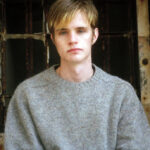
By the summer of 1973, Dean Corll, Elmer Wayne Henley, and David Brooks had been carrying out a perverse arrangement. Henley, 17 served as the 33-year-old Corll’s main procurer of boys, plying them with promises of marijuana and beer, along with a place to hang out.
Brook’s relationship with Corll also began with sexual favors. It then graduated to Brooks, enticing boys with drugs or rides for Corll. Brooks was also 17 at the time.
On the evening of August 8, Henley brought two friends to Corll’s home at 2020 Lamar Street. These were 19-year-old Timothy Cordell Kerley, who was already an acquaintance of Corll’s, and 15-year-old Rhonda Williams.
Kerley was the intended victim in this case. Henley was already seeing Williams romantically, and she had nowhere to stay that night, so he brought her along.
As Corll’s predelictions were mainly of teen boys, her presence broke the dynamic of what typically happened in the house. Corll then snapped and screamed at Henley for bringing a girl.
The argument escalated, and at one point after midnight, he produced a rope and handcuffs. These, he used to bind Kerley, Williams, and Henley, as well.
Corll told Henley that he was going to kill all of them. By that time, he had already killed 28 people, so there was no reason for Henley to think he was bluffing, considering he had lured victims to Corll for two years.
Henley tried to de-escalate the situation, telling Corll he would participate, assisting with Kerley and Williams. He talked enough until Corll’s anger cooled down, and uncuffed Henley.
Once he was free, Henley moved through the house. Corll began assaulting Kerley, who was still restrained on the floor. Henley then found a .22 caliber pistol, which was the same weapon Corll had previously used to execute his victims.
Henley confronted Corll with the gun, Corll taunted him to do it. According to Henley’s account, it went something like, “Go ahead, I dare you.” Corll did not believe Henley would pull the trigger.
He shot Corll six times to his forehead, back, and shoulder. Corll fell back and died almost immediately. At 8.24 am, Henley called the Pasadena Police Department, saying, “Y’all better come here right now! I just killed a man!”
Henley was immediately arrested on suspicion of murder. The police thought it was a single homicide, but Henley kept talking. He confessed that Corll had been murdering boys for three years.
Henley also gave the identities of three boys who had gone missing for years. They were Marty Ray Jones, Malley Winkle, and David Hilligiest.
The Candy Man
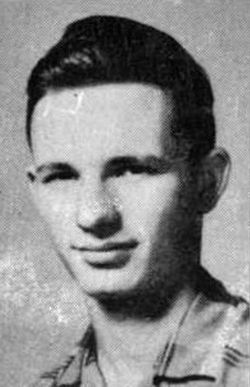
Dean Arnold Corll was born on December 24th, 1939, in Fort Wayne, Indiana. He was the firstborn of Arnold Edwin Corll and Mary Emma Robison. His parents divorced when he was still young due to frequent conflict.
His mother remarried multiple times, and relocated the family between Indiana and Texas. Corll was also diagnosed with a heart murmur from a young age following a bout of rheumatic fever, which excluded him from doing competitive sports.
He opted to channel his energy into music, playing the trombone in the band. By all appearances, Corll was neat, polite, and academically average.
In the 1950s, Emma began making pecan candies at home. Corll helped get the ingredients and made the deliveries when the final products were ready. When the family relocated to Houston, the candy operation grew significantly.
She opened the Corll Candy Company in 1963 after divorcing her third husband. It was based in Houston Heights, a low-income neighborhood. Incidentally, the company was also directly across the street from an elementary school.
Corll was appointed vice president, and it was there that the nickname “Candy Man” originated. He frequently gave out free sweets to the neighborhood children, and let teen boys hang out at the back of the factory, where he set up a pool table.
Corll also took groups of youth on trips to the South Texas beaches. Co-workers described him as odd, but polite. The reputation of being clean-cut, but generous, and of being great with younger people, helped him build a rapport.
Despite the heart condition, Corll was drafted into the Army in 1964. He served as a radio repairman and got an honorable discharge in 1965 after disclosing that he was a homosexual.
Corll then returned to Houston, and got a job as an electrician working for the Houston Lighting and Power Company. He still maintained connections with people from his past, and these created the avenue for him to groom victims for torture.
Grooming his Henchmen
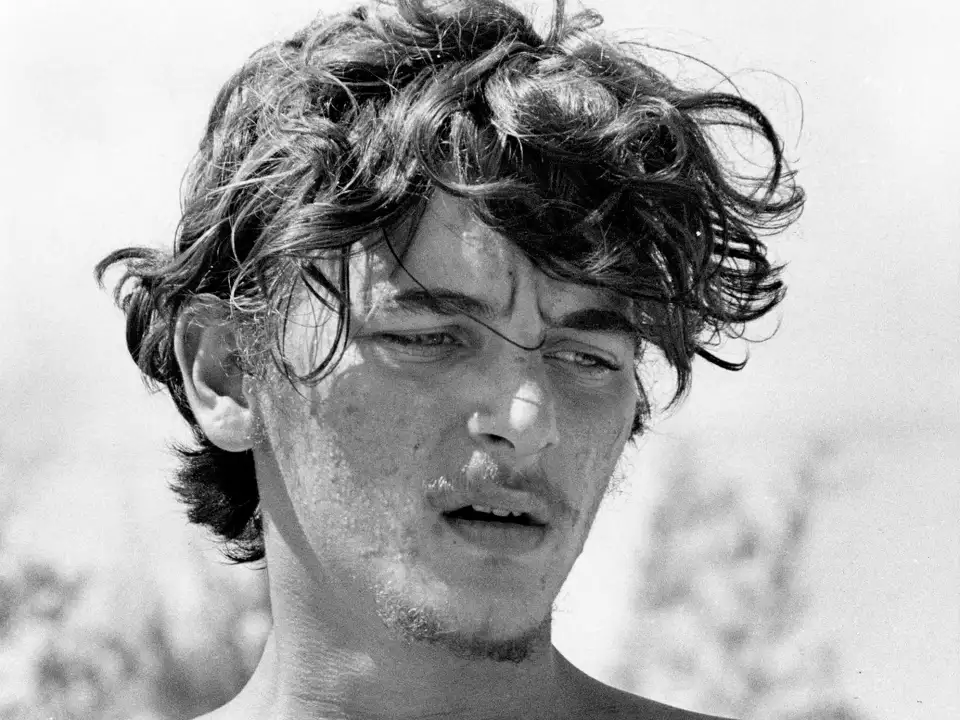
In 1967, when he was 27, Corll befriended 12-year-old David Owen Brooks. He was a sixth-grader whose parents were divorced, so Brooks drifted between his father’s and mother’s places.
Corll gave him money when he asked and took him on outings. Over the years, he groomed Brooks methodically, first getting him financially dependent.
In 1969, Corll paid Brooks in cash and a few gifts to allow him to be sexually intimate with him. When Brooks turned 14, Corll then showed him two boys he had tied up in his apartment. Corll later confessed that he had killed them.
To secure Brook’s silence, Corll bought him a green Chevrolet Corvette as a birthday present. He also offered Brooks $200 for every new boy that he would bring over.
Elmer Wayne Henley became a part of the gang in 1972. He was 15 and from a struggling family in the Heights neighborhood. Henley was introduced to Corll and soon came to enjoy the money, alcohol, and marijuana that secured Brook’s loyalty.
In return, Henley brought his access to the social world of classmates, neighbors, and friends. Corll paid them $200 for every new boy they brought to him.
The three operated by rotating their addresses. To avoid suspicion, Corll moved apartments several times between 1970 and 1973. He eventually settled into a rental house at 2020 Lamar Street in Pasadena.
Victims were either lured into Corll’s white Ford Econoline van or his Plymouth GTX. The Green Corvette he had given Brooks was also an option they used. They were offered rides, beer, or parties. To the boys, it seemed harmless because both Brooks and Henley were teens.
Luring and Locking in the Victims
Corll’s approach was consistent across the victim base. Once, a boy was in whatever house Corll happened to be renting at the time, and he was offered marijuana and alcohol.
Many of these boys were teens who had no apparent reason to be suspicious of a man who was happy to supply them with drugs.
They were also likely curious, so any free opportunity to indulge away from prying eyes was welcome. Getting their guards down through substances was deliberate.
Once they were drunk or high enough, Corll produced handcuffs. In some cases, it began as a dare or a game. Brooks and Henley would assist in restraining them if they were present.
The victim was secured to a torture board with holes drilled at each corner and fitted with handcuffs. The plywood measured 8 by 3 feet, so it could accommodate most teens.
Victims were put in a spread-eagled position, face up or down, and immobilized. The board was constructed according to this purpose. Once a boy was placed on the board, there was no version or sequence of events in which they left that house alive.
Corll’s crimes were sexually motivated; the abuse done was prolonged and sadistic. The victims were raped repeatedly over the course of their activity. They were also kept alive for days, restrained on the board throughout. Corll would return to rape them between periods when he came from work.
Post-mortem analysis of most of the bodies also confirmed anal trauma. In a sadistic twist, Corll also forced some of the boys to write postcards to their families. They claimed they had found work in a different city and would not be coming home.
Forensics noted the handwriting on these postcards was irregular, shaky, and unlike the victim’s normal writing style. However, when presented with these when the boys were initially missing, the police accepted them as proof that the boys had left voluntarily.
In many cases, they used the postcards to formally close the investigations into missing persons. A search of the property showed eight pairs of handcuffs. There were also multiple lengths of nylon rope, rolls of clear plastic sheeting, and a large hunting knife with a fixed blade.
A .22-caliber pistol and a portable battery-powered radio were also on scene. The radio was probably meant to drown out the screams. An electric motor with loose wires was used to deliver shocks to restrained boys. Dildos and other sexual paraphernalia, including lubricant, were also present.
It appeared that the sheeting collected blood and other bodily fluids. It was laid across the floor before Corll killed the victims. The body would be rolled in it, sealed, and then transported for burial.
Investigators found traces of blood soaked into the flooring beneath, where the sheeting had been laid across different rooms. This indicated the killings were done in more than one part of the house.
The fiber boat, which Corll kept in the shed and later used as a reference point for a boat storage rental. It was also found to contain trace evidence, as he used it to transport bodies to burial sites.
Corll killed his victims by either strangling or shooting them. The majority of them were strangled with a cord while still being restrained on the board. Corll looped the ligature around the neck of the victim and tightened it gradually. This was to extend the process of asphyxiation.
Medical examiners assessing the remains then found evidence of petechial hemorrhaging, which coincided with prolonged cases of strangulation.
Other victims were shot in the head with the .22 caliber pistol at close range. It was chosen because of the low-velocity round, which was less likely to exit the head cavity, cause blood spatter, and produce less noise.
Investigators also found evidence that Corll inserted objects into the victims before and after killing them. In some cases, the victims had been castrated. This was suppressed in the press at the authorities’ request.
The Burials
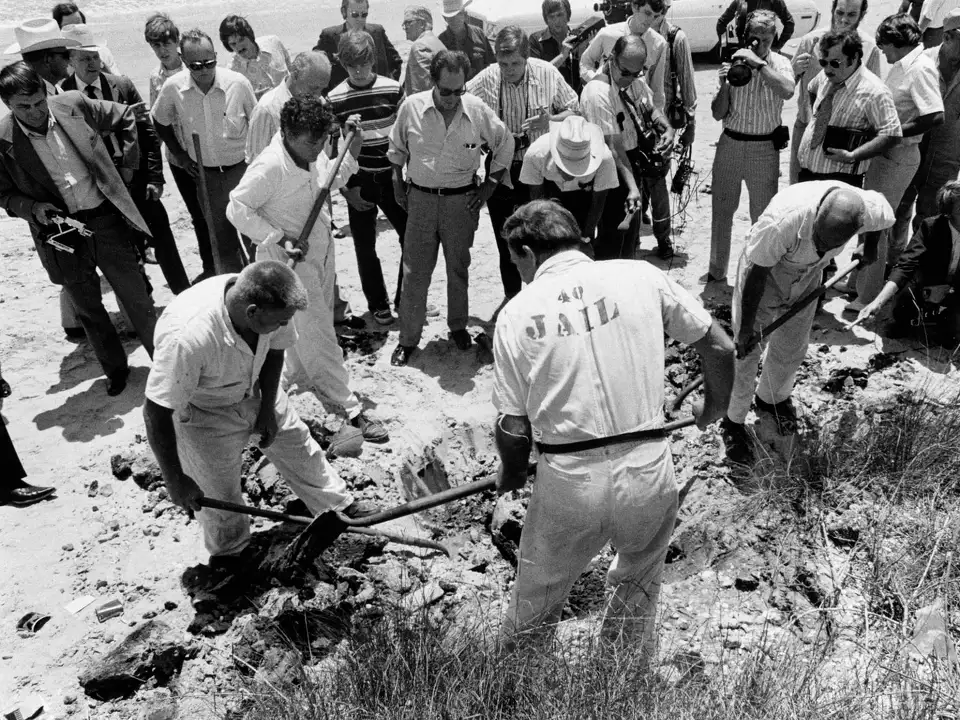
After killing a victim, the body was wrapped in a waiting plastic sheet, bound with a cord, and transported to one of three burial sites. The main site was stall number 11 at the Southwest Boat Storage on Silver Bell Street. It was a rented unit with no windows that Corll had specifically secured.
Seventeen bodies were exhumed from the dirt floor of this shed. Corll had buried them at different depths in proximity to each other. Lime was also scattered over the bodies to accelerate decomposition and reduce odor. Broken concrete slabs were also placed over the graves to further conceal them.
The condition of the bodies varied, though, as some were buried recently, allowing identification from physical features. Others had been in the ground for three years, so only their bones remained, along with belts, shoes, or some items of clothing. Some of the bodies were found with tape set to the jaw and ankles.
Four other victims were buried in a wooded place near Lake Sam Rayburn in East Texas. The remote nature of this site was intentional to avoid attention.
Six other bodies were buried on the beach at High Island on the Bolivar Peninsula. This stretch of coastline lies southeast of Houston. Salt marches and the heat in that area accelerated the bodies’ decomposition, making their identification more difficult.
Corll was not panicking as he was dumping the bodies. He used a methodical approach to rotate sites and manage the risk. There was no expectation he would ever be caught.
Identifying the Victims
The youngest of the confirmed victims was James Stanton Dreymala. The 13-year-old was abducted on August 3, 1973, and killed before Corll himself was shot.
The oldest was Jeffrey Alan Konen, 19, from the University of Texas. He had been hitchhiking home from Austin when Corll picked him up from Bergstrom Air Force Base on September 25, 1970.
Donald and Jerry Waldrop were taken together in January 1971. They were 15 and 13. Abducted and buried at the same site. Their father was told his sons were runaways before the Houston Police found the boat shed.
Billy Gene Baulch Jr, 17, and Michael Anthony Baulch, 15, were each recruited through the same network. The brothers also worked at Corll Candy Company at different times, and they were killed two years apart.
The boys Henley mentioned including David Hilligiest, Malley Winkle and Marty Ray Jones were all found at the Southwest boat storage. Hilligiuest and Winkle were buried among the early 1971 victims, while Jones was buried in 1973.
The seventeen bodies at the boat shed, four in the Angela County woods, and six on the High Island beach made for 27 confirmed victims. The 28th boy was Roy Eugene Bunton, 19, who was not correctly named until 2011 through DNA comparison.
The Trials and the Aftermath
Elmer Wayne Henley was brought to trial in 1974 for six of the murders. He was also accused of luring victims to Corll’s house, participating in torture and killing.
He pleaded not guilty to ‘murder with malice’. The jury convicted him of murder, and sentenced Henley to six consecutive 99-year terms. One for every murder charge.
This conviction was overturned after an appeal in 1978, and a retrial was held the following year. Again, Henley was found guilty of all six murders. This time, the sentences were issued concurrently.
Henley is currently in his late 60s and remains incarcerated at the Telford maximum security prison in Bowie County, Texas. He has been denied parole multiple times.
David Brooks was tried in 1975 by Judge William Hatten. He was convicted of one murder and received a life sentence with the possibility of parole. Brooks died in prison in 2020 at the age of 65 from COVID-19. He had served 45 years.
Investigators have never fully closed the case, though. Tim Miller, the Texas EquuSearch founder, claimed there may be as many as 20 other unidentified victims, considering the statements Henley made over the years. However, no other bodies were recovered.
The Heights is currently one of the most sought-after neighborhoods in Houston. The boat shed and candy factory are gone. The house on 2020 Lamar Street was also demolished.