WARNING: Transcripts attached at the end of the article. Reader discretion advised.
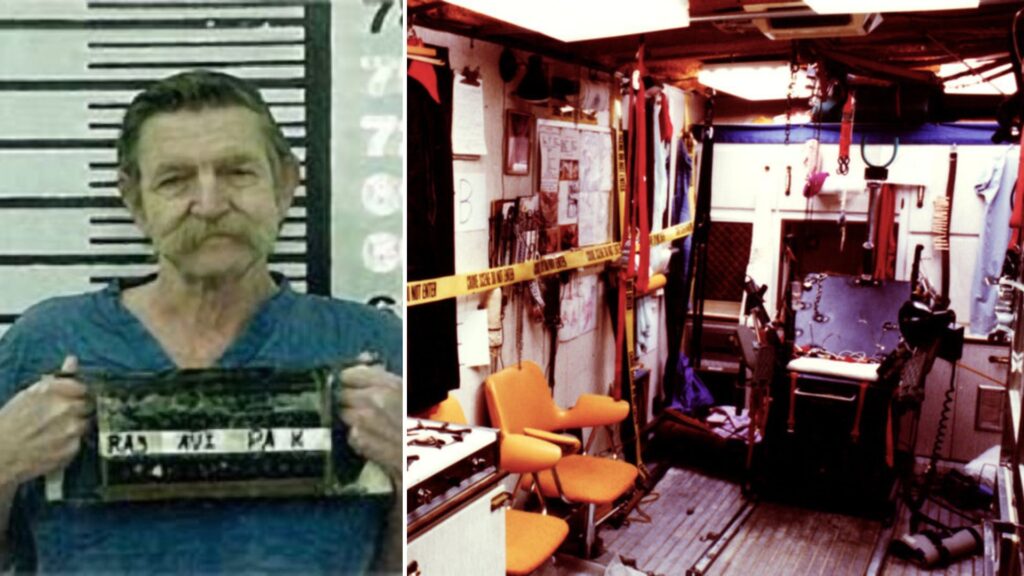
David Parker Ray was arrested on March 22, 1999 after a woman escaped from captivity near Elephant Butte, New Mexico, and reported she had been held and sexually assaulted. That escape triggered searches, a multi-victim prosecution, and federal involvement.
Ray lived in the Truth or Consequences and Elephant Butte area and worked around Elephant Butte State Park. Investigators and prosecutors focused on a property setup that included a trailer used to restrain victims and record assaults.
The case that made him publicly known was built from three main strands: a survivor who escaped in 1999, a second woman who reported captivity in early 1999, and a Colorado woman tied to a 1996 incident whose case became the first major trial.
Key dates at a glance
Feb. 17–22, 1999: A local woman later said she was lured to Ray’s home under the pretext of borrowing a cake mix, threatened, and held for several days before being released.
March 22, 1999: Cynthia Vigil was reported running for help wearing a padlocked collar and chain, leading police to Ray and his girlfriend Cindy Hendy and to searches of their property.
July 2000: Ray’s first trial on the Colorado woman’s 1996 case ended in a hung jury and mistrial, and prosecutors filed to retry him.
May 2000: One of the three accusers, Angelica Montano, died. Her death later mattered in how the final plea package was structured.
April 2001: Ray’s retrial in the Colorado woman’s case proceeded with testimony and video evidence; he was ultimately convicted in that case before later pleading to the 1999 case.
July 3, 2001: Ray entered a plea agreement covering state charges, and also agreed to plead to federal counts under the “white slavery act” language used in reporting.
Sept. 21, 2001: Ray was sentenced to more than 223 years in prison, with the sentence tied mainly to the 1996 and 1999 cases; the third case had been dismissed after the victim’s death.
2011: The FBI released images of 401 items seized in the investigation and asked families to review them; it also stated Ray claimed about 40 abductions and that no bodies had been found.
Victim 1: Angelica Montano (the February 1999 report)
Angelica Montano was one of the three women tied to the original charging structure. In a court-filed account summarized in AP coverage, she said she went to Ray’s trailer in Elephant Butte to pick up a cake mix for her boyfriend’s birthday and was then taken captive.
In that same reporting, Montano alleged she was restrained and tortured, including with electric shock and what were described broadly as sexual devices. The coverage makes clear she described confinement, assault, and coercion rather than consensual activity.
According to testimony summarized in later AP coverage from preliminary hearings, the woman connected to the “cake mix” lure said Ray pulled a knife, hit her, and held her for five days. She described being pressured into arranging a money order as part of securing release.
A particularly important procedural detail is that she tried to tell someone soon after release. An off-duty law enforcement investigator later testified she flagged him down and warned him he would not believe her, but he did not treat it as fully credible at the time.
That investigator said he later dropped her at a bus stop and did not report the encounter until he saw news of the other woman’s allegations. The same witness described seeing indicators consistent with restraint and shock allegations.
Montano later contacted police after hearing about the March 1999 escape case, according to the AP hearing coverage. That timing detail matters because it shows how the March 1999 incident pulled earlier allegations back into the system.
Montano died in May 2000, according to AP reporting, after prosecutors were attempting to contact her as a witness in Hendy’s sentencing. At the time of that report, the cause of death was not publicly confirmed and an autopsy was referenced.
By the time Ray was sentenced in 2001, AP coverage described Montano as the “third victim” who died of pneumonia the prior year, and stated Ray was never tried for her part of the case because the district attorney dismissed that case under the plea structure.
Victim 2: Cynthia Vigil (the March 1999 escape that broke the case)
On March 22, 1999, multiple calls came in about a woman trying to stop cars for help near Elephant Butte. She was described as naked except for a padlocked metal collar around her neck, and she reported she’d been abducted days earlier and tortured.
In early official framing and later summaries, the abduction is described as happening in Albuquerque with Ray and Hendy involved. Different media accounts describe the initial approach differently, including versions where she believed she was meeting for a date before the situation turned into coercion.
Cynthia Vigil’s own account, as reported in multiple places, included being restrained and controlled through force and fear. One report described her being shocked with a stun-gun type device and held in a trailer referred to in testimony as the “Toy Box.”
The escape mechanics show how fast the scene turned from allegation to evidence. Vigil said she waited until Ray left, reached keys left nearby, and tried to unlock restraints, leading to a violent struggle with Hendy before she got out.
The CBS contemporaneous report captures how that looked in court: the 22-year-old testified she fought back with an ice pick, ran for what felt like a long distance, and reached a trailer where a woman helped her and called police.
At the preliminary hearing stage, prosecutors described the indictment as sweeping. A judge said the evidence supported moving forward on a 25-count indictment, including kidnapping, aggravated battery, and sexual assault, and prosecutors said they believed there were additional victims.
In later AP sentencing coverage, Vigil testified in June 1999 about being flogged with leather whips and described being restrained and gagged. The record reflects she became overwhelmed on the stand and paramedics were called.
That same AP sentencing report includes a description of her alleging electrical shocks from a machine, and also shows the courtroom dynamic where she did not want to continue detailing specific acts. This is one reason later proceedings leaned toward negotiated resolutions.
Victim 3: The 1996 Colorado woman (Kelli Garrett) and the first major trial
The earliest charged incident in the core case package dated to 1996 and involved a Colorado woman. Prosecutors presented it as a kidnapping and torture event tied to Ray’s setup in the Elephant Butte area.
A key investigative detail is how she was located. AP reporting stated investigators identified and found her through leg and ankle tattoos seen on a videotape recovered from Ray’s trailer. That tape became a major piece of evidence in court.
At sentencing, the victim described a knife held to her throat and said a dog collar was used like a leash. She described fear and uncertainty about what would happen to her, and prosecutors used that to argue coercion and captivity.
In the April 2001 retrial, AP coverage described a videotape shown to jurors depicting the woman strapped to a medical-type bench with her eyes and mouth covered with duct tape. The article described Ray moving around her and adjusting straps.
The same courtroom coverage records her testimony that she was restrained and assaulted and could not scream because her mouth was taped. She told jurors she was scared and wanted to go home, and she appeared visibly distressed during playback.
A therapist treating her testified she showed symptoms consistent with post-traumatic stress, including nightmares and sleep disturbances. Under cross-examination, defense counsel suggested alternative sources of trauma, and the therapist conceded PTSD can have multiple origins.
The retrial also included family testimony about long-term behavioral changes, including vigilance and fearfulness. Another relative, Ray’s niece, publicly supported him and framed the events as consensual, reflecting the defense theme that the trailer represented fantasy rather than coercion.
Procedurally, the Colorado case is where the prosecution first hit a wall. The first trial ended in a hung jury, and Judge Neil Mertz declared a mistrial. Prosecutors filed to retry the case and emphasized scheduling challenges due to publicity.
AP reporting also makes clear the court’s evidentiary rulings shaped outcomes. Some evidence was excluded in the first trial, and prosecutors stated they would ask the court to reconsider exclusions before a retrial.
What police said they found: evidence, lists, tapes, and the “Toy Box” concept
Once the March 1999 escape led police to Ray and Hendy, investigators described collecting a large amount of material. CBS reported the investigation generated more than 1,000 pieces of evidence, more than 100 leads, and touched as many as 10 states.
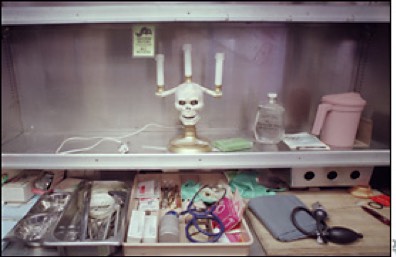
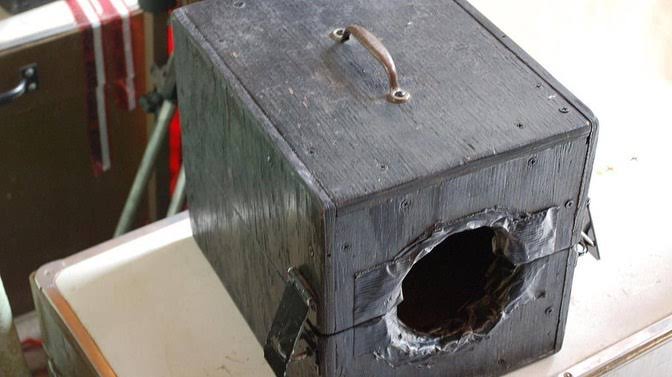
AP hearing coverage described items found in Ray’s recreational vehicle that were consistent with restraint and coercion, including taped materials, rope and chains, and a device described in ways consistent with electrical shocking allegations.
A separate AP trial story described a “list” posted on a wall inside the trailer detailing “how to handle people,” and noted prosecutors were allowed to introduce certain interior photos and a videotape, while other items required more foundation to be admitted.
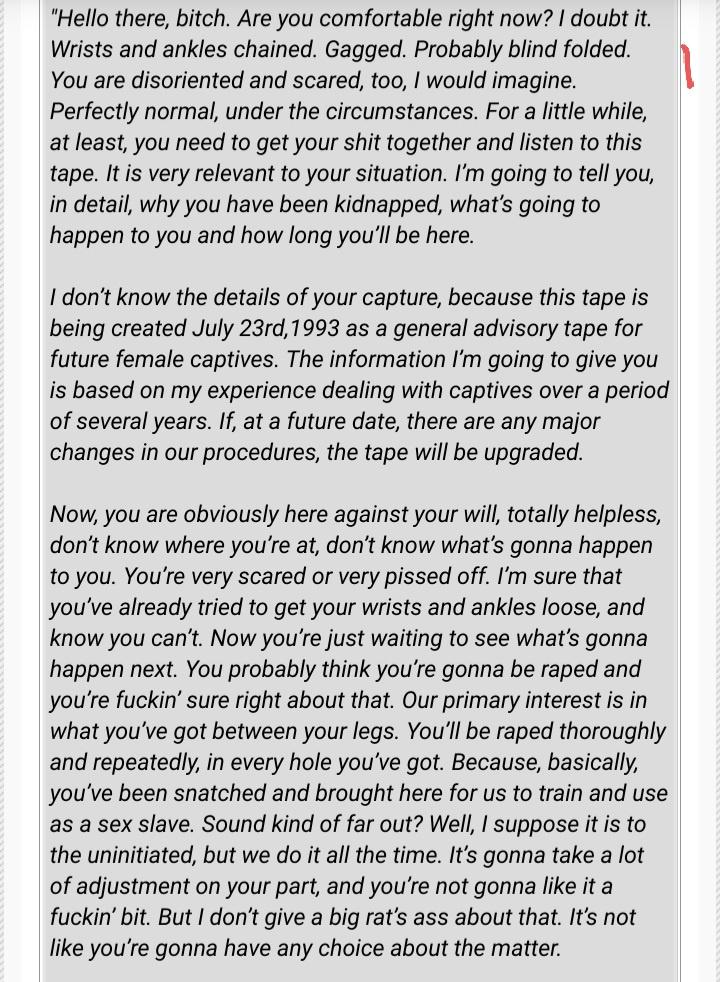
Several sources also describe an audio “instruction” tape Ray recorded and played for victims. Some outlets quote portions of it, and law enforcement sources described it as a tool for intimidation and control immediately after victims regained consciousness.
Importantly, courts did not always allow the full tape or the full set of seized items into every trial. That is visible in the AP reporting about evidence exclusions and in later summaries of why prosecutors wanted cases combined while the defense wanted separation.


The prosecution structure: three victims, separate tracks, and why cases were split
By mid-1999 and 2000, the case structure involved three alleged victims and multiple defendants. Ray faced a total count described in AP reporting as 37 counts across incidents from 1996 to 1999, with separate trials anticipated.
The state argued that separating cases made it easier to attack one victim’s credibility. In AP reporting, District Attorney Ron Lopez said the case became harder once it was “severed,” because three accounts together would be harder to discredit than one.
The defense wanted separation and argued jurors could not keep the cases straight if combined. That strategic split mattered because jurors in the first Colorado trial deadlocked, forcing prosecutors to restart with a retrial plan.
Co-defendants and the deals: Cindy Hendy and Glenda “Jesse” Ray
Cindy Hendy was charged alongside Ray and became central because prosecutors treated her as an active participant, not a bystander. CBS reported her charges were reduced as part of a proposed plea and cooperation structure early in the case’s life.
AP reporting later described Hendy pleading guilty to multiple counts as an accessory and conspiracy counts. By the time Ray’s July 2001 plea was discussed, Hendy was described as having received a 36-year sentence.
Ray’s daughter Glenda “Jesse” Ray was also charged. In the AP sentencing coverage carried by Chron and in the Las Cruces Sun-News clipping, Ray said he accepted a plea in part to keep his daughter from serving more prison time as an accomplice.
Those same reports describe her plea outcome as time served (about 2½ years) plus probation. The AP clipping even describes her speaking to her father in court after sentencing, underscoring how explicitly the plea was linked to family outcomes.
The 2001 plea package and the final sentence
After the retrial era and the evidentiary fights, Ray reached a plea deal in July 2001. AP reporting described him agreeing to plead to first-degree kidnapping, criminal sexual penetration, conspiracy, and to appear in federal court for two counts under the “white slavery act” wording in the agreement.
AP coverage also stated the maximum exposure discussed at the time included a 238-year maximum on state cases, plus up to 20 years in the federal case, and that prosecutors spoke with both victims before accepting the plea.
On Sept. 21, 2001, Ray was sentenced to more than 223 years. AP reporting stated the sentence stemmed primarily from charges involving the 1996 and 1999 victims, with the third case dismissed after Angelica Montano’s death.
That same AP sentencing report records the judge rejecting an attempt to withdraw the July guilty plea on the grounds of medication impairment, stating the court found Ray sufficiently coherent at the time.
The Marie Parker case and Dennis Roy Yancy: connected but not charged against Ray
Running alongside the sex-torture prosecutions was the disappearance of Marie Parker, last seen in July 1997. Dennis Roy Yancy was charged and later pleaded in connection with her death, while her body remained missing.
AP reporting in the compiled file says police tested human tissue recovered from Elephant Butte Lake in June 1999 and explored possible DNA links, including a potential comparison to Parker’s DNA. Analysts struggled to determine key identifiers from the material.
The compiled reporting also records prosecutors acknowledging they found no physical evidence tying Marie Parker to Ray’s trailer, even while they pursued searches in areas described during the investigation. That absence helped explain why Ray and his co-defendants were not charged with her murder.










After Ray’s conviction: what remained open
Ray died in custody in 2002, and the FBI later summarized him as having died while serving a sentence of more than 223 years. That removed any realistic chance of a full debrief about additional victims.
In 2011, the FBI released photographs of 401 items seized during the investigation, saying some items may have been taken from victims. The FBI also stated Ray claimed he abducted about 40 victims from several states, and said no bodies had been found.
Separate reporting shows investigators continued to treat missing-person angles as unresolved. The Los Angeles Times later wrote about renewed searches connected to suspected victims such as Jill Troia, with law enforcement still looking around the Elephant Butte area years later.