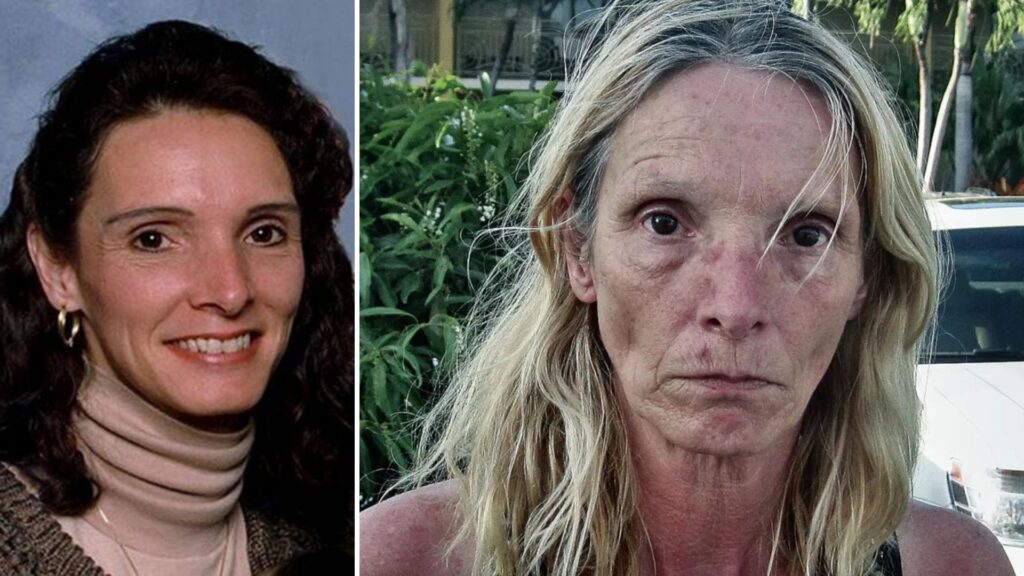
In 2002, Brenda Heist was a 42 year old mom in Lititz, Pennsylvania, juggling divorce, money problems, and two young children. One February morning she dropped her kids at school, did some chores at home, and then simply vanished.
Police and family first treated it like a classic missing person case. Her half finished laundry and defrosting dinner made it look as if she had planned to come back. Her car, a Mercury Mystique, later turned up abandoned in a nearby parking lot.
At the time, Brenda and her husband Lee were going through what friends described as an amicable divorce. They were applying for public housing assistance because money was tight. When her application was denied, the future looked even more unstable.
One day after that denial, Brenda sat crying on a park bench in Lititz. According to her later account to police, three people she had never met before, two men and one woman, approached her, listened to her problems, and invited her to leave town with them.
She told detectives that something inside her “snapped.” After dropping off her children and talking with the strangers, she agreed to go. The group drove her car to York, Pennsylvania, left it there, met other travelers, and started hitchhiking down Interstate 95 toward Florida.
From that point, Brenda cut off contact completely. She did not call home, check in with friends, or draw on her old bank accounts. For the family she left behind, it was as if she had been swallowed up in the space of a single day.
Lee reported her missing. Local police opened an investigation that grew to include state and federal agencies. Detectives interviewed friends, coworkers, neighbors, and relatives. Everyone repeated the same line, there was no way she would walk away from her children on purpose.
Because many missing mothers are eventually found to be victims of crime, investigators looked hard at the possibility of foul play. Lee faced whispered suspicion in the community, even though he cooperated with police and was never charged with anything.
He later told reporters that other parents refused to let their kids play with his children because they thought he might have done something to their mother. That social isolation became one of the most painful parts of the case for him.
As the months turned into years, the hope of finding Brenda alive faded. Police kept her photo on the wall at headquarters and reopened the case in 2008, but no body, no credible sightings, and no financial activity appeared. In 2010, a court declared her legally dead.
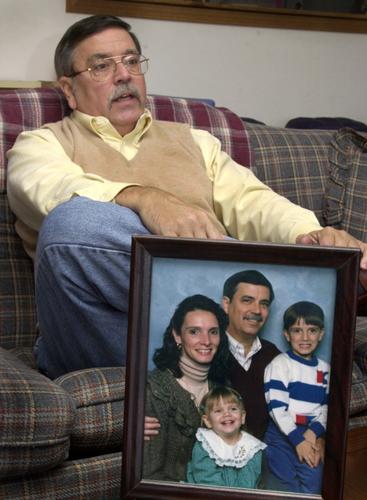
Lee collected on a life insurance policy and tried to give his children a stable life. Their daughter Morgan grew up, went to college, and their son Lee Jr pursued a career in law enforcement. They marked anniversaries without answers, assuming their mother had died.
All that time, Brenda was alive in Florida. When she finally talked to police and television interviewers in 2013, she described years spent hitchhiking, sleeping in tents and under bridges, and eating from restaurant trash bins while working occasional cash jobs.
She told detectives she had lived for about seven years with a man in a camper and then drifted back into homelessness, staying at a tent encampment run by a social service agency. She said she used a different name and kept her old life secret.
Records from Florida tell a more complicated story. Under the alias “Kelsie Lyanne Smith,” she faced charges for forgery and giving a false name to police after stealing a driving licence. She received probation but later failed to check in, which created an outstanding warrant.
A Florida woman named Sondra Forrester later told reporters that Brenda, using yet another variation on that alias, had worked as a cleaner in her Pensacola home and eventually moved in. She recalled weekend beach trips and fishing, not constant life on the streets.
According to Forrester, Brenda claimed to be a childless widow whose mother had died when she was very young. The story painted a tragic background but left out the two children growing up in Pennsylvania wondering why their mother never came back.
By early 2013, Brenda’s life in Florida had narrowed again. She said she was tired, sick, and felt she could not keep running. She believed there might be an active warrant linked to one of her aliases, which made her feel cornered.
On April 26, 2013, she walked into the sheriff’s office in Key Largo, Florida. She told staff she was on probation under another name and thought she was wanted. Then she handed over a Pennsylvania ID that carried her real name, Brenda Heist.
A routine database check lit up her file as “missing and possibly deceased” from Lititz. Florida authorities contacted Detective John Schofield in Pennsylvania, who had worked her case for years. He flew down to verify that the woman in custody really was the same Brenda.
Schofield later said she told him she had reached the end of her rope. She described the park bench meeting in 2002, the sudden choice to leave with strangers, and the long years of hiding her identity. She expressed shame and said she had “just snapped.”
The news reached Pennsylvania like a shock. Lee and Morgan assumed the detective was coming to tell them her remains had been found. Instead, they learned that the woman they had buried on paper was alive, in a Florida jail, talking about her decision to abandon them.
Morgan, then a college student, spoke publicly about her reaction. She described her mother as her best friend when she was a child and said she never imagined she would choose to leave. Her anger focused on the deliberate nature of that act, not a sudden accident.
Lee tried to balance criticism with a sense of closure. He said he was angry about what his children had endured, including years of suspicion aimed at him, yet he also told reporters he forgave Brenda and wanted to let the adult children decide whether to reconnect.
In the middle of all this coverage, Brenda agreed to a televised interview from jail with Dr Phil McGraw. It was her first extended public account of those eleven years, recorded while she wore an orange jumpsuit and waited on the outcome of her Florida legal issues.
In that interview she described leaving town with only twenty dollars, convinced she was a failure as a wife and mother. She said she had told herself that her children would be better off without her, a belief she now called deeply wrong.
She told Dr Phil she wanted their forgiveness but expected to struggle with forgiving herself. She talked about years of guilt, about waking up each day as a different person under a false name, knowing that her children might think she was dead.
The interview did not answer every question. It did not fully explain why she never picked up a phone or sent a letter, even once, during a decade that included birthdays, graduations, and holidays. It also did not square neatly with accounts from people who knew her in Florida.
Detective Schofield has said that it is common for law enforcement to assume violence when a mother disappears, and that Brenda’s case forced him to confront the possibility that some people do walk away. He still emphasised the scale of harm that choice caused.
For missing persons experts, the case became an example of how “walk off” disappearances complicate databases filled with presumed victims of crime. One national advocate noted that such reappearances are rare but documented, and that each one can reshape how families view their own unresolved cases.
Back in Lititz, practical questions followed the emotional ones. Courts had already issued a death certificate and a life insurance payout. Legal commentators pointed out that those orders might need untangling, although early reports suggested that the focus remained on family decisions rather than lawsuits.
Brenda’s own future was uncertain. At first, plans called for her to spend time with a brother in Florida and then live with her mother in Texas once the warrant matter was resolved. Those plans depended on the outcome of her probation violation and related charges.
Her children faced a different kind of uncertainty. Morgan said publicly that forgiveness was hard to imagine after eleven years without answers. She wanted to protect the life she had built and to decide at her own pace whether any contact was possible.
For Lee Jr, now in law enforcement, the case shaped both his childhood and his career. He grew up inside a missing persons story and then watched it flip into something closer to a story about choice, responsibility, and the limits of what police can see from the outside.
Seen from a distance, the Brenda Heist case often gets reduced to a headline about a mother declared dead who turned up alive in Florida. The full timeline is messier, filled with impulsive decisions, changing stories, and family members left to create their own kind of survival.
Her interview on television offered one layer of explanation, centred on stress, depression, and the belief that escape was the only path. The public record, including court files and witness accounts from Florida, adds another layer that suggests periods of relative stability hidden under false identities.
What remains is the bare outline. A mother under serious strain left a town in Pennsylvania with strangers, reinvented herself in Florida for more than a decade, and eventually walked into a police station and said her real name out loud for the first time in years.