In late December 1978, in Shakhty, Russia, 9-year-old Svetlana Gurenkova waited for a streetcar. Her attention was fatefully taken by the interaction happening some distance away involving a young plump girl, her age.
Standing next to this girl was a tall man who had glasses on and a long black coat. This man did not appear threatening in any way, but the manner he whispered to the girl invited suspicion as they did not seem related.
After some time, the man started off and the girl followed close behind. Soon the streetcar arrived and Svetlana soon forgot all about the girl and the strange man she had seen.
Two days later, the body of a young girl was found in the Grushevka River. Police identified the girl Lena Zakotnova. She was a 9-year-old who happened to be on her way home, and as it turned out the girl who went with the middle aged man.
When the two left, the man took her to a dilapidated hut, he had incidentally bought that year. The man led her inside and locked the door. He immediately pushed her to the floor, and started assaulting her. The man began choking her with his arm rendering her unable to scream.
He then blindfolded her using a scarf and then pulled her underwear, off so he could try to have sex with her. However, the man was unable to achieve an erection, and became angry. In his frustration, he used his fingers to penetrate the girl’s genitals.
All the while, Lena attempted to get out from under him and catch a breath. Fearing she might scream if given the chance, the man produced a knife and stabbed Lena three times in the abdomen. In a panic, the man picked up her body, and went to a remote part of the Grushevka River.
He did not notice her blood on the doorstep of his shack, or that he left the light on.
A witness would later describe to the police that a middle aged man in a black overcoat was seen talking to Lena, at the bus stop where she was last seen alive. The police also came up with a sketch that closely resembled the person of interest and circulated it in the area.
Alexsandr Kravchenko was a local that had previously served six years in prison for rape. Immediately, the girl’s body was found, he was considered a prime suspect and brought in for questioning.
While this was happening, a local mining school principal saw the police sketch of the suspected perpetrator, and noticed it resembled one of his teachers, Andrei Chikatilo. The authorities cautioned the principal not to tell anyone this information as they proceeded with the investigation.
Later, two detectives acting on the lead found traces of blood on the steps of a broken down shack. Inquiries to the neighbors revealed that the structure was owned by Andrei Chikatilo.
He was promptly called in, but was released after his wife corroborated a story that he was with her the entire last evening. The evidence against Chikatilo was significant, but the police opted to push the narrative of Kravchenko’s guilt.
Kravchenko initially denied any involvement in the killing of the girl. He also had a strong alibi of being home with his wife, and a friend of the family that afternoon.
Police then threatened the wife, and her friend saying they would be charged with being an accomplice to murder, and perjury. They retracted their statements and stated Kravchenko was not home until late that evening.
Disheartened by their change in testimony, Kravchenko confessed under duress. During his trial in 1979, he again retracted the confession saying it was coerced, but Kravchenko was convicted and sentenced to death.
In 1980, the sentence was commuted to 15 years. However, following pressure from Lena’s relatives, he was retried, convicted and sentenced to death again. Kravchenko was executed by firing squad in 1983.
Chikatilo might have narrowly escaped prison, but the killing of Lena awoke his taste for murder. His spree would earn him the designation, ‘Butcher of Rostov’.
The Butcher of Rostov
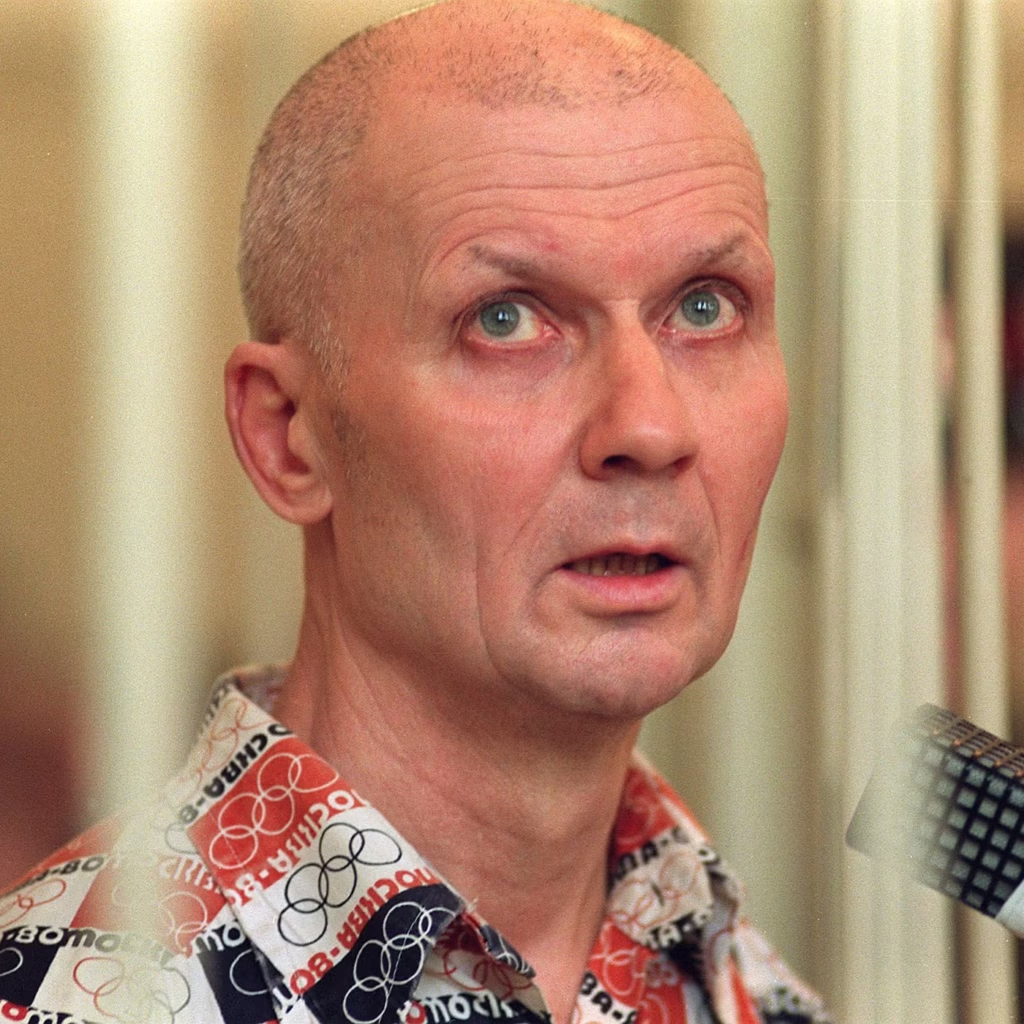
Andrei Romanovich Chikatilo was born in rural Ukraine on October 16, 1936. At that time, the country was part of the Soviet Union, and suffering under Stalin’s collectivization policies.
This system led to the Holodomor famine, which caused the death of millions. Chikatilo’s mother reiterated to him when he was younger that he had an elder brother who was kidnapped and eaten by starving neighbors.
This was never confirmed, but the story apparently stuck with him as he acted out his trauma on future victims.
His mother and father were farm laborers who shared a single room hut with him. During the war, Chikatilo also witnessed the violence and brutality of German occupying forces. Later on, he would admit fantasizing about luring soldiers into the woods to kill them.
Chikatilo’s father was wounded in World War II and captured as a prisoner of war. This carried stigma in the Soviet Union, and reportedly affected the family’s social standing.
His father’s status harmed the family’s ability to gain any upward mobility, hence their designation as laborers after the war. Chikatilo himself was a frequent bedwetter, and often beaten by his mother as punishment.
His teen years did not come with any relief either. Chikatilo was a good student, but he still failed his university entry exams. Opting to focus on the military, he completed the standard period of compulsory military service for young Soviet males. His service was described as disciplined and uneventful.
After getting out of the military, he got a degree in Russian literature, and became a secondary school teacher, working in homes for street children.
Chikatilo also suffered from impotency which made him largely unable to have penetrative sex.
This condition along with an obsession with violent sex only exacerbated the deterioration of his mental state. Compounded with childhood trauma, it developed into compulsions.
Chikatilo lay low for the next three years after killing Lena and almost getting caught. Investigators believe he was letting the dust settle before striking again.
A Pattern of Violence Develops
In 1981, Chikatilo was triggered into enacting his dark fantasies again after losing his teaching job. His career had come to an end following a slew of sexual misconduct complaints by children of both sexes at the school.
As a factory supply clerk, he was required to travel across the soviet union for logistics coordination. In September 1981, Chikatilo spotted a 17-year-old boarding student called Larisa Tkachenko.
Chikatilo tempted her with vodka and promises of a good time. He lured her to some woods near the Don River. When he was sure they were alone, Chikatilo threw her down, and tried to rape her.
He was not able to get an erection so he became furious and began beating her to death. To stop her from screaming, Chikatilo stuffed her mouth with mud, before strangling her.
Afterwards, he mutilated the body and tore one of her nipples off with his teeth. Chikatilo used torn pages of newspaper and leaves to cover the body.
Nine months later, his job had him travel to the southern part of the Rostov region for a vegetable consignment. He came upon 13-year-old Lyubox Biryuk. She was walking home, past an unfrequented bus station, and Chikatilo pounced.
He dragged her into the bushes, tore off her dress, and stabbed her to death. Her body would be discovered two weeks later. The medical examiner would find twenty-two knife wounds to the head, neck, and eyes.
By this time, Chikatilo was escalating his appetite for violence. On December 11, 1982, six months after Biryuk, he came across Olga Stalmachenok who was on a bus headed to her parents’ house in Novoshakhtinsk.
He managed to persuade the 10-year-old girl to get out of the bus and follow him. Chikatilo took Olga to a cornfield on the outskirts of the city and stabbed her more than 50 times. He also excised her lower bowel and uterus.
Over the course of 1983, Chikatilo killed six more. Two of these victims were young males. This caused significant confusion among the investigators.
They had no experience with serial killers and were operating under a regime that refused to believe such criminals existed in the Soviet Union. The addition of male victims to the roster made them start looking for multiple suspects.
After killing a girl in December 1983, Chikatilo lay low for another six months. But it did not take long before he was back to his obsession. His next victim was Laura Sarkisyan, a 15-year-old Armenian.
In her case, the body was not found until he was later caught, and confessed to her murder. He also directed the police to her grave.
In many of these cases, Chikatilo ate the sexual organs of the victim or removed body parts like the nose, or tongue.
Earlier on, he would damage the eyes by stabbing the sockets or removing the eyeballs. This, he believed, would remove the possibility that the victim kept an imprint of his face, in their eyes, even after their death.
The Investigation and Operation Forest Path
By January of 1983, police had determined four of the victims had been killed by one person. A team based in Moscow, headed by Major Mikhail Fetisov, was sent to Rostov. The initiative was called Operation Forest Path.
Fetisov’s team faced structural issues from the beginning. The investigation was based on sex offenders and the mentally ill, but the interrogation methods used by the local police often solicited false confessions from prisoners.
These left the forensic analyst, Viktor Burakov, skeptical of the majority of the confessions that took place. Some of the suspects were incidentally given long prison terms, while others committed suicide.
However, after every confession or guilty conviction, another body would surface, showing they had not caught the right person.
The forensic evidence did point to a killer with blood type AB, after semen was recovered at many of the crime scenes. In September 1984, through a stroke of luck, Chikatilo was arrested after being spotted behaving suspiciously at a bus station.
His briefcase was found to have a knife, a towel, rope, and a jar of petroleum jelly. His blood type was tested and came back as blood group A.
What the investigators did not know, was that Chikatilo belonged to a minority group known as ‘Non-secretors’. These individuals’ blood type cannot be determined by anything other than a blood sample and the police only had semen samples.
He was released in December 1984. After this Chikatilo maintained a low profile, but it was not for long. By August the next year, he had murdered two women in separate incidents. It was unusual however, according to police because the tempo of murders was previously more than 10 in one year.
By 1988, the tempo of killing resumed. He avoided public transport routes as he saw that these were surveilled by police. He killed two women and seven boys in 1990. The killings were also more brutal than before involving mutilation and cannibalism.
Between 1988 and 1990, the body count had increased by 19. By all appearances, it seemed that the killer was becoming more brazen. He chose to kill in public areas even.
The higher-ups in government, noted this and exerted downward pressure on the police to find the killer. Burakov also targeted places with undercover police in an attempt to flush out the killer.
Final Murder and Arrest
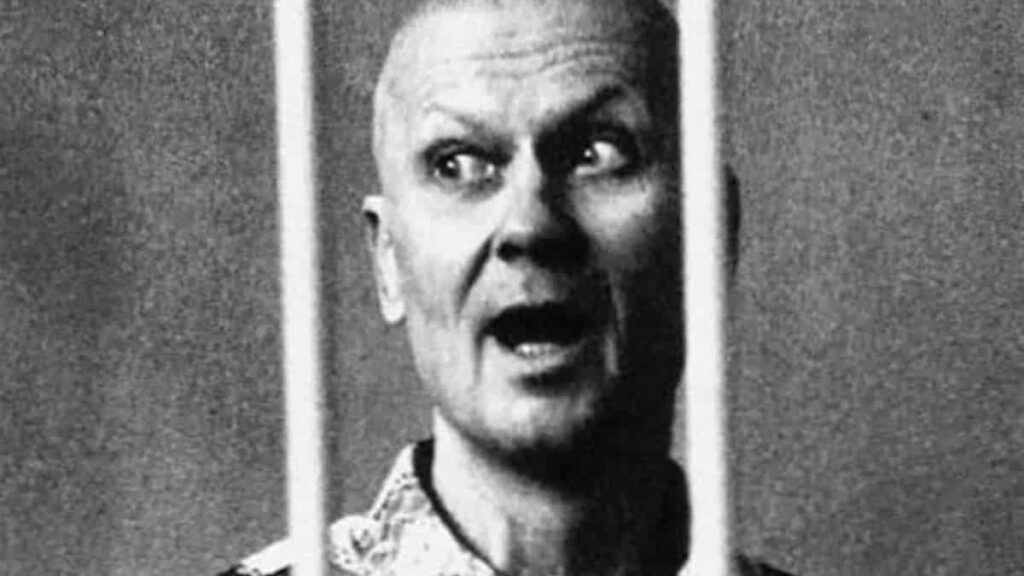
The police caught a break on November 6, 1990 after Chikatilo killed Svetlana Korostik. He had lured her to woods near the Donleskhoz station, and followed the previously established modus operandi. Sexually assault, stabbing and mutilation of the body.
During the struggle, Korostik scratched him leaving defensive wounds. He emerged from the woods washing his bloody hands. A police officer who was in the area spotted him, and took note of Chikatilo’s description.
When Korostik’s body was found, investigators cross-referenced the details all men who had been stopped and searched in the area. They realized Chikatilo’s name was familiar to oficers who had also dealt with him in 1984. After six days of surveillance, Chikatilo was arrested at a local park near Novocherkassk. He was seen trying to talk to various children.
Chikatilo refused to confess at first, so Burakov enlisted Bukhanovsky, a psychiatrist who had set up Chikatilo’s profile. Bukhanovsky explained to Chikatilo that he was doing scientific research on the criminal mind.
Flattered by this attention, Chikatilo confessed to all of his crimes. He provided extensive information on all the murders. He also led the police to the sites of bodies that were yet to be discovered. In all, Chikatilo confessed to taking the lives of 56 people.
Trial and Execution
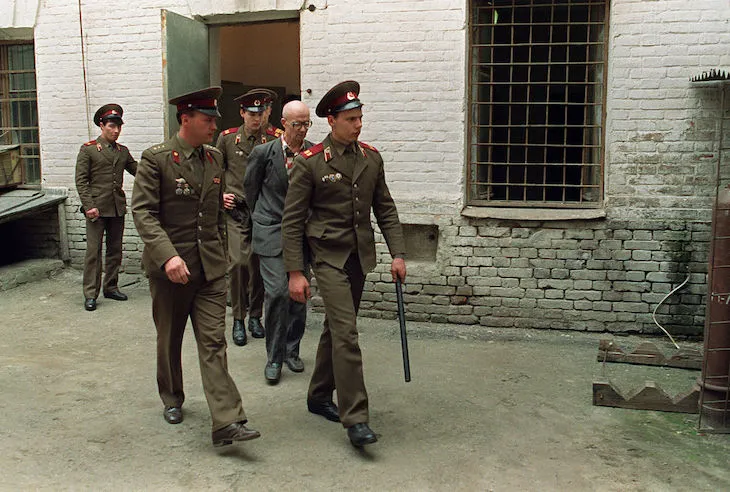
Chikatilo was brought to trial on April 14, 1992. The case got widespread media attention, and Chikatilo was dubbed, ‘The Maniac’. During the case, he was held in an iron cage to separate him from the relatives of the victims.
The attention caused him to behave erratically as he sang, and spoke gibberish. At one point, Chikatilo even dropped his trousers and waved his genitals to the audience.
A psychiatric evaluation on his ability to stand trial found that Chikatilo suffered from borderline personality disorder, with sadistic features. But, he was fit to stand trial.
On October 15, 1992, he was found guilty of 52 charges of murder, and subsequently sentenced to death. The defense team tried to overrule the psychiatric evaluation of his ability to be tried, but they failed.
On February 14, 1994, Andrei Chikatilo was executed by gunshot to the back of the head.
The body count of 52 confirmed kills only gives a partial image of how much damage was done. Innocent men were imprisoned and executed while the real killer roamed free.
Alexandr Kravchenko, the first to be wrongfully imprisoned was executed in 1984 and became a direct casualty of the system’s failures. In the USSR, reports of crimes like serial murder and rape were also often suppressed by the state controlled media. These offenses were touted as only common in the hedonistic nations of the West.
Consequently, with little knowledge that predators like Chikatilo were on the street, many parents did not warn their children to be wary of strangers. After his conviction though, the government publicized the serial killings and debunked the rumors surrounding the disappearances of the victims.