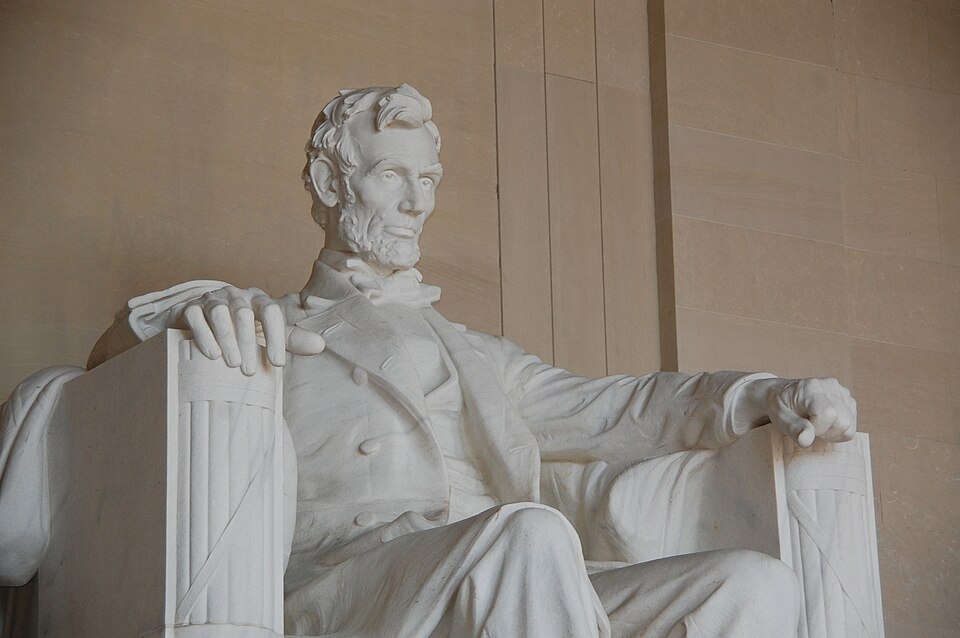
WASHINGTON — Civil rights groups and protesters gathered at the Lincoln Memorial on Friday for a new March on Washington focused on voting rights, congressional redistricting and changes to federal civil rights protections ahead of the November midterm elections.
The event, called “March on Washington 2026: Defend the Vote,” was held 63 years after the historic 1963 March on Washington, where Martin Luther King Jr. delivered his “I Have a Dream” speech. Organizers included the National Action Network and the Drum Major Institute, led by Martin Luther King III and Arndrea Waters King. More than 90 partner organizations were involved.
Participants included union members, students, civil rights organizations and activists who traveled to Washington from across the country. The NAACP and National Urban League were among the groups supporting the event.
Also Read: Trump Administration Appeals Hudson Tunnel Funding Order
The rally came as voting rules and congressional maps have become increasingly prominent issues ahead of the 2026 elections.
Organizers pointed in particular to the Supreme Court’s April decision in Louisiana v. Callais, which struck down a Louisiana congressional map containing a second majority-Black district. The court ruled that the Voting Rights Act did not require Louisiana to create an additional majority-minority district and that the state’s use of race in drawing the map constituted an unconstitutional racial gerrymander.
The 6-3 decision has had wider political consequences as states reconsider congressional maps before voters decide control of the House in November. Civil rights groups have argued that the ruling makes it more difficult to use Section 2 of the Voting Rights Act to protect minority representation.
Republicans and supporters of the ruling have taken a different view, arguing that congressional districts should not be drawn primarily on the basis of race.
Speakers at Friday’s event included House Minority Leader Hakeem Jeffries, Sen. Bernie Sanders of Vermont and Rep. Alexandria Ocasio-Cortez of New York.
Jeffries used his remarks to criticize changes to congressional districts in several Southern states and said Black political representation was under pressure.
Other speakers connected the voting-rights debate with economic issues, including employment, housing and the cost of living.
The organizers said the demonstration was intended to address not only election laws but also changes involving civil rights enforcement, diversity policies and economic inequality. Their official platform described voting rights, civil rights and economic opportunity as the three central themes of the march.
The rally also took place amid a separate legal fight over President Donald Trump’s effort to impose new requirements on mail-in voting.
A federal judge in Massachusetts this week temporarily blocked core provisions of a U.S. Postal Service rule developed at Trump’s direction. The administration has appealed that decision. The dispute centers on requirements involving ballot envelopes and voter information that states would have to provide to the Postal Service.
Trump and Republicans have argued that tighter election rules are needed to protect election integrity. Democrats and voting-rights organizations have countered that some of the proposals could make voting more difficult and that the Constitution gives states and Congress, rather than the president, primary authority over election procedures.
Friday’s march occurred as both parties move into the final stretch of campaigning for the November elections.
Control of Congress will be at stake, placing renewed attention on voting laws, turnout, and congressional district boundaries during the remaining weeks of the campaign.