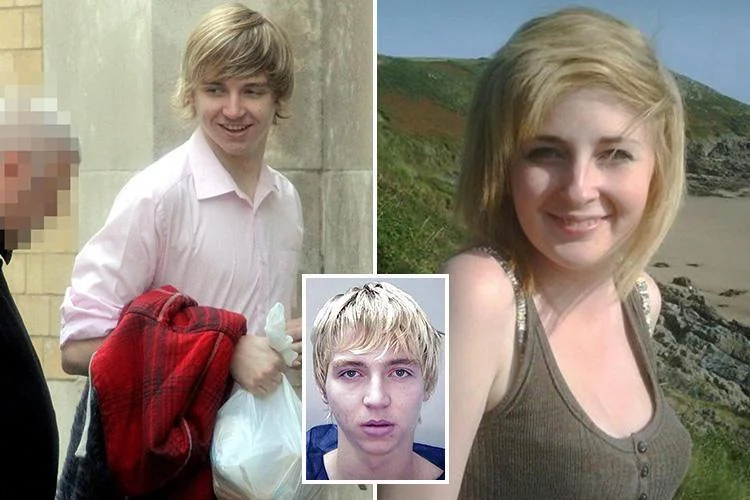
Rebecca Aylward was 15 and lived in Maesteg, near Bridgend in south Wales. In October 2010 she was killed after meeting her former boyfriend, Joshua Davies, who was also 15 at the time.
Davies was later convicted of murder at Swansea Crown Court in July 2011, when he was 16. The case became widely known because of messages and conversations about a “breakfast” bet in the days before she died.
Rebecca and Davies had known each other for years and had dated as teenagers. The relationship lasted for a short period and ended about a year before the killing, but they stayed in contact through friends and school circles.
During the break up period, friends later described arguments and shifting stories about why the relationship ended. In court reporting, Davies claimed she tried to trick him into pregnancy, while other accounts described disputes about condoms.
In the months before Rebecca died, Davies talked repeatedly about killing her. Friends later said they treated it as dark joking because of his age and how casually he brought it up during normal teenage conversations.

He also talked about methods. In court summaries, prosecutors said he discussed poisoning her using plant toxins, including ideas about making poison from plants such as foxgloves and deadly nightshade.
Davies asked friends what they would give him if he actually went through with it. The exchange that became central to the case started as banter among teenagers who assumed none of it would become real.
One message described in court began with Davies asking, “What would you do if I actually did kill her?” The reply from his friend was, “Oh, I would buy you breakfast,” treating the question as a joke.
Two days before the killing, Davies sent the message that later became part of the prosecution narrative. He texted, “Don’t say anything, but you may just owe me a breakfast,” framing the plan as if it had turned serious.
The friend’s replies were described in different reports, but the tone was consistently shocked and mocking rather than cautious. In court reporting, the friend responded in a way that signaled disgust, not expectation.
Those messages sat alongside a broader pattern of threats. Friends told investigators he had spoken about killing Rebecca and “getting away with it,” and that he framed it as something he could plan and control.
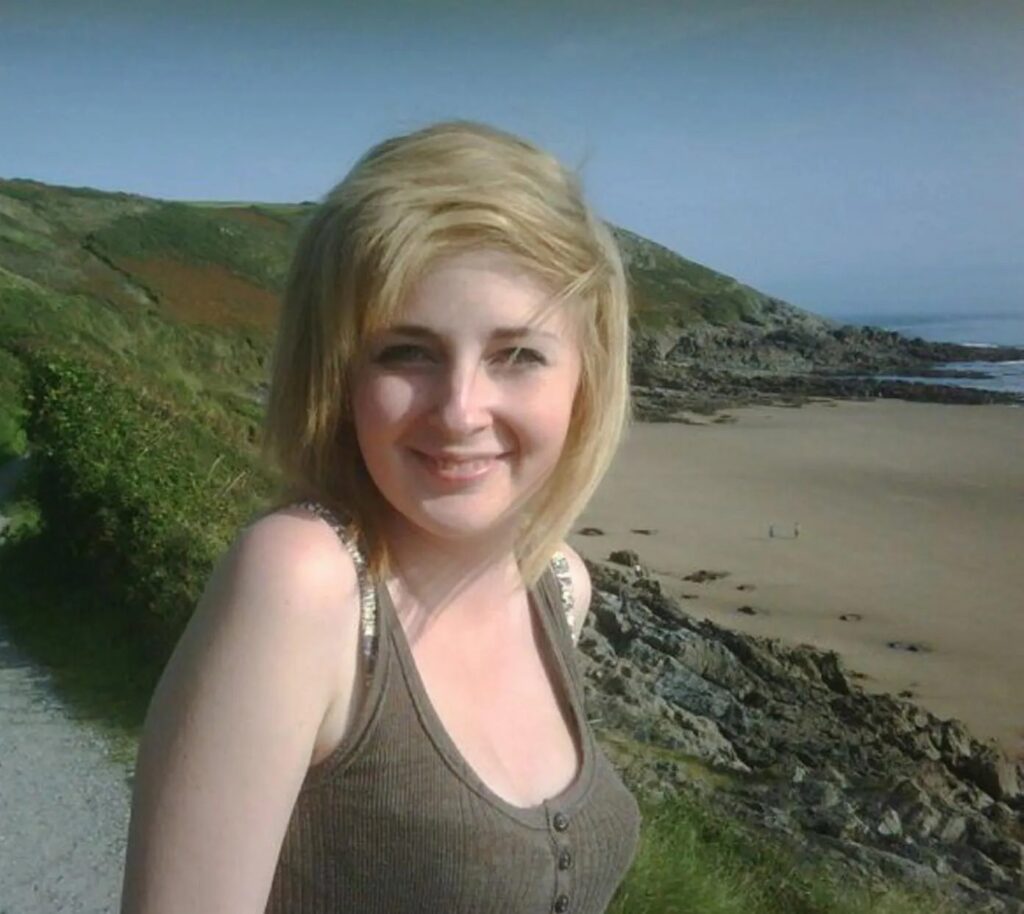
On Saturday, October 23, 2010, Rebecca left home in the early afternoon. Police appeals at the time said she was last seen around 12:30 p.m. after being dropped off by relatives in the Sarn area.
Her plan that day was described as visiting friends, and she was expected back later. As the afternoon moved on, the people looking for her began to notice that she was not responding normally.
That Saturday also included a planned meeting with Davies. Court reporting later described it as a meet up in the woods near Aberkenfig, an area outside Bridgend that teenagers used as a place to hang out.
Before leaving for the woods, Davies told at least one friend a line that later appeared in court coverage. He said, “The time has come,” a statement prosecutors treated as a sign of premeditation.
Rebecca prepared for the meeting as if it was a date. Multiple court reports said she wore a new outfit she had bought for the meet up, believing the conversation might lead to them getting back together.
The meeting spot was a wooded area near Aberkenfig, close to roads and paths but screened by trees. Police later treated the location as the primary scene, sealing sections of woodland and working a tight timeline.
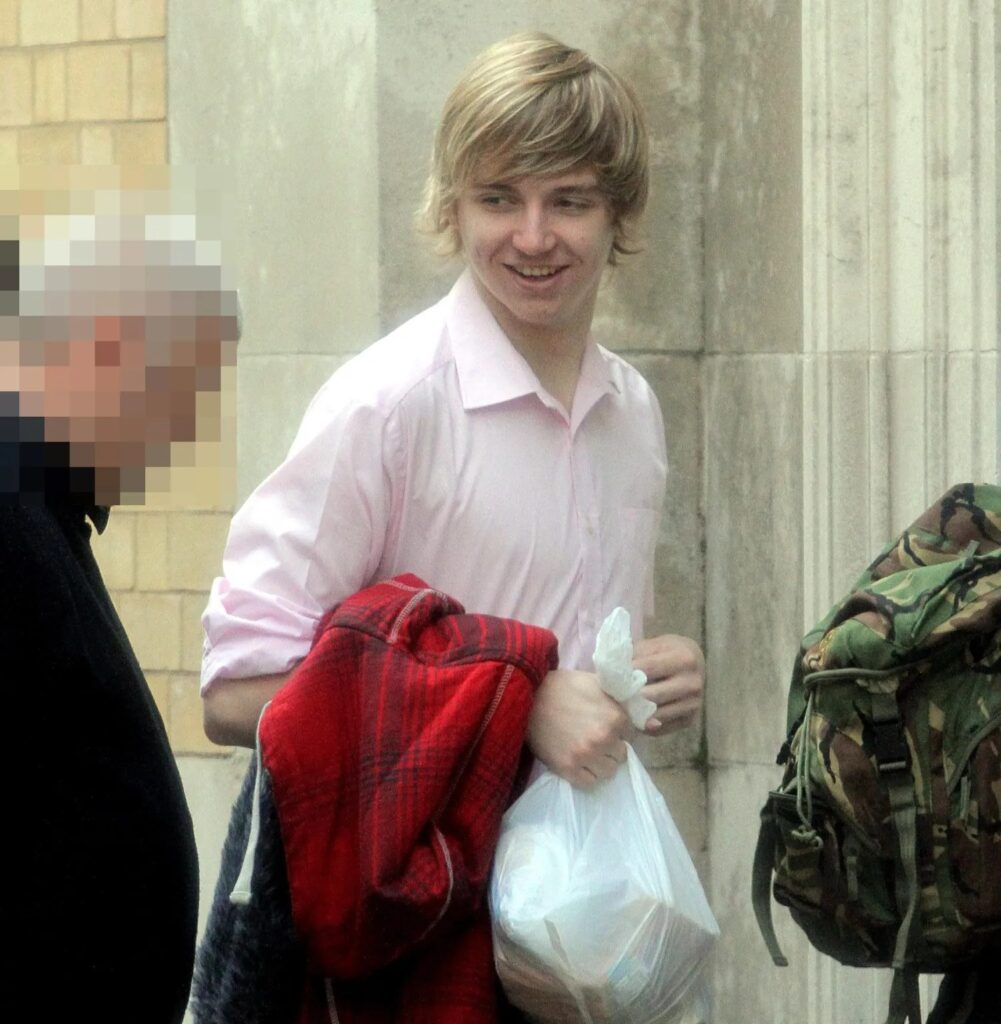
According to the prosecution case, Davies led Rebecca into the wooded area and attacked her there. The weapon described in court was a large rock, often compared in size to a rugby ball.
The injuries were concentrated around her head, and early police statements said she died of head injuries. In later reporting about the trial, prosecutors said he struck her repeatedly, delivering multiple blows.
After the attack, he left her lying face down on the forest floor. Weather was mentioned repeatedly in court coverage, with reports describing rain and wet ground, and her body left in the clothes she had worn to meet him.
A key detail came from a phone call while Davies was still in the woods. A friend rang him and asked if he was with Rebecca, and Davies replied by asking the friend to “define” what “with” meant.
That response later became part of the prosecution picture of his behavior after the attack. The tone was presented as controlled and evasive at a moment when friends were already trying to locate Rebecca.
The hours that followed became the window investigators focused on most. Rebecca did not return home that evening, and her mother reported her missing when she failed to come back as expected.
Police began searching and appealing for information about her movements from early afternoon Saturday onwards. The initial public timeline asked anyone who had seen her between 12:30 p.m. Saturday and Sunday morning to call in.
Rebecca’s body was found the next morning, Sunday, October 24, 2010. Police and media reports put the discovery at about 9 a.m. in woodland just outside Aberkenfig, a short distance from a roadside.
The discovery triggered an immediate murder investigation. Police sealed off the woodland, set up lighting, and used specialist search teams, treating the area as both a crime scene and a place where evidence might be scattered.
An incident room was set up at Bridgend Police Station. Senior detectives appealed publicly for witnesses, emphasizing the need to reconstruct her movements and identify who she was with during the missing hours.
Within that first day, two 15 year old boys were arrested on suspicion of murder. Police sought and received additional time to question them as investigators worked through evidence and statements coming in quickly.
At this stage, public reporting did not identify either boy because of their age. The early focus was on the short timeline between Rebecca being dropped off in the Sarn area and her body being found in Aberkenfig woods.
The investigation soon narrowed toward Davies. Court reporting later described how friends’ accounts, message histories, and his own behavior after the killing placed him at the center of the case.
Prosecutors later told the court that a friend of Davies led police to Rebecca’s body. In that version of events, the friend broke down, told parents, and police were taken to the woodland where her body lay.
Court reporting also described a scene at Davies’s home the following morning. Prosecutors said he went to his parents and told them a girl he knew would be missing and that he feared she had been hurt or worse.
His parents contacted police, and the case moved fast from a missing person search into a homicide investigation anchored on the woods. That sequence became part of how the prosecution argued the killing was known early inside his circle.
Investigators seized phones and pulled message histories. The breakfast texts were among the clearest pieces because they were time stamped, direct, and connected to a real conversation about killing Rebecca.
Friends described Davies speaking about murder in the weeks and months before October 2010. They also described him treating it like a topic he could workshop, asking others how to do it and how to avoid being caught.
One reported statement presented in court claimed Davies asked a friend after the killing how hard it is to break someone’s neck. Prosecutors used that as a behavioral detail showing he was describing violence directly.
More damaging were alleged admissions to friends about what happened in the woods. In court reporting, prosecutors said he described trying to break her neck and then using the rock because she screamed.
The prosecution treated those admissions as evidence of intent and direct action. They also argued that his later conduct was designed to create distance between himself and the killing while keeping control of what others knew.
Part of that strategy, prosecutors said, was using social media and messages to manufacture normality. In trial coverage, he was accused of using Facebook posts to suggest he was simply spending time with friends.
One example reported from court was a post describing him “chilling” with friends, used to support an alibi. Another reported post said he had enjoyed “a rather good day and a lovely breakfast,” placed after the killing.
Police and prosecutors also focused on the gap between how he spoke privately and how he acted publicly. They argued he tried to play the role of a concerned friend while knowing what had happened in the woods.
During the investigation, Davies blamed someone else. Multiple court reports said he denied murder and accused his best friend, describing it as an elaborate prank that went wrong and insisting he was not the attacker.
That defense created a clear conflict for the jury. Prosecutors argued it was a planned and calculated attack carried out by Davies alone, with his friend group reacting afterward rather than participating in the assault.
The trial opened at Swansea Crown Court in 2011. Reporting described it as lasting about four weeks, with jurors hearing from friends, police officers, and forensic witnesses who covered the timeline and the message evidence.
Prosecutors laid out the background of the relationship, the breakup, the repeated threats, and the breakfast conversation. They framed the killing as premeditated, with Davies seeking a reward and recognition from peers.
The defense maintained the alternative story, with Davies denying he was the killer. His lawyer argued that the prosecution had not proven beyond doubt that Davies delivered the fatal blows, pointing the finger at his friend.
The jury returned its verdict on July 27, 2011. It was a 10 to 2 majority guilty verdict for murder, delivered after deliberations that were described in some coverage as lasting several days.
Because Davies was a minor, the court had initially protected his identity. After the guilty verdict, the judge ruled that anonymity should be lifted, stating the public should know who had been convicted in a case that shook a close community.
Sentencing was set for a later date. Court reporting described the judge warning that the sentence would be indefinite, reflecting the legal framework for minors convicted of murder in England and Wales.
On September 2, 2011, Davies was sentenced at Swansea Crown Court. The judge set a minimum term of 14 years, meaning he would have to serve at least that long before he could be considered for release.
Years later, another family development drew attention. Rebecca’s sister Jessica later began a relationship with Jordan Davies, Joshua Davies’s brother. Reports in 2024 said they had two children together, and the relationship caused a major rift within Rebecca’s family.
In sentencing remarks reported publicly, the judge described Davies as devious, calculating, and controlling in the period leading up to the killing. The court also emphasized the planning implied by threats and message trails.
The sentencing hearing included discussion of the false blame placed on his friend and the expectation that peers would cover for him. The judge said the friends had not believed his threats and assumed he was joking.
The case record, as presented in court reporting, left a clear timeline. Rebecca was last seen early Saturday afternoon, was reported missing that evening, and was found dead in Aberkenfig woods the next morning.
It also left clear digital markers. The breakfast message two days earlier and the earlier question about buying breakfast were treated as evidence that the killing had been discussed and that Davies was looking for a payoff.
The prosecution position, upheld by the verdict, was that Davies lured Rebecca to the woods with the pretense of reconciliation. The killing was presented as deliberate, with his later conduct focused on evasion and misdirection.
After sentencing, Davies remained in custody under an indefinite sentence structure with the minimum term set by the judge. Public reporting continued to refer to the case as one of the starkest peer influenced murders in recent Welsh memory.
Across the investigation and trial, the central facts did not change. Rebecca Aylward was killed in October 2010 in woodland near Aberkenfig, and Joshua Davies was convicted of her murder in July 2011 and sentenced in September.
The most unusual detail remained the simplest one. A conversation that began as teenage banter about buying breakfast became part of a murder prosecution, preserved in phone messages that mapped intent and timing step by step.