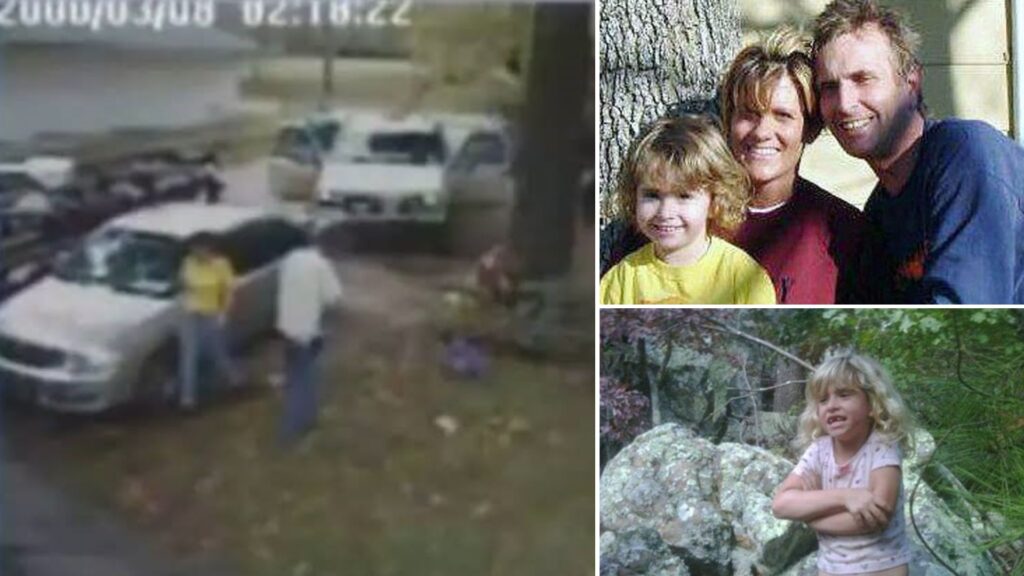
In October 2009, a family of three from Eufaula, Oklahoma drove into the Sans Bois Mountains to look at rural land. Forty four year old Bobby Jamison, his wife, Sherilynn, and six year old Madyson never returned home afterward.
Days later their white pickup truck was found on a rough mountain track in Latimer County. For four years there were searches, rumours, and theories, but no trace of the family themselves in the woods surrounding that road.
In November 2013 hunters discovered skeletal remains in remote woodland a few kilometres from the truck. Testing confirmed that the bones belonged to Bobby, Sherilynn, and Madyson. The medical examiner could not say clearly how they died or who was responsible.
Before that trip the Jamisons lived in a modest house near Eufaula Lake. Friends and relatives later described a home marked by financial strain, chronic pain, depression, and frequent arguments, rather than by open violence or any clear criminal involvement.
Bobby had suffered a serious back injury in a car crash several years earlier. Ongoing pain limited his ability to work and pushed the couple toward disability payments and occasional small jobs, which never fully covered their bills or eased their constant stress.
People close to the family said both adults became more withdrawn over time. They spent less time socialising, spoke often about money problems, and appeared exhausted. Those who cared about them saw a family under pressure, although no one expected that they would vanish.
Alongside money and health issues, there were conflicts inside the wider family. Bobby launched a civil suit against his father over an Oklahoma City gas station, claiming that he had been promised a share of proceeds that never reached him after the sale.
Earlier in 2009 he had also asked a court for a protective order that accused his father of threats and of using a vehicle to hit him the previous year. The judge dismissed that request, but the written claims showed deep mistrust and fear.
These documents later encouraged the idea that a relative might have harmed the Jamisons in the mountains, possibly because of anger over money and control. Investigators said they examined that angle and did not find evidence placing any such person at the final location.
By 2009 the couple were talking about leaving their lake house and starting again on rural land. They became interested in a forty acre plot near the small town of Red Oak and arranged to visit it with the local landowner who lived nearby.
Their plan, as described later by family members, was simple and severe. They wanted to place a metal shipping container on the property and live there with their daughter, away from neighbours and town life, with lower costs and more control over their surroundings.
The Jamisons had already obtained a container and discussed moving it to the site. For a family dealing with long term pain, disputes, and money problems, a remote property looked like a sharp break from their current life rather than a casual weekend project.
In the week of their disappearance, security cameras at the Jamison home captured them preparing for that land visit. The recording shows Bobby and Sherilynn walking repeatedly between the house and their white pickup, slowly loading items into the truck over many separate trips.
They move with flat expressions and rarely appear to speak. At one point, Sherilynn carries a brown briefcase from the house and places it in the truck. That briefcase has never been found, despite later searches of the vehicle, the house, and the property.
Family members who watched the footage thought the couple seemed strangely detached compared with earlier times. Some viewers, including officers, suggested that strong prescription medication or drugs might explain the slow, repetitive movements. There are no test results from that day, so this remains opinion.
The calm manner of the loading, combined with the presence of the briefcase, led some investigators to wonder whether the family were carrying a large amount of cash for a private deal. That possibility became more plausible when officers later explored the inside of the truck.
On 8 October 2009 the Jamisons left Eufaula with Madyson in the back. They headed toward Latimer County to meet the landowner near Red Oak. Phone records later showed their devices moving into that area. The landowner reported seeing them there at the expected time.
Within days searchers located the family pickup on a dirt road south of Kinta, not far from the area they had planned to visit. The truck was locked and still in workable condition. There were no clear signs of violence or a struggle around the vehicle.
Inside, officers found both adults’ wallets, identification, and mobile phones, along with jackets suited to the cool weather and a GPS unit showing recent routes. Hidden in the cabin was roughly thirty two thousand dollars in cash, a striking sum for a household under financial strain.
The family dog, a small animal named Maisie, was in the truck as well. She was alive but severely weakened, close to death from lack of food and water. Her condition suggested that the vehicle had been left unattended for several days in the mountain cold.
The discovery of such a large amount of money inside a locked but abandoned truck immediately deepened suspicion. Investigators considered whether the family had gone to the mountains for a drug transaction or other risky business involving cash, but no specific contact or network was identified.
The GPS trail led searchers up a rough path from the road to a small clearing on higher ground. The spot appeared as if it might have served as a short rest point or makeshift campsite, although there were no obvious signs that a crime occurred there.
Inside the truck police also found an eleven page handwritten letter from Sherilynn to Bobby. Those who read it described a long, angry account of grievances in the marriage, including claims that he ignored her, failed as a father, and did not support the household.
Relatives have said that Sherilynn lived with depression and could become intense and volatile when distressed. She also owned a handgun which she sometimes carried. That firearm was not in the vehicle when it was recovered, and it has not been found anywhere else in the case.
Taken together, the furious letter, the mental health problems, and the missing gun encouraged one possible scenario. In that version, one adult kills the others and then themself somewhere in the woods. The physical and forensic evidence later collected never fully confirmed this.
The family’s pastor added an important detail when he told reporters that Bobby and Sherilynn had come to him saying their house was haunted. They described seeing strange figures around the property and spoke seriously about spiritual danger affecting them and even their young daughter at night.
They also spoke about reading material on occult beliefs and reportedly kept at least one well known book about Satanism at home. At one point Sherilynn painted disturbing messages on a shipping container connected to the family, accusing neighbours of wrongdoing and hinting at a desire to escape.
These details led some observers to wonder whether an individual or group with extreme religious or occult interests might have targeted the Jamisons. Investigators did not publicly identify any such organisation or person. The material remained part of the picture of their state of mind, not direct proof.
After the pickup was located, state and county agencies organised an extensive land search around the road. Teams on foot, horseback, and all terrain vehicles moved through the hills while helicopters watched from above. Search dogs worked in the forest close to the truck and along likely paths.
The Sans Bois area is steep and heavily wooded, with old mining tracks and thick undergrowth. Visibility drops very quickly once someone leaves a road or main trail. The terrain alone makes it easy for even experienced walkers to become disoriented, especially in poor weather or failing light.
Because of that geography, one explanation for the missing family involved simple misadventure. According to that view, they might have left the truck for a short walk, lost their bearings, and died from exposure. The items left inside the locked vehicle complicated this apparently straightforward account.
The jackets, phones, identification, and cash would usually be carried by people who expected to spend significant time outside in cold conditions. The starving dog sealed in the cab raised another problem. These details made the idea of an ordinary hiking accident feel incomplete, even if not impossible.
Despite the size of the search operation, teams did not find the Jamisons, their clothing, or clear physical remains in the weeks after the truck was discovered. There were no obvious campsites, shallow graves, or clusters of belongings. At some point the active search effort had to end.
For several years the case remained open but stagnant. Detectives continued to review tips, background documents, and the family’s electronic records, yet there were no major breakthroughs. Without bodies, weapons, or witnesses, the known facts stayed limited to the strange security footage and the contents of the truck.
In November 2013 a group of hunters walking in remote woodland in Latimer County found skeletal remains on the forest floor. The spot lay roughly three miles from where the family pickup had been recovered, separated by stretches of dense trees and uneven ground without clear trails.
The bones belonged to two adults and one child. Time, weather, and animals had scattered the remains and disturbed the surrounding soil. Clothing fragments and small personal items lay nearby. Investigators collected everything they could and sent the bones for identification and examination by the medical examiner.
Laboratory testing confirmed in mid 2014 that the remains were those of Bobby, Sherilynn, and Madyson. For relatives this ended any lingering hope that the three had left the area and started new lives. It also meant that the focus shifted from searching to understanding how they died.
The condition of the skeletons limited the answers that specialists could give. There were no obvious large fractures that clearly matched gunshots, stabbing, or major blunt force. A small hole in the back of Bobby’s skull drew attention, but its origin could not be determined with confidence.
Experts said that such a defect might come from a bullet, but they also explained that animal activity or long exposure could produce a similar mark. Without a recovered weapon, clear residue, or intact soft tissue, the medical examiner declined to label the deaths in a specific way.
Officially the cause and manner of death were recorded as unknown. That single entry covered every possibility that had been raised over the years, from an attack linked to family disputes or criminal contacts, to a murder suicide in the woods, to a fatal mix of confusion and cold.
Each cluster of evidence points in a different direction. Family lawsuits and the failed protective order suggest dangerous conflict with relatives. The cash, briefcase, and security footage suggest a trip that might have involved risky business. The letter and missing gun hint at extreme despair and potential violence at home.
The spiritual fears and container messages show a couple who felt threatened and unstable. The difficult terrain and distance between the truck and the remains support an exposure scenario. None of these groups of facts fits together cleanly, and none can currently be tested against a full crime scene.
What remains certain is narrow but clear. A family in visible distress planned a move to rural land, drove into the hills to inspect it, and did not return. Their truck and belongings were found within days. Their bones were found years later in the surrounding forest.
Without a weapon, reliable final sighting, or precise forensic markers, investigators have had to leave the file open. Unless new physical evidence appears or a person with direct knowledge comes forward, the Jamison case will remain an investigation built from fragments rather than a story with a firm conclusion.